@680TheFan They did the same for the Vikingsnin the Metrorome.
Sat in the nosebleeds for a GB vs. MIN game and was laughing at how magically the blowers would be on in favor of the Vikings and against the Packers during kicks. Not to mention the pumped in noise.
"The Milwaukee Bucks organization have been there with me since the beginning. They changed my life."
Giannis Antetokounmpo on his love for the #Bucks and the city of Milwaukee. #FearTheDeer
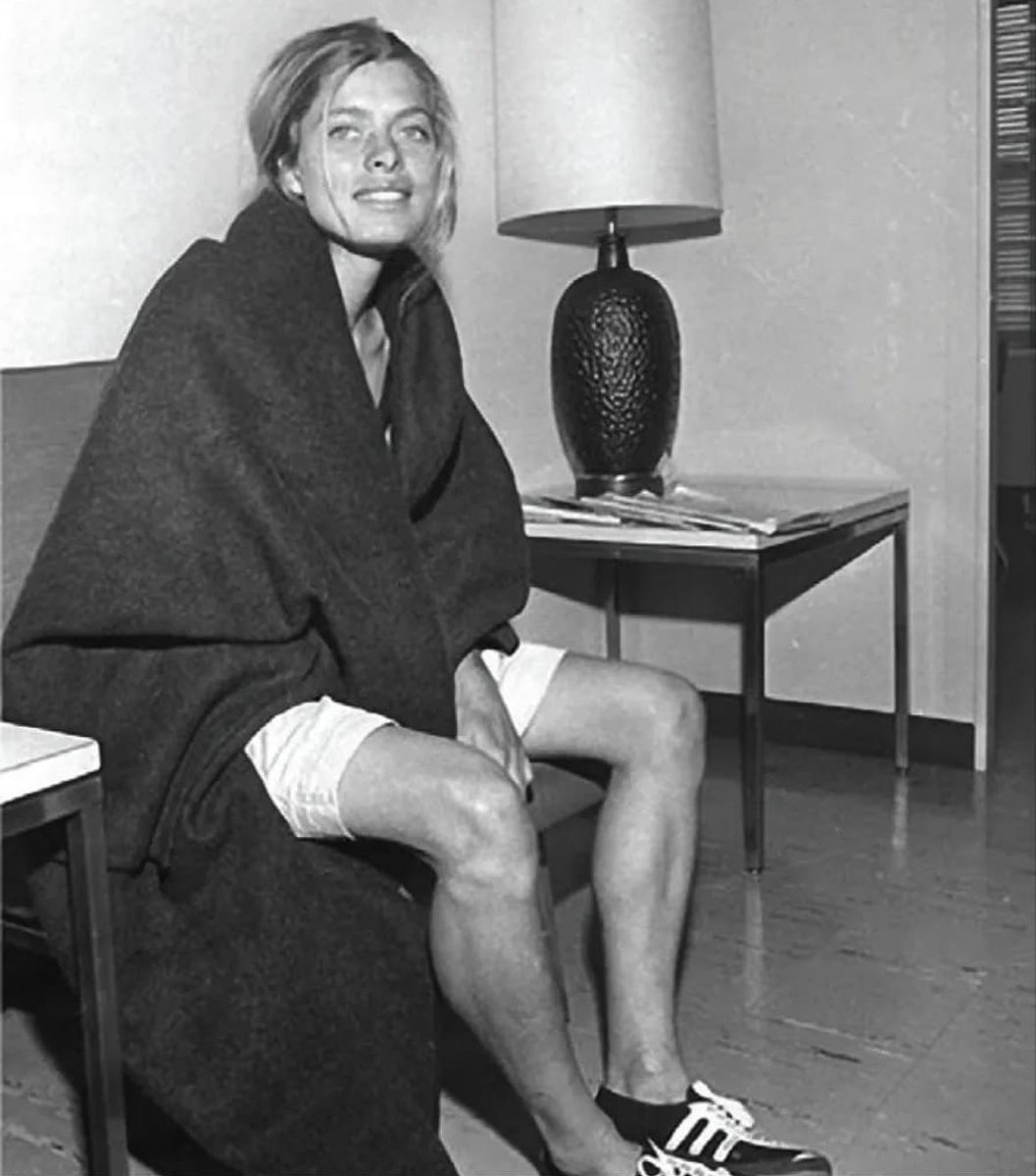
This is 23-year-old Bobbi Gibb in 1966, right after becoming the first woman to run the Boston marathon.
A few months earlier, Gibb had received a letter in the mail, disqualifying her for the marathon. The letter stated that women are "not physiologically able to run a marathon." The Amateur Athletics Union even went as far as prohibiting women from running more than 1.5 miles (2.4 km), and the organizers of the Boston Marathon did not want to "take the liability" of having a woman compete.
However, the rejection letter only emboldened her. On the day of the race, Gibb showed up wearing a blue hooded sweatshirt over a black swimsuit and her brother's Bermuda shorts. She hid behind a bush near the starting line and waited. When the starting gun fired, Gibb waited some more until about half the runners had passed. She then jumped in and blended into the pack.
However, it wasn't long before the men saw that she was a woman. To her surprise, she was not met with hostility but with encouragement and support. She removed her sweatshirt and finished the race in 3 hours and 21 minutes and 40 seconds, beating two-thirds of the runners.
Diana Chapman Walsh, who later went on to become the President of Wellesley College, recalled that day many years later: "That was my senior year at Wellesley. As I had done every spring since I arrived on campus, I went out to cheer the runners. But there was something different about that Marathon Day-like a spark down a wire, the word spread to all of us lining the route that a woman was running the course. For a while, the 'screech tunnel' fell silent. We scanned face after face in breathless anticipation until just ahead of her, through the excited crowd, a ripple of recognition shot through the lines, and we cheered as we never had before. We let out a roar that day, sensing that this woman had done more than just break the gender barrier in a famous race..."
Shortly after Steve Jobs returned as the CEO of Apple in 1997, he met with Jony Ive, Apple’s Senior VP of industrial design.
Apple had 40 products on the market.
“Jony, how many things have you said no to?” Jobs asked.
Ive was confused.
“You have to understand,” Jobs said,
“There are measures of focus, and one of them is how often you say no.”
“What focus means,” Jobs taught Ive, “is saying no to something that you—with every bone in your body—think is a phenomenal idea, and you wake up thinking about it, but you say no to it because you're focusing on something else.”
Jobs walked up to a whiteboard and drew a 2 x 2 grid. On top, he wrote “Consumer” and “Professional.” Down the side, “Portable” and “Desktop.”
Four products—meet Apple’s new radically focused product line, Jobs said.
After that meeting, over the next two decades, Jobs and Ive—focused on making a few high-quality products while saying no to everything else—transformed a dying, near-bankrupt company into one of the most valuable companies in the world, worth over $2.9 trillion.
Takeaway 1:
The philosopher Marcus Aurelius pointed out that the focus of doing less “brings a double satisfaction.”
You get the satisfaction of having fewer things to do. And…you get the satisfaction of doing those fewer things at a higher level.
You get “to do less, better.”
During Steve Jobs’ first visit to Jony Ive’s design studio, he looked around, and then he said, “Fuck, you’ve not been very effective, have you?”
It was clear to Jobs that Ive was full of ideas and potential he wasn’t able to execute or fulfill under Apple’s previous leadership.
In the Jobs era of “doing less, better,” Ive was very effective.
Some products he designed include: iMac, iPod, iPhone, iPad, Apple Watch, and AirPods.
Takeaway 2:
Even though he slashed the product line down to four products, Jobs loved to have and hear ideas.
“Steve used to say to me,” Ive said, “and he used to say this a lot, ‘Hey, Jony, here’s a dopey idea.’ And sometimes they were: really dopey. Sometimes they were truly dreadful.
But sometimes they took the air from the room, and they left us both completely silent.”
It made me think of what Jerry Seinfeld identifies as the ultimate skill of the artist: “taste and discernment.”
“It’s one thing to create,” Seinfeld says. It’s one thing to have ideas.
“The other is you have to choose. ‘What are we going to do, and what are we not going to do?’” What are we going to add to the product line, and what are we not going to add?
“This is a gigantic aspect of [artistic] survival,” Seinfeld continues.
“It’s kind of unseen—what’s picked and what is discarded—but mastering that is how you stay alive.”
- - -
“Everything just got simpler. That’s been one of my mantras—focus and simplicity.” — Steve Jobs
Follow @bpoppenheimer for more content like this!


![bpoppenheimer's tweet photo. Shortly after Steve Jobs returned as the CEO of Apple in 1997, he met with Jony Ive, Apple’s Senior VP of industrial design.
Apple had 40 products on the market.
“Jony, how many things have you said no to?” Jobs asked.
Ive was confused.
“You have to understand,” Jobs said,
“There are measures of focus, and one of them is how often you say no.”
“What focus means,” Jobs taught Ive, “is saying no to something that you—with every bone in your body—think is a phenomenal idea, and you wake up thinking about it, but you say no to it because you're focusing on something else.”
Jobs walked up to a whiteboard and drew a 2 x 2 grid. On top, he wrote “Consumer” and “Professional.” Down the side, “Portable” and “Desktop.”
Four products—meet Apple’s new radically focused product line, Jobs said.
After that meeting, over the next two decades, Jobs and Ive—focused on making a few high-quality products while saying no to everything else—transformed a dying, near-bankrupt company into one of the most valuable companies in the world, worth over $2.9 trillion.
Takeaway 1:
The philosopher Marcus Aurelius pointed out that the focus of doing less “brings a double satisfaction.”
You get the satisfaction of having fewer things to do. And…you get the satisfaction of doing those fewer things at a higher level.
You get “to do less, better.”
During Steve Jobs’ first visit to Jony Ive’s design studio, he looked around, and then he said, “Fuck, you’ve not been very effective, have you?”
It was clear to Jobs that Ive was full of ideas and potential he wasn’t able to execute or fulfill under Apple’s previous leadership.
In the Jobs era of “doing less, better,” Ive was very effective.
Some products he designed include: iMac, iPod, iPhone, iPad, Apple Watch, and AirPods.
Takeaway 2:
Even though he slashed the product line down to four products, Jobs loved to have and hear ideas.
“Steve used to say to me,” Ive said, “and he used to say this a lot, ‘Hey, Jony, here’s a dopey idea.’ And sometimes they were: really dopey. Sometimes they were truly dreadful.
But sometimes they took the air from the room, and they left us both completely silent.”
It made me think of what Jerry Seinfeld identifies as the ultimate skill of the artist: “taste and discernment.”
“It’s one thing to create,” Seinfeld says. It’s one thing to have ideas.
“The other is you have to choose. ‘What are we going to do, and what are we not going to do?’” What are we going to add to the product line, and what are we not going to add?
“This is a gigantic aspect of [artistic] survival,” Seinfeld continues.
“It’s kind of unseen—what’s picked and what is discarded—but mastering that is how you stay alive.”
- - -
“Everything just got simpler. That’s been one of my mantras—focus and simplicity.” — Steve Jobs
Follow @bpoppenheimer for more content like this!](https://pbs.twimg.com/media/FzeinZYWYAEzlYI.jpg)


