Corporation: "We made $4B but spent $3.9B so we only owe taxes on $100M."
Government: "Totally reasonable."
You: "I made $60K but spent $58K on survival."
Government: "You owe taxes on $60K."
You: "That's not—"
Government: "File by May 15."
Joe Rogan: "If you do DMT and you have a DeWalt laser level... you see the matrix you see code."
He told Harland Williams: "Everyone I know who did it see the same thing, we live in a simulation"
He breaks down the wild Dewalt laser experiment where DMT users report seeing intricate symbols, hieroglyphs, numbers, and foreign code like patterns in the beam. "Everybody that I know that's done it said it blew their fucking mind. You see all these weird symbols they look like hieroglyphs or some foreign language or numbers. It's very bizarre."
Williams questions if it's evidence of a larger program: "Why run us through the drama of a human life where we're born we endure pain illness suffering love hate all the emotions to be in a simulation?" He suggests maybe we're not in a "Simulation" but "Running a program" designed for balance, growth, and eventually creating advanced AI.
Nvidia will now pay you to put a mini AI data center on your house
It looks like a normal AC unit in the yard.
But inside sits 16 Nvidia Blackwell GPUs and Dell servers.
A startup called Span builds them, backed by Nvidia.
They bolt onto your home and you get paid for the power and Wi-Fi.
Some estimates put that around $1,000 a month in your pocket.
That is rent money just for hosting a box outside.
Span says it deploys way faster and cheaper than a real data center.
The AI boom is literally moving into the suburbs.
Save this, the grid is getting rebuilt in real time.
Our vision is to build the Netflix of the next generation
If you are obsessed with movies, love storytelling, and are making AI films please DM right now
Apply to work at TrueShort here: https://t.co/JRLlyV8giN
We want to find the kid in his bedroom with a dream!
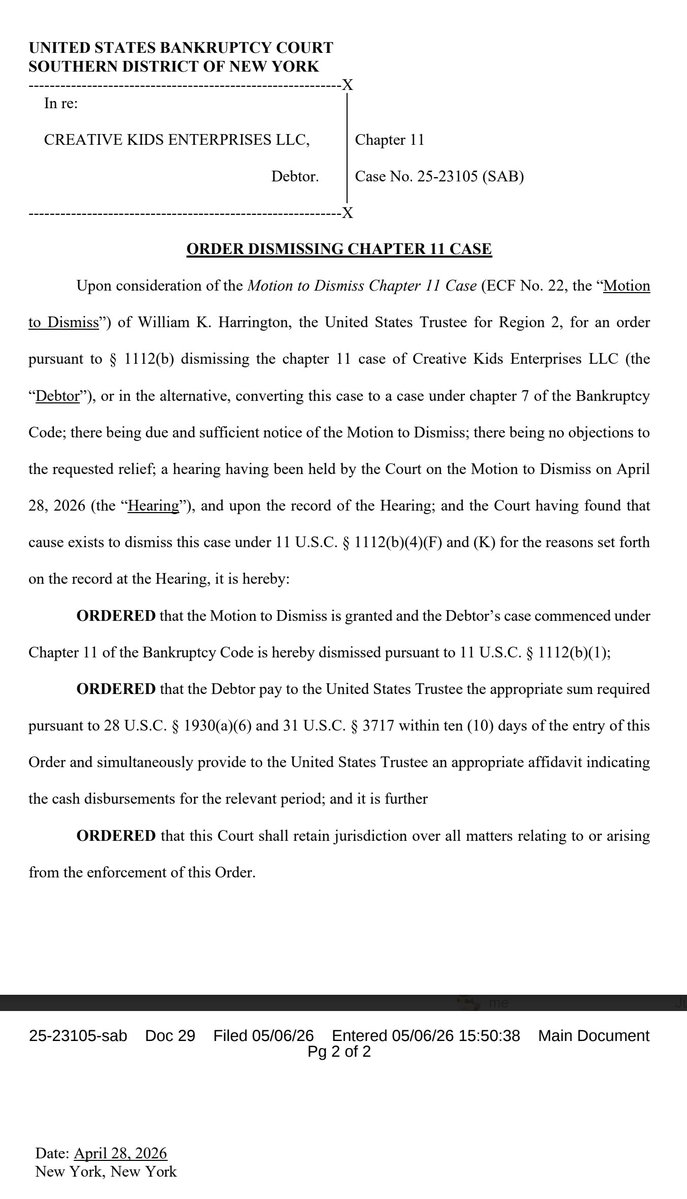
After the publishing of this article, my company was sued in bankruptcy court.
That case was just dismissed along with 2nd bankruptcy.
So now we are returning to district court for the 4th time in year 8.
Situation is getting so interesting that we might need a part 2!
My team has been diving into federal contract data for the highest accelerating market segments in national security.
We're looking at national security industries that face hockey stick growth in govt demand signals:
- shipbuilding
- space
- aircraft manufacturing
- critical infrastructure
- energy production
- nuclear
- critical munitions
- radar detectors
- semiconductor manufacturing
Some areas are massively undersaturated in terms of private sector participation. More on this in the coming weeks as we release our findings.
But the problem I'm sitting with is this obvious need:
If we actually want to strengthen national security, we need to fix how govt engages with industry.
For decades, the defense contracting system favored incumbency, compliance, low prices, and process over outcomes.
But the threats we're facing today are evolving faster than the system itself.
The best solutions aren't always getting in. They're not even getting to the periphery of the market. Especially the small businesses, non-traditional vendors, and innovative firms without federal experience.
If we're serious about defense readiness, supply chain resilience, and modernization, then we need to reduce the friction to entry.
We need to make it in-your-face obvious that the opportunity is there, that the opportunity is astronomical, and that the opportunity brings a multitude of benefits from both the business and govt perspectives.
The capability in't the issue. Access is.
Artık robotlarla 12 metrelik bir tekneyi tek parça hâlinde 3D yazdırıyorlar; kalıp yok, ek maliyet yok… Bir zamanlar tersane gerektiren şey, artık dev bir yazıcıyla yapılabiliyor. 🚢
Dave Portnoy reveals he sold Barstool Sports to PENN Entertainment for $500,000,000, but due to regulatory complications, they later returned the company to him for just $1.
What a time for U.S. manufacturers. Government is calling for innovative solutions to address some of America's most complex manufacturing and materials challenges relevant to the U.S. energy sector.
Below is a list of top areas of interest.
This isn't a surprise. The National Security Strategy, National Defense Strategy, and a slew of Executive Orders have signaled a surge in demand for these capabilities. For reindustrialization. To supercharge the defense industrial base. And now we're seeing the specific calls for innovation.
One example: Department of Energy's HPC4EI initiative released a solicitation a few days ago. It's an opportunity for U.S. manufacturers to participate in collaborative projects with DOE national labs' supercomputing capabilities and technical expertise to strengthen domestic supply chains and enhance U.S. industrial competitiveness.
Some of the solutions they are most interested in:
- Overcoming qualification and certification barriers for advanced materials (time, cost)
- Scaling and manufacturability / reducing cost and risk in scaling up advanced materials
- Computational methods that reduce technical, cost, and supply chain risks for rare earth elements, battery materials, etc
- Multifunctional materials w/ combined structural, thermal, and electrical performance
- Advanced thermal management solutions for power electronics, semiconductors, computing systems
- AI/ML driven materials informatics, end-to-end digital thread platforms, smart manufacturing approaches that enable faster development, reduced costs
- Modeling of material systems that enable cost-effective domestic production -- e.g. rare-earth-free magnetic materials, substitutes for critical minerals
- Advanced reactors, turbine systems, grid-scale storage
- Simulation of advanced manufacturing methods
Modeling of high-throughput machining, finishing, and forming technologies that deliver greater precision and reliability at scale
- AI/ML and smart manufacturing platforms to optimize process control
- Technologies that improve productivity optimization in energy-intensive industries
- Chemicals and fuels -- process innovations, novel reactor and separation technologies, advanced materials development for chemical manufacturing
- Iron and steelmaking, aluminum, and other metals -- innovative processes for primary metals production, methods to optimize productivity, methods to decopperize steel
- Food and beverage products processing that optimize efficient recovery and reuse of waste energy, extend product shelf life, minimize waste
- Cement and concrete, asphalt, and glass process innovations, alternative source materials, novel material composition, and solutions to reduce waste
- Forest products, including novel dewatering or drying technologies and improved pulping and chemical recovery processes
- Equipment and processes that improve industrial process heating, including reducing cost, improving efficiency, or enhancing product quality
- Non-thermal processes for cost-competitive separations and treatments
- Industrial technologies that can ensure grid reliability amidst industrial demand growth
- Technologies that enable production of fit-for-purpose water -- e.g. reduce direct water consumption of data centers
Concept papers due May 27.
NEW LONG FORM VIDEO: Why people are starting to hate Disney World
So I’m 51 now, and one of the things I remember vividly from my childhood is watching big sporting events like the Super Bowl or the World Series. At the end of the game, the winning players would be celebrating, getting interviewed, and they’d always be asked the same question: What are you going to do next?
And the answer was almost always the same: I’m going to Disney World.
But fast forward 30 years, and you don’t hear that anymore. In fact, the conversation has shifted in the opposite direction. Today, YouTube and social media are filled with people criticizing Disney’s parks, whether in California or Florida. When I was a kid, going to a Disney park was a rite of passage. My parents once drove us across six states just so we could spend spring break there.
Now, for many families, the parks feel like an afterthought. And it turns out this shift isn’t an accident. It’s the result of deliberate strategy, changing economics, and some unusual decisions inside the Disney corporation.
This is the story behind the rise and fall of Disney World.
Yesterday, a small business in Brooklyn was awarded a $21 million max-value IDIQ yesterday for physical fitness shirts for the Air Force & Space Force.
Today, that same business was selected for another max-value $763 million IDIQ to provide physical fitness gear to the military services over the next 5 yrs.
They're having a good week.
Also, apparel manufacturing.