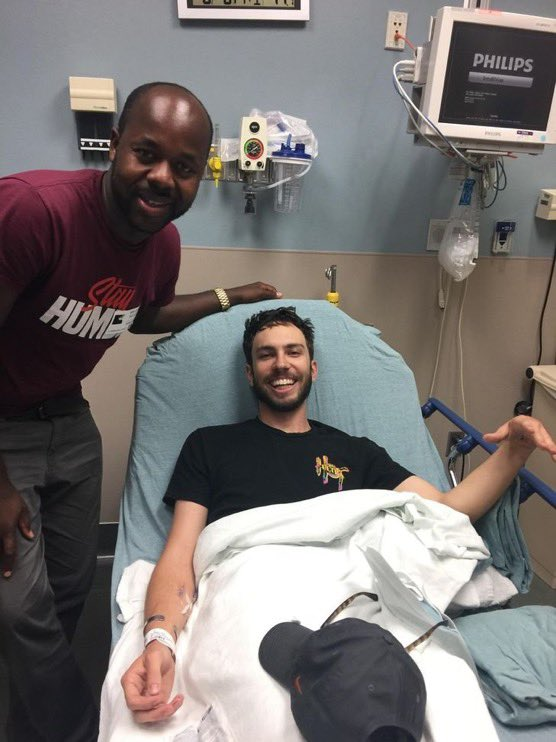
A college student in Texas broke his wrist and ordered an Uber instead of an ambulance because of the cost.
His driver refused payment, stayed with him at the hospital for 6 hours, and missed a day of work so he wouldn’t be alone.
7 years later, they’re still friends. ❤️
A 10 year old child’s experiment demonstrated that memories can be inherited across generations.
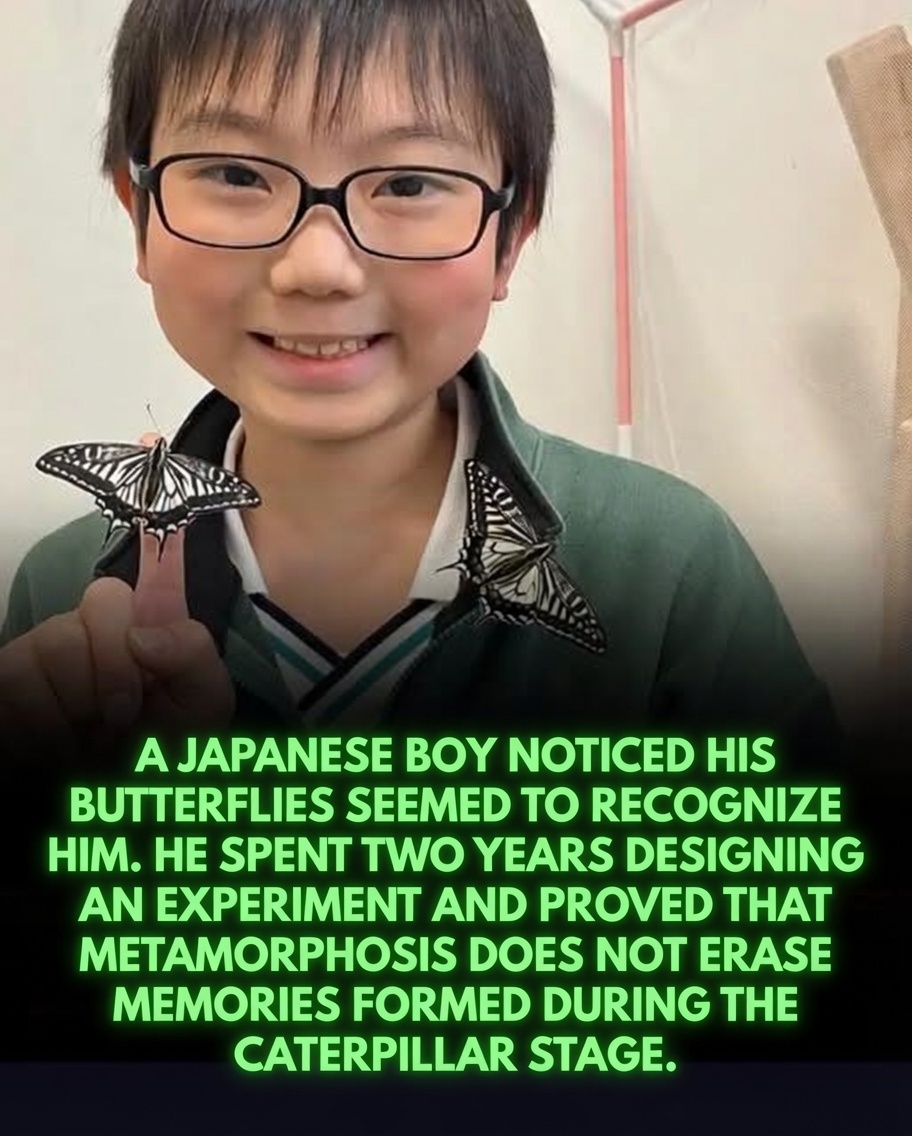
The story started when Jo Nagai, a second grader from Kobe, Japan, observed that swallowtail butterflies he had raised by hand appeared to recognize him, whereas wild butterflies would flee.
Motivated to uncover a scientific explanation, he contacted Georgetown University entomologist Dr. Martha Weiss, who had previously shown that moths retain memories despite the extensive cellular reorganization during metamorphosis.
Encouraged by her research, Jo suggested conducting a similar study with butterflies. This led to a remarkable international collaboration. Using a simple setup created at home, Jo conditioned caterpillars to link a gentle vibration with the smell of lavender.
Remarkably, after their brains were entirely reconstructed inside the chrysalis, 70 percent of the adult butterflies still avoided the lavender scent, demonstrating that their memories had endured the transformation.
The most surprising result emerged when Jo bred these conditioned insects. Neither the offspring nor the grandchildren had ever encountered the vibration, yet both generations displayed an instinctive aversion to the lavender scent.
At the age of ten, Jo compiled his groundbreaking observations into a 33 page paper and presented them alongside Dr. Weiss at the International Congress of Entomology in Kobe. This discovery of transgenerational memory challenges conventional views of genetics and inheritance while illustrating how a child’s curiosity can push the frontiers of scientific understanding.
#DYK although women make up nearly 70% of the global health workforce, they hold only 25% of health leadership positions worldwide?
Read that again.
In essence, our research shows that even though women effectively run health systems – they are seldom formally in charge.
"This gap reflects not just inequity, but a misalignment in how leadership is recognized and valued," says Dr Sharon Salmon, a Technical Officer with the @WHO Health Emergencies Programme in the Western Pacific Region.
Dr Salmon facilitates the @WHOGOARN leadership initiative – a programme designed exclusively for women, equipping them with practical strategies to navigate barriers to global health leadership.
In a recently published opinion piece in the World Economic Forum @wef, Dr Salmon draws on her experience supporting emergency responses across multiple continents, describing how she has seen women often leading "without the title, authority or institutional backing that emergency leadership demands."
@dfat
#Nurses have been experiencing severe shortages in PPE as they work on the frontlines to provide vital care to #COVID19 patients. Tell Congress to support the Medical Supply Chain Emergency Act to fully exercise the #DPANOW to #GetMePPE & keep RNs safe! https://t.co/zA0HLBGrog
Falling behind on a student loan shouldn’t jeopardize your nursing license. Support the Protecting JOBS Act, the bill that would change that now! @RNAction https://t.co/8Hku7OP3SL
1 in 4 nurses has been assaulted at work. Our chance to change this has finally arrived – join me & @RNAction and ask the Senate to help #EndNurseAbuse now! https://t.co/B1YWmAtTCG
1 in 4 nurses has been assaulted at work. Our chance to change this has finally arrived – join me & @RNAction and ask the House to help #EndNurseAbuse now! https://t.co/cXPaDEBB5A