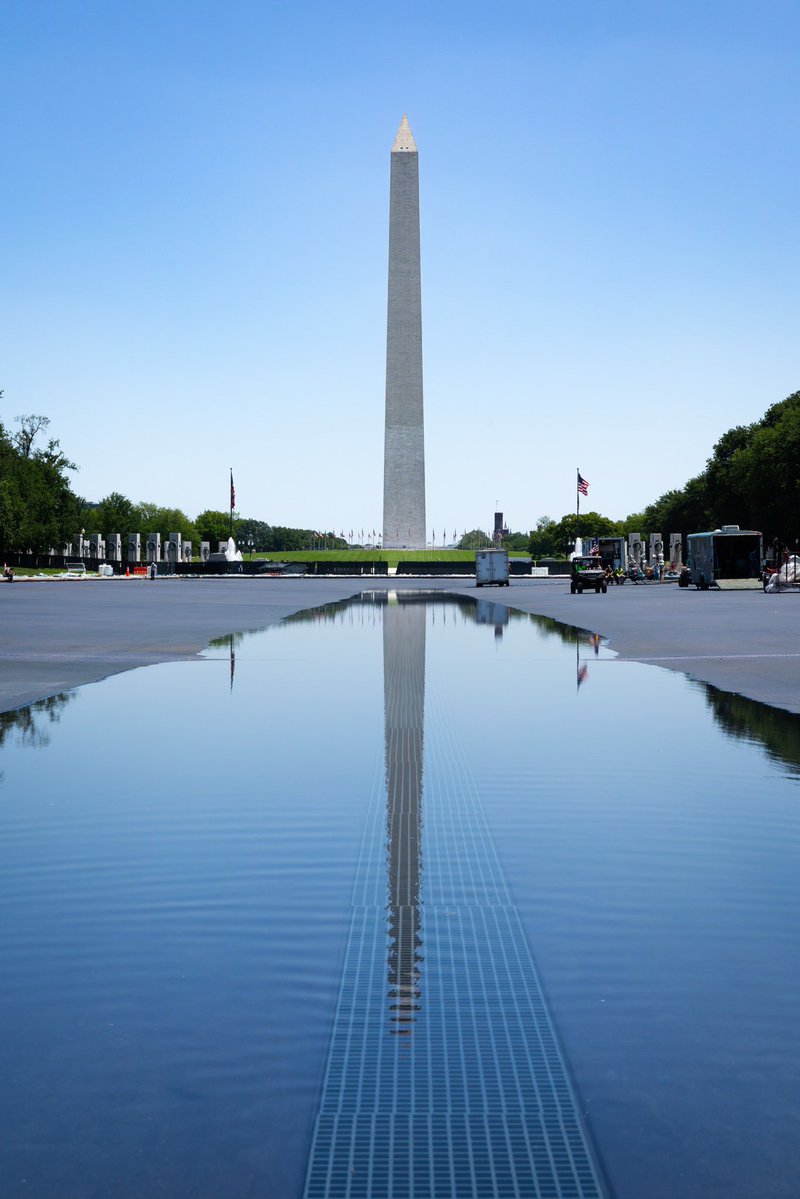
84 years ago today, a pilot running out of fuel made a decision that won the Pacific War. Most Americans have never heard his name.
June 4, 1942. Six months after Pearl Harbor, Japan's navy is undefeated. Four of the carriers that burned Pearl, Akagi, Kaga, Soryu, and Hiryu, are steaming toward Midway to finish off the US Pacific Fleet.
At 7:52 AM, Wade McClusky launches from USS Enterprise leading 32 Dauntless dive bombers. Here's the detail nobody mentions: McClusky is a fighter pilot. He'd been given the air group weeks earlier and had barely flown a dive bomber in combat. Now he's leading every SBD the Enterprise has at the most important target in the Pacific.
9:20 AM. He arrives at the intercept point where the Japanese fleet is supposed to be.
Empty ocean. Nothing for miles.
The Japanese had turned. Nobody knew where. And now McClusky owns the worst math problem in naval aviation: his fuel is bleeding away, and every minute he keeps searching, he condemns more of his own pilots to ditch in open water where nobody will find them.
Doctrine is clear. Turn back.
McClusky keeps going. He works a search pattern, squeezing miles out of dying fuel tanks.
9:55 AM. Far below, a single Japanese destroyer is cutting a white scar across the ocean at flank speed. It's the Arashi, racing to rejoin the fleet after depth-charging the American submarine Nautilus. Think about that. A failed sub attack is about to give away the entire Japanese navy.
McClusky reads the wake like an arrow and follows it.
10:02 AM. The horizon fills with the entire Japanese strike force. Four carriers, their decks crammed with planes being refueled and rearmed. Fuel lines snaking everywhere. Bombs stacked in the open.
And here's the miracle: the sky above them is empty. Minutes earlier, American torpedo squadrons had attacked at sea level and been annihilated. Torpedo 8 lost all 15 planes. One survivor, Ensign George Gay, watched what came next while hiding under his seat cushion in the water. Those doomed pilots dragged every Japanese fighter down to the waves. The door upstairs was wide open.
10:22 AM. McClusky pushes over from 14,500 feet. Both squadrons follow him down onto Kaga. It's actually a mistake, doctrine said split the targets, but Lt. Dick Best catches it mid-dive, pulls out with two wingmen, and goes after Akagi alone. His single bomb pierces the flight deck into the packed hangar. It's enough.
By 10:28, Kaga, Akagi, and Soryu, the third hit simultaneously by Yorktown's bombers, are floating infernos. Six minutes. Three carriers that attacked Pearl Harbor, gone. Hiryu follows them to the bottom that evening.
The cost of McClusky's gamble was real. Many Enterprise bombers never made it home, some shot down, others swallowed by the sea when their tanks ran dry. McClusky himself was jumped by two Zeros on the way out, took five bullets through his shoulder, and still flew his shot-up Dauntless back to the Enterprise.
Admiral Nimitz said McClusky's decision "decided the fate of our carrier task force and our forces at Midway." Japan never won another major battle.
One borrowed pilot. One destroyer's wake. One choice to keep flying when every gauge said go home.
Her name was Betty Ong.
And for 23 minutes on September 11, 2001, she became the calmest voice in America.
Betty was 45 years old.
A flight attendant from San Francisco.
Known to coworkers simply as “Bee.”
That morning, she was working aboard American Airlines Flight 11 from Boston to Los Angeles.
She had picked up the trip because she planned to continue home to San Francisco afterward and then fly to Hawaii for a vacation with her sister.
At 7:59 a.m., the plane took off.
Twenty minutes later, Betty picked up a phone at the back of the aircraft and called American Airlines operations.
The reservations agent who answered heard a calm voice say:
“I think we’re getting hijacked.”
Nobody had ever made a call like that before.
Betty stayed on the line for the next 23 minutes.
While chaos unfolded around her, she remained composed and methodical.
She reported that the cockpit wasn’t responding.
That flight attendants had been stabbed.
That passengers were struggling to breathe after something resembling Mace had been sprayed.
She even gave seat numbers for the suspected hijackers.
Everything she observed was passed from American Airlines to the FAA and air traffic control in real time.
Her call helped authorities understand something horrifying:
This wasn’t an accident.
This was coordinated.
This was an attack.
People later falsely described Betty as hysterical during the call.
The woman who spoke with her directly said the opposite was true.
“She was calm, professional, and poised.”
Betty never stopped doing her job.
Even in the final minutes of her life.
At 8:46 a.m., Flight 11 crashed into the North Tower of the World Trade Center.
The line suddenly went silent.
The agent on the other end waited a moment and quietly asked:
“Betty… are you there?”
No answer came back.
Months later, Betty’s family fought to obtain the recording of her final call.
When they finally heard it, her brother explained something that stayed with many people afterward:
Betty never called home.
Not because she didn’t love her family.
Because in that moment, she believed her responsibility was to the passengers and crew around her.
That’s who she was.
Today, Betty Ong’s name is memorialized at Ground Zero and throughout San Francisco’s Chinatown.
But what makes her unforgettable isn’t only the tragedy.
It’s the extraordinary calm she showed while facing unimaginable fear.
She was heading to Hawaii.
Instead, she picked up a phone and helped the world understand what was happening while there was still time to warn others.
That is what courage sometimes looks like.
Not loud.
Not dramatic.
Just a steady voice doing its job until the very end.
Spencer Pratt got 0 out of 24,000 votes in a late night LA ballot drop.
0/24,000
A guy getting around 30% support got 0 out of 24,000.
Astronomically small probability of happening.
Impossible.
California no longer even hides it.
Doors need to be kicked in.
Colorado’s Jefferson County Public Schools had 61 male athletes on girls’ sports rosters.
Not one. Not a handful. 61.
Biological males taking roster spots, wins, scholarships, and safety from actual girls, all while the district cheered it on.
This isn’t “inclusion.” It’s erasure of girls’ sports.
How many more districts are hiding the same numbers?
Petty Officer 3rd Class Lauren J. Singer was traveling over the Coronado Bridge near San Diego, California, returning to her on base residence, when she noticed a stranded motorist outside his vehicle.
Singer asked if he needed any help, and the driver responded that he was fine. Something in the manner of the driver’s response triggered her intuition and made her feel that something was not right.
She noticed the driver putting a rope around his neck. As he was putting a foot on the barrier to jump over the side, Singer rushed to his side, pulling him back. Startled, she grabbed him and asked what he was doing. He coolly responded by saying that today was the day he was going to die. While Singer was holding the driver, she noticed a knife on the barrier ledge. She cut the rope from around his neck, dropped the knife and kicked it underneath the car. She then identified a gun in his pocket. She removed the firearm and directed other stopped motorists to lock the gun securely in the trunk and call 911.
She stayed with the suicidal driver until the California Highway Patrol arrived. Singer’s willingness to assist a stranger undoubtedly resulted in saving his life.
We salute you Petty Officer Singer! The 2020 USO Sailor of the Year!
#Military #Hero #SuicidePrevention
Dear @WhiteHouse, my name is Rodney Smith Jr., founder of Raising Men & Women Lawn Care Service in Huntsville, Alabama. Through our 50 Yard Challenge, over 6,000 kids across the country have signed up to mow free lawns for the elderly, disabled, veterans, active-duty military, first responders, and single parents. With America celebrating its 250th birthday this year and me also being born on July 4th, I wanted to humbly ask if a few kids from our program and myself could travel to Washington, D.C. to help mow the White House lawn for this historic celebration.
More than anything, I want these kids to see how a simple act of service something as ordinary as mowing a lawn for someone in need can lead to extraordinary places. What better lesson in community service than showing them that helping others can take them all the way to our nation’s capital? I’d also love to bring my American flag-themed mower in hopes that the President might sign it, so I can later auction it off and donate 100% of the proceeds to a nonprofit supporting veterans. It would be a once-in-a-lifetime opportunity to highlight the importance of service, patriotism, and the impact young people can have when they choose to make a difference. 🇺🇸
You have to be 16 to drive.
You have to be 18 to vote.
You have to be 21 to drink.
You have to be 25 to rent a car.
Why are teachers talking to our kids about sexuality at 12?
Why are kids encouraged to mutilate their bodies at 13?
This gender ideology madness needs to end.
I really don’t understand people trying to make Scott Pelley of 60 Minutes a martyr. What would happen at your job if the new boss came to work, you publicly insulted him and said he didn’t deserve his job and then refused to meet with him? You’d get fired. Just like he did.
Rep. Sara Jacobs (D-CA): “Mr. Secretary, who won the 2020 presidential election?”
Secretary of State Marco Rubio: “I’m not here to answer [questions] about 2020. This is a foreign affairs committee.”
Sara Jacobs: “Okay great. You can’t answer the question, even though we all know that President Biden won!”
Marco Rubio: “No! I don’t answer the question because as Secretary of State, I do not participate in domestic political issues.”
Sara Jacobs: “This is not about domestic political issues, this is about our democracy.”
Marco Rubio: “It most certainly is… You’re asking me to opine. Just like I don’t do campaign rallies—because as Secretary of State we’re not supposed to. That’s been the long tradition of the department. And you should know that if you’ve been on this committee for any period of time.”
NUKED!
Being white doesn't make you racist.
I don't give James Talarico permission to apologize for me on behalf of my whiteness. He doesn't get to drag me in to his self-admitted racist views.
The janitor saw a soldier crying alone at the gate. What he did next left the whole terminal speechless.
It was just past 6 a.m. at a busy airport when Army Corporal James Whitfield sat down in an empty row of seats at Gate 14 and put his head in his hands.
He had just missed his flight.
Not because he was careless. Not because he overslept. James had been held up in a security line for 40 minutes, his military ID triggering an additional screening that morning of all mornings. By the time he reached the gate, the door was closed. The plane was already pulling back from the jetway.
He was supposed to be on it to say goodbye to his mother.
She had passed away three days earlier. The funeral was in eight hours, two states away. And James a 26-year-old who had spent the last year deployed overseas, had come home just in time to miss it.
He didn't make a scene. He just sat there in his uniform, quietly falling apart.
That's when Marcus Webb noticed him.
Marcus, 58, had been mopping the floor near the gate when he looked up and saw the young soldier. He set his mop aside, walked over, and sat down next to him without saying a word. After a moment, he asked, simply: "You okay, son?"
James told him everything.
Marcus listened. He didn't offer empty words. He didn't say it'll be okay. He just sat with him in the quiet for a moment, nodding slowly. Then he stood up, took off his work gloves, and said, "Wait here."
Marcus walked to the nearest ticket counter. He had $800 in his checking account, his rent was due in five days. He asked the agent for the next available flight to James's destination. She found one leaving in two hours. The ticket cost $794.
Marcus paid for it without hesitating.
When he walked back to Gate 14 and handed James the printed boarding pass, the soldier stared at it like he didn't understand what he was holding.
"I can't let you do this," James said, his voice breaking.
Marcus shook his head. "You already can't stop me."
A gate agent who witnessed the exchange later shared the story online. Within hours, thousands of strangers had found Marcus's GoFundMe and covered his rent three times over. He refused most of it, asking that the rest go to a veterans' fund.
"I just saw a young man who needed to be somewhere. I had the money. He needed it more than I did that day. That's all it was." Marcus Webb, airport custodian
James made it. He walked into the funeral home twenty minutes before the service began, still in his uniform.
His family said his mother would have loved the story.
They'd never met before that morning. They've talked every week since.
There's a hangar on San Antonio's Southwest Side big enough to hold 15 widebody jets, a Guinness world record. Every C-17 in the U.S. fleet comes through it. So does Air Force One.
This city spends a lot of attention on what doesn't work--Boeing does.