@IrvZinter@emollick A LLM is like a mathematical (stateless and non deterministic) function f that takes an input x and returns an output y that is a plausible guess inferred from a huge volume of human knowledge.
Because it’s no deterministic same input returns different outputs.
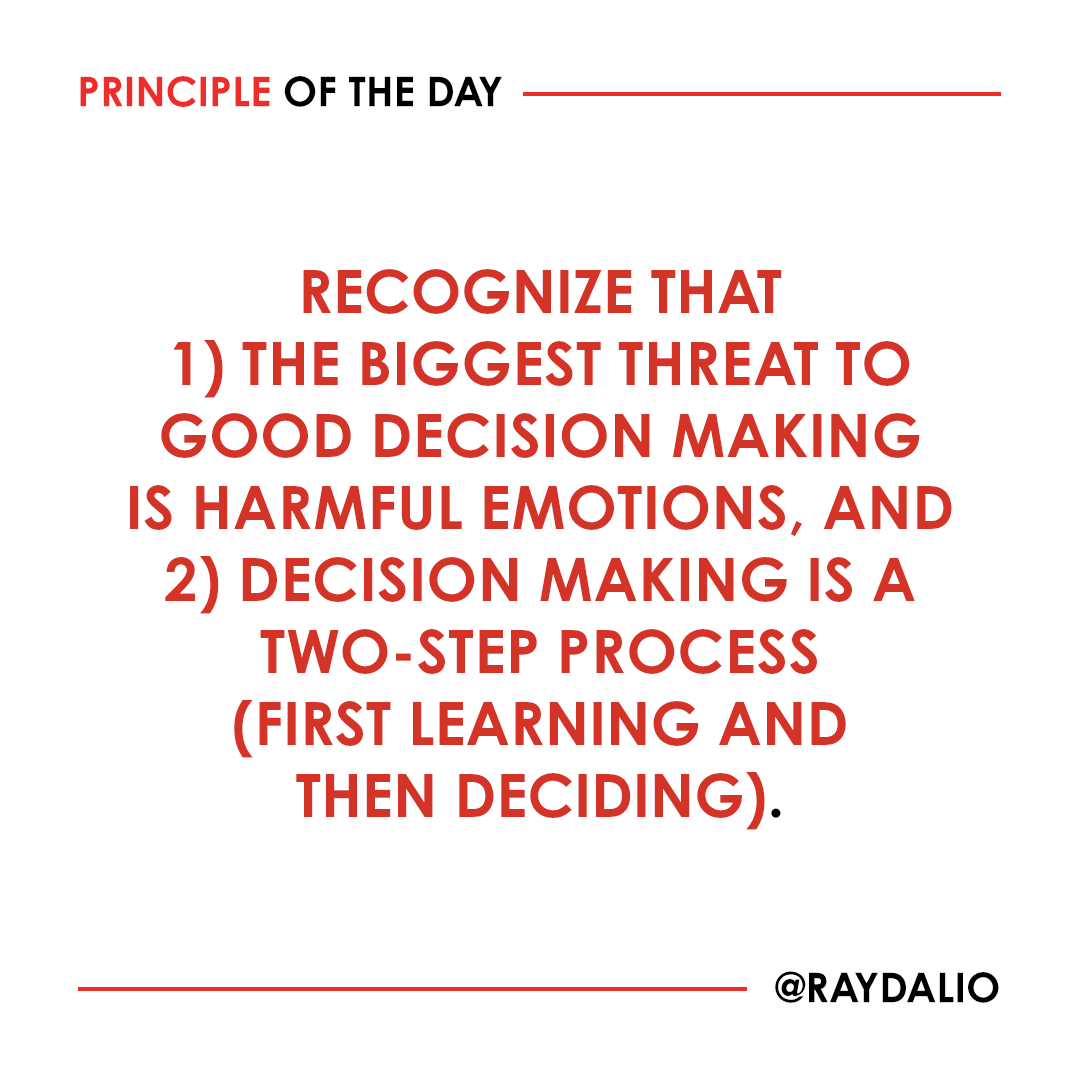
Learning must come before deciding. As explained in Chapter One, your brain stores different types of learning in your subconscious, your rote memory bank, and your habits. But no matter how you acquire your knowledge or where you store it, what’s most important is that what you know paints a true and rich picture of the realities that will affect your decision. That’s why it always pays to be radically openminded and seek out believable others as you do your learning. Many people have emotional trouble doing this and block the learning that could help them make better decisions. Remind yourself that it’s never harmful to at least hear an opposing point of view.
Deciding is the process of choosing which knowledge should be drawn upon—both the facts of this particular “what is” and your broader understanding of the cause-effect machinery that underlies it—and then weighing them to determine a course of action, the “what to do about it.” This involves playing different scenarios through time to visualize how to get an outcome consistent with what you want. To do this well, you need to weigh first-order consequences against second- and third-order consequences, and base your decisions not just on near-term results but on results over time.
Failing to consider second- and third-order consequences is the cause of a lot of painfully bad decisions, and it is especially deadly when the first inferior option confirms your own biases. Never seize on the first available option, no matter how good it seems, before you’ve asked questions and explored. To prevent myself from falling into this trap, I used to literally ask myself questions: Am I learning? Have I learned enough yet that it’s time for deciding? After a while, you will just naturally and open-mindedly gather all the relevant info, but in doing so you will have avoided the first pitfall of bad decision making, which is to subconsciously make the decision first and then cherry-pick the data that supports it.
But how does one learn well? #principleoftheday
@BowTiedMara@diegoberaza That’s the dude’s fault.
Everyone knows first asado is with your neighbours. You even invite fire department boss if necessary. 😀😀😀
By default my first question to any startup is "What's your growth rate?" That's the patient's pulse. Which is why we push startups to launch. Till then you have no pulse; till then you have no idea if you're doing well or badly.
@SandyofCthulhu As Argentinian, let me give you the highest compliment an Argentinian can give you, which was a local internet meme before the word meme was coined: "Sos groso, sabelo".
Brex plans to open-source "Crab Trap": an HTTP proxy that routes all AI agent traffic through a second LLM to catch bad behavior in real time.
The agent being monitored doesn't even know it's happening.
@pedroh96 breaks it down in this clip from the @corememory podcast👇
The founder of Postman says you have to kill your existing org chart, especially if you're still operating with a pre ai hierarchy arrangement.
The modern org chart, according to @a85:
- wide span of control (even within exec team)
- work directly with ICs, not through layers
- either you're building, or you're selling
Projects are led by staff/principal engineers with high agency. They see across the board as well as deep in the stack.
Product managers are building APIs and prototyping in Claude instead of writing PRDs.
Designers are shipping PRs through Cursor directly instead of relying solely on Figma.
Everyone is building. And the management's job is to develop better judgment.
"What happens when the next version of Claude makes my product a feature?" — that's commoditization in one sentence.
Software is becoming a commodity.
The value is moving to the outcome.
Service: The new Software
Great article by @JulienBek
If AI is so intelligent, why are you the one adapting?
That's why I built Lucid Thread.
You decide what the how AI behaves, sees, remembers, and forgets.
Not the other way around.
Watch the demo and vote at: https://t.co/wRmkD2tm72
Fragments: code review isn't just catching bugs, what role for observability in agentic programming, what we lose with GPS over maps
https://t.co/f2tfkLanN4