First: US business applications are diverging. Total new filings are accelerating — but applications likely to hire employees have stalled. The gap is a signal of solopreneurs. We think in part AI tools are lowering barriers to launching a business without ever adding payroll. /2
SOARING HIGHER: Purdue Engineering is now the No. 2 ranked public engineering college in the country.
With three specialties in the Top 5 and eight in the Top 10, our 2026 research and graduate engineering performance builds on this triple crown of national distinctions:
-No. 1 producer of engineering graduates
-No. 1 engineering college for market demand
-No. 1 ranked online engineering master’s degrees in all 5 specialties ranked by @usnews
More: https://t.co/wApBDbQbCJ
#VictoryLap #VictoriesAndHeroes
#DataInsights
According to the 5-Year ACS from the @uscensusbureau, females ages 16 to 64 increased by a little more than 2.5 million between 2014 and 2024. Of these, 69.5% were in the labor force in 2014, increasing to 71.8% in 2024. In raw numbers, more than 4.2 million joined the labor force, a ratio of about 1.6. Males age 16 to 64 increased by roughly 4.3 million during this period. Of these, 78.1% were in the labor force as of 2014, increasing to 79.2% in 2024. In raw numbers, a little more than 4.5 million joined the labor force, a ratio of 1.
In other words, more females joined the labor force after controlling for their respective overall increase.
By the way, if the female labor force participation rate were the same as the male rate as of 2024, the labor force would have 7.7 million more workers.
"The OpenVault report also compared the way that homes and businesses use broadband. The analysis showed that households use 23 times more download than upload. For households, video represents 48% of all download data use. Businesses use broadband in a very different way, and businesses use 7.3 times more download than upload. Said a different way, businesses use a lot more upload, with 20% of all business usage used to connect to the cloud."
https://t.co/XZKQNR0uN2
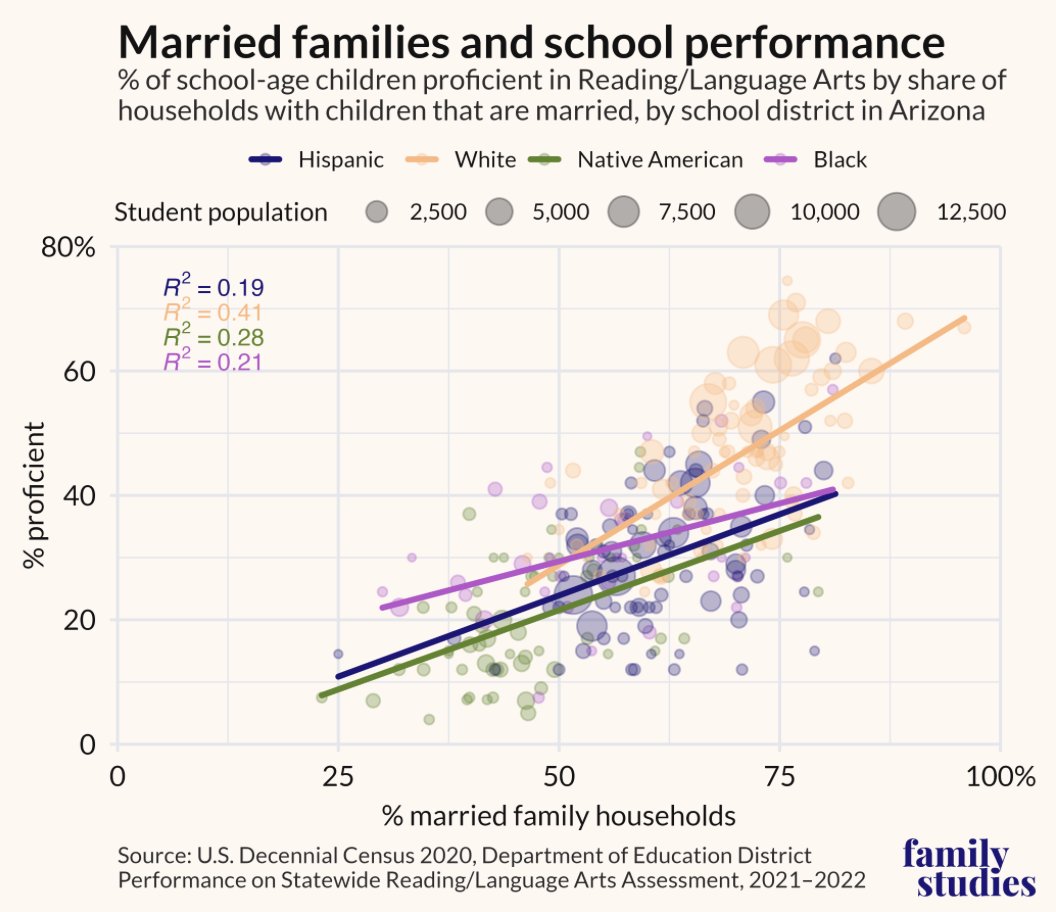
What predicts kids' reading proficiency across Arizona school districts better than race, ethnicity, or family income?
The share of married families.
A truth almost never mentioned in education circles.
New @FamStudies@azpolicy:
Public Policy 101: define a problem. #rural is almost always measured using variables developed with #urban communities in mind. This leads to distorted findings/measurements, followed by incorrect or misaligned solutions.
In addition, there is no parity between #rural and #urban when it comes to many things. Both are running a marathon. One is running it with a backpack filled with rocks.
Consider grantmaking organizations: a report from @USDA found that "of the roughly 75,000 grantmaking organizations active in the U.S. between 2014 and 2021, just 6,300, or 8% were based in a rural community"
https://t.co/3iNOROYf5Y
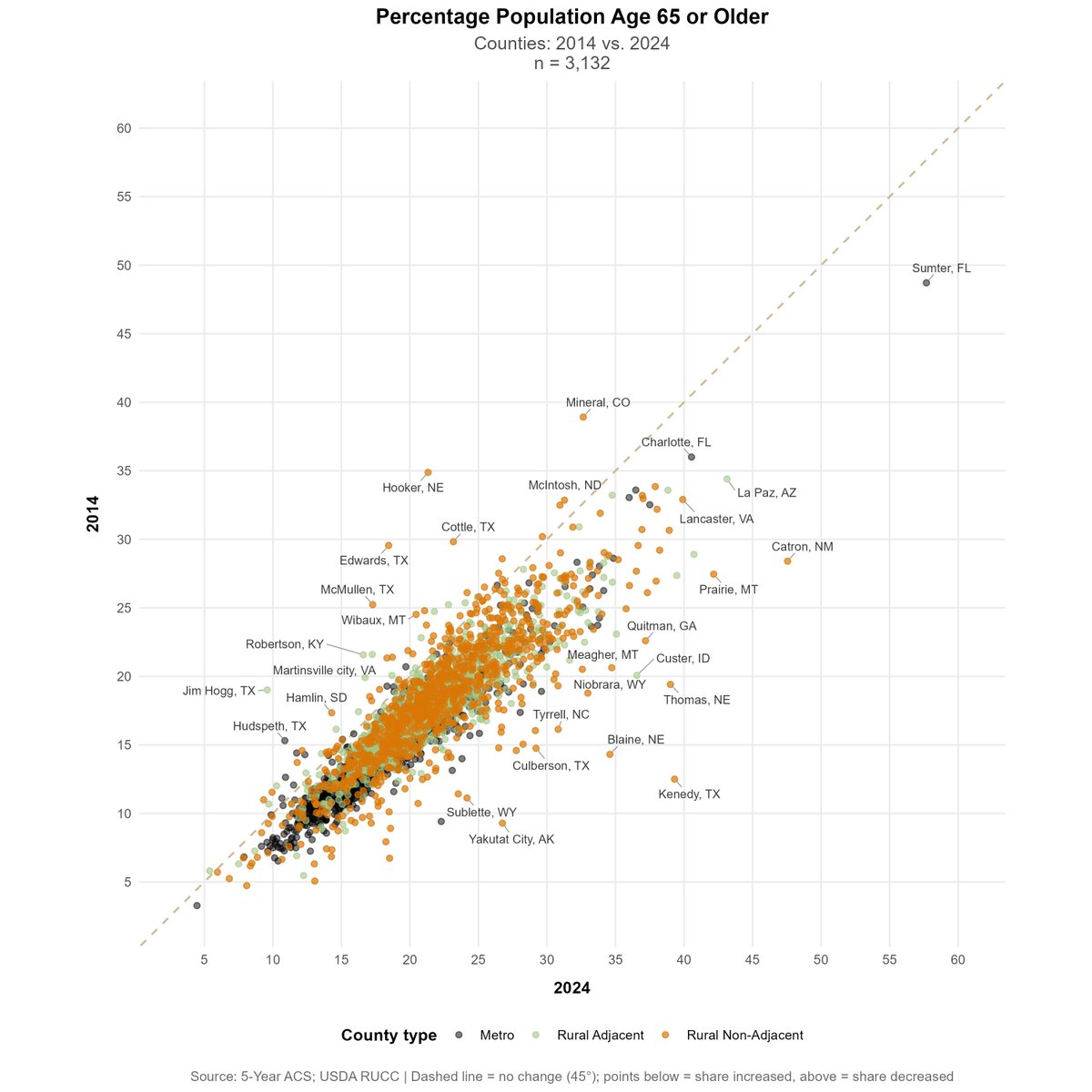
You can see this playing out in the data already. See scatter plot below: plots the 2014 (y-axis) and 2024 (x-axis) share of population age 65 or older for 3,100+ counties. Below the diagonal means the county's (dot) share increased during this time.
More than 84% of counties saw their share of population age 65 or older increase between 2014 and 2024.
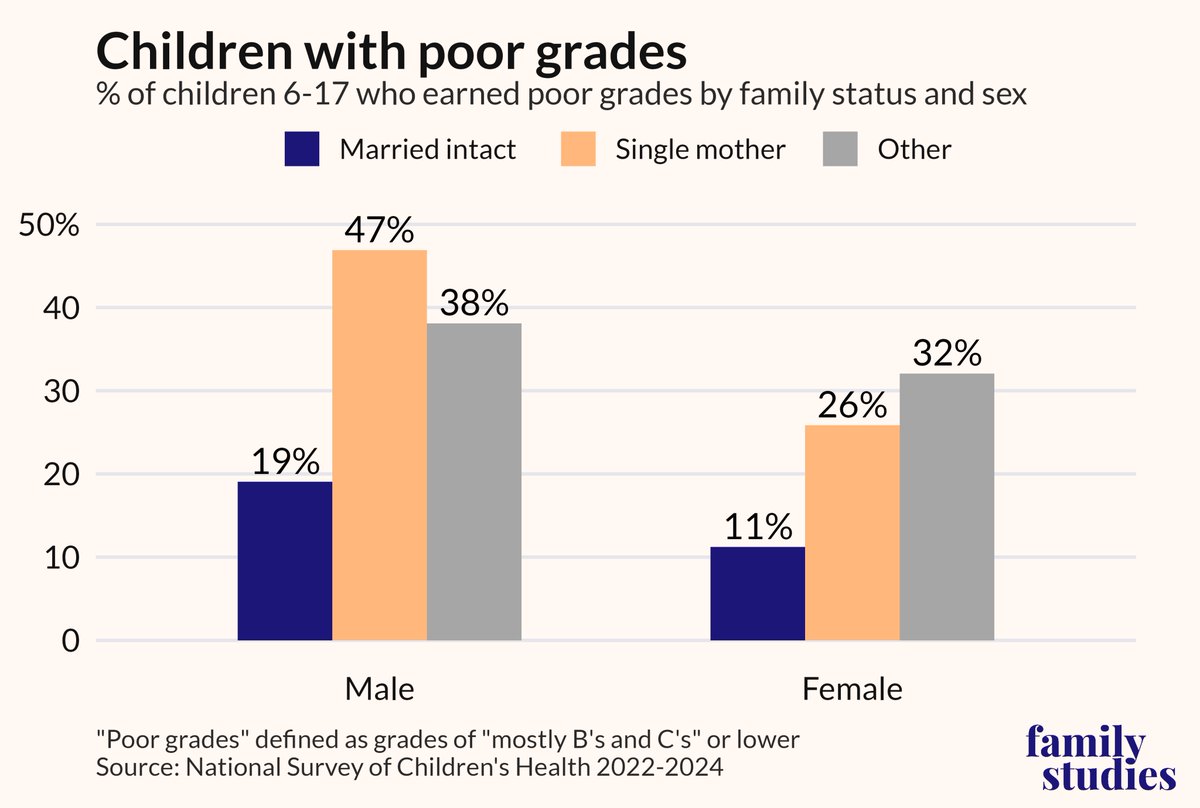
Children from non-intact families are about 91% more likely to be earning poor grades than children from intact families. This is a profound difference.
@FamStudies@BradWilcoxIFS@grantjbailey@azpolicy
Skills Clusters group occupations together based on the skills they require. Using data from O*NET, 800+ jobs are organized into 38 clusters that reflect the full range of work in the labor market!
🔗 https://t.co/GJobcLwPXw
Source: https://t.co/K5fpS8KJvz
#DataInsights#RegionalDevelopment@pcrd recently published updated clusters based on industries, knowledge-based occupations, and skills-based occupations. We crunched the industry-based clusters for our latest research & policy insights. Read more here: https://t.co/w0ZE3J8VHs
Below is the bubble chart for the agribusiness and food processing industry cluster across all 15 #Indiana regions. A couple of regions became more specialized both in 2014-2019 and again in 2019-2024.
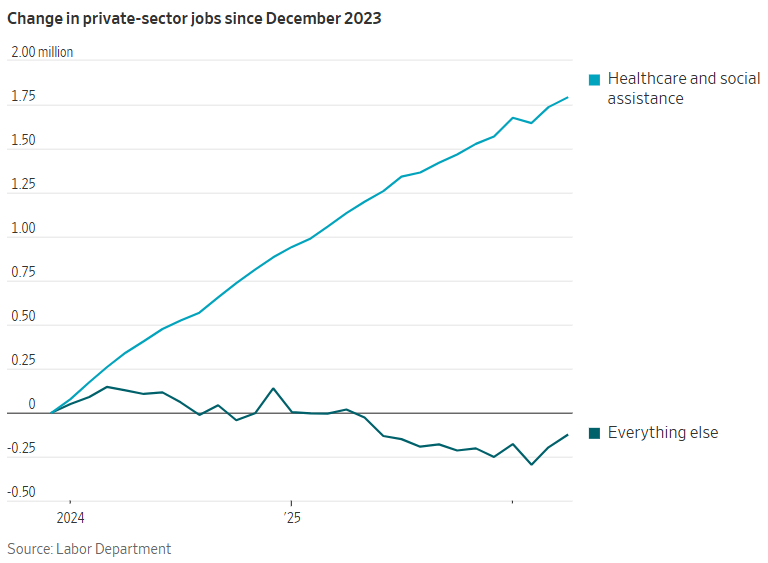
Insane stat: Healthcare and Social Assistance have added nearly 1.8 million private-sector jobs in the US since the end of 2023 while all of other industries combined have lost 127,800 jobs.
73.6% of women ages 20-64 with children under the age of 18 were employed in 2024.
Here's to all the moms out there! ⭐🌷
Learn more about moms: https://t.co/6BDpRsbLEy
#MothersDay#StatsInSchools#ACSdata
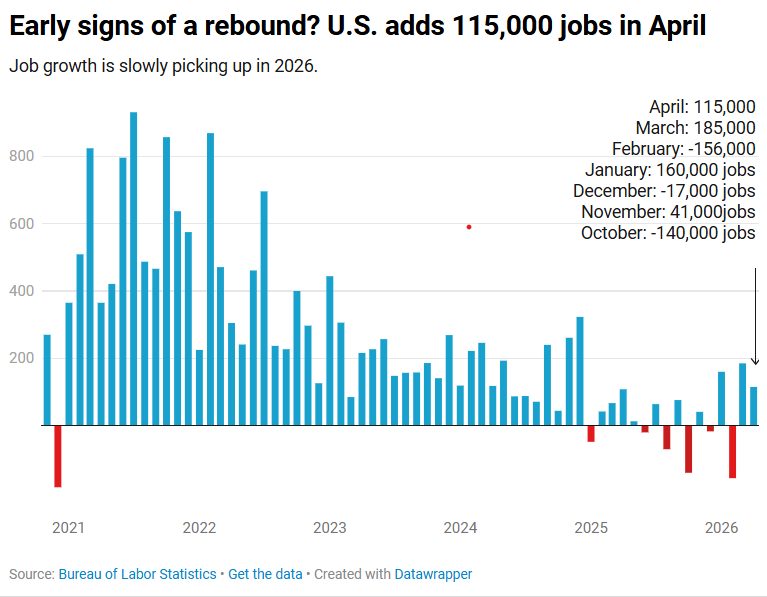
JUST IN: Good news. The US economy added a strong 115,000 jobs in April (and March was revised higher to 185,000!) The unemployment rate stayed at 4.3%. Hiring was strong in healthcare (about 1/3 of job gains in April), retail and transportation/warehouse.
The bad news = Inflation is about to eat up wage gains.
Wage growth: 3.6% in past year --> That’s likely to be eaten up by April inflation of ~4%
#jobs
"Labor Department data from March showed that 1 in 3 men [age 16 or older] across the United States are not working or looking for a job."
https://t.co/5JzCZaPDhr
According to Karin Kimbrough, Chief Economist @indeed, in April, overall hiring in the U.S. slowed for a fourth consecutive month. Hiring is down 8.5% year-over-year, and 27% below pre‑pandemic levels.
Via @LinkedIn
#DataInsights#RegionalDevelopment
The scatter plot below shows all 92 #Indiana counties by type (metro, rural adjacent, rural non-adjacent) and their share of population age 65 or older in 2014 (y-axis) and 2024 (x-axis). A county below the diagonal means its share increased during this period.
The share of the population age 65 or older increased across *ALL* Indiana counties.