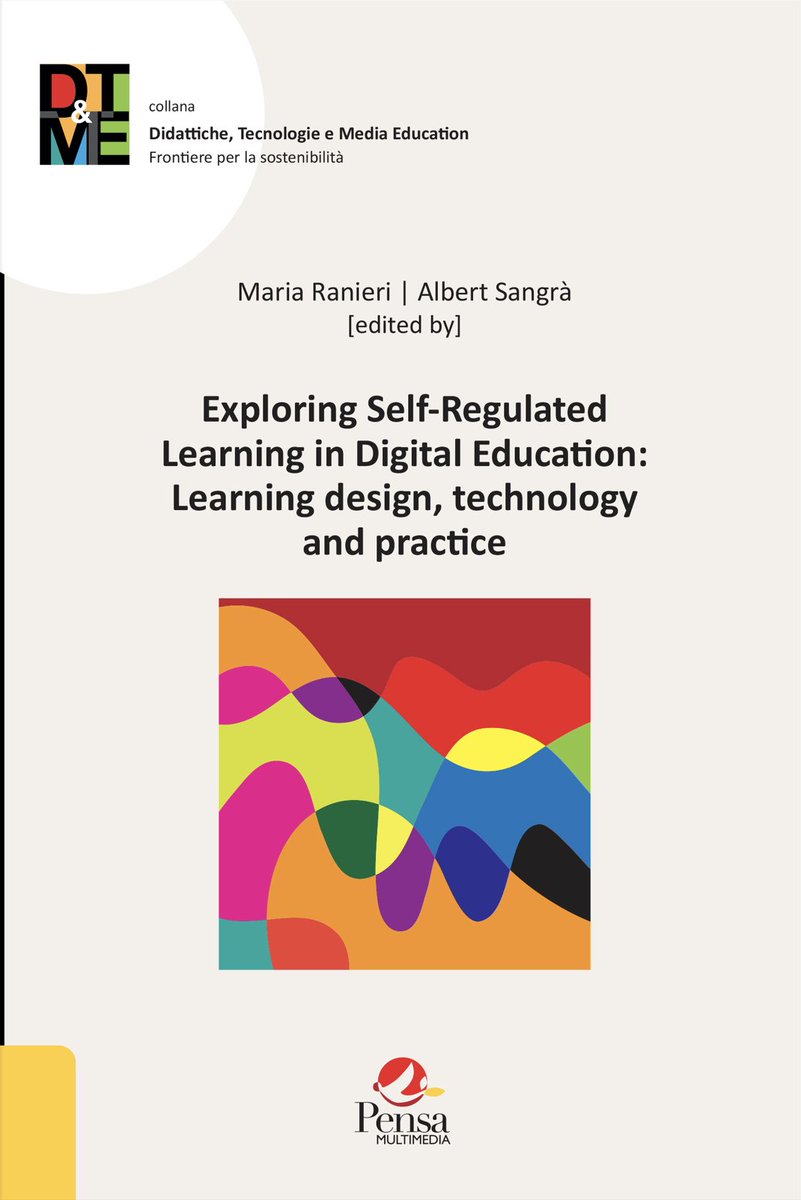
🆕 "Exploring Self-Regulated Learning in #DigitalEducation: Learning Design, Technology and Practice"
👥 Edited By @emmeran (University of Florence) and @albert_sangra (#Edulab, @UOCpsicoedu)
👉 #SuperRed Project: https://t.co/vQvwRDM7Gg
📖 Full Book: https://t.co/d1lNO4XISs
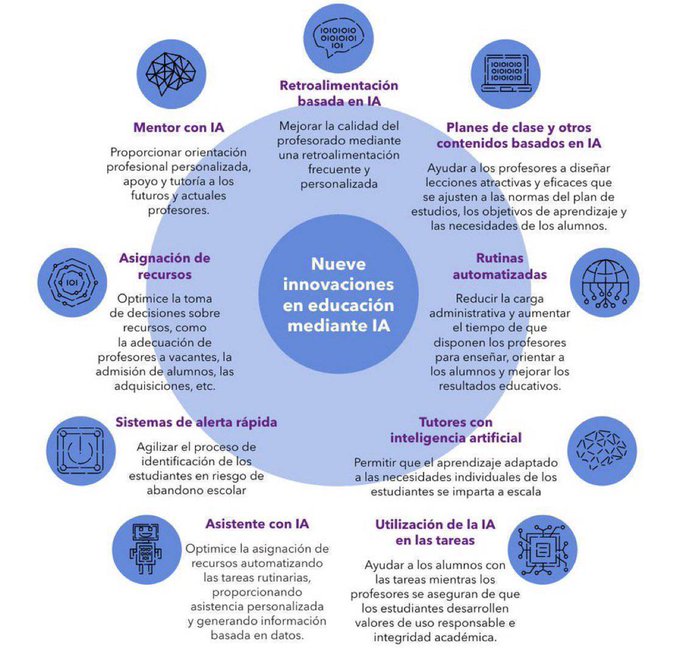
La #InteligenciaArtificial está redefiniendo el panorama educativo. Al optimizar tareas administrativas, personalizar el aprendizaje y mejorar la retroalimentación, la IA permite a los docentes centrarse en lo que realmente importa: inspirar a sus estudiantes. Compartimos esta #infografía de última publicación del Banco Mundial https://t.co/xXvfNp6vT0
#IA #educación
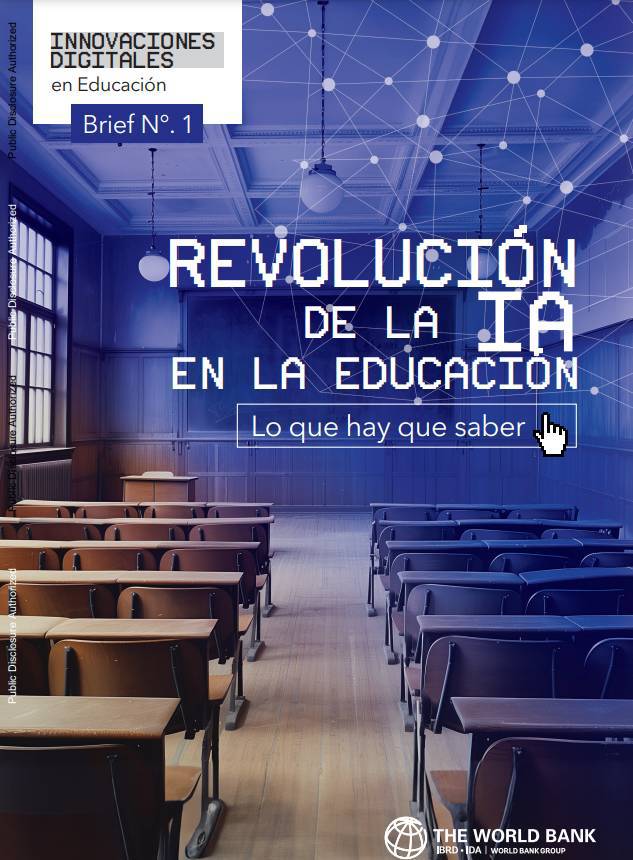
Informe: La Revolución de la Inteligencia Artificial en la Educación: Lo que Hay que Saber Banco Mundial
El éxito o fracaso de uso dependerá de la manera en la que se implemente
https://t.co/nRcElfL9FZ
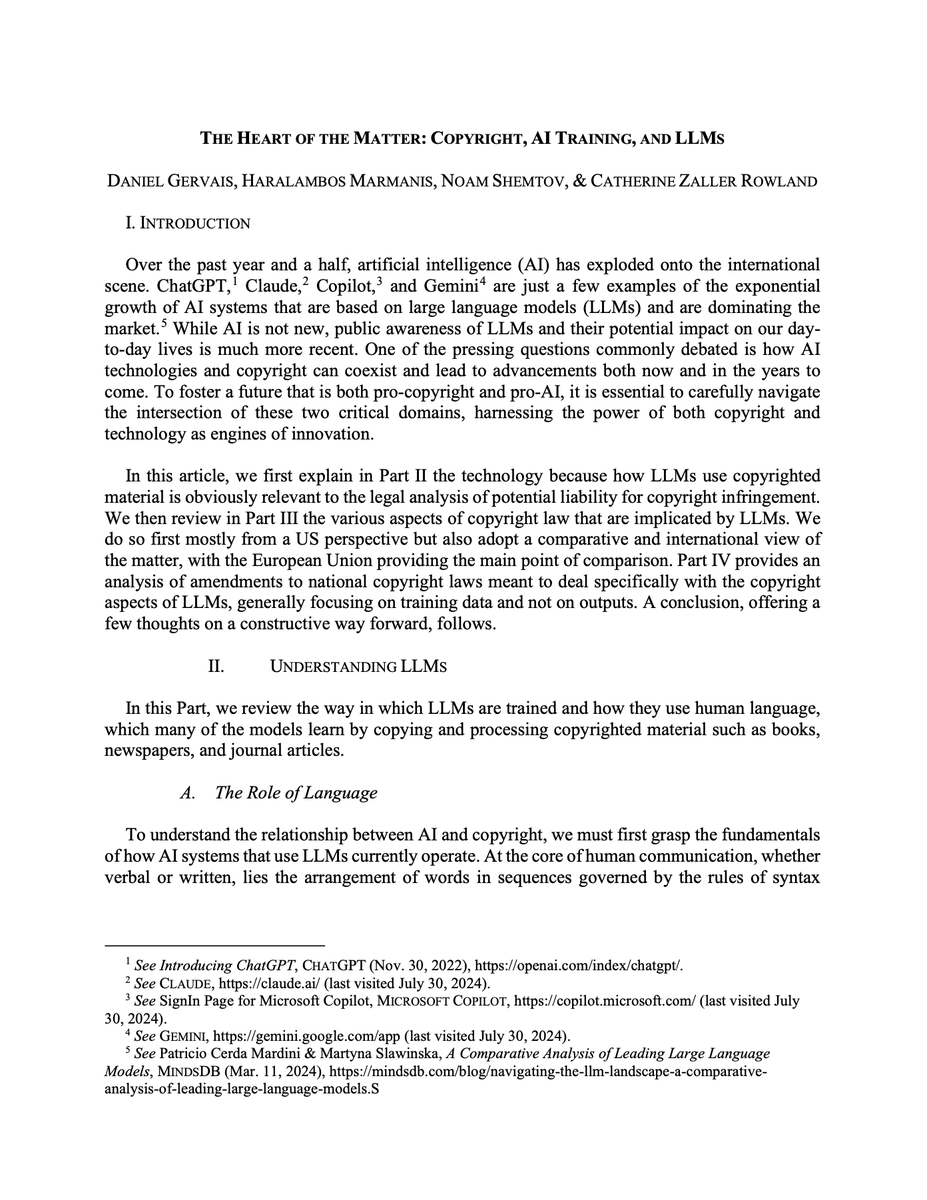
🚨 If you're interested in AI COPYRIGHT, the paper "The Heart of the Matter: Copyright, AI Training, and LLMs" by @DanielGervaisIP, Noam Shemtov, @marmanis & Catherine Zaller Rowland is a must-read. Here's why:
╰┈➤ Since the recent Generative AI boom started in November 2022, with the launch of ChatGPT, the AI copyright lawsuits have been piling up, and various academic papers covering LLM-related copyright infringement have been published, discussing, e.g., if "fair use" can be applicable or who can be covered by Article 3 of the EU copyright directive (I have been covering both the lawsuits and the articles in my weekly AI governance newsletter - make sure to subscribe).
╰┈➤ We are almost two years into the Generative AI wave, and we still do not have a final legal answer for the AI copyright conundrum. As the public debate proceeds (and the pressure from all the AI hype increases), I have recently read opposing arguments coming from the fields of copyright law and data protection law, stating that because there is no "copy" (copyright) or "storage" (data protection) in the traditional sense of these legal terms, the law would not cover the backstage processing that happens during LLM training and fine-tuning. According to these approaches, which support some version of 'Generative AI exceptionalism,' copyright and data protection infringement claims would not make sense in the context of LLMs because "it's different."
╰┈➤ This paper covers the copyright side of the debate and refutes Gen AI exceptionalism. It brings us back to the legal grounds and is ESPECIALLY GOOD at breaking down the technical part of how LLMs work, and how they infringe copyright law during input and output, and when they remove rights management information. If you're interested in AI and copyright, you can't miss it.
╰┈➤ I'll finish with a quote from the paper:
"Now the most profound technological change in history is upon us. A technology that can produce commercially competitive content that is likely to displace some human-created works. It can do this because it has absorbed the works of human authors. The stakes could not be higher."
╰┈➤ Read the full paper below.
🏛️ STAY INFORMED: If you're interested in the AI copyright debate, I recommend you join 37,700+ people who subscribe to my AI governance newsletter, where I discuss the latest developments in AI policy, compliance & regulation, including AI copyright lawsuits and papers. If you have friends in this field, tell them to subscribe! (link below).
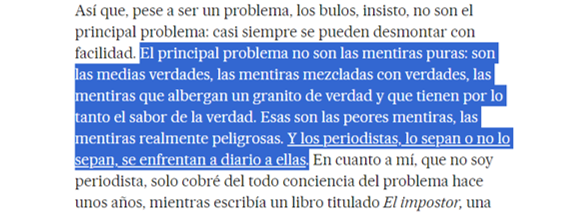
Javier Cercas dijo esto anoche ante una nutrida representación de personalidades, muchos de ellos políticos. No estuve en el acto, así que no sé si estos últimos le aplaudieron. Supongo que sí. Yo sí le aplaudo hoy y no por cortesía.
https://t.co/SIqlcQflgU
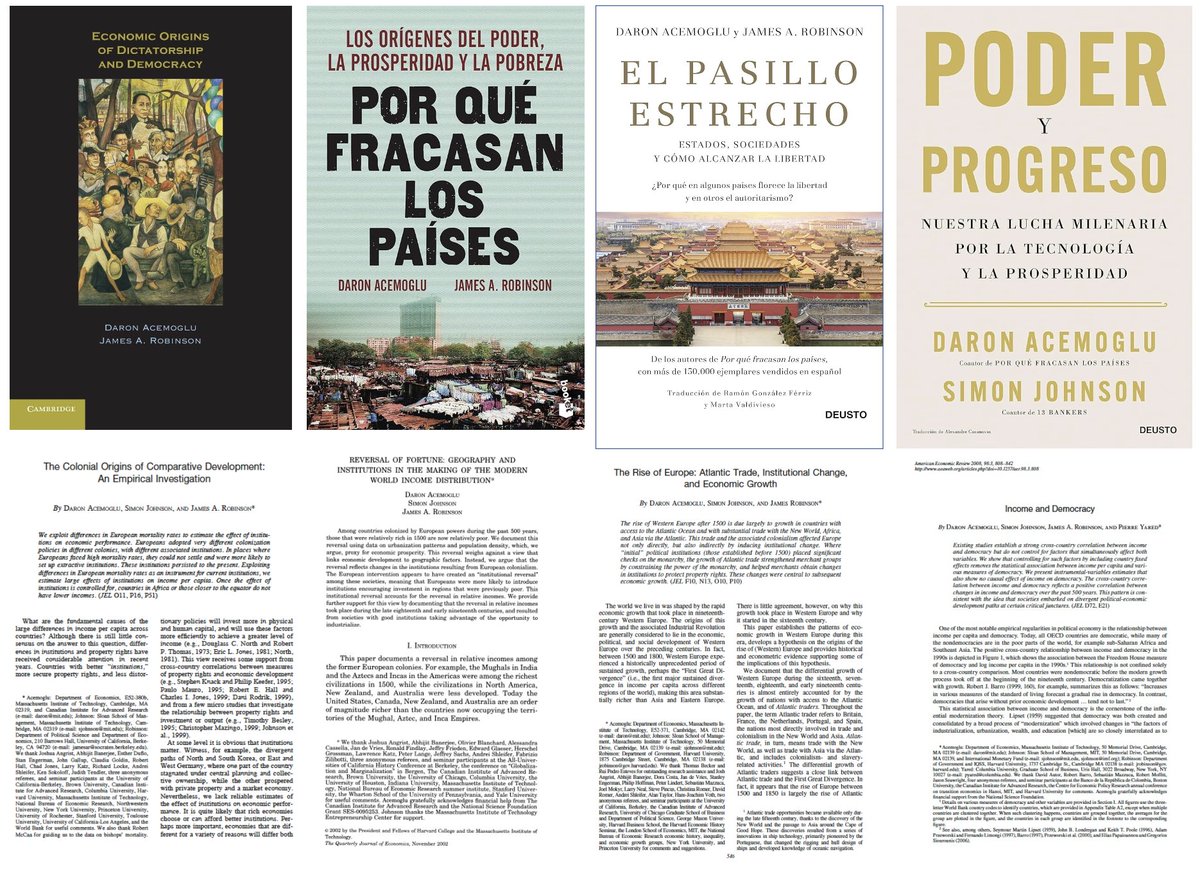
Los cuatro libros por los que Acemoglu, Johnson y Robinson - que recibieron hoy el Premio Nobel de Economía - son conocidos en la amplia comunidad de científicos sociales y más allá, junto con cuatro de sus influyentes artículos.
🧵con enlaces a los 4 artículos
From the #MergeTeam, we want to thank everyone, sponsors, speakers, partners, and the 2500+ attendees who trusted us and helped make this incredible edition at Palacio de Cibeles possible. We created something truly spectacular, and we can’t wait to return to our home in Madrid in 2025.
It’s been an intense three days, filled with valuable knowledge and meaningful connections, enjoying inspiring content from top experts in an amazing atmosphere.
Today we share a glimpse of what’s to come. In the next few days, we’ll be sharing more because “happiness is shared or it’s lost.” See you in 2025 - March in Buenos Aires 🇦🇷 and October in Madrid 🇪🇸
#Merge2025 #ThankYou #KnowledgeAndConnections
Buena parte de las mesas de la primera jornada profesional de LIBER ha estado centrada en analizar los efectos que la Inteligencia Artificial puede tener en el sector del libro: La IA como reto y oportunidad para el sector editorial. https://t.co/A7iZxQWDqy
Jornadas Profesionales-FeriaLIBER Barcelona 2024: Las redes han activado los fondos editoriales, no solo las novedades. Un cambio de paradigma en la promoción del libro y la lectura favoreciendo el conocimiento de los catálogos y ampliando la llegada de títulos a nuevos lectores.
🛜 Las redes sociales han activado los fondos editoriales y no solo las novedades. Dicho en el @FeriaLiber 📻 Magnífica noticia para las editoriales de las universidades y centros de investigación. https://t.co/kmjIf2pXfU
Agustín Paz, responsable de redes en Penguin Random House: 76% son mujeres, FB es la mas usada entre usuarios de 45 a 60 años, Instagram y X de 25 a 44 años (X: es mayor el porcentaje de hombres). Tik Tok, entre 14 y 24 años, es la mayor comunidad de lectores (fenómeno booktok).