Kwame Nkrumah was not overthrown by accident. He was removed by a conspiracy that included the United States government.
On February 24, 1966, while Nkrumah was on a peace mission to Hanoi and Peking, the Ghanaian military and police seized power. The coup ended his vision of an industrialized, self-reliant Ghana and a united Africa.
For decades, the US role was suspected but unproven. Then the files started opening.
In 1978, former CIA officer John Stockwell revealed that the CIA station in Accra was "encouraged by headquarters to maintain contact with dissidents of the Ghanaian army," was given a "generous budget," and maintained "intimate contact with the plotters as a coup was hatched." The station even proposed a cover operation to storm the Chinese embassy during the coup, though Washington rejected that specific plan.
In March 2025, Ghana's President John Mahama said it plainly at the 68th Independence Day celebrations: "Declassified documents from the United States archives reveal that this was a coup inspired and engineered by the CIA. It shattered Nkrumah's vision of an industrialised and self-reliant Ghana and significantly delayed our attainment of the objectives of nationhood".
One detail complicates the story, but does not clear Washington. The high-level 303 Committee in Washington had explicitly rejected a CIA request to authorize Nkrumah's overthrow. The CIA station in Accra went ahead anyway, supporting the plotters and later receiving "full, if unofficial credit" from headquarters. The agency didn't follow the rulebook. It acted in the field and was rewarded for it.
Nkrumah wanted Ghana's wealth to serve Ghana. He wanted Africa to unite. He wanted a continent that could stand on its own. That vision was buried on February 24, 1966. The men who buried it had help.
The receipts are no longer hidden. They are in the archives, in the memoirs, and in the words of a Ghanaian president standing before his nation.
Between 1998 and 2004, Namibian-born businessman Jürgen Kögl facilitated a series of secret, high-level meetings at his Johannesburg home between ANC leadership—including Thabo Mbeki and Jacob Zuma,—and former apartheid-era South African Defence Force (SADF) generals. [1]
These clandestine discussions have resurfaced as a central focus of the TRC Cases Inquiry chaired by Sisi Khampepe, which is investigating whether the political prosecution of apartheid-era atrocities was deliberately suppressed or obstructed. [1]
The Purpose of the Meetings
According to testimonies and historical accounts, the secret interactions served several strategic and political functions at the time:
• Averting Civil Conflict: In his testimony before the inquiry, Kögl stated that the meetings provided a confidential platform to manage tensions between former military leaders and the Truth and Reconciliation Commission (TRC), aiming to avert a potential civil war and preserve national stability. [1]
• Negotiating Post-TRC Indemnity: The generals, operating via a structure called the SADF Contact Bureau, sought backdoor legislative solutions or a blanket amnesty to avoid criminal prosecutions for unprosecuted military personnel who had missed or rejected the TRC process. [1]
• The ANC's Motivations: Records indicate that the ANC government was simultaneously seeking guarantees that its own members would not face prosecution. Additionally, Jacob Zuma reportedly argued during these talks that criminal trials would be "counter-productive" to nation-building and "not in the interest of the government".
The ANC also wanted the generals to disclose old third-force arms caches in KwaZulu-Natal to prevent future political violence. [1]
Differing Perspectives and Testimony
The exact nature and outcome of these discussions remain highly contested:
• Jürgen Kögl: Positioned himself strictly as a logistical host, famously stating, “I just fed them.” He maintained that while he facilitated the dialogue, he held no personal political agenda or authority to bind either side to any agreement. [1]
• Thabo Mbeki : In an 82-page statement submitted to the TRC Cases Inquiry, Mbeki denied that an informal political agreement or "deal" was struck to block prosecutions.
He instead attributed the failure to prosecute apartheid criminals to the institutional culture of the National Prosecuting Authority (NPA) inherited from the old regime. [1]
• Other ANC Officials: Former Justice Minister Penuell Maduna testified that a February 2003 meeting with the generals ultimately failed because the military chiefs demanded blanket immunity without fulfilling the core requirement of full disclosure. [1]
🚨 The @commonwealthorg 2026-2027 Grants Call is OPEN! 🚨
Up to £60k available for civil society orgs working on:
🌍 Climate justice
❤️ Economic inclusion
🗣 Freedom of expression
Apply via @commonwealthorg — sign up for details & deadlines:
https://t.co/uz092Pug9P
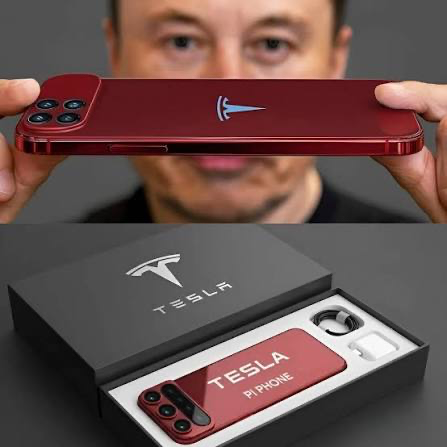
JUST RELEASED, MY ALL NEW TESLA MINI PHONE !!!
I AM GIVING AWAY 300 OF THESE NEW TESLA MINI PHONES TO WHOEVER COMMENTS THUMBS UP 👍 LIKES AND SHARES THIS POST!
No one has found this number yet 👀
DIFFICULTY LEVEL - VERY HARD No one has found the number yet
The person who finds the correct answer wins $10,000 💸
Ends in 24 hours! ⌛️
No one has found this number yet 👀
DIFFICULTY LEVEL - VERY HARD No one has found the number yet
The person who finds the correct answer wins $10,000 💸
Ends in 24 hours! ⌛️
No one has found this number yet 👀
DIFFICULTY LEVEL - VERY HARD No one has found the number yet
The person who finds the correct answer wins $10,000 💸
Ends in 24 hours! ⌛️