@FreddyLA7 You want a real old Florida experience? Do yourself a favor. Go down near Gainesville, Florida and park your car for $6 and rent a tube at the springs to float down the river. You won’t regret it
Ichetuknee Springs
12087 S.W. U.S. Highway 27
Fort White FL 32038
In 1979, a doctor gave John Beal 4 months to live. He had 3 heart attacks on top of the wounds and the nightmares he'd brought back from Vietnam.
There was a creek behind his house in South Seattle, and it was dying too.
Hamm Creek ran yellow. It was buried in pipe in places, packed with garbage, and drained its filth into the Duwamish River.
Nobody would have blamed him for doing nothing. He had almost no money, no science degree, and no authority over a creek the city had already paved over. He had every reason to sit on the porch and run out the clock.
Instead, he started pulling the trash out by hand, worked to free parts of the creek from the pipes they'd been buried in, and replanted the banks one tree at a time.
He and the volunteers who worked with him name every tree they put in, because he believed a tree with a name had a better chance.
He didn't die that summer. He kept showing up for 27 years. Today that creek runs salmon, herons, osprey, beavers, and otters through a neighborhood boxed in by factories.
John died in 2006, at 56. But the work didn't stop with him. The crews he'd pulled together kept showing up, and before he passed, his testimony helped inspire the creation of the Veterans Conservation Corps, which gives other veterans the same thing the creek gave him: a place to heal by restoring one.
Hamm Creek is now one of only two salmon-spawning creeks left on the Duwamish, and volunteers are still in it today.
The Duwamish Alive Coalition runs work parties on the creek and across the watershed every spring and fall, hauling out invasive plants and trash and putting native plants back, and they hand out a John Beal Environmental Stewardship Award every year to someone carrying it forward.
The 'crawdad' in the creek behind your house is the reason it isn't fetid, dead water, and they're racing toward extinction.
Leaves fall in the water and rot, the crayfish shreds them into the bits that feed the bugs, the bugs feed the fish, and on up the line.
One Ozark study found more than 200 kinds of fish, birds, and animals eating crayfish. It's the floor the whole thing stands on. Pull it and the floor drops. Bass, herons, otters, all of it.
The US has nearly 400 kinds of crayfish, more than anywhere on Earth. About half are circling the drain and one has already gone extinct.
The sooty crayfish lived in the creeks around San Francisco Bay and nowhere else in the world. People brought in a bigger, hungrier cousin from up north, the signal crayfish. The sooty crawfish couldn't compete, and it blinked out of existence. That same signal crayfish is now grinding down the Shasta crayfish, which is hanging on in only a single county.
And it keeps happening by accident. A fisher dumps his leftover bait in a new lake, a classroom turns the science-project crayfish loose in a creek, somebody empties an aquarium into a pond: every one of those can introduce a crayfish the local ecosystem evolved without, and sometimes that's enough to unravel species that have been there for millions of years.
The Trump admin insists they review every refugee case based on its merits, & that it has nothing to do with race.
Look at their own quota system: nearly 100% white.
So much for merit-based.
I am deeply grateful for the overwhelming support, encouragement, and kind messages I have received from people around the world. Your solidarity has reminded me that football unites us beyond borders. Thank you to everyone.
CNN's Anderson Cooper looks at how President Donald Trump and his family are promoting gold and silver coins commemorating the UFC fight set to take place at the White House.
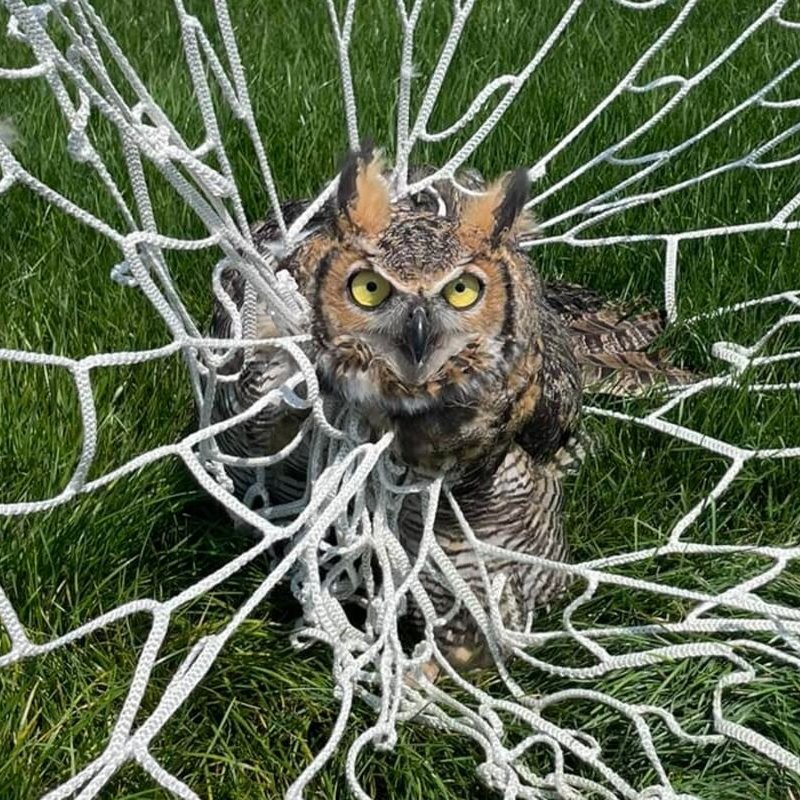
Take thirty seconds and roll up the soccer net in the backyard. It's a quiet killer.
An owl crossing the yard at night doesn't see the netting and hits it at speed. Wildlife rescues find them wrapped up like a burrito, if they're found in time at all. A groundhog turned up tangled in a backyard soccer net just last fall.
Loose garden and fruit netting does the same thing, snagging birds by the leg or wing and leaving them to starve, and groups like the RSPCA get called to it constantly.
The worst offender hides in plain sight every October: fake Halloween cobwebs. Stretched across a bush, that stringy webbing is strong enough to ensnare a screech owl, and it catches hummingbirds, bats, and birds all season.
The fixes are all easy. Roll up or take down sports nets when nobody's using them. Pull any netting you keep up drum-tight, and check it morning and night. And skip the fake cobwebs outdoors, because nothing alive benefits from them.
Loose netting is one of the few backyard hazards that kills for no reason at all. Yours can stop today.
You've seen the advice: set out a dish of sugar water to save tired bees. It came from a viral social media post attributed to David Attenborough. He never said it, and the advice is mostly wrong.
Most of the time, a bee on the ground isn't dying, it's resting, warming up, or refueling between flights. And sometimes it's simply old. A worker honeybee lives about six weeks, a male bumblebee only a couple, and a bee at the end of its life won't fly again no matter what you feed it.
The other problem: a bee that finds easy sugar water flies home and recruits the whole hive, pulling bees off the real flowers that need pollinating.
Do the thing that actually works: plant flowers, and otherwise let nature take its course.
That little papery sac in the corner of the garage is dozens to hundreds of free pest controllers waiting to hatch. Before you crush it, hear me out.
A single spider eats roughly 2,000 insects a year: flies, mosquitoes, roaches, gnats, earwigs. The eggs in that sac are the next round of that, and nature already keeps the count in check, since only a small fraction of spiderlings ever survive to adulthood. One sac is not an infestation. It's a burst of pest control about to scatter.
So if the sac is somewhere you can tolerate, leave it. If it's genuinely in the way, you still don't have to destroy it. Slide a piece of paper behind it, lift it gently, and move it to a shed, a garage corner, or a sheltered outdoor nook.
The one real caution: leave black widow and brown recluse sacs alone and call a pro if those are what you've got.
Nearly every other spider in a typical house or yard is harmless and working for you.
I'm gonna save you $40: those little plug-in gadgets that promise to drive off mice and bugs with high-pitched sound do basically nothing, and regulators have said so for decades.
The pitch is seductive: plug it in, and a sound you can't hear makes your house unbearable to pests. It just doesn't hold up.
Rodents and insects that react at all get used to the sound within days and move right back in. The waves don't pass through walls or furniture, so there's a dead zone behind every couch. Some insects, cockroaches included, may not register it at all.
This isn't a fringe take. The FTC sent warning letters to more than 60 of these manufacturers back in 2001, telling them to back up their claims with evidence, and had taken several to court before that. One later lawsuit included a photograph of mice napping contentedly on top of the device.
What works is less high tech but actually effective. Find where they're getting in and seal it, cut off the food and clutter they're living on, and use snap traps if you need them.
And skip the rat poison, which climbs the food chain into the owls and foxes that hunt rodents for free.
Back in Victorian days, it was considered quite fancy for gardeners to build something they called a stumpery.
It's a pile of dead stumps and logs, often stacked roots-up, arranged in a shady damp corner and left to rot on purpose. The Victorians built them to show off ferns, but they also turn out to be some of the best wildlife habitat you can make.
The first one went up in 1856 at Biddulph Grange in England, where a gardener took the stumps left from clearing land and stacked them ten feet high along a sunken path. The fern craze was at its peak, and the rotting wood made perfect planting pockets. King Charles has a famous modern stumpery at Highgrove built from sweet chestnut roots.
What the Victorians treated as decoration, nature treated as a feast. As the wood breaks down it feeds fungi, mosses, and beetles, including stag beetles whose grubs live in deadwood for years. Toads, salamanders, and small mammals move into the damp gaps. A single rotting log can support an astonishing variety of life.
To build one: find a shaded corner, stack stumps and logs with the roots facing up and out, leave plenty of gaps, and tuck ferns and moss around the base. Then walk away and let it rot.
You make a sculpture out of dead trees, and everything in the yard moves in.
New York City spends part of every summer renting goats to fight invasive plants.
Two dozen retired farm goats get trucked in from upstate and turned loose on a two-acre hillside too steep and tangled for human crews to work safely. They go straight for the plants nobody else wants to touch: porcelain berry, mugwort, multiflora rose, English ivy, and poison ivy, which they eat with no reaction at all.
A goat puts away about a quarter of its body weight in vegetation a day, and the herd grazes the invasives down to the root, again and again, weakening them and making them easier to control.
It isn't a gimmick. Goats reach terrain machines can't, can reduce or even eliminate the need for herbicides in some areas, their droppings fertilize as they go, and clearing the tangle is exactly what lets park staff come in behind them to plant native trees and understory that hold the slope.
Cities from California to the Carolinas now rent goats to clear brush and cut wildfire fuel.
A poisoned rat doesn't die fast. It goes slowly and painfully.
It clumsily wanders out in the open for a day or two, which makes it the easiest meal around for the owl, the hawk, the fox, or the snake that was already hunting your rodents for free.
They eat the dying rat and swallow the poison with it. Then it builds up in them.
The numbers are grim. At one Massachusetts wildlife clinic, 100% of the red-tailed hawks tested carried anticoagulant rat poison in their bodies.
In California, testing found it in 69% of endangered San Joaquin kit foxes. These second-generation poisons linger in tissue and pass from one animal to the next, killing by slow internal bleeding.
So you poison the rats, and you poison the exact predators that keep rats in check. The yard ends up with more rodents, not fewer.
Skip the bait. Seal the gaps where they get in, cut off their food, and use snap traps if you need them, indoors and away from kids and pets.
Then let the hawks and foxes handle the rest.
A black rat snake can eat dozens of rodents in a year and make you less likely to be bitten by a tick.
The mice and rats a snake hunts are the same rodents that carry the ticks that spread Lyme disease. Fewer rodents, fewer infected ticks.
A University of Maryland analysis estimated that a single timber rattlesnake, just by eating small mammals, removes somewhere between 2,500 and 4,500 ticks from the landscape a year.
Garter snakes pull their weight too, working through slugs, grasshoppers, and beetles in the garden.
So when you find a snake in the yard, the move is to let it be.
And whatever you do, skip the rat poison, because a poisoned rat gets eaten by the snake, the owl, the hawk, or the fox that would have kept those rodents in check for free, and the poison kills them right along with it.
Beavers aren't just dam builders. They're some of the best wildfire mitigation specialists in the forest.
When a beaver dams a stream, it spreads the water out across the land in a web of ponds and channels, soaking the ground and keeping a wide band of vegetation green even through drought.
In 2020, ecohydrologist Emily Fairfax mapped beaver wetlands inside major wildfires across the western US and found something striking: the beaver-dammed stretches stayed green while everything around them burned. Wet ground doesn't catch. The fire often burns less intensely in these wet corridors, and in some cases the wetlands can slow or redirect its spread.
This used to be everywhere. Before European colonization, North America likely supported tens to hundreds of millions of beavers. We trapped them down to almost nothing for their pelts, and the wetlands they maintained drained and dried out.
But some states are hiring them back. California built a Beaver Restoration Program to return them to their old range specifically as cheap, self-repairing defense against drought and fire.
They're remarkably cost-effective. Once established in suitable habitat, they maintain and expand many of their own wetlands without the constant maintenance that engineered projects require.
The firefly blinking over your yard tonight has maybe 2 weeks left to live. It spent the last year or 2 as a fierce little predator underground.
Fireflies are beetles, and the glow you know is its final act. Before it, the larva lived down in the soil and leaf litter, hunting slugs, snails, and earthworms, injecting them with a paralyzing toxin and slurping them out.
Most adults don't even eat. Their whole remaining job is to flash.
And that flash is a language. Each species has its own pattern, a coded signal between males and females trying to find each other.
Which is exactly why your porch light is a problem. Artificial light at night washes the flashes out, and a firefly that can't be seen can't find a mate. The Xerces Society lists light pollution, along with pesticides and lost habitat, as a leading reason firefly numbers are dropping, with several species now considered at risk.
Helping them is mostly about doing less. Cut the outdoor lights on summer nights, or put them on a motion sensor. Leave a corner of leaf litter and longer grass damp and undisturbed for the larvae. Skip the lawn chemicals that poison the soil they grow up in.
A dark, slightly messy yard is the only place the light show still happens.