The @cziscience team is excited to launch our new Gene Expression feature on #CZCellxGene! It helps researchers identify marker genes using RNA expression data across 31M+ cells:
https://t.co/uqiBSccmiP
Tips for designing figures for your manuscript! #sciart
1) Keep it simple: The figure should clearly and concisely convey the information you are trying to present. Avoid clutter and unnecessary detail that can distract from the main message.
2) Use appropriate software: Choose software that is suitable for your type of figure. For example, use vector graphics software like Adobe Illustrator for creating diagrams and line drawings, and use graphing software like Excel or Origin for creating graphs.
3) Label everything: Ensure that all labels, axes, and other text are clear and easy to read. Use a font size that is appropriate for the size of the figure, and avoid using too many colors or fonts that are difficult to read.
4) Choose appropriate colors: Use colors that are easy on the eyes and that are easily distinguishable from each other. Consider color-blindness and choose colors that are accessible to all readers.
5) Use high-quality images: Use high-quality images with a high resolution. This will ensure that the details of the image are clear and crisp.
6) Get feedback: Share your figures with colleagues and ask for feedback. This can help identify potential issues or areas for improvement that you may have missed.
7) Follow journal guidelines: Follow the guidelines of the journal you are submitting to regarding figure format, size, and resolution. This will ensure that your figures are presented in the best possible way and meet the requirements of the journal.
8) Keep a record of your figures: Keep a record of all the figures you create, including any changes you make during the editing process. This will help you keep track of the different versions of your figures and ensure that you use the correct version when submitting your manuscript.
9) Be consistent: Ensure that all figures are consistent in terms of style, font, and size. This will help to create a cohesive and professional-looking manuscript.
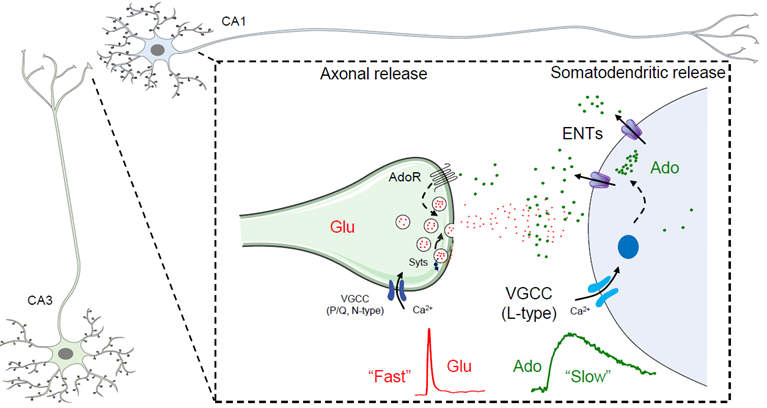
(1/5) “New techniques–New discoveries–New ideas". Happy to share our study on somatodendritic adenosine release was published on PNAS today. @ZhaofaW#Adenosine#Release
https://t.co/pJk3BfKeFP
🐁🐘🐿🔥SuperAnimals for #Pose
-No human labeling
- Video analysis on over 45 species with only 2 global classes of animal pose models
-If SA needs fine-tuning, its 10× more data efficient & 2X outperforms prior transfer learning
📝@shaokaiyeah et al https://t.co/s3RdKKvcrn
🧵⬇️
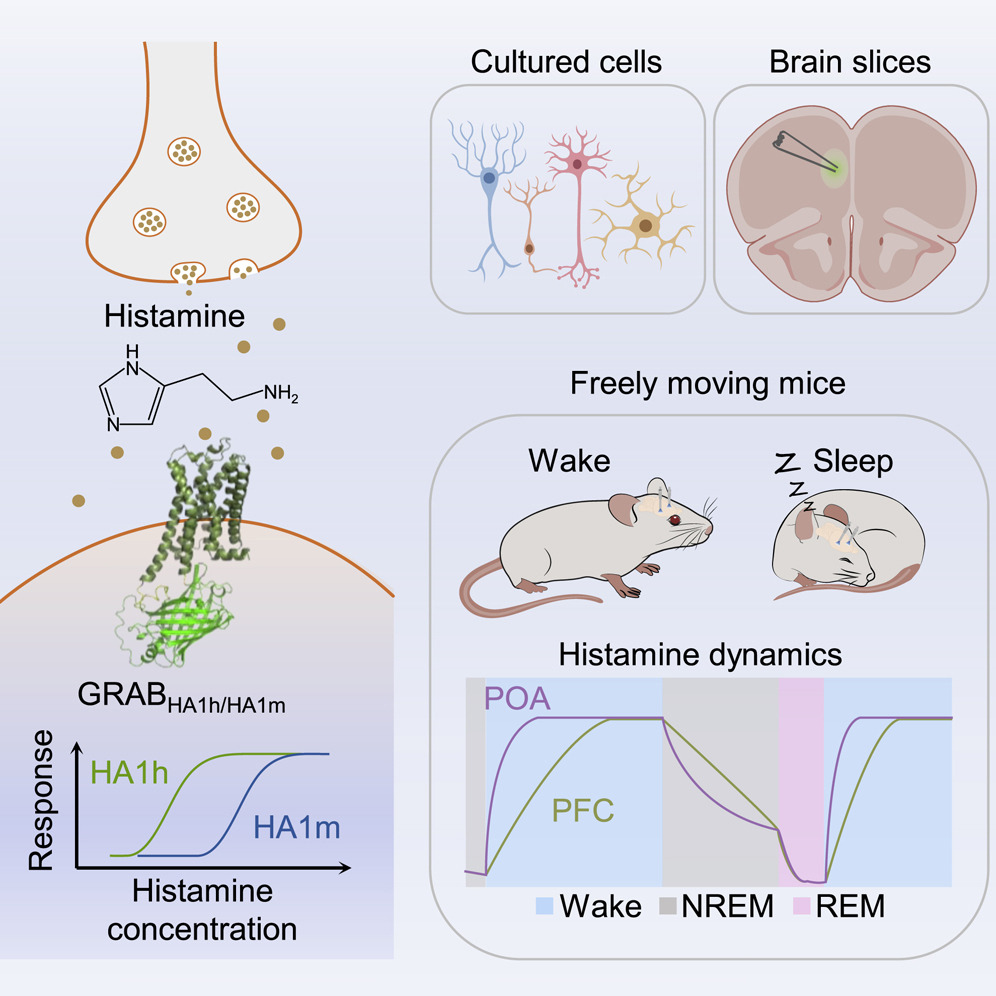
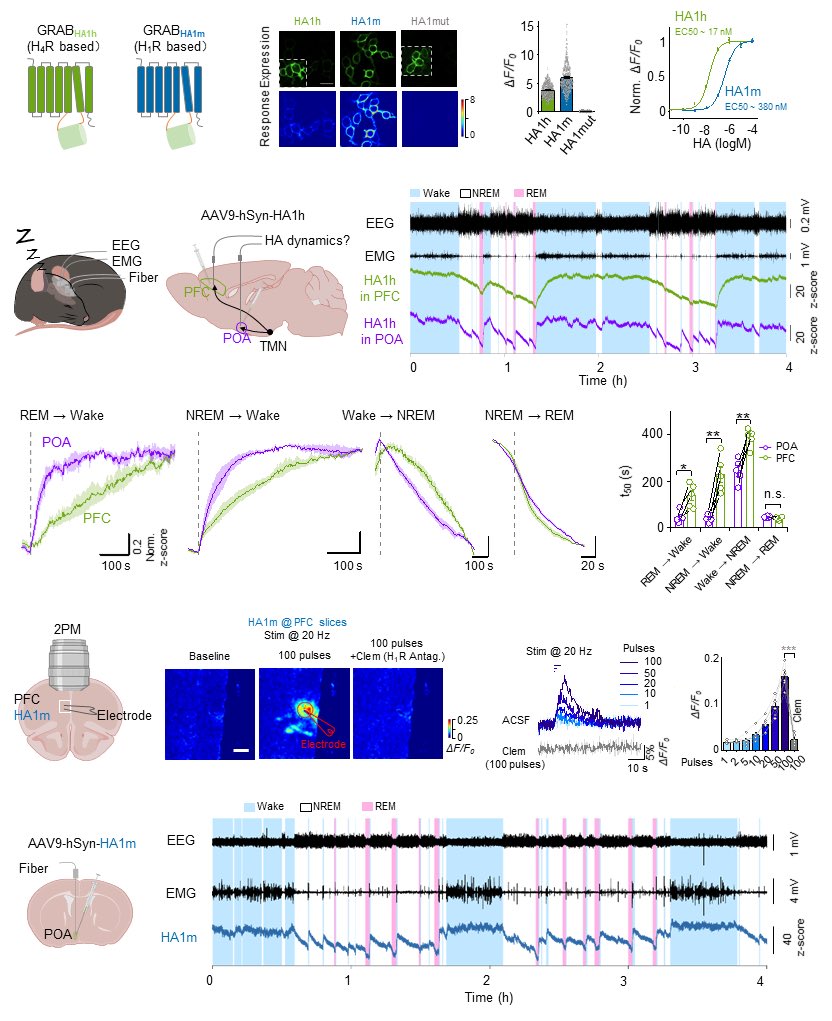
Happy to share our latest research on GRAB histamine sensors, which was published in Neuron. Using these sensors, we uncovered distinct patterns of histamine release in specific brain regions during sleep-wake cycles.
https://t.co/BZvgaKAeZv
Happy to share our oxytocin (OT) sensor published on @NatureBiotech today. GRAB-OT1.0, based on the cpGFP and bovine-derived OTR, enables the detection of OT ex vivo and in vivo with good sensitivity and spatiotemporal resolution. #GRABSensors#Oxytocin
1/3 #GRABsensors#histamine We developed a pair of genetically encoded fluorescent sensors for measuring histamine (HA) dynamics. These sensors produced robust increases in fluorescence upon HA application with tens to hundreds nanomole affinities and high specificity.
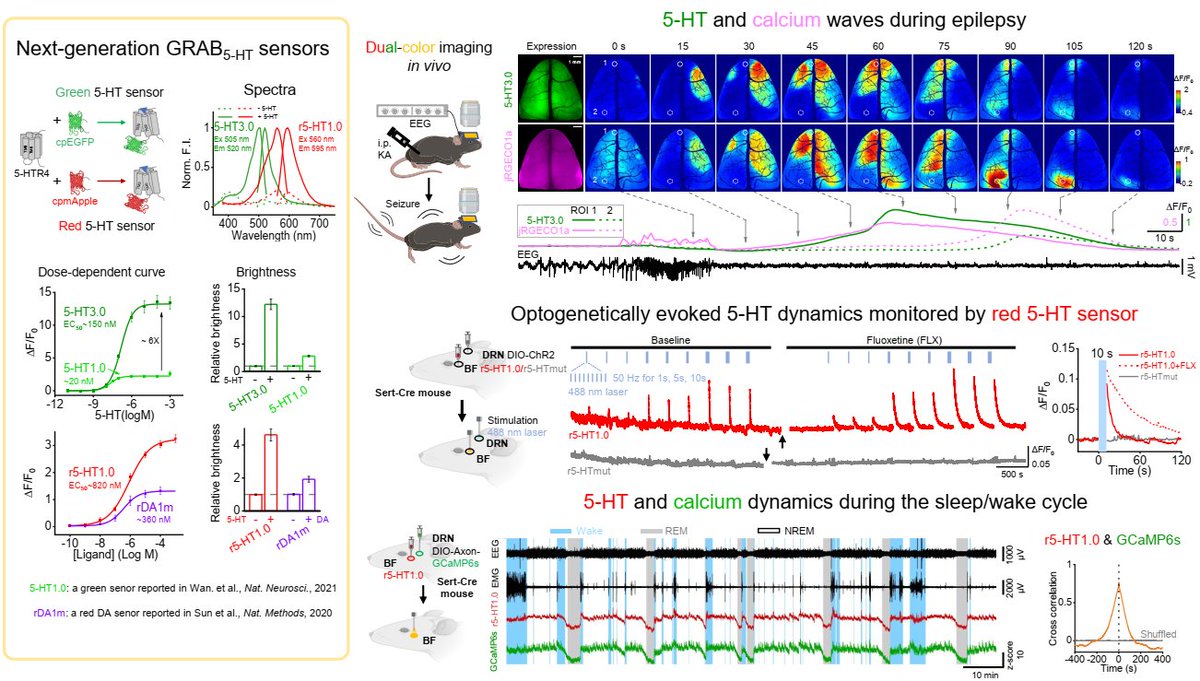
Serotonin dynamics in vivo! We now have new green and red serotonin (5-HT) GRAB sensors enabling detection of 5-HT dynamics in different brain regions and conditions, also suitable for dual-color imaging! #GRABSensors#serotonin@5HT_Society
Dopamine signals in RED! New rGRAB-DA sensors provide much higher in vivo sensitivity and SNR, and enable multiplex imaging with green sensors. #GRAB_sensors
Elon Musk is a big believer in First Principles Thinking.
Not just Musk — Jeff Bezos, Peter Thiel and Feynman too.
Here's what it is, how to use it, and become better at it:
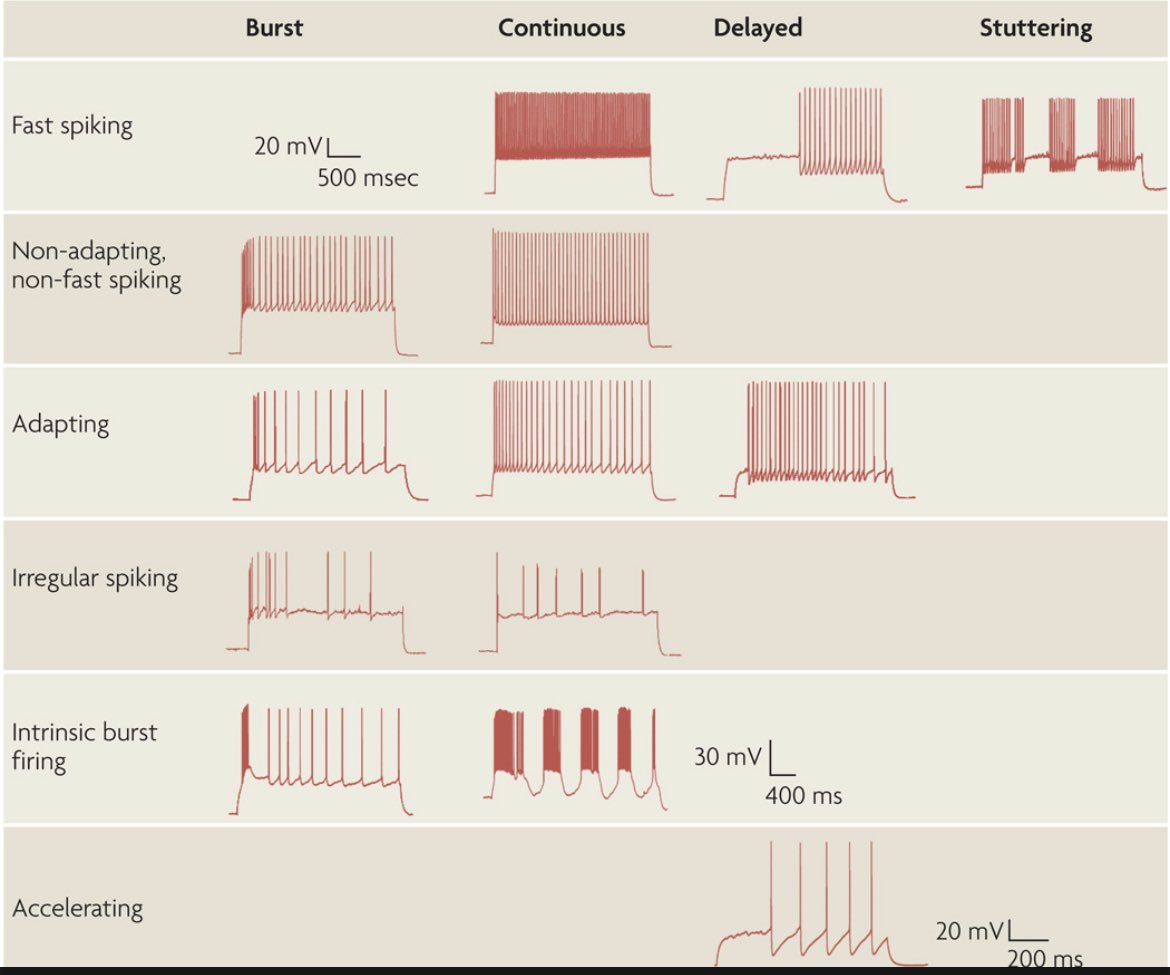
How did firing patterns develop in single neurons? Has evolution shaped the intrinsic properties of neurons according to the function the play in circuit computations? These are fundamental questions that have not been answered yet but seem approachable to current technologies.
What is your favorite example of 𝘁𝘄𝗼 𝗼𝗿 𝗺𝗼𝗿𝗲 𝗯𝗿𝗮𝗶𝗻 𝗿𝗲𝗴𝗶𝗼𝗻𝘀 computing, representing, or implementing etc something? In other words, *not* one region computing and passing a variable to another but two or more *creating* something?