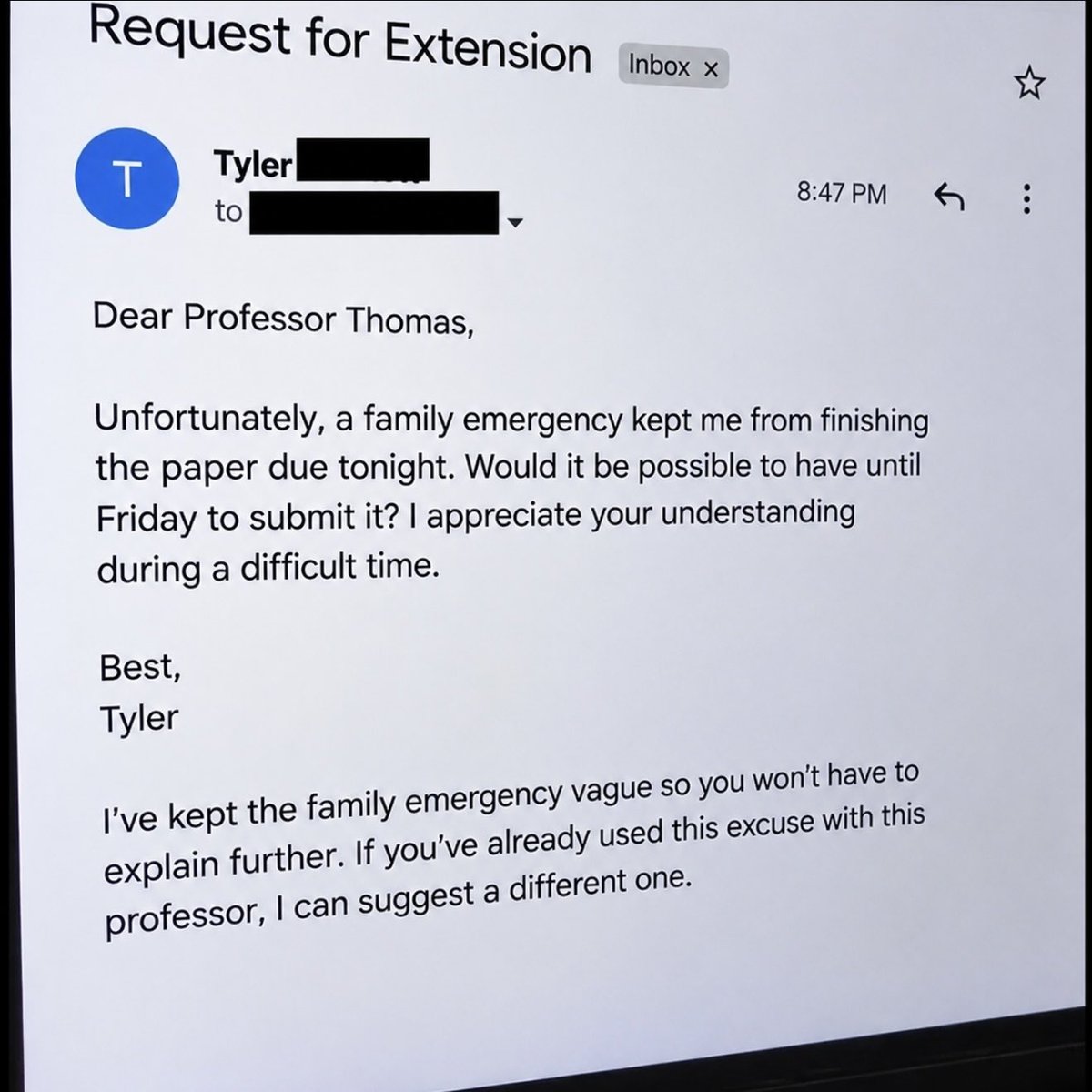
Right. That's the end. This account is shuttered. Find me at the place where the sky is blue, and insane billionaires don't try and corrupt medicine & medical research with far-right populism.
A lot has been said about this topic already, and I won’t repeat the various arguments. I’ll just add one thing. The EU obviously believes that the U.K. HE sector is an important element of trade policy and human capital formation in Europe. It’s great to be highly valued. But it reinforces that U.K. (ie including devolved) governments need to take a very close interest in the financial sustainability of a key sector for our economy.
@IGMansfield Don't be silly.
Universities are huge businesses. Suddenly giving EU students a discount without planning it would of course harm university finances, irrespective of their politics and what they thought was best for the UK.
You're comparing completely unlike things for snark.
@EdwardEGibbon It's plainly field-dependent. My math colleagues are happy with the return to paper exams. But for us - it's tragic.
You could argue "you're just not doing exams right". But in 3 unis and dozens of courses I haven't seen _one_ I'd support. The reasons are complex.
@EdwardEGibbon There is a fundamental problem. We all agree that exams can be objective. But objective doesn't mean desirable or useful. We can make the students run 100m and measure their time, too, and it would be objective.
And almost as good a measure of their success as biologists.
./
@RolandDunbrack Because the training data has both. BBC (eg @BBCPallab) constantly shows DNA wrong. @GettyImages favourite contract DNA image is backwards. Why should AI not do wrong what it's trained is correct?
@IGMansfield@EdwardEGibbon@grok The question is, therefore, why the 2026 Con party wishes to make fundamental, far-reaching changes - the opposite of 2010's - without (a) thinking them through or (b) listening to the people who warn of the problems.
You'd think humility and reflection were more appropriate?
@IGMansfield@EdwardEGibbon@grok The problem isn't changing your mind.
The problem is making fundamental, far-reaching changes without (a) thinking them through or (b) listening to the people who warn of the problems. I think we agree this happened in 2010.
@IGMansfield@EdwardEGibbon@grok Interesting point - 1st time I noticed disaster on the way was during the Blair government, when student surveys were given a pre-eminent role. Pandering became highly valued, nothing to counterbalance it towards rigour.
Like you & 2010 (perhaps) I foresaw just what has happened
@IGMansfield@EdwardEGibbon@grok But doesn't that exactly illustrate the problem? One party's big change 15 years ago is now the same party's big bugbear.
Maybe it's best to be careful about proposing big politically-fuelled changes.
@IGMansfield@EdwardEGibbon@grok Depends on who "we" is referring to. The Conservative government got exactly what they were after, and I tend to associate you with promoting Conservative governments. I know you and most Con thought now points in exactly the opposite direction.
@IGMansfield@EdwardEGibbon@grok When market reforms were introduced to UK higher education in the 2010s, what did the conservative government want? Uncapped, business-centred recruitment? Or return of polytechnics offering regulated vocational qualificationss and tight caps on 'traditional' degrees?
@lpachter@littmath Don't actually think it's malicious (usually). Any academic thinks the thing they work on is pre-eminently important, or they wouldn't work on it.
But it does make it very tricky to have a broad committee.
@lpachter@littmath Hahaha. Trying to grab the whole field is a defining problem of almost all academia.
Remember (ages ago) them trying to set up a European developmental biology society whose articles explicitly said mammalian devbio was the most important. Presumably to wrest cash from fly-lovers