It's hard to oversell how big a discovery this is.
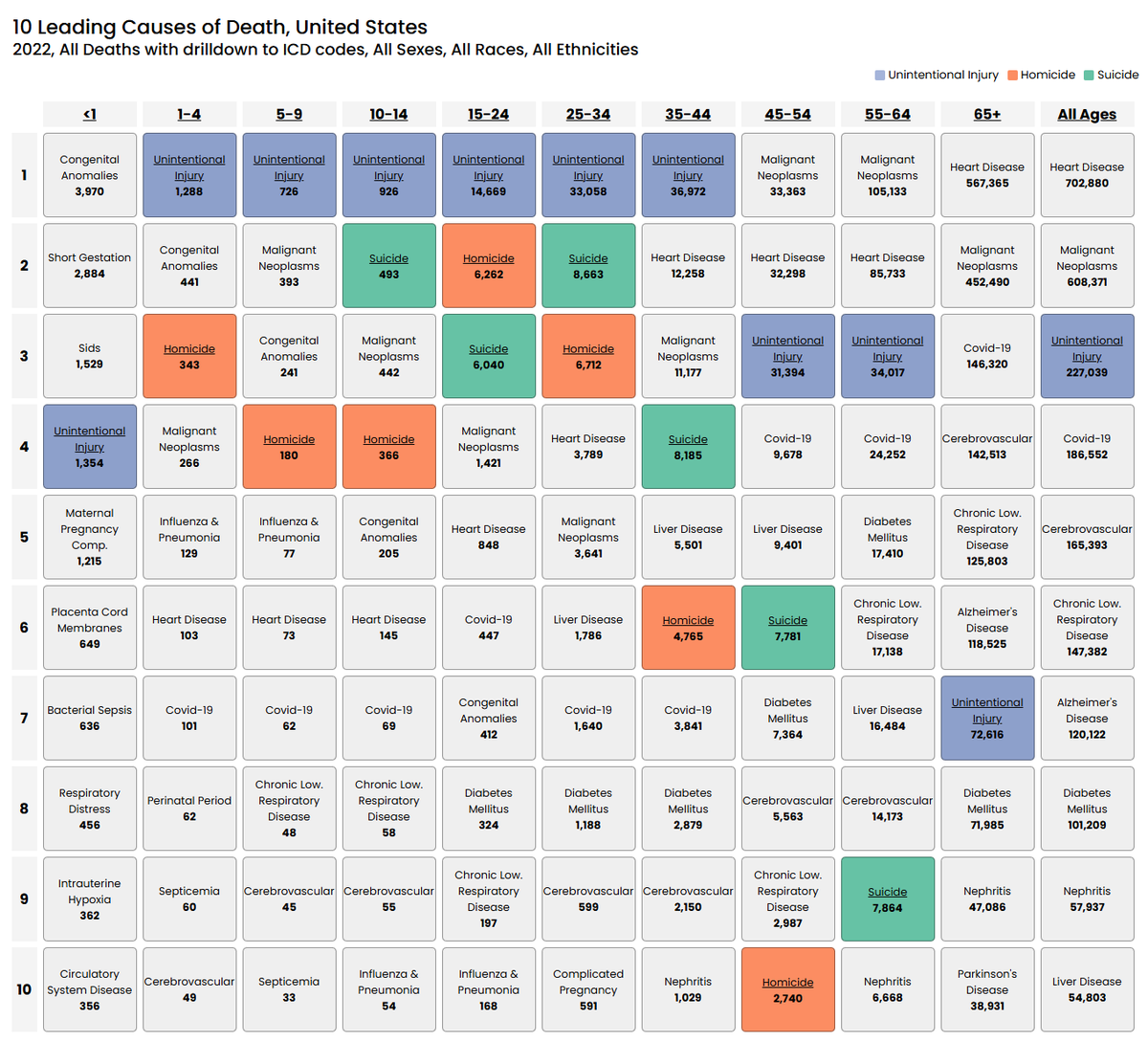
Heart disease is America's #1 cause of death. With a combination of two drugs administered once every six months, it might be mostly defeated.
Just think about that how big this is! You will know your great-grandkids!
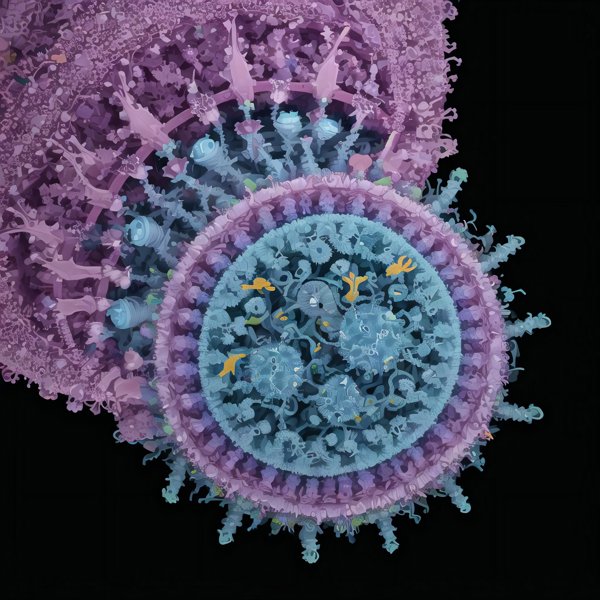
Thrilled to share our “visual-omics” models OmiCLIP and Loki are now published in Nature Methods! 🎉Huge thanks to Dr. Wang, our lab, and collaborators. We believe OmiCLIP & Loki mark a big step toward combining morphology and molecular insights for more precise disease analysis.
We are so happy to publish our new foundation model in Nature Methods. we trained OmiCLIP, a vision-omics due modalities model to bridge pathology image and transcriptomic, and Loki, a platform using OmiCLIP as backbone for ST and HE image cross analysis. https://t.co/UkHryBRFqQ
Molecular dynamics simulations in mixed reality!
With @labriataphd and @lucien_krapp we’re scaling our multi-user WebXR platform to enable immersive molecular simulations, fully based on web technologies.
Stay tuned, lots of cool stuff coming soon!
@threejs#WebXR#Quest3
Chapter 2 of branched RNA: chemically modified branched cap for multi-capped mRNA and capped circular RNA (QRNA)--the cellular translation machinery is surprisingly tolerant of unnatural structures! Beyond enhanced performance, the mechanism is intriguing: https://t.co/iGynbJb8b8
Some stunning progress in medical #AI
"The convergence of unprecedented, massive computing power and self-supervised learning of a ginormous body of human-derived data has laid the foundation for medical applications that were not previously within reach."
https://t.co/YaqKNKRzpT
Check out our Review in @TrendsCellBio!
"How it feels in a cell"
@bonucci_martina and Tong Shu led the charge.
We explore how the active, crowded intracellular environment influences biology.
Here's a link for free access until July 25!
RT plz!
https://t.co/RANtZBq7G2
@lpachter I agree that the RNA seq and ATAC seq cells do not match. They are entangled on UMAP nonetheless. Out of curiosity, regardless of computational methods, what's the expectation of multimodal data integration?
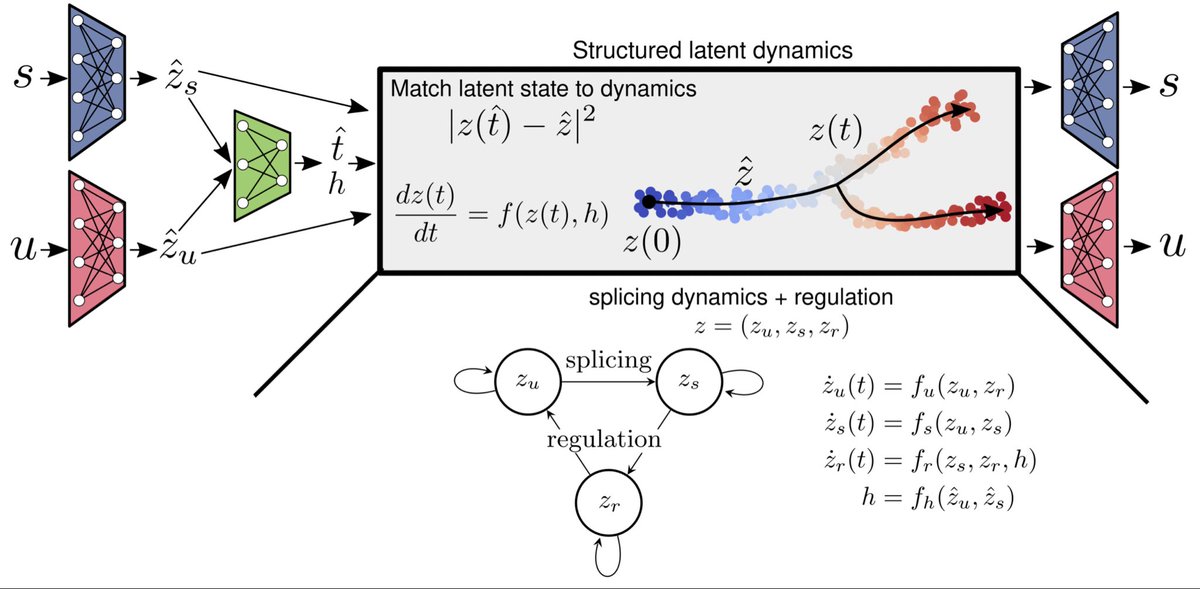
Excited and grateful to be part of this innovative work from @Guangyu_Wang01 team in Nature Biotechnology describing cellDancer, a scalable DNN that locally infers RNA-velocity from cell-specific predictions of transcription, splicing, and decay rates. https://t.co/dNAQiUe1ve
Our new study for inferring cell-dependent RNA velocity and kinetics of mRNA by deep learning is online in Nature Biotechnology. The website of cellDancer is https://t.co/chA5AqJ2KQ. Hope it can help your studies.
https://t.co/BQh4HKgB1K
Excited our work is out at Nat Biotechnol! Check out cellDancer - which enables RNA velocity estimation with cell-specific kinetics. Thanks to @robinustc, @wchen4005, Dr. Ye, @bRaNnAn_LAB, Dr. Le, Dr. Abe, @rnacorejpc, and Dr. Wang. #RNAvelocity#scRNAseq
https://t.co/O1DqSIS5Es
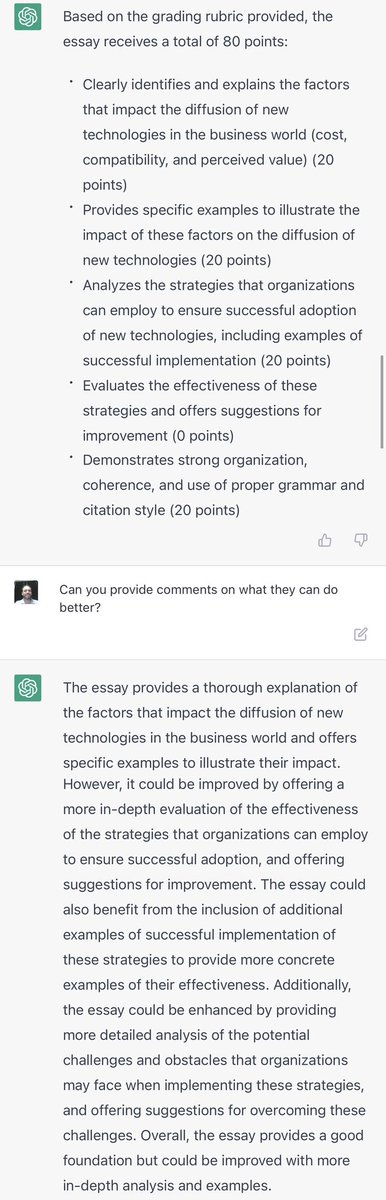
Look, if everyone is worried about students cheating on essays for AI, instructors can just cheat right back.
I asked OpenAI to give me an essay question & make a rubric for grading. I had GPT-3 actually write the essay.
I then had the OpenAI grade the essay & give comments. ✅
Does your research involve computation of the metal cations in biological molecules? Our research topic collection on Frontiers in Molecular Biosciences is now open for submissions!
Our Research Topic, "Molecular Simulations on Multivalent Metal Cations in Biomolecules" is #openforsubmissions 🚨📢
Led by:
Dr.Piotr Cieplak
Dr.Pengzhi Zhang @robinustc
Dr.Min-Yeh Tsai
📅 15th of January 2023
Learn more and submit here➡️https://t.co/NUU4T2FQfD
How “the most advanced machine learning approach” is finding new cancer-causing mutational signatures - Cancer Research UK News https://t.co/SIZjig9W8U
Do you want to get into scRNA-seq but are lost in the sea of never-ending papers?
No worries, I got you covered.
Here's a list of the best review that have help me understand the core concepts of the technique, analysis and interpretation:🧵