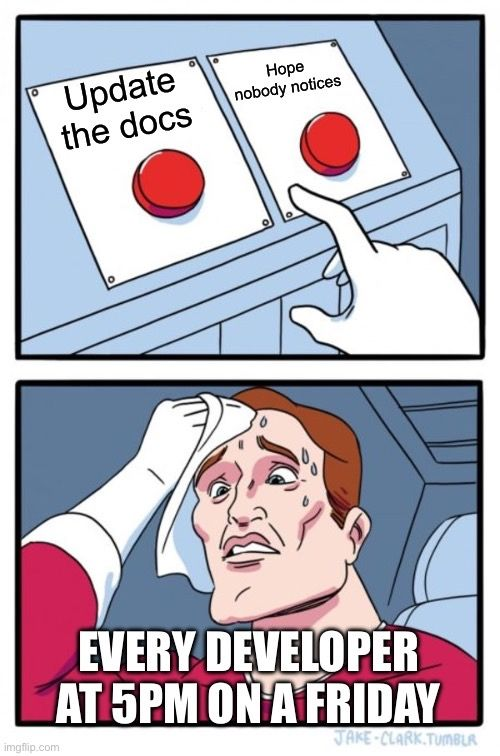
Something that no one is talking about is how all of the emerging knowledge stored in Skills or AGENTS.md or Obsidian is just different forms of documentation.
Genuine question, can someone explain to me what PG @paulg is talking about when he says do things that don’t scale? At what point does it cross into romanticizing busywork? For example - if I hand-wrap 300 gifts for our users. Is that “do things that don’t scale” or is that dumb
For @promptlessai, our doc agents have a wide range of tools, including navigating codebases, retrieving context, browsing the web, etc. There is rarely a single gold answer for “the correct” documentation update, but there are almost always better and worse trajectories.
Counter intuitively, acting (tool calls) and thinking are not automatically aligned in agentic RL. In fact, they hurt each other with conventional LLM training.
Pairwise comparisons are more generalizable than scoring. The reward model becomes a critic, not a number generator. That makes it useful for best-of-N selection, self-reflection loops, and iterative agent improvement, etc.
You don’t need ground truth to build a good tool-call critic. Instead of requiring human experts to label the “correct” tool call in every context, ToolRM uses pairwise preferences.
Training Qwen3-4B/8B on their constructed dataset, the reward models achieved up to 17.94% higher accuracy, substantially outperforming frontier LLMs and existing reward models that are magnitudes larger.
A few non-obvious takeaways:
The method is very practical.
1. Collect agent trajectories, break them into context–tool call pairs
2. Sample alternative tool call choices from LLMs, and construct pairwise comparisons (“Option A vs Option B”)
3. Train reward model (RM) using GRPO.
when you jointly train reasoning and tool use, they can interfere. Gradients that improve reasoning can degrade tool behavior, and vice versa.
ToolRM proposes a lightweight reward modeling approach that is specifically designed to evaluate tool-use behavior, replacing generic RM
Last Friday at @promptlessai paper club, we read TOOLRM: Towards Agentic Tool-Use Reward Modeling: https://t.co/GJQsqA5asU.
This paper clicked for me because it complements another paper: Reasoning and Tool-use Compete in Agentic RL from the ByteDance team.
Last Friday, we read "Agentic Context Engineering: Evolving Contexts for Self-Improving Language Models” (https://t.co/pkeYfoAWHU) as part of the @promptlessai paper club. Here's some tidbits that we found useful, so want to share it with other AI agent builders out there
@promptlessai (3/3) You don’t necessarily need ground truth labels for learning from the trajectories. Structured feedback from execution (success/failure signals) is enough. That’s really key for us as a small startup.
@promptlessai (2/3) Over-compression of context reduces performance. Instead of periodically compressing knowledge into short snippets. it’s better to build and update a synthesized context incrementally (A bulleted list playbook in this particular paper).
@promptlessai Takeaways that are not super obvious
(1/3) Don’t be afraid to feed models long, rich context. You can maintain long context without quadratic latency/cost blow-ups thanks to the many inference + attention optimizations.
@promptlessai It proposes a process that treats context as a first-class object that evolves over time with experience. It proposes a three-role loop — Generator (tries tasks), Reflector (analyzes outcomes), and Curator (incorporates insights) — to iteratively refine an agent’s playbook.