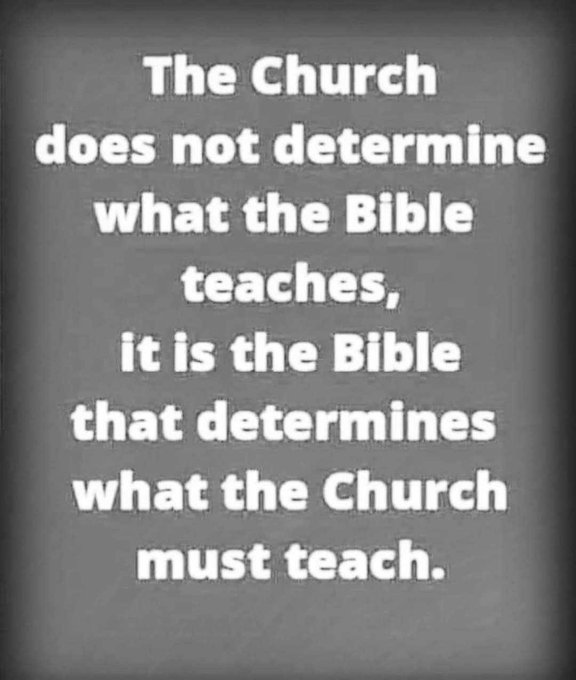
If you love Jesus you should love what Jesus loves, and that ultimately means you should be an official, active, and serving member of your local church (Eph. 5:25).
Church membership should be normal for Christians. Lives lived in regular accountability demonstrate the gospel’s reality to the world, particularly through the mutual love that Jesus identified as the mark of his followers. This is both biblical and strengthens evangelistic witness. Weaker and newer Christians gain feeding and accountability through membership, and mature and seasoned believers demonstrate authentic Christian living.
Hebrews calls believers to “consider one another to provoke unto love and to good works,” explicitly warning against forsaking assembly “as the manner of some is” (Heb. 10:24–25). This suggests participation isn’t optional but essential to spiritual health.
Church membership preserves biblical truth by establishing who bears responsibility for rooting out false teaching and protecting the gospel when leadership itself becomes compromised. Paul’s letter to the Galatians exemplifies this. I say this as a positional elder in my church — Paul appealed to the whole congregation rather than leadership alone to address doctrinal corruption. Think about it: how are you to “bear one another’s burdens, and so fulfill the law of Christ” (Gal 6:2), which positions mutual care as a central Christian obligation, if you’re not actively in a membership role? Thessalonians similarly exhorts believers to “encourage one another and build one another up” (1 Thess 5:11), framing encouragement as a reciprocal responsibility that requires presence and investment.
Healthy membership equips believers to recognize heresy when taught or communicated and transforms them from passive consumers into active defenders of the faith.
Acts depicts the early church persevering in apostolic teaching, communion, and gathering daily, with believers holding possessions in common (Acts 2:42–47), a portrait of intensive communal engagement rather than individual isolated devotion or nominal affiliation.
Ultimately, practicing membership glorifies God as Christians gather to form his body, living under the life giving words of scripture, fellowshipping with one another sacrificially, and reflecting his character.
What does it actually mean to dress modestly? The biblical answer may be different than you think! Tell us what you think in the comments, then watch the video to learn more.
Redemption is messy work.
Yet God mercifully steps into our lives ridden with the blemishes of sin.
In this clip, @RCSproul explains how Christ covers us with His stainless, perfect righteousness.
Watch the full message: https://t.co/z6JXnTdkTx
"We shall never be clothed with the righteousness of Christ except we first know assuredly that we have no righteousness of our own."
- John Calvin “Commentaries on the Epistle of Paul the Apostle to the Romans,” Translated and Edited by John Owen
A hymn by Horatius Bonar
Upon a Life I have not lived,
Upon a Death I did not die,
Another’s Life; Another’s Death:
I stake my whole eternity.
Not on the tears which I have shed;
Not on the sorrows I have known:
Another’s tears; Another’s griefs:
On them I rest, on them alone.
Jesus, O Son of God, I build
On what Thy cross has done for me;
There both my death and life I read;
My guilt, my pardon there I see.
Lord, I believe; O deal with me
As one who has Thy Word believed!
I take the gift, Lord, look on me
As one who has Thy gift received.
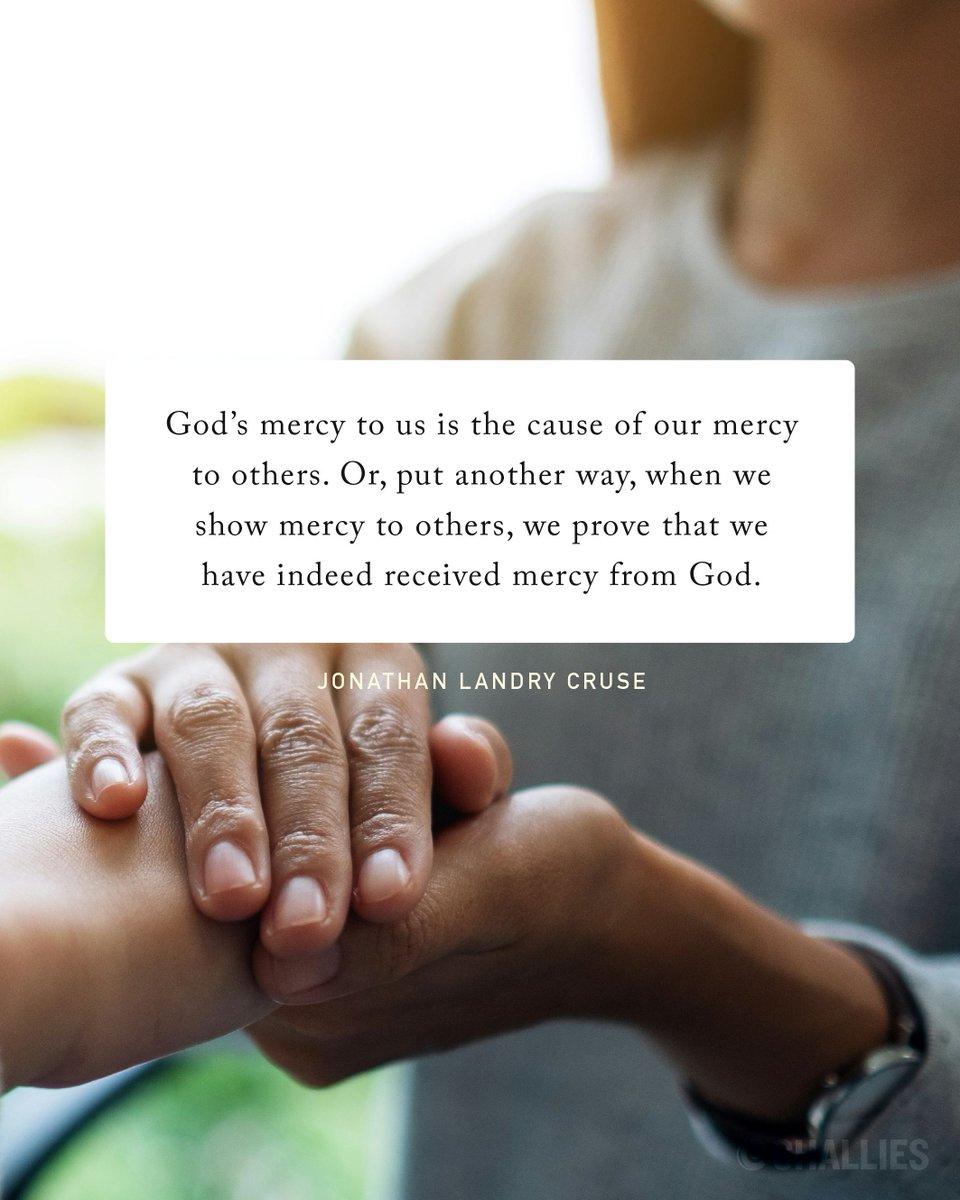
"God’s mercy to us is the cause of our mercy to others. Or, put another way, when we show mercy to others, we prove that we have indeed received mercy from God." (Jonathan Landry Cruse)