@poppy_haze Being louche and irresponsible in your twenties is a blast because you feel like a character in a Tom Waits song and then you hit a certain age and you start thinking, "Oh fuck, I might actually be like a character in a Tom Waits song."
@PokerPolitics I'm surprised more of them don't take the line that a lot of apocalyptic movements eventually adopt of like, "Oh, the apocalypse actually *did* happen already, but just in some way that's not visible to non-believers."
@xenocryptsite I remember reading something similar about Martin van Buren, that he knew every candidate in every county election in upstate New York and could recall exact vote tallies even years later.
@xenocryptsite I find the nuts-and-bolts of what political skill actually consisted of before modern media and analytics to be fascinating. You notice again and again that skilled 19th-century politicos were often obsessed with the limited quantitative measures they had access to.
@_night_brain__ Also, rebuilding many cities nearly from scratch during a period of extreme cultural ferment when there were also sort of no hard-and-fast laws.
@futurama_nerd And meanwhile the majority of sacrificial victims even in those societies were still slaves or prisoners of war. I haven't actually read or watched the Hunger Games, but they don't think it's magic do they? I got the impression it was purely an entertainment/terror thing?
@futurama_nerd But the examples we have of voluntary, high-status human sacrifice victims are in cultures where people genuinely believed that sacrifice was efficacious; like it could win you the favor of the gods, ensure a good harvest, win battles, make sure the sun returned, etc.
@_night_brain__ If JoJo were set in a random logging town that is now perpetually cursed with catering to the fanbase. It's died down a lot compared to ten years ago, but I go hiking out there and you still regularly encounter disappointed-looking tourists from all over the world.
@langofmind That's interesting because the exact same thing seems to be true of Quechua. The Inca probably started out using base-5 and then borrowed base-10 from the Wari people.
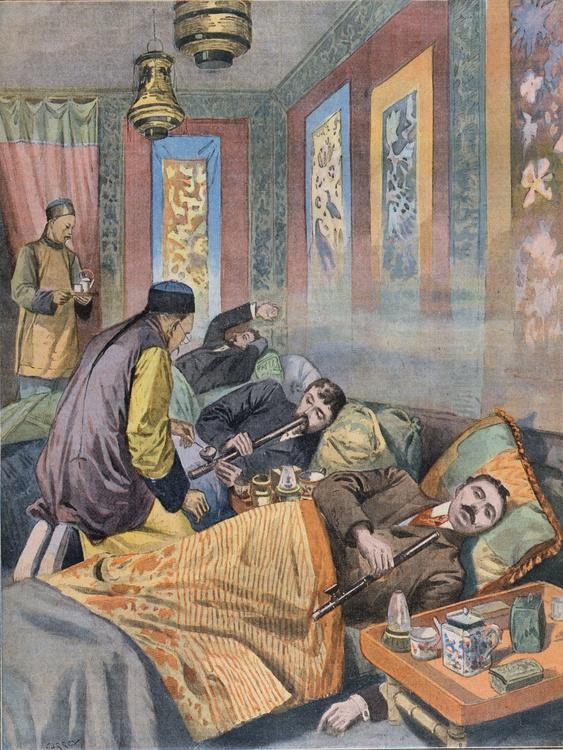
The English LOVED to smoke and drink in the late 1660s, as a French traveller reports:
"According to the custom of the country, the [inn] hostesses sup with strangers and travellers; and if they have daughters, these are also of the company, to entertain those at table with amusing talk, at which they drink as much as the men.
But what displeases me in all this is that when one drinks someone’s health, the custom of the country allows you to drink only half of what is in the cup, which is then filled to be presented to the person whose health you have drunk.
Moreover, when supper is over, half a dozen pipes and a tub of tobacco are brought to the table for smoking. This is a general custom among the women as well as the men, who believe that without tobacco one could not live in England, because, they say, it dispels the bad humours of the brain."
He's then asked by a guide in Worcester "whether it was the custom in France, as in England, when the children went to school, to carry in their little satchel with their books a pipe of tobacco, which their mother takes care to fill early in the morning in place of their breakfast; then that at the hour for taking it, each one leaves his book to light his pipe, and the schoolmaster with them, who shows them the way to hold their pipe and to drink the tobacco; to which they are accustomed from youth, which they believe to be absolutely necessary to the health of man."
@ASPertierra And the book is still pretty sympathetic to Gorbachev. He's portrayed as a genuine idealist, and even heroic for his refusal to return to the methods of terror right up to the end.
@KenmoWy@watari_toriyuki It's the combination of the *mostly* correct first names and the totally mutated last names that really sells it, although I do like Jeromy and Sleve.
@kokoha_ann I've taught ESL before and my students often saw a huge leap in effective fluency once they really got the hang of prosodic stress and realize that you only *really* need to listen for (and clearly pronounce, for that matter) the stressed words in a sentence.
@kokoha_ann It can sometimes be hard to distinguish "can" and "can't", but most of the time this is made easier by prosodic stress, which is often neglected in ESL teaching. Words like "not" are usually stressed, so you can catch them just by listening to the stress pattern.
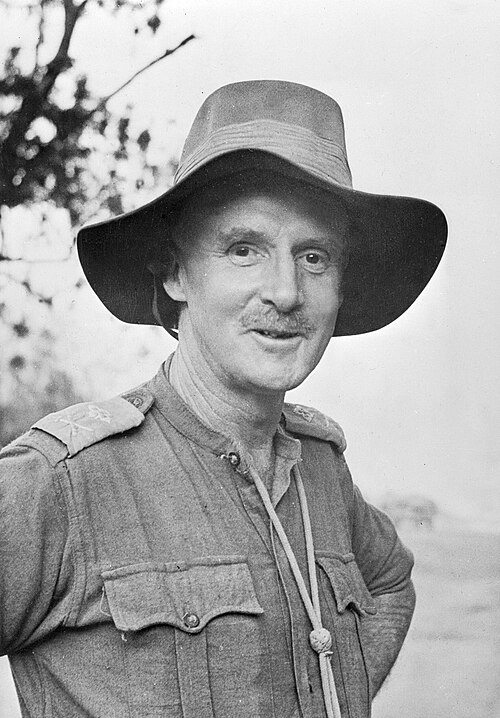
@HQuarterma43504 The commanders-in-chief of the Indian and Pakistani armies during the 1947 war were respectively a Scotsman born in Ayrshire and an Old Etonian born in Trinidad.