Old assumption about AI:
- Should save time immediately
- Works well right out of the box
- Generic prompts produce usable output
- The tool does the work
New reality:
- The early days are often slower than working manually
- Your skill and system take time to develop
- The input you bring determines the output you get
- You do the work — AI handles the parts that used to take the longest
The payoff comes after the curve. Not before it.
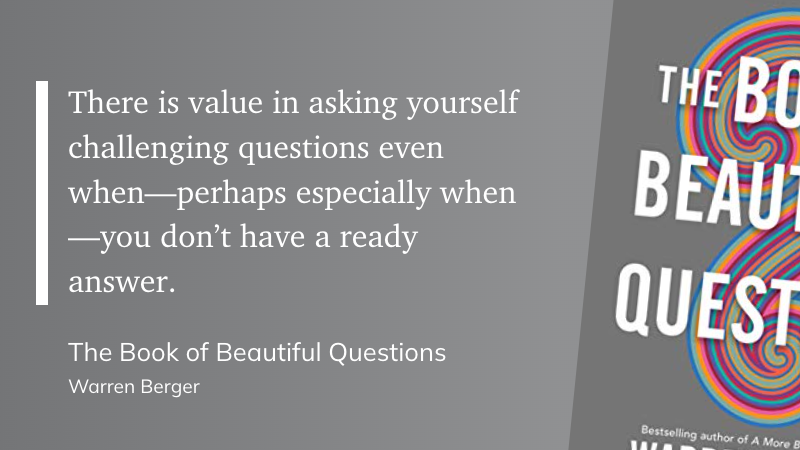
"There is value in asking yourself challenging questions even when—perhaps especially when—you don’t have a ready answer."
-- 𝐖𝐚𝐫𝐫𝐞𝐧 𝐁𝐞𝐫𝐠𝐞𝐫, 𝐢𝐧 "𝐓𝐡𝐞 𝐁𝐨𝐨𝐤 𝐨𝐟 𝐁𝐞𝐚𝐮𝐭𝐢𝐟𝐮𝐥 𝐐𝐮𝐞𝐬𝐭𝐢𝐨𝐧𝐬." @GlimmerGuy
5 things that move you through the AI learning curve faster:
1. Give AI more context, not less — your thinking, your voice, your examples
2. Use voice notes as raw material instead of typing topic prompts from scratch
3. Treat every bad output as a diagnostic: what was missing from what you gave it?
4. Build a voice profile for anyone you ghostwrite for — and add to it every time something feels off
5. Check every output like a careful editor, not a passive reader
The curve isn't a problem. It's the process.
6 lessons from working through the AI learning curve:
1. Phase one feels like failure. It isn't. It's the curve.
2. Every bad draft is data about your prompt or your system.
3. AI doesn't know your voice. You have to teach it.
4. Building a voice profile changes everything — add a rule every time something sounds wrong.
5. An AI audit tool is the last line of defense, not the only one.
6. The experts claiming 10 hours saved per week aren't exaggerating. They're just further along the curve than you.
Old way of evaluating a bad AI draft:
- "This is terrible."
- "AI doesn't work for me."
- "I'm just not good at this."
- Quit. Go back to manual.
New way:
- "This is phase one output."
- "What specifically made this miss?"
- "What rule or context was I missing?"
- Add it to the system. Try again.
The difference between experts who reach phase three and experts who quit isn't talent. It's the question they ask when the output disappoints them.
3 things the people who got good at AI did differently:
1. They treated AI use like a skill. They studied what it does well, where it goes wrong, and how to structure prompts so the output is actually useful.
2. They used a brain-first approach. They fed AI their expertise first — voice notes, rough thinking, their own words — and let it help them develop what was already there.
3. They stayed in their zone of judgment. They kept the thinking. They delegated the drafting. They checked every output the way you'd check the work of a smart but overconfident intern.
10 signs you're in phase one of AI skill-building:
1. Every draft needs major editing
2. It takes longer than doing it yourself
3. The output sounds nothing like you (or your client)
4. You've almost given up at least once
5. You keep going back to doing it manually
6. The "AI saves you 10 hours a week" claims feel like a lie
7. You can't figure out what you're doing wrong
8. Every prompt feels like a guess
9. You're not sure if it's the AI or your prompts
10. You're reading this and nodding
This is normal. This is phase one. It ends.
I couldn't ghostwrite well with AI until I stopped trying to prompt my way to good output and started building a system around it.
- Built a detailed voice profile for my client from the start
- Every time a draft didn't sound right, added a new rule to the profile instead of just fixing the draft
- Eventually, first drafts came out nearly right almost every time
- Added an AI audit tool as a final pass to catch the patterns that creep in no matter how good your prompts get
AI didn't get better. My system did.
Almost nobody talks about the three phases of AI skill before you start. Then you hit phase one and think you're doing something wrong.
- Phase one: Working with AI is slower than working alone. The output is rough. You spend more time fixing drafts than creating.
- Phase two: You're breaking even. Prompts are improving. Output is decent.
- Phase three: Working with AI surpasses what you could produce alone. Bigger problems. Better output. Scope you couldn't manage solo.
The only path from phase one to phase three runs directly through phase one.
Most experts ask AI to generate ideas for them. That's why the output feels hollow. AI doesn't know anything you haven't told it. The ones who reach phase three figured this out early: feed it your expertise first. Voice note, rough transcript, your own thinking. Ask it to interview you. Let it develop what's already there. The best AI output sounds like you because it started with you.
The first email I ghostwrote for a client using AI was terrible. Generic. Stiff. Nothing like the way she wrote. I spent more time fixing it than I would have writing it from scratch. What I didn't know then: I wasn't experiencing an AI problem. I was experiencing a phase one problem. The incompetence is temporary — even when it doesn't feel that way.
5 lessons from redesigning a course I'd been running for 7 years:
1. The real problem is rarely what it looks like at first. I thought I needed to reorder modules. The real issue was too much information and not enough practice.
2. The simplest version of a tool is usually the most useful. My instructor Liane built a guide for our coach trainees with less information and more "here's what to say and when." It worked better than ours.
3. A supplemental resource is an optional resource. If something matters, build an exercise around it.
4. Exercises and tools have to be designed together. One without the other produces either practice with nothing to practice — or a resource that never gets used.
5. Reorganizing is the last resort, not the first move. Structure problems are usually content problems in disguise.
7 mistakes course builders make when designing exercises:
1. Treating the exercise as optional — if it doesn't connect to the main deliverable, clients will skip it
2. Over-explaining before the practice — too much theory upfront creates clutter before action
3. Building exercises around understanding concepts instead of using tools
4. Creating a coaching guide with too much information — simpler is harder to build but far more effective
5. Never telling clients WHY they're doing a particular exercise
6. Reorganizing modules instead of improving the exercises themselves
7. Designing the exercise and the tool separately — they have to be built together