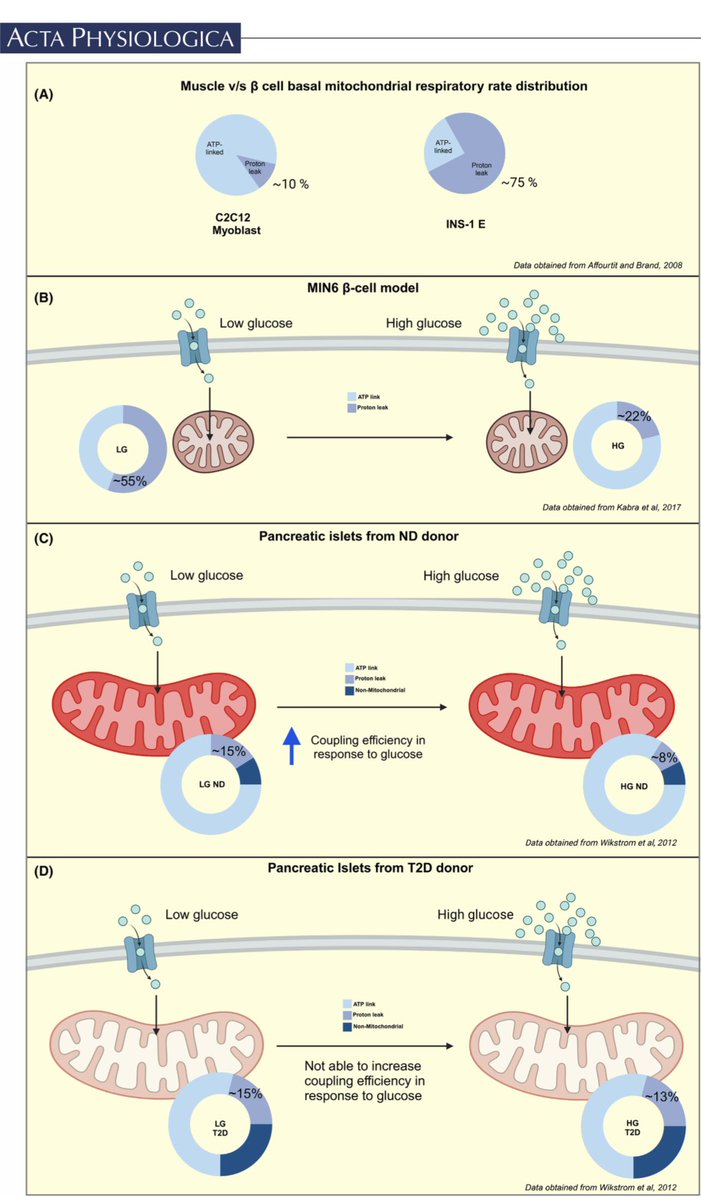
I am delighted to share that our latest review article, which delves into the unique metabolic characteristics of beta cells, has now been published in "Acta Physiologica".
https://t.co/KsSWlEpHbT
Con profunda tristeza, lamentamos comunicar el fallecimiento esta pasada madrugada del Dr. Joan Guinovart, fundador, ex director, ex investigador y profesor emérito del IRB Barcelona.
El Dr. Guinovart ha sido una figura clave en el ámbito de la bioquímica, dejando una huella imborrable tanto a nivel científico como de gestión. Su inteligencia, liderazgo y su profundo humanismo han sido fundamentales para las personas que hemos tenido la suerte de compartir camino con ese hombre irrepetible y para el mundo de la investigación.
Expresamos nuestro más sentido pésame a su familia, amigos, compañeros ya toda la comunidad del IRB Barcelona.
Joan, tu ausencia nos deja un gran vacío, pero tu legado perdurará para siempre.
Te recordaremos siempre, capitán.
Thrilled to share our joint work with Anne L. Madsen from Torben Hansen's lab (@Metabolcenter) and @1jorgeferrer lab. We explored the genetics of the β-cell function to unlock insights into T2D. Out today in @NatMetabolism ! Here’s what we found 🧵: https://t.co/KgcR2r57NN
I am delighted to have contributed to this study, It combines GWAS, functional studies of glucose homeostasis, beta cell function in vivo and in vitro. It identifies beta cell dysfunction T2D genes.
Congratulations to all contributing authors!! 🥂🥂🥂 https://t.co/aGuEQEOrAz
Join the #WorldDiabetesDay Skåne event at CRC in Malmö on November 14. LUDC researcher Malin Fex will be moderating this event. Read about the programme (in Swedish): https://t.co/kMPGVLhJyb
Find our activity on the #WorldDiabetesDay website: https://t.co/G6uTrI0dY2
@MedeonSP
The Nobel Assembly at the Karolinska Institutet has decided to award the 2024 Nobel Prize in Physiology or Medicine jointly to Victor Ambros and Gary Ruvkun “for the discovery of microRNA and its role in post-transcriptional gene regulation.” @NobelPrize
I am pleased to have had the opportunity to present our ongoing work on the role of lysine metabolism in potentiating insulin secretion at the EASD conference in Madrid. @Metabolcenter@DiabetesLUDC
the molecular mechanisms of β cells to sense nutrients, their metabolically mediated regulation of insulin secretion and the molecular events precipitating β-cell failure are of pivotal importance to understand the pathophysiology of T2D. https://t.co/bakh4qsltM
It is truly satisfying to receive financial support for our projects. I am delighted to share that we will continue working to understand the role of EPDR1 on mitochondrial metabolism in beta cells, thanks to the support from the Crafoord Foundation.
Finally, we discuss the distinct mitochondrial bioenergetics features that contribute to beta cells' glucose responsiveness. I hope researchers with a keen interest in understanding how beta cells sense glucose and regulate insulin secretion will find our article insightful.
I am delighted to share that our latest review article, which delves into the unique metabolic characteristics of beta cells, has now been published in "Acta Physiologica".
https://t.co/KsSWlEpHbT
We explore the selectively expressed and repressed "disallowed" genes in human islets and their potential alterations in T2D islets. Additionally, we shed light on a recently identified non-canonical metabolic mechanism underlying GSIS.
I am delighted to share that our latest review article, which delves into the unique metabolic characteristics of beta cells, has been now published 👇🏼
https://t.co/OlIVzQqY22
I'm pleased to present our poster on a clinical case of neonatal monogenic diabetes caused by NEUROG3 mutations, which are associated with chronic diarrhea. We discovered that the patient did not produce pancreatic hormones or intestinal incretins and serotoninbut high bile acids