Update:
Original DOI (Tech issues solved) + Affiliation: Yan Research - An Independent Research Team
1st Yan Rep
https://t.co/FLneTJDSOq
2nd Yan Rep
https://t.co/nMGUwKcYQp
3rd Yan Rep
https://t.co/e6Rlb4kFGJ
#UnrestrictedBioweapon#UnrestrictedScientificMisinformation
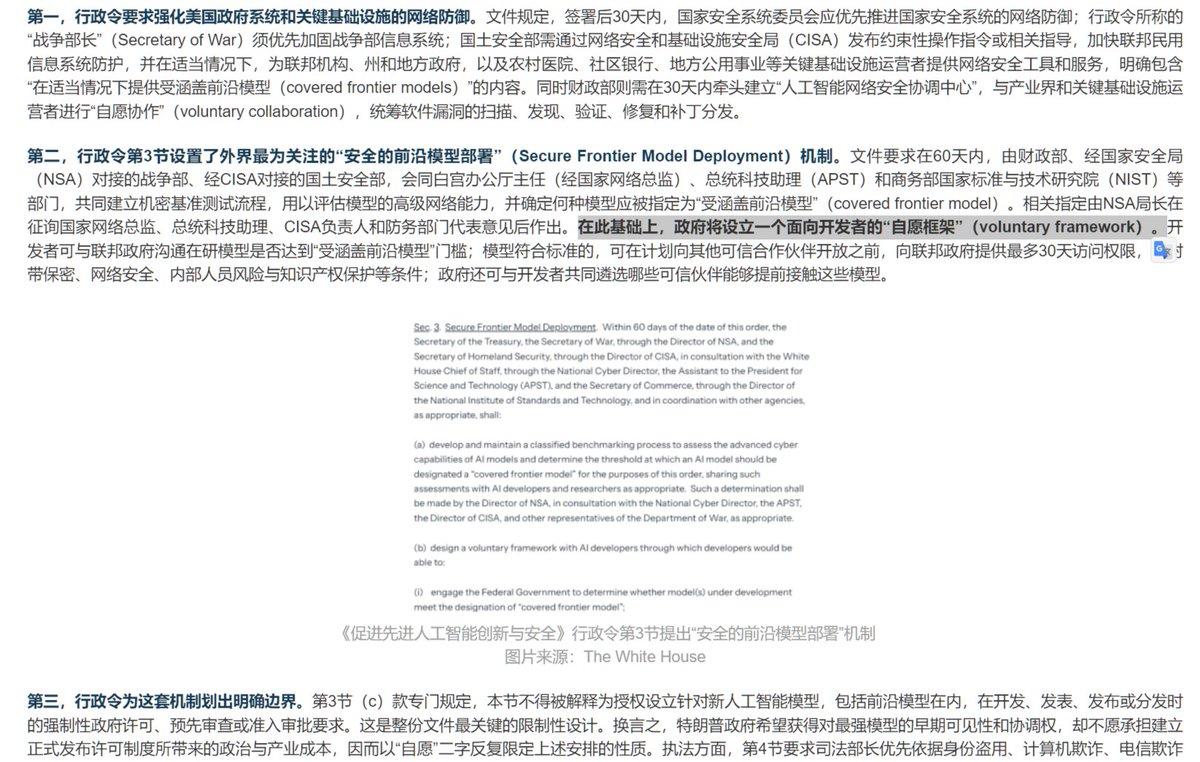
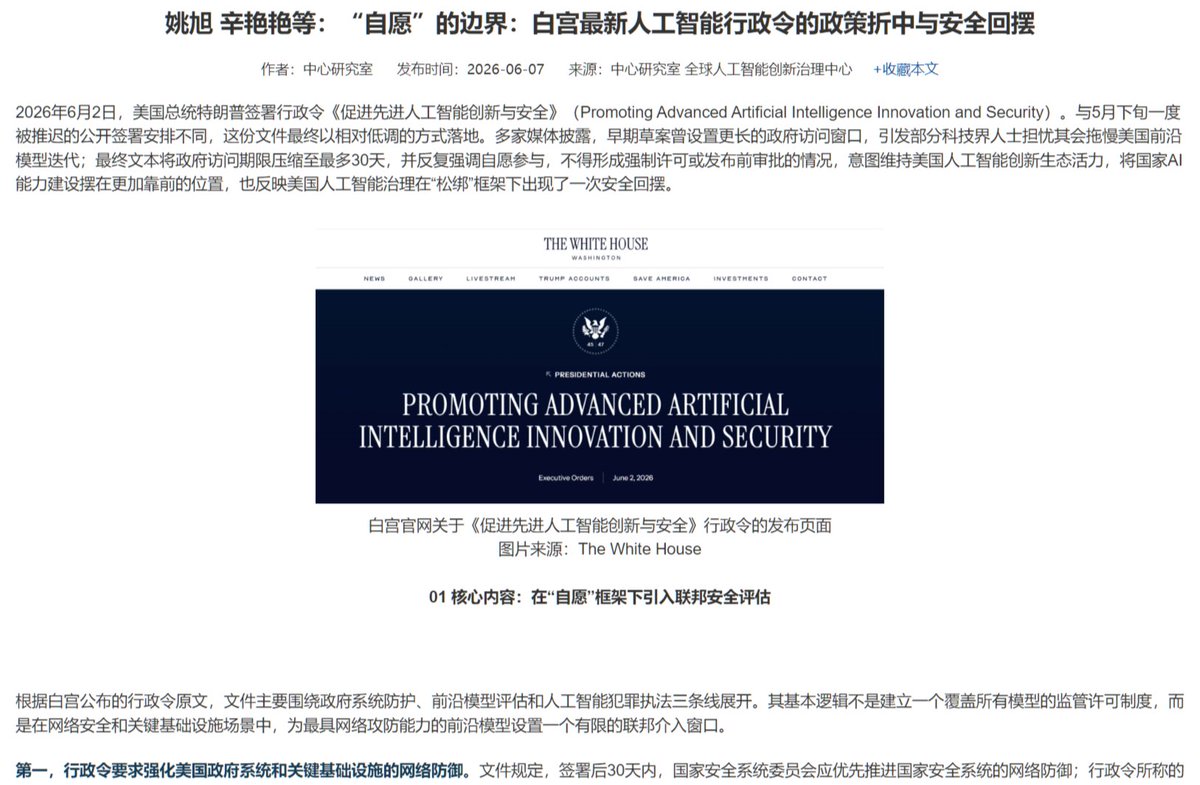
Writing in @WSJopinion, Hoover Senior Fellow Steven E. Koonin argues that President Trump's June 2 executive order on AI corrects course, but that regulating its use and regulating its development are not the same problem. https://t.co/WgY37c6fpn
US Analysts Flag $312 Billion in Suspicious Activity Tied to Suspected Chinese Money Laundering Networks
A specialist told House lawmakers during a hearing that cartel-linked networks exploit banks, shell firms, real estate, cryptocurrency, and trade channels.
U.S. financial institutions filed more than 137,000 reports totaling roughly $312 billion in suspicious activity linked to suspected Chinese money laundering networks between 2020 and 2024, serving as the focus of a June 9 House subcommittee hearing.
Congressional Research Service specialist Liana Rosen noted that these Bank Secrecy Act filings represent flagged transactions rather than confirmed criminal proceeds, serving as initial investigative starting points with unquantified enforcement outcomes.
The House Financial Services Subcommittee on Oversight and Investigations examined how these Chinese money laundering networks (CMLNs) act as the dominant financial partners for drug cartels moving illicit funds through the U.S.
Subcommittee Chairman Dan Meuser (R-Pa.) stated that these highly organized networks offer transnational cartels rapid transfers, low transaction fees, and financial guarantees even in the event of law enforcement seizures.
Moving Value Without Moving Cash
Witnesses described CMLNs as professional operations serving two customer bases: criminal groups cleaning illicit proceeds and Chinese citizens seeking to bypass domestic capital controls to access U.S. dollars.
Under this arrangement, laundering networks purchase U.S. dollars generated by domestic drug sales, distribute equivalent values to cartels through alternative channels, and sell the cash to Chinese buyers attempting to move wealth overseas.
Rosen explained that the physical illicit currency remains entirely within the United States, while the overarching financial values are cleared externally via trade channels or separate accounts.
Retired Treasury special agent John Cassara warned that this mechanism circumvents traditional border-crossing tracking systems because the networks excel at exchanging value locally without physically moving cash across borders.
Cassara stated that traditional financial regulations are less effective against advanced underground banking, trade-based money laundering, and mirror swaps where illicit values are offset rather than physically transferred.
A 2025 FinCEN advisory previously detailed that CMLNs utilize shell companies, money mules, real estate investments, complicit insiders, and digital assets to effectively mask the origin of their funds.
Banks, Real Estate, and Shell Companies
Chairman Meuser stated that the flagged $312 billion in suspicious transactions flowed through 489 depository institutions, over 200 money service businesses, and various other financial sectors.
FinCEN's comprehensive review spanned banking, securities, futures, casinos, and real estate, highlighting a deeply pervasive footprint across the entire U.S. financial system over the four-year period.
Several lawmakers focused their inquiries on whether opaque ownership structures and anonymous shell companies are severely hindering law enforcement's ability to trace criminal proceeds.
Rep. Nikema Williams (D-Ga.) questioned the national security risks of real estate laundering through anonymous LLCs, with Cassara responding that beneficial ownership data remains the critical missing piece for investigators.
FinCEN��s data specifically isolated 17,389 Bank Secrecy Act reports linked to more than $53.7 billion in suspicious activity directly involving the U.S. real estate sector.
Crypto and Reporting Gaps
Committee Democrats focused on closing loopholes in cryptocurrency and beneficial ownership regulations, arguing that digital platforms grant criminal syndicates advanced tools to conceal illicit capital.
Ranking Member Maxine Waters (D-Calif.) questioned whether crypto firms should face the same strict compliance mandates as traditional banks to detect and report financial crimes.
MissionLytics CEO Louis DeTitto confirmed that CMLNs aggressively exploit cryptocurrency, emphasizing that law enforcement urgently requires comprehensive data access from digital asset exchanges.
DeTitto added that these decentralized networks purposefully connect drug trafficking, fraud, and capital flight to exploit regulatory gaps across competing global jurisdictions and agencies.
Beijing Link Debated
The congressional hearing exposed a policy debate regarding the level of direct involvement by the ruling Chinese Communist Party in these laundering operations.
Rosen cautioned lawmakers that the operational classification of a Chinese money laundering network does not automatically prove an official directive from Beijing.
Consultant Leland Lazarus stated that while no direct evidence links these criminal networks to top Chinese leadership, a symbiotic relationship exists through state-backed business and friendship associations overseas.
Lazarus urged U.S. officials to address underground banking directly with Chinese leader Xi Jinping, asserting that Beijing possesses the complete state authority to dismantle the networks if it chooses to act.
Cassara echoed this assessment, describing China as a centralized command state capable of immediately shutting down illicit financial operations if the regime desired.
What Congress May Do Next
Expert witnesses advised Congress to implement描 stricter beneficial ownership transparency, increase data analytics, target high-risk trade corridors, and enhance cross-agency law enforcement coordination.
Cassara noted that while the U.S. generates vast amounts of financial intelligence, a severe shortage of dedicated investigators prevents these leads from being successfully converted into criminal cases.
He explained to Rep. Warren Davidson (R-Ohio) that complex financial investigations are often passed over because they require years of labor with no guarantee of successful prosecution.
The hearing concluded with a central question left unresolved, as public records fail to show exactly how much of the flagged $312 billion has resulted in asset seizures or dismantled networks
https://t.co/ziqAqgmC6i
KMT Party Chair Cheng Li-wun casually dropping the anti-semitic trope of Jewish control of the United States government during her speech in the US:
"如果猶太朋友可以對美國有怎麼關鍵的影響力, 我們華人的智慧,華人的努力,華人的平德, 絕對不輸給他們."
China is months away from exporting its first small modular reactor. @RepJimBaird and @RepGregoryMeeks agree that this amendment ensures the U.S. takes the technological lead. It's time to supply our diplomats with the tools to promote American civil nuclear tech around the world.
🚨 LMAO! PRESIDENT TRUMP on IRAN: "We don't know who the hell we're dealing with. We call up, this is Mohammed, so-and-so, and I say, are you a leader!? We're looking for a LEADER!"
"It's the only country in the world. Nobody wants to be a leader, you know, they say, would anybody like to be president?! And there are no takers!" 🤣
China Steals AI Capabilities It Can’t Build, Cybersecurity Firm Says
CrowdStrike’s 2026 Global Threat Report reveals that China-nexus cyber actors increased targeted intrusions by 38 percent in 2025.
The cybersecurity firm states these groups are accelerating attacks on corporate systems to steal artificial intelligence (AI) capabilities the Chinese regime is unable to build itself.
Adversaries frequently target internet-facing edge devices, such as VPNs and firewalls, to establish long-term intelligence collection operations.
The report notes that 67 percent of the vulnerabilities exploited by these actors provided immediate system access, with 40 percent specifically targeting edge devices.
Logistics, Telecom, Finance Targeted
These targeting patterns directly align with the Chinese Communist Party’s strategic priorities of economic espionage, technology transfer, and telecommunications surveillance.
Logistics organizations experienced the sharpest increase in attacks, surging by 85 percent to become the primary target for Chinese threat actors.
Attacks against telecommunications and financial services also rose by 30 percent and 20 percent, respectively, as groups like OPERATOR PANDA focused on intercepting communications.
Edge Devices Used for Access
Multiple China-nexus groups heavily exploited remote code execution vulnerabilities in internet-facing systems to gain direct, external network access.
These adversaries actively monitor vulnerability disclosures, often weaponizing newly published software flaws into intrusion tools within two to six days.
This rapid weaponization takes advantage of the brief window before targeted organizations can apply necessary security patches.
In one instance, the hacking group Warp Panda exploited a VPN appliance to maintain persistent access within a victim's network for 22 months.
AI Enters the Tradecraft
Attacks driven by AI-enabled adversaries surged by 89 percent in 2025, largely by accelerating existing cyber techniques.
Threat actors leveraged AI for sophisticated social engineering, malware development, and generating highly convincing phishing campaigns.
Chinese intelligence services specifically used AI to create fake consulting firms to target former U.S. government employees on job platforms.
Hackers are also targeting AI systems directly, using malicious code to hijack local AI tools like Claude and Gemini for stealing cryptocurrency and authentication materials.
Speed Narrows the Response Window
The average "breakout time"—how long it takes an intruder to move laterally after initial access—plummeted from 48 minutes in 2024 to just 29 minutes in 2025.
This rapid movement, with the fastest recorded breakout at just 27 seconds, leaves defenders with severely limited time to identify and stop breaches.
Furthermore, 82 percent of CrowdStrike's 2025 detections were malware-free, with hackers using legitimate credentials to blend in with normal network behavior.
US Agencies Warn About Similar Tactics
U.S. allied agencies, including the National Security Agency, previously warned that Chinese state-sponsored actors are targeting global critical infrastructure.
Microsoft’s 2025 Digital Defense Report similarly highlighted China’s broad espionage push using vulnerable edge devices to avoid detection.
CrowdStrike recommends that organizations patch edge devices within 72 hours of a vulnerability disclosure, monitor perimeter systems, and segment their networks to restrict hacker movement.
https://t.co/kgNue6bFeE