I visited a neighborhood devastated by the Spokane fires. For one couple I met with, losing their home was awful, but they said that losing their community is worse.
It's our job as elected leaders to do everything we can to rebuild that community.
This is not #scifi - it's a photograph taken by one of us, on this day in 1971, during Apollo 15.
It also happens to be one of the fine art prints an Apollo Moonwalker (I can't say which one) ordered from my website and had framed for his wall at home - an absolute beauty!
Curiosity has delivered a new 360-degree panorama from Mars. “We’ve seen a lot of fascinating landscapes through Curiosity’s eyes, but this sea of polygons took our breath away,” said the mission’s project scientist. 1/2
@MichaelOkun Thank you for this post. What if the p-tau blood marker is a result of loss of blood flow? What if Alzheimer’s is Atherosclerosis of the brain? A very slow loss of arterial blood flow?
Are you checking out all the ‘heading’ of the ball in the World Cup? What happens to p-tau after a header? What is p-tau217? p-tau217 is a blood biomarker linked to the tau protein, which plays an important role in brain cells. It has attracted attention because it can reflect brain injury and is also being studied in neurodegenerative diseases such as Alzheimer's disease. Hoppen and colleagues describe in a new paper in JAMA Neurology how heading a soccer ball during real-world amateur matches was associated w/ short-term increases in blood biomarkers linked to neural injury.
Key points:
- Amateur soccer players who headed the ball showed greater immediate increases in the blood biomarker S100B compared to players who did not head the ball.
- More headers, and especially high-impact headers, were associated w/ greater increases in both p-tau217 and S100B, suggesting a dose-response relationship.
- These biomarker elevations returned to baseline within 24 to 48 hours, however the long-term implications remain unknown.
My take: This is an important study because it moves the discussion beyond speculation. The investigators carefully accounted for the effects of exercise itself and still observed measurable changes in blood biomarkers after real-world soccer heading. That does not mean that every header causes permanent brain damage or that soccer is unsafe. It does mean that repetitive heading leaves a measurable biological fingerprint that deserves further study. The biggest unanswered question is whether these temporary changes accumulate over years and contribute to later neurodegeneration. We simply do not know yet. Studies like this help us ask better questions, identify who may be at greatest risk, and hopefully develop smarter strategies that preserve both the joy of the game and long-term brain health.
Here are 5 points that resonated w/ me:
1- Repetitive heading appears capable of producing measurable short-term biological changes in the brain, even during amateur competition.
2- The number and force of headers matter. This study supports the idea that cumulative exposure is important.
3- Blood biomarkers such as p-tau217 may become useful tools for studying brain health in athletes, though they are not ready for routine clinical decision making.
4- Temporary normalization of a blood test does not necessarily mean the brain has completely recovered. More research is needed to understand repeated exposures.
5- The future should focus on making sports safer through better science, smarter coaching, improved techniques and thoughtful policies that protect athletes while preserving the many benefits of participation.
https://t.co/p4XFpoyvkT
A Russian psychologist spent 10 years proving that the act of talking to yourself out loud is one of the most powerful cognitive tools the human brain has, and almost nobody outside his field has read the work.
His name was Lev Vygotsky.
He worked in Moscow in the 1920s and died of tuberculosis in 1934 at the age of 37. He had no laboratory, no funding, almost no English readers, and a body of work that the Soviet government suppressed for two decades after he died.
He produced the foundational theory of how human cognition actually develops, and the central piece of that theory was a behavior almost every adult is faintly embarrassed about.
Vygotsky noticed that young children talk to themselves constantly. They narrate their own actions, they argue with imaginary opponents, they instruct themselves through tasks out loud.
The dominant theory at the time, from the Swiss psychologist Jean Piaget, said this was a sign of cognitive immaturity that children would eventually grow out of as they learned to think properly.
Vygotsky said the exact opposite.
He argued that this self-directed speech was the most important cognitive event in the entire developmental window, because it was the moment a child first started to use language as a tool to control their own mind. The child was not failing to think. The child was learning how to think by externalizing the process and listening to themselves do it.
He predicted that as children matured, this out-loud self-talk would not disappear. It would go underground. It would become silent inner speech, which is the running monologue every adult has inside their own head for the rest of their life.
The voice you hear when you read this sentence is the direct descendant of a four-year-old narrating their own block tower.
For 50 years almost nobody outside Russia had access to his work, and the few researchers who did pick it up could not get funding to test it. Then in the early 2000s the experiments finally started to pile up, and what they found was that Vygotsky had been right about something even more important than he knew.
The first major study came from Gary Lupyan at the University of Wisconsin and Daniel Swingley at the University of Pennsylvania in 2012. They ran a simple visual search experiment. Participants were shown 20 images at once and asked to find a specific object, like a banana or a chair. In one condition they searched silently. In the other condition they were told to say the name of the object out loud to themselves while looking for it.
The participants who spoke the target name out loud found the object significantly faster, with higher accuracy, than the participants who searched in silence. The effect was strongest when the spoken word matched a familiar object the brain already had a strong category for.
Saying the word out loud literally tuned the visual system to detect that thing better. The researchers called it the label feedback effect, and the implication was that the act of vocalizing a goal physically changes how the brain processes the world while pursuing it.
The second major study came out of the University of Michigan and Michigan State in 2017. The lead researchers were Ethan Kross and Jason Moser, and they used both EEG and fMRI to record what happens inside the brain when people talk to themselves while emotionally upset.
They asked participants to recall painful autobiographical memories and reflect on them in two different ways. Some used the first person, saying things like "why am I feeling this way." Others used the third person, referring to themselves by their own name, saying things like "why is John feeling this way."
The brain scans showed that the simple act of switching from first person to third person, even silently, decreased activity in the medial prefrontal cortex, the region responsible for rumination and self-referential pain. Within a single second of using their own name instead of the word I, participants showed measurably lower emotional reactivity. The shift required no extra cognitive effort. It cost the brain nothing. And it worked.
Kross described the mechanism in his interviews. Talking to yourself by name creates a small amount of psychological distance from your own experience. Your brain processes the situation more like a problem belonging to someone else, which means it can analyze it instead of drowning in it.
What Vygotsky had intuited in 1934 turned out to be even more powerful than the developmental theory he built it into. The voice you use to talk to yourself is not background noise. It is one of the most precise cognitive tools the brain has, and you can change how it works just by changing the pronoun you use.
People who talk through problems out loud are not anxious or unstable. They are running an externalized version of a process the rest of us are running silently and worse. The kindergartener narrating their block tower, the surgeon muttering through a procedure, the engineer pacing a hallway describing a bug to nobody, the athlete repeating a cue to themselves before a free throw, they are all using the same ancient mechanism that builds and steers human thought.
You can run the experiment yourself the next time you are stuck on something hard. Stop trying to solve it silently in your head. Say it out loud. Describe what you are seeing. Walk yourself through the steps as if you were explaining it to a colleague who is not in the room.
And when something genuinely upsets you, switch to your own name. Ask why this person is feeling this way, instead of why I am feeling this way.
The voice you have been told to keep quiet your entire life is one of the oldest pieces of cognitive technology you own.
Most people are still embarrassed to use it.
... and both intercontinental and near vertical incident skywave (NVIS) high frequency radio communications.
NVIS was pioneered in the SWPA and was used by DoW consultant Dr. Harold Beverage to connect 9th AF afloat with Normandy invasion fleet to RAF Fighter Command.
2/2
@UntoldWarFacts That airplane, BuNo 2106, fought at the Battle of Midway with VMSB-241, and is the only surviving airplane from that battle. It is fully restored and on display at the National Naval Aviation Museum in Pensacola.
It has quite a story.
This is Appomattox, the biggest oil rig platform. It is located in the Gulf of Mexico but was built in South Korea
It took a total of seven years to build. It had to be transported across the oceans using the world largest marine transport vessel.
This is impressive.
population has grown ~9x in 200yrs, while poverty trends to 0
people act as though capitalism is a zero sum game, but it’s actually the only system that creates positive sum outcomes
the average person today is far richer than most kings in days past
@JonStewartIL It was part of the payload of the descent stage. It was compact brought out...in 1/6 G. This was NOT Apollo 11, only 15 16 17 used this because 18 and 19 were cancelled. So if that's fake, so is this
You have your mother's cells in your brain right now. If she ever carried you, yours are in hers.
Scientists looked at the brains of 59 women after they died, ages 32 to 101. In 63% of them, they found their sons' DNA scattered across different brain regions. The cells had traveled from the womb, through the blood, past the wall that normally keeps foreign material out of the brain, and settled in. The oldest woman still carrying her son's cells in her brain was 94. In mice, those cells became functional brain cells.
The transfer starts as early as 7 weeks into pregnancy. Your cells slip through the placenta into your mother's body. Hers slips into yours. One study found a mother still had her son's cells in her blood 27 years after giving birth. After delivery, between 50 and 75% of women carry their child's cells. During pregnancy, up to 6% of a woman's blood DNA comes from the baby.
When a mother's heart gets damaged during or after pregnancy, the baby's cells travel to the injury, latch on, and turn into beating heart cells, blood vessel lining, and muscle. Heart failure tied to pregnancy has a 50% spontaneous recovery rate, better than every other kind. The Mount Sinai team behind the research thinks the baby's cells are fixing the mother's heart from the inside.
The cancer data caught me off guard. A study compared healthy women to women with breast cancer. 85% of the healthy group still carried their children's cells. Only 64% of the breast cancer group did. That works out to about 4x lower odds of getting breast cancer if you kept those cells. The working theory is that they patrol the body and catch cancer cells before they grow.
A 2022 study found that in developing mouse brains, a mother's cells controlled the brain's immune cells, preventing them from cutting too many connections between brain cells. Your mom's cells helped wire your brain before you were born.
And it stacks across generations. A woman can carry cells from her kids, from her own mother, and even from pregnancies her mother had before her. Three generations of cells from different people, living inside one body.
As a medical school professor, I spent years teaching that Alzheimer's is an amyloid disease. A comprehensive new review in the Journal of Clinical Medicine confirms what I now believe: Alzheimer's is a metabolic disease.
Key findings from the evidence synthesis:
-> Glucose hypometabolism appears BEFORE amyloid plaques form
-> Insulin resistance accelerates cognitive decline and tau pathology
-> Mitochondrial dysfunction correlates with tau damage more than amyloid
-> Better muscle mitochondrial function = lower dementia risk
-> GLP-1 signaling restores brain glucose metabolism and reduces neuroinflammation
The review concludes: metabolic dysfunction, not amyloid, is the central driver.
Researchers call Alzheimer's "Type 3 Diabetes" because the pathways overlap so precisely.
This is exactly why I wrote "Lies I Taught in Medical School." The metabolic root cause of chronic disease has been staring us in the face.
Full breakdown coming on the Health Longevity Secrets podcast.
Source: https://t.co/ypOJQ9ehks
#Alzheimers #MetabolicHealth #InsulinResistance #BrainHealth #HealthLongevity
Poor sleep really does let waste build up.
Boston University study shows the process - during deep non-REM sleep, cerebrospinal fluid flows between neurons in waves, removing metabolic waste, "refreshing the system" for next day’s thinking and learning
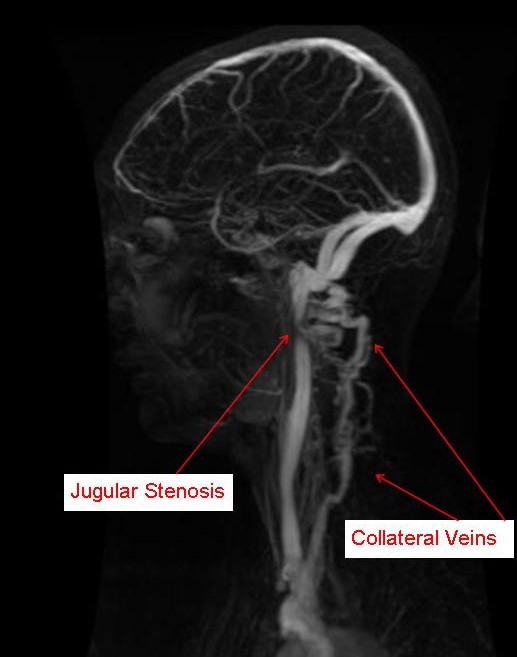
@zambo57 I know! It's so crazy they tell us this is not a problem! That's a 95% blockage of left internal jugular, right was 85% blocked, compressed against bone. The spaghetti vein collaterals at the back were trying to handle blocked blood flow.
How might mechanical pressure on the brainstem (either by CCI, the weight of the skull, or hypertension), trigger ME/CFS (which seems to be a quintessentially immune-based disorder?).
Enter Jin et al., 11/N