The New Wave of Nationalization: Why State Takeovers Are Back — and How This Time Is Different
A timely new article by historian Nicholas Mulder in the IMF’s *Finance & Development* magazine explores the resurgence of nationalizations — the fastest pace in 50 years.
Since 2020, governments across every continent have taken control of assets worth hundreds of billions of dollars: utilities and shipyards in Europe, railways and steel in the UK, rare earths in the US, and critical minerals (lithium, nickel, gold, uranium) in many emerging markets. Russia alone has seized over $48 billion in foreign assets since 2022.
Key Drivers:
- Geopolitical tensions and supply chain security
- Energy transition and critical minerals for renewables
- Commodity shocks and post-pandemic/COVID responses
Mulder places this in historical context as the fourth major wave of nationalizations in the past century (after the 1930s Depression, post-WWII reconstruction, and 1970s decolonization/oil shocks).
What makes today’s wave different: It’s happening amid high capital mobility and floating exchange rates, yet governments are still pushing forward — often targeting strategic sectors rather than broad ideological takeovers.
Bottom line for investors and EM watchers: This shift won’t reverse globalization but will reshape it — favoring “friend-shoring,” bloc-based investment, and greater state influence in key industries. Companies and investors in energy, mining, and infrastructure need to price in higher political risk in strategic sectors.
A must-read for anyone navigating the new geoeconomic reality.
🔗 Full article: https://t.co/ubvv483BcQ
What are your thoughts — opportunity or risk for long-term investors?
🎧 Listen to the newest episode of Mariva Emerging Markets Pulse: Weekly Insights from Roger K. Horn >> https://t.co/XNWfvrPo4v
Today’s theme: Holdouts, Haircuts, and Hyperinflation: Sri Lanka, Venezuela and the Long Road Back from Default.
Venezuela’s historic debt restructuring is shaping up as one of the biggest emerging markets credit stories of the decade. With more than $200 billion in sovereign and PDVSA obligations in default, the country is embarking on one of the most complex restructurings ever attempted. What lessons can investors learn from Sri Lanka’s recent default, Argentina’s long battle with holdout creditors and other sovereign debt crises?
But first, Roger starts by going into the time machine for a history lesson: Ghana’s 1979 AFRC Revolution, when a little-known Air Force officer named Jerry Rawlings emerged from a prison cell to seize power and launch one of Africa’s most remarkable political careers.
And finally, he catches up on this week’s LatAm credit headlines, including Colombia’s presidential election, Peru’s contested vote count, Petrobras-Pemex cooperation, Brazilian corporate credit stories, and developments in Bolivia and Panama.
��� Listen to a short preview of the episode below.
📌 Subscribe to our Spotify Channel to stay ahead of the week’s key news and keep your strategies sharp and informed >> https://t.co/CThsY4jDC6
#MarivaLatAmMarketPulse #WeeklyPodcast #EmergingMarkets
Today in emerging markets history...
June 1975: Suriname's Final March Toward Independence
In June 1975, Suriname entered the decisive final phase of its transition from a Dutch colony to an independent nation. After more than three centuries of Dutch rule, negotiations between leaders in Paramaribo and The Hague accelerated toward a formal transfer of sovereignty that would ultimately occur on November 25, 1975.
The principal protagonists were Prime Minister Henck Arron, whose government championed rapid independence, and Dutch Prime Minister Joop den Uyl. Arron believed independence would allow Suriname to chart its own political and economic future, while the Netherlands sought an orderly decolonization process supported by substantial development assistance.
Yet independence was not universally embraced. Suriname's diverse population—comprising descendants of African slaves, Indian indentured laborers, Javanese migrants, Indigenous peoples, and others—held differing views about the risks and opportunities ahead. Political uncertainty prompted tens of thousands of Surinamese citizens to migrate to the Netherlands before independence, creating demographic and social consequences that would endure for decades.
The move toward independence unfolded during a transformative period globally. The era of decolonization was still reshaping Africa, Asia, and the Caribbean. The Cold War continued to influence political developments across the developing world, while the aftermath of the 1973 oil crisis was challenging economies worldwide. In neighboring South America, military governments ruled in countries such as Brazil and Chile, while newly independent nations across the Global South were seeking their place in an increasingly polarized international system.
Suriname's independence journey was peaceful compared with many other decolonization struggles of the twentieth century. Yet the debates of 1975—over identity, governance, economic development, and national unity—would continue to shape the country's trajectory long after the Dutch flag was lowered and a new republic emerged on the northern coast of South America.
Citizen Vigilante the movie has been banned in Europe. (Including Britain)
Recap:
1. A young girl is gang-raped by 14 foreign men, only for the courts to set them FREE.
2. A vigilante takes justice into his own hands, punishing everyone responsible. Including judges and police officers.
3. At the end he vows to keep fighting until the people grow strong enough to stand up themselves.
The most based film you will ever watch. 10/10.
Today in emerging markets history...
June 1979: Jerry Rawlings and Ghana's AFRC Revolution
In June 1979, Ghana experienced one of the most consequential episodes in its post-independence history when a young Air Force officer, Jerry John Rawlings, led a military uprising that toppled the ruling Supreme Military Council. The revolt culminated in the establishment of the Armed Forces Revolutionary Council (AFRC), which promised to eradicate corruption, restore discipline, and return power to civilian rule.
Rawlings had first attempted a coup in May 1979 but was arrested. His dramatic rescue by sympathetic soldiers transformed him into a symbol of popular frustration with years of economic decline, inflation, shortages, and perceived elite corruption. Once in power, the AFRC launched what it called a "housecleaning exercise," targeting senior military officers and former leaders accused of mismanagement. Several former heads of state, including Ignatius Kutu Acheampong and Fred Akuffo, were executed after military tribunals.
What made the 1979 revolution unusual was that Rawlings ultimately honored a transition to civilian government. Elections proceeded as planned, and power was transferred to President Hilla Limann in September. Yet the underlying economic and political challenges remained unresolved, setting the stage for Rawlings' return to power in a second coup in 1981.
The events unfolded during a turbulent era globally. The Cold War was entering a renewed period of tension. In neighboring Iran, the Islamic Revolution had overthrown the Shah earlier that year. Nicaragua's Sandinista Revolution was nearing victory, while oil shocks and inflation were unsettling economies across both developed and developing nations.
For many Africans, Ghana's 1979 revolution reflected a broader struggle across the continent: the search for accountable governance amid economic hardship, military intervention, and the competing ideological pressures of the Cold War.
China is laying out its blueprint for a “more just and equitable” global order — but will it back the rhetoric with resources?
In a sharp new piece from Chatham House, Yu Jie analyzes Beijing’s latest white paper, More Just and Equitable Global Governance: China’s Principles, Proposals and Actions. The 45-page document consolidates long-standing Chinese diplomatic themes into a coherent vision for reshaping the post-1945 system.
Core elements of the vision:
• A genuinely multipolar world that better reflects current economic and demographic realities (with developing countries as the majority).
• Continued centrality of the United Nations as the primary institution, paired with reform rather than replacement.
• Significantly greater voice and representation for the Global South in rule-setting, decision-making, and international institutions — extending cooperation into security and technology domains.
The white paper positions China as a defender of multilateralism against unilateralism and power politics, capitalizing on perceived U.S. retrenchment. However, the analysis highlights a central tension: China remains notably reticent to commit the scale of financial resources historically associated with systemic leadership (e.g., large-scale public goods provision or a modern equivalent of the Marshall Plan). Beijing appears to favor normative influence and principle-setting over the costly hegemonic role the U.S. once played.
For emerging markets and developing nations, this raises important questions about creditor diversification, the evolution of alternative financing models, and whether normative appeals can deliver tangible support on debt sustainability, infrastructure, and development without major new resource commitments from Beijing.
A timely read on the evolving balance between ideas and means in global leadership.
Full article: https://t.co/RgRZDk0PNa
What are your views — can China translate this vision into credible leadership without matching financial weight?
#China #GlobalGovernance #EmergingMarkets #Multipolarity #GlobalSouth #Geopolitics
Why “China First” Will Fail – insightful new piece by Patricia M. Kim in *Foreign Affairs* (July/August 2026).
As the U.S. pulls back from global leadership under an “America First” approach, many wonder if China will fill the void. Beijing has skillfully positioned itself as a champion of multilateralism and the Global South, expanding partnerships with over 100 countries and leading forums like the SCO and BRICS. Yet, the article argues convincingly that China is **not** seeking to replace the U.S. as a system guarantor.
Instead, Beijing has long pursued a “**China First**” strategy: global reach without entanglement, partnerships without binding obligations, and great-power status without the burdens of leadership. It prioritizes flexibility—tightening or loosening ties as convenient—while avoiding formal alliances (beyond the outdated North Korea pact) and letting partners like Russia (Ukraine) or Iran bear the brunt of conflicts.
**Key takeaways:**
- **Historical roots**: Bitter experience with the Sino-Soviet alliance (Korean War costs, eventual split) taught Beijing that deep commitments constrain autonomy and expose it to others’ risks.
- **Short-term wins, long-term limits**: This transactional model has extended influence at low cost and won diplomatic support. However, it breeds weak loyalty—partners hedge, pursue ties with U.S. allies, and rarely incur major costs for China. In a Taiwan contingency, Beijing would largely stand alone.
- **Broader risks**: By stepping back from crisis management, China perpetuates the very instability that threatens its economic interests and overseas assets.
The cautionary lesson for Washington (and all major powers): A narrowly self-interested, transactional posture may reduce immediate burdens but erodes alliances, reliability, and stability—ultimately leaving everyone worse off in an interdependent world.
In EM credit and geopolitics, this dynamic matters deeply. China’s selective engagement shapes risk in LatAm, Africa, and commodity markets, while alliance fragility adds volatility to supply chains, sanctions regimes, and investment climates. Worth a read for anyone navigating great-power competition.
(https://t.co/5fW1HpySvR)
What are your thoughts on whether Beijing can (or should) evolve beyond this model?
Today in emerging markets history...
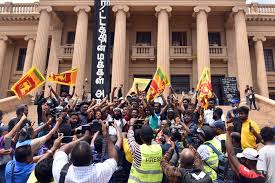
June 2022: Sri Lanka's Debt Crisis Reaches the Breaking Point
By June 2022, Sri Lanka was in the midst of the most severe economic crisis in its post-independence history. Years of fiscal mismanagement, heavy external borrowing, declining tourism revenues following the Easter terrorist attacks of 2019 and the COVID-19 pandemic, compounded by ill-timed tax cuts and a failed experiment with rapid agricultural reform, had pushed the country to the edge. Foreign exchange reserves were nearly exhausted, fuel and food shortages were widespread, and inflation was spiraling.
The principal protagonists were President Gotabaya Rajapaksa and Prime Minister Ranil Wickremesinghe, who struggled to manage a rapidly deteriorating situation. Ordinary Sri Lankans endured hours-long queues for fuel, rolling blackouts, and shortages of essential medicines. Public anger erupted into mass demonstrations, culminating in the "Aragalaya" protest movement that would eventually force Rajapaksa from office.
In April 2022, Sri Lanka suspended payments on its external debt, becoming the first Asia-Pacific sovereign in decades to default on its international obligations. By June, negotiations with the International Monetary Fund and major creditors had become a matter of national survival.
The crisis unfolded against a turbulent global backdrop. Russia's invasion of Ukraine had sent energy and food prices sharply higher. Central banks around the world were raising interest rates to combat inflation, tightening global financial conditions. Emerging markets from Ghana to Pakistan faced mounting debt pressures, prompting renewed debates about sovereign debt sustainability.
Sri Lanka's collapse became a cautionary tale for policymakers and investors alike—a reminder that external shocks can expose long-standing structural weaknesses, and that confidence, once lost, can disappear with remarkable speed.
Today in emerging markets history...
June 22, 1941: Operation Barbarossa and the Opening of History's Largest Front
At dawn on June 22, 1941, Nazi Germany launched Operation Barbarossa, the largest military invasion in history. More than three million German and Axis troops crossed the Soviet frontier, shattering the 1939 Molotov-Ribbentrop Pact and opening the Eastern Front of World War II.
The principal protagonists were Adolf Hitler and Joseph Stalin. Hitler viewed the Soviet Union as both an ideological enemy and a source of the land, resources, and agricultural wealth he believed Germany needed to dominate Europe. Stalin, despite numerous intelligence warnings, was caught largely unprepared for the scale and timing of the assault.
German Army Groups North, Center, and South surged toward Leningrad, Moscow, and Ukraine. Initial Soviet losses were catastrophic: entire armies were encircled, millions of soldiers were killed, wounded, or captured, and vast territories fell under German occupation. Yet the campaign would ultimately become the turning point of the war. The Soviet Union absorbed the blow, relocated industry eastward, mobilized its enormous manpower reserves, and eventually reversed the invasion at staggering human cost.
Elsewhere, the world was already engulfed in conflict. Britain stood alone in Europe after the fall of France. In North Africa, British and Axis forces were battling for control of the Mediterranean. The United States remained officially neutral, though President Franklin D. Roosevelt was steadily increasing support for the Allies. Japan was expanding its influence across East Asia, setting the stage for the Pacific War later that year.
Few dates have altered the course of history more profoundly than June 22, 1941. The struggle unleashed that morning would determine the future of Europe and shape the geopolitical order that emerged after 1945.
Colombia’s 2026 Presidential Election: One of the Tightest Races in History
In one of the most dramatic and polarized elections in modern Colombian history, right-wing outsider Abelardo de la Espriella (Defensores de la Patria) has emerged victorious in the presidential runoff by the slimmest of margins. With nearly all votes counted, De la Espriella secured approximately 49.66% (~12.96 million votes) against leftist Senator Iván Cepeda (Pacto Histórico) at 48.70% (~12.71 million votes) — a difference of just ~248,000–250,000 votes, or under 1 percentage point.
This makes 2026 the narrowest runoff in percentage terms since Colombia introduced the two-round system in 1991 — surpassing even the intensely contested 2022 election. Four years ago, Gustavo Petro defeated Rodolfo Hernández by roughly 688,000 votes (50.42% to 47.35%, a ~3.07-point margin) in a highly polarized contest that brought the left to power for the first time. The 2026 result reflects even deeper divisions, with blank/null votes reportedly rivaling the margin of victory and turnout around 63-64%.
De la Espriella, a Trump-endorsed businessman and lawyer known as “El Tigre,” campaigned on tough security measures, anti-drug trafficking policies, and stronger U.S. ties. His razor-thin win sets the stage for a challenging governance environment amid ongoing polarization, security concerns, and economic pressures — including the growing dominance of the illicit cocaine economy.
As EM investors track implications for Colombia’s credit story, fiscal policy, oil sector, and rule of law, this outcome highlights the country’s persistent political volatility.
Full article by El Espectador (in Spanish): https://t.co/nsE7HIslzF
What are your thoughts on how this narrow mandate will shape Colombia’s trajectory in the coming years — particularly on security, investment climate, and relations with the U.S. and markets?
#Colombia #EleccionesColombia2026 #EmergingMarkets #LatinAmerica #PoliticsAndMarkets #Geopolitics
Today in emerging markets history...
June 2013: When Brazil Took to the Streets
In June 2013, Brazil witnessed the largest wave of public demonstrations since the end of military rule nearly three decades earlier. What began as protests against modest increases in bus fares in São Paulo quickly evolved into a nationwide movement encompassing frustrations over corruption, inadequate public services, rising living costs, and government spending on preparations for the 2014 FIFA World Cup.
The principal protagonists were not traditional political parties but millions of ordinary Brazilians—students, workers, and middle-class citizens—mobilized initially by the Movimento Passe Livre (Free Fare Movement). President Dilma Rousseff found herself confronting a crisis that exposed growing discontent beneath the surface of what had been celebrated internationally as Brazil's economic success story. Images of demonstrators filling avenues from São Paulo to Rio de Janeiro and Brasília captured the world's attention.
The protests occurred during a period of global uncertainty. The Eurozone was still recovering from its sovereign debt crisis, the Arab Spring's aftermath continued to reshape the Middle East, and emerging markets were grappling with the consequences of the U.S. Federal Reserve's impending "taper" of monetary stimulus. Brazil, long viewed as a rising BRICS power, suddenly appeared vulnerable to the same social and institutional strains affecting many developing democracies.
Although the demonstrations subsided, their political consequences endured. The June Protests shattered assumptions about public satisfaction, weakened confidence in Brazil's political establishment, and helped set the stage for the turbulent years that followed—including recession, corruption investigations, and the eventual impeachment of President Rousseff.
Looking back, June 2013 stands as a pivotal moment when a generation of Brazilians demanded that economic progress be matched by more effective governance and accountable institutions.
Clean LinkedIn Post (ready to copy-paste):
Thought-provoking analysis on Venezuela’s current situation and the broader implications of U.S. intervention.
In “Venezuela at a Crossroads: Cautionary Lessons on Intervention,” Dr. Christopher Zambakari examines the January 2026 U.S. military operation that led to the capture of President Nicolás Maduro. Framed by the Trump administration as a law enforcement action (building on prior indictments for narco-terrorism), the piece explores the legal architecture—including precedents like the 1989 Panama operation—tensions with international norms (e.g., UN Charter), executive power vs. congressional oversight, and historical U.S. interventions in Latin America.
Key points from the article:
•The operation revives fundamental questions about sovereignty, constitutional authority, and the durability of the rules-based international order in an era of great-power competition.
•The U.S. frames the intervention as a transnational law enforcement action rather than an act of war, allowing it to bypass congressional approval under the War Powers Resolution while drawing on precedents like the Noriega capture in Panama.
•It highlights the persistent tension between international legal norms (e.g., UN Charter prohibitions) and broad interpretations of U.S. executive power, supported by Office of Legal Counsel memos.
•Historical context shows this fits a long pattern of U.S. interventions in Latin America (over 40 since 1898), raising risks to regional stability and inviting reciprocal actions by other powers.
•While acknowledging the Maduro regime’s crises, the piece cautions about the challenges ahead for any transition and the potential erosion of global governance norms.
Zambakari highlights the risks to sovereignty, regional stability, and the rules-based order, while noting the complex realities of great-power competition and the challenges ahead for any transition. A timely read for anyone following EM credit, geopolitics, and Latin America dynamics.
Highly recommended—especially Part 1 of this insightful three-part series.
Credit to author: Dr. Christopher Zambakari, MBA, MIS, LP.D. (Doctor of Law and Policy from Northeastern University), Founder & CEO of The Zambakari Advisory, Hartley B. and Ruth B. Barker Endowed Rotary Peace Fellow, and expert in international law, security, governance, conflict management, and state-building.
Link: https://t.co/3z9YvUQMva
#Venezuela #EmergingMarkets #Geopolitics #LatinAmerica
Francis Fukuyama recently shared a compelling piece titled “The Myth of Authoritarian Efficiency” by political scientists Jørgen Møller and Svend-Erik Skaaning (Aarhus University / V-Dem project).
The article dismantles the popular notion that authoritarian regimes—particularly China—are simply better at “getting things done.” Drawing on historical data and comparative evidence, the authors argue that democracies consistently outperform autocracies over the long term across critical domains:
• Military effectiveness: Democracies have won more than 80% of wars since 1815. Greater legitimacy enables citizens to make greater sacrifices, and democratic alliances prove more durable.
• Economic performance: While autocracies can drive catch-up growth to middle-income levels, they struggle to transition to innovation-driven, knowledge economies that require rule of law, intellectual property protection, and open debate. High-quality democracies show a modest but robust long-run growth advantage.
• Avoiding catastrophe: Autocracies periodically produce large-scale man-made disasters (Mao’s Great Leap Forward, Soviet collectivization). Institutional checks and public scrutiny in democracies make comparable failures rare.
• Crisis management & environment: Transparency, independent science, and accountability lead to better outcomes on pandemics, climate policy, and environmental indicators. China’s zero-COVID flip-flop and overstated economic statistics illustrate the risks of centralized, unaccountable decision-making.
The authors acknowledge democracies can be slow and messy, but emphasize that self-correction mechanisms ultimately make them more resilient and effective than systems that concentrate power without feedback loops.
Francis Fukuyama, author of the landmark book The End of History and the Last Man, continues to spark important conversations about the enduring strengths of liberal democracy in an era of renewed authoritarian confidence.
Full article (highly recommended):
https://t.co/rdLYptPLnY
What’s your take—do you see evidence of this “myth” playing out in emerging markets or great-power competition today?
#Democracy #Geopolitics #China #EmergingMarkets #InternationalRelations #PoliticalEconomy
Today in emerging markets history...
June 2006: Kuwait Debates Reform, Succession, and the Future of Gulf Governance
By June 2006, Kuwait found itself navigating a pivotal moment in its political evolution. While many of its Gulf neighbors remained firmly anchored in traditional monarchical structures, Kuwait was engaged in vigorous debates over parliamentary authority, electoral reform, and the balance of power between elected institutions and the ruling family.
The immediate backdrop was an unprecedented succession crisis earlier that year. Following the death of Emir Jaber Al-Ahmad Al-Sabah, the National Assembly played a historic role in resolving a dispute within the ruling Al Sabah family, ultimately confirming Sabah Al-Ahmad Al-Jaber Al-Sabah as the country's new ruler. The episode demonstrated the unusual strength of Kuwait's parliament compared with other Gulf monarchies.
By June, attention had shifted toward broader political reforms. Opposition groups and reform-minded legislators were pressing for changes to the electoral system, arguing that larger electoral districts would reduce patronage and strengthen representative government. The resulting debates highlighted a central question in Kuwaiti politics: how to reconcile traditional monarchical authority with growing demands for accountability and participation.
The broader regional environment made these discussions particularly noteworthy. The Iraq War continued just across Kuwait's northern border, reshaping security calculations throughout the Gulf. Meanwhile, high oil prices were generating enormous revenues across the region, fueling economic growth while raising questions about governance, modernization, and political reform.
Globally, 2006 was a period of relative economic optimism before the financial crisis that would emerge two years later. Energy-exporting states enjoyed strong fiscal positions, and many observers believed the Middle East might be entering a new era of gradual political opening.
Historically, June 2006 represents an important chapter in Kuwait's distinctive political development. While not a revolution or dramatic transition, the debates surrounding succession and parliamentary reform underscored Kuwait's role as one of the Gulf's most politically pluralistic states—a country seeking to balance tradition, legitimacy, and representative governance in a rapidly changing region.
Today in emerging markets history...
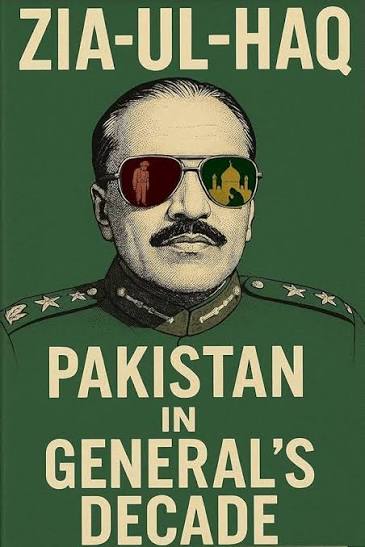
June 1988: The Final Months of Zia-ul-Haq's Pakistan
By June 1988, Pakistan stood at a political crossroads. After nearly eleven years of military rule, President Muhammad Zia-ul-Haq was navigating a period of intense political maneuvering as questions about succession, democratization, and the future of the state grew increasingly urgent.
Zia had come to power through a military coup in 1977 that ousted Prime Minister Zulfikar Ali Bhutto, who was later executed following a controversial trial. During the ensuing decade, Zia reshaped Pakistan through a combination of military rule, Islamization policies, and close alignment with the United States during the Soviet-Afghan War.
By mid-1988, however, the political landscape was shifting. Earlier that year, Zia had unexpectedly dissolved parliament and dismissed Prime Minister Muhammad Khan Junejo, reigniting uncertainty about the country's democratic future. Opposition figures, including Benazir Bhutto, were mobilizing in anticipation of future elections, while the military establishment weighed its options regarding a post-Zia political order.
The international backdrop was equally dramatic. The Cold War was entering its final phase. Soviet leader Mikhail Gorbachev was pursuing reforms at home, while Soviet forces were preparing to withdraw from neighboring Afghanistan after nearly a decade of war. Pakistan had been a frontline state in that conflict, serving as a critical conduit for U.S. and Saudi support to the Afghan mujahideen.
Few observers knew that the end was near. On August 17, 1988, only weeks later, Zia would die in a mysterious plane crash, abruptly transforming Pakistan's political trajectory.
Historically, June 1988 represents the final chapter of one of Pakistan's most consequential military regimes. The uncertainty and maneuvering of those months would shape the country's transition back toward electoral politics and influence civil-military relations for decades to come.
Today in emerging markets history...
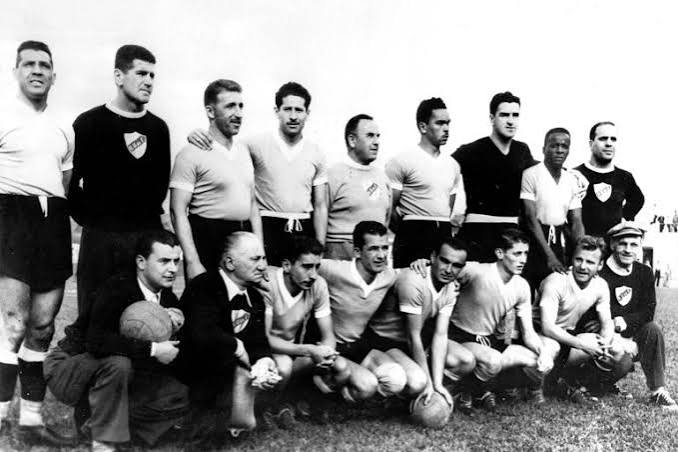
June 1950: Brazil Prepares to Host the World (Cup)
By June 1950, Brazil was preparing for what many believed would be its grand arrival on the global stage. The country was weeks away from hosting the 1950 FIFA World Cup, the first World Cup held after World War II, and the event carried significance far beyond sport. For Brazilian leaders and much of the public, it represented a powerful symbol of national modernization, economic progress, and international prestige.
The centerpiece of these ambitions was the newly constructed Maracanã Stadium in Rio de Janeiro. At the time, it was the largest stadium in the world and a monument to Brazil's confidence in its future. Politicians, journalists, and intellectuals saw the tournament as an opportunity to showcase a rapidly urbanizing nation that aspired to join the ranks of the world's leading powers.
The country itself was undergoing important political change. President Eurico Gaspar Dutra presided over a democratic government following the end of the Estado Novo dictatorship of Getúlio Vargas. Economic development, industrialization, and national integration were increasingly central themes of public life.
The broader international context was equally dramatic. The Cold War was intensifying, and only weeks later the Korean War would erupt, transforming global geopolitics. Europe was rebuilding from the devastation of World War II, while newly independent nations across Asia and the developing world were beginning to redefine the international order.
Against this backdrop, Brazil viewed the World Cup as evidence that it belonged among the rising nations of the postwar era. The tournament became a projection of national ambition—a statement that Brazil was no longer a distant exporter of coffee and commodities but a modern country with global aspirations.
Historically, June 1950 captures a moment of extraordinary optimism. Although the tournament would later end in heartbreak with the famous defeat to Uruguay known as the Maracanazo, the preparations themselves reflected a nation increasingly confident about its future and its place in the world.
Today in emerging markets history...
June 1990: Ukrainian Nationalism Gains Momentum as the Soviet Union Begins to Unravel
By June 1990, the political foundations of the Soviet Union were beginning to crack, and nowhere was this more evident than in Ukraine. As reforms initiated by Soviet leader Mikhail Gorbachev loosened political controls, Ukrainian nationalist and democratic movements gained strength, challenging decades of centralized rule from Moscow.
The catalyst was not a single event but a growing wave of political awakening. Organizations such as Rukh, the Popular Movement of Ukraine, mobilized citizens around demands for greater autonomy, cultural rights, environmental accountability, and ultimately national sovereignty. Public demonstrations drew increasingly large crowds, while newly elected reform-minded deputies began pressing for political change within the Ukrainian Soviet Socialist Republic.
The memory of historical grievances also played an important role. Many Ukrainians were revisiting long-suppressed discussions of Stalin-era repression, the Holodomor famine of the 1930s, and the environmental consequences of the Chernobyl disaster, which had deeply undermined confidence in Soviet governance.
The broader international context was extraordinary. Across Eastern Europe, communist regimes were collapsing with remarkable speed. The Fall of the Berlin Wall had occurred only months earlier. Democratic governments had emerged in Poland, Hungary, and Czechoslovakia, while Germany was moving toward reunification. The Cold War order that had defined global politics for nearly half a century was rapidly dissolving.
In Ukraine, these developments fueled a growing conviction that political destiny should no longer be determined in Moscow. Within weeks, the Ukrainian parliament would adopt the Declaration of State Sovereignty, a crucial milestone on the path toward independence.
Historically, June 1990 represents a turning point in the emergence of modern Ukraine. What began as a movement for greater autonomy soon evolved into a struggle for full statehood, culminating in independence in 1991 and laying the foundations for a national identity that continues to shape European geopolitics today.
Peru’s Politics: A Chaotic Punchline, But the Economy Keeps Chugging?
In a sharp New Yorker piece, Daniel Alarcón captures Peru’s profound political dysfunction ahead of the June 7 runoff election (Keiko Fujimori vs. Roberto Sánchez, from a chaotic first round with 36 candidates).
Key highlights:
•Peru is on track for its 9th president in a decade—only the third elected. Recent short-lived leaders include one who quickly scrubbed misogynistic tweets and another pushing child marriage. Four ex-presidents imprisoned; over 90% of Peruvians distrust the government.
•Congress dominates amid revolving-door executives, often aligned with local interests tied to illicit activities. This has led to fiscal guardrail erosion, unfinished public projects (nearly half since 2012), underfunded scholarships, and permanent spending commitments that could strain the budget if commodity prices falter.
Yet, macro indicators remain surprisingly resilient:
•Strong growth (3.4% last year, outperforming many regional peers), record foreign reserves (~30% of GDP), low inflation, and robust debt metrics.
•Driven by near-peak gold/copper prices and mining investment—legal exports alone massive, plus informal/illegal sectors.
•Economist Carolina Trivelli notes the “pretty snapshot” but warns of underperformance relative to commodity tailwinds, poor execution on infrastructure/education/health, and vulnerability to shocks like El Niño.
The article’s core tension: Politics decoupled from the economy—for now. But chronic instability, corruption, and short-termism risk long-term damage, eroding public trust and investment capacity. As political scientist Alberto Vergara observes, in Peru, “caring about politics is not rational.”
For EM credit folks, Peru remains a fascinating case of commodity-driven resilience amid institutional fragility. Sovereign and corporate credits (esp. mining-related) have held up, but governance risks loom large for sustainability. The runoff winner will likely lack a strong mandate, with Congress retaining outsized power.
Worth a read for anyone following LatAm: https://t.co/IhpPD88xgn
What are your thoughts on Peru’s decoupling—or the next risks on the horizon? #EmergingMarkets #LatAm #PeruPolitics #CreditStrategy
Excellent new op-ed by Josephine Lechartre (@JoLechartre) in The National Interest on the structural challenges facing any potential transition in Venezuela.
Lechartre makes a compelling case that Venezuela is not simply transitioning from authoritarian rule—it is transitioning from a criminalized state. Under Chávez and Maduro, illicit networks (notably the fragmented Cartel de Los Soles and links to groups such as Tren de Aragua and Mexico’s Sinaloa Cartel) were deliberately cultivated within segments of the military, security apparatus, and political elites to secure loyalty and control. Removing Maduro does not automatically dismantle these embedded structures.
She draws sharp lessons from Guatemala’s CICIG (the UN-backed International Commission against Impunity), which successfully targeted “macro-criminality”—the institutional ties between organized crime, elites, and state institutions—delivering prosecutions, stronger judicial capacity, and a meaningful reduction in violence before political backlash led to its dismantling.
For Venezuela, she argues that sustainable democratization and economic normalization will require a tailored international mechanism (with broad regional and multilateral backing, not a unilateral U.S.-led effort) focused on dismantling these state-crime linkages. Critical design considerations include a politically viable narrower mandate, smart sequencing that starts at mid-level networks to build capacity and support, and elements of conditional accountability or reconciliation to encourage cooperation.
As someone who has covered Venezuela’s credit and political-risk landscape for years, this piece is a timely reminder that institutional integrity and the rule of law are foundational to any durable recovery—not secondary issues that can be addressed later. Without confronting these criminalized networks, the risks of persistent corruption, violence, and failed consolidation remain high (as Mexico’s post-2000 experience with groups like Los Zetas illustrates).
Highly recommended reading for anyone following LatAm geopolitics, governance, and emerging markets:
https://t.co/A4f3YPW1yl
What are your views on the sequencing of accountability versus reconciliation in complex transitions like this?
#Venezuela #EmergingMarkets #LatAm #PoliticalRisk #Governance #RuleOfLaw