Up for debate: how and when the end will truly come for the Department of Government Efficiency, which triggered thousands of federal employees to leave their jobs and voided billions of dollars in government contracts.
https://t.co/HoVMrxoNiZ
Thomas Jefferson recorded the weather on July 4, 1776. It was in the 60s and 70s. Today's forecast? Around 100 degrees.
Here's a fascinating look at the weather on the day America declared its independence — and how it compares with today:
https://t.co/aXL8DJHuyq
26 years ago today, the dot-com bubble peaked
At the time, these were the biggest tech companies on earth:
• Yahoo: $125B company → delisted
• Sun: Powered the internet → gone
• Intel: Dominant chipmaker → -20%
• Cisco: Most valuable stock → flat
• Microsoft: The "boring" pick → +720%
• Amazon: A bookstore → +6,290%
But the company nobody was watching in 2000:
Nvidia → +73,000%
The next Nvidia is out there right now
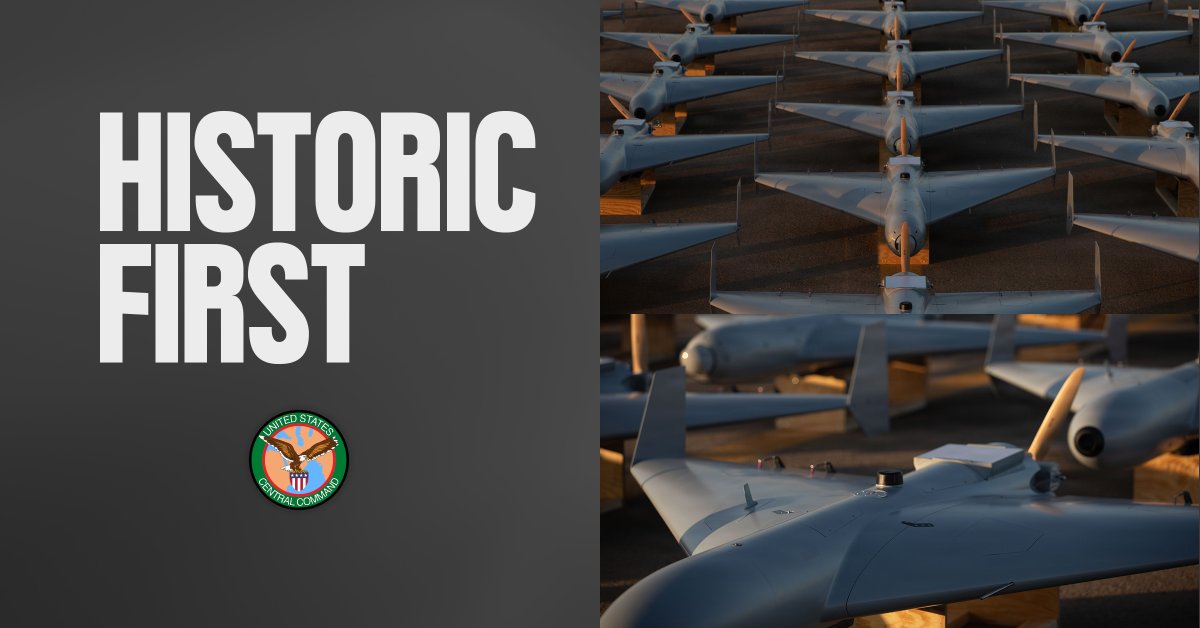
CENTCOM's Task Force Scorpion Strike - for the first time in history - is using one-way attack drones in combat during Operation Epic Fury. These low-cost drones, modeled after Iran's Shahed drones, are now delivering American-made retribution. 🇺🇸
Make no mistake: France’s true comparative advantage isn’t wine or luxury goods—it’s the ruthless extraction of tourism dollars...We’re being out-traded, one overpriced pastry at a time, by a nation whose strategic horizon spans centuries...
https://t.co/MQoZhji9YC
#tourism
Students most commonly used Claude to create and improve educational content (39.3% of conversations) and to provide technical explanations or solutions (33.5%).
Even if you don’t need to know finance to do your day-to-day job, the more conversant you are on the subject, the better off you’ll be. https://t.co/ntZI14FOWQ
With its threatening emails, mass firings and its hoovering-up of sensitive government data, DOGE has provoked something close to panic among civil servants. But to what end? https://t.co/q6mO98cFil
I've spent hours and hours thinking about how AI is going to change writing. This is a 90-minute distillation of everything I've learned.
Some things I believe:
1. The combination of LLM-driven humor and image generation means that we're about to enter the golden age of memes.
2. The best writers will be fine. Robert Caro and Dostoevsky aren’t about to be disrupted by ChatGPT.
3. What are the different models like? ChatGPT is your friend who makes a lot of good points, but it’s kinda boring, Claude is your hippie friend who loves to get vulnerable but takes the whole “express yourself” thing a little too far, and Grok is your unhinged friend who leans a little too hard into tinfoil hat theories, but is always a trip to jam on ideas with.
4. People who say that AI writing is low-quality aren’t realizing that quality exists along two dimensions: (1) the absolute quality of the writing and (2) how tailored the writing is to your interests at the time.
5. I’ll tell you this: What writers are doing with AI behind closed doors is a long way ahead of what's publicly understood. I don't expect this to change anytime soon because of the social stigma associated with AI-enhanced writing. Because of that, if you want to see the cutting edge, you're gonna have to piece things together through private conversations and group chats.
6. If you want to follow what's happening in AI, remember this quote from William Gibson: “The future is here, it’s just not evenly distributed yet.” You can get a glimpse of the future by looking at how a small percentage of writers are already using AI.
7. I’m bearish on writers who are currently using AI to write for them, and bullish on writers who are currently using AI to write with them.
8. What kinds of writing will continue to be written by humans? Ones that speak to our humanity. People are interested in people. Their stories, their struggles, their emotions, their drama.
9. Almost all utilitarian writing, where the goal is to convey information, not do it beautifully, will be written by AI.
10. In some ways, AI is the end of slop. So many Google search results are slop. LinkedIn posts are slop. The way Twitter got taken over by Threadbois in 2021 was also slop. AI-generated writing is already better than all of those things, so why would you read them now?
11. AI will be tougher on writers than readers. Readers will be exposed to some slop, but the Internet will be good about filtering it out. Writers, though, are now competing against ever-improving LLMs, which are getting better and better by the month.
12. Humans will contribute with unique data or perspectives. The famous Peter Thiel interview question doubles as a good writing prompt: “What very important truth do few people agree with you on?”
13. New technologies breed new kinds of art. Ever notice how flat 13th or 14th century Medieval art looks? And how different that art looks from the Renaissance art created in the 15th and 16th centuries? Technical innovations like the camera obscura and perspective grids are behind this. Similarly profound changes will come to the writing world because of AI (credit to @jmrphy for the idea here).
14. Satya Nadella says: “The new workflow for me is I think with AI and work with my colleagues.” When it comes to discovering ideas, I've also found that jamming with an LLM is more productive than doing it with most people I know (save for a few giga-brain conversationalists).
15. Thought experiment: Will AI-writing be more like music or chess? With music, we don't care how a song is made. We just want it to be good. With chess, there's a huge market for watching human beings play even though the computers are already better. I think non-fiction writing will go the way of music. People won’t care how it was made. They’ll just care that it’s good.
16. AI has flipped the rules of tech adoption. Seasoned managers usually drag their feet with adopting new technology, but the ones I know love AI, while frontline workers struggle to see the point. My theory is that AI matches how managers already operate. Management has always been a kind of prompt engineering: set a vision, delegate, give feedback, iterate. But LLMs remove the drama that used to come with having a team. No 1-on-1s. No emotional tangles. It's like management without the headache. For frontline employees, things are different. They aren't as accustomed to setting a vision and giving feedback, so LLM prompting is a daunting and unfamiliar kind of work for them.
17. AI editors are already quite good. Sure, they aren’t as good as the world’s best editors, but they’re a fraction of the cost, they’ll instantly give you 80th percentile feedback, and they work 24/7. As a novelist recently said to me: “Paying an editor to review my novel costs me $7,000 and a 4-6 week turnaround time, whereas Claude costs me $1.25 and gets me results a few minutes later.” The edits definitely aren’t as good, but there’s a virtue to speed (and this guy isn’t a chump writer).
18. The way AI-skeptics hate on LLMs while using old models is like driving a ‘92 Honda while hating on a self-driving Tesla.
19. AI-generated fiction makes people very upset. A friend insists it’s like having sex with a robot. Doesn’t matter how good it is. It ain’t human-generated, and there’s something uniquely repulsive about that.
I’ve shared the full conversation below. It’s a solo-episode of me riffing on what I’ve learned about AI for ~90 minutes. If you’d rather watch it on YouTube or listen on Apple or Spotify, I’ve shared the links in the reply tweets.
And if you have any questions, I’ll be extra active in the replies for this episode.