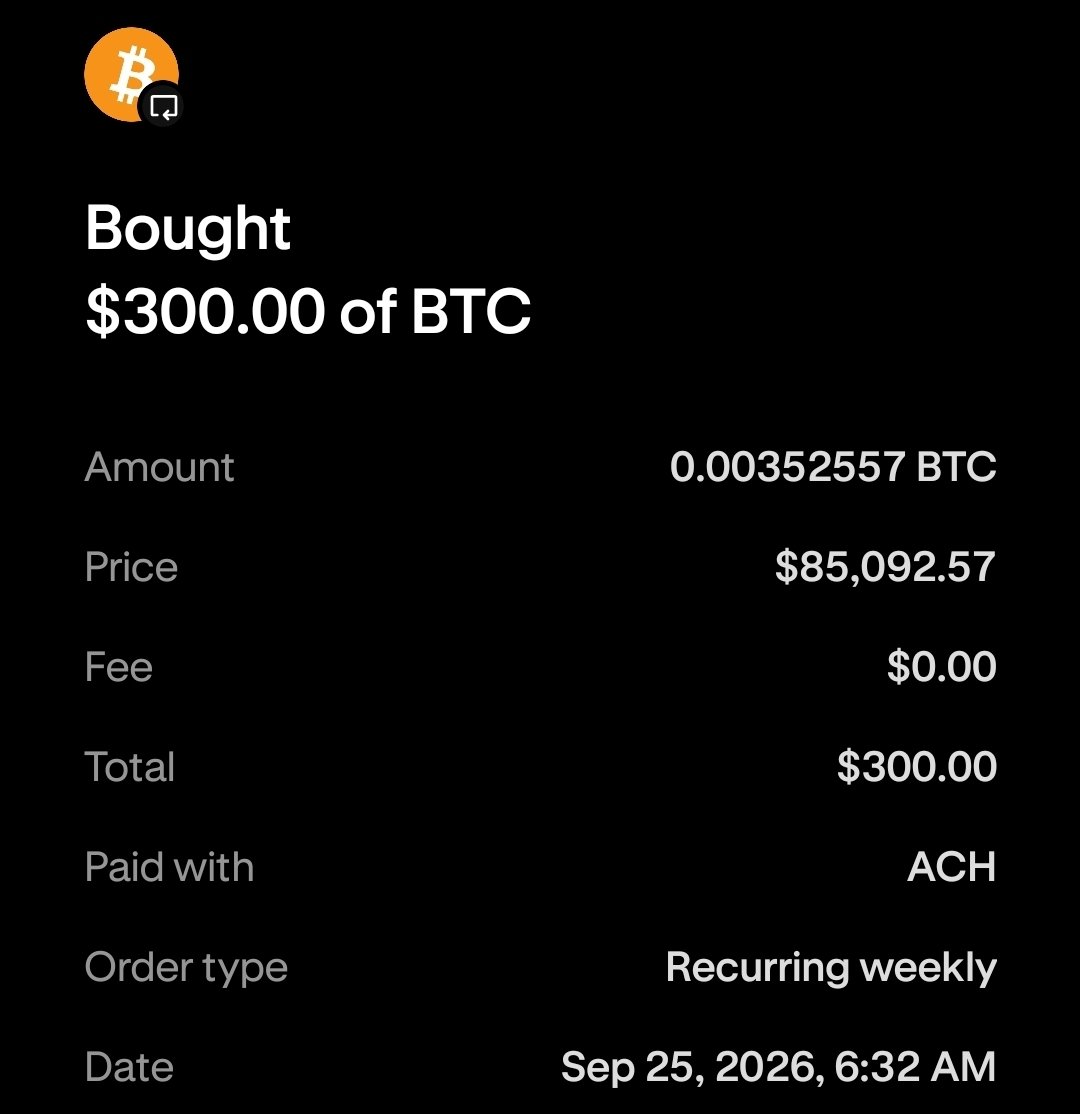
0.25 of 1.000000.
A quarter of a whole coin, built $300 at a time. No timing, no lump sums.
The climb has one rule: buy every week. Next stop: a whole coin.
@indexnforgetit Sad fact! The chart's own caption is the finding: income doesn't predict the spending.
Which is the whole problem with "I'll invest when I earn more." The habits scale with the paycheck unless something automatic gets there first.
Nobody controls Bitcoin's price. Everybody controls their savings rate.
Invest 20% of your income → ~35 years to freedom
40% → ~20 years
50% → ~15 years
Same market. Same returns. The only variable is the gap between what you earn and what you spend.
That gap is the fuel. The buys are just the engine.
@theficouple Missing the seventh: time.
All six of those can be true for two years and produce almost nothing. They only compound if they stay true for twenty, and that's the one most people can't hold.
@MDBitcoin The part I'd keep is that the window is always open, not closing.
Every week has been someone's "too expensive" and someone else's "wish I'd bought." I stopped ranking them and just buy Fridays.
No FOMO required. That's the point of a schedule.
@AccentInvesting All five run on the same mechanism: something that happens on a schedule whether you feel like it or not.
Gym day, buy day, bedtime. Motivation shows up for about a week. The calendar doesn't quit.
@TheBTCTherapist The buying back in is the hard part, not the selling.
Nobody who sold at $60,000 bought back at $65,000. They waited for $50,000, then $80,000 felt insulting. Getting out is one decision. Getting back in is a new one every week.
People ask what my exit price is. I don't have one.
My condition is a count, not a price. 2.0 BTC, then the weekly buys start going to the index instead.