“I wrote this because I can’t speak about it.
I wrote this because I want you to know that I will make sure that you live on.”
@RBLeipzig and @equipenatciv winger Yan Diomande on the life of his sister, Roxane. https://t.co/6wQmpdWTSi
In March 2014, Suzlon Energy sold one of its businesses for ₹2,000 crore, about 26 times what that business was worth on its own accounts. It would have been a remarkable sale, but for the fact that the buyer wasn't some outside investor. It was a subsidiary it had set up itself.🧵👇
This might genuinely be the CRAZIEST stat I’ve ever seen.
Out of all 341 La Liga players — including GOALKEEPERS — Kylian Mbappé ranks DEAD LAST in defensive contributions per 90.
Not among forwards. Not among attackers.
Dead last. 341st out of 341.
Good luck winning anything
All right, buddy, let’s get the chronology right
2023 - Max is already warned about the planned 2026 rules after seeing early simulator work. He says he doesn’t like the direction, especially the heavy reliance on battery power and energy management.
2023–2025 – almost nobody else pushes back, F1 and the FIA publicly sell 2026 as greener and more electric. Most drivers and media speak about it in neutral or positive terms.
Bahrain test 2026 – first big public rant
by Max. He says the cars are “not fun” to drive, calls it more like “Formula E on steroids,” and argues that F1 should get rid of battery power. He attacks the 50/50 split and says the increased electrical dependence is anti‑racing because it turns the sport into energy management instead of pure driving.
Hamilton says he needs a college degree to understand the tech part of it.
Australia 2026 – opening race under new regs. Mercedes are fastest, Ferrari are fast, Red Bull and McLaren are in trouble.
From free practice onward, Max is complaining that racing is completely dominated by battery deployment and harvesting windows. Around this phase (Australia/China), he drops the “Mario Kart” line, saying it’s not real racing anymore, just boosting past each other and then getting re‑passed when the battery is empty. He says that if someone likes this, they don’t understand what racing is.
Max and Oscar crash heavily during quali and recon lap.
George is happy.
Lando finds it “funny” and “ragebaits” says Max is only moaning because he’s slow and if he wants to leave he should.
Drivers of top cars react very differently. Hamilton praises the new era’s wheel‑to‑wheel action and calls some of the races among the best racing he has seen.
Lando initially pushes back at Max’s negativity and basically says that if Max doesn’t like it, he can leave F1 because everyone else is enjoying the cars.
Team bosses (Toto Wolff) and a lot of media frame Max’s criticism as frustration because Red Bull are uncompetitive.
China 2026 – contrast hardens
By China, Max doubles down and repeats that the racing is like Mario Kart: you hit the boost, pass, then get re‑passed when you’re out of energy. He calls it a joke and says this isn’t proper F1.
Hamilton says it’s the best racing he’s ever done.
The narrative in coverage becomes: Max hates it, Ham, Lando and George love it.
Charles isn’t entirely happy.
Lando, who originally defended the new regs and mocked Max’s stance, contradicts himself, admitting he’d said some things just to see the reaction.
Alonso calls it the “battery world championship”
Charles hates what qualifying has become
Japanese GP 2026 –
Ham vs Lando exposes the flaw
their fight makes the energy‑management issue impossible to ignore.
Their duel shows how much their w2w battle depends on hybrid deployment and harvesting, not just on racecraft, braking and throttle.
Ollie has a massive crash.
Analysis after the race focuses on how the energy rules can effectively “force” a driver into certain moves or prevent them from doing what they strategically want, because the hybrid system’s behaviour and the regulations dictate when you can push or must recharge.
Lando says “it doesn’t matter what we say”
He publicly becomes much more sceptical.
Carlos and Charles publicly show their disdain.
Lando’s comments line up very closely with the same issues Max has been screaming about since Bahrain: the battery, deployment rules, and energy windows overriding driver choice.
Media tone shift after Norris’s statement, a lot of Brit‑leaning analysis suddenly take the battery‑over‑driver issue far more seriously.
The same core criticisms that the hybrid rules are forcing artificial moves and constraining racecraft are now being discussed in detail, even though Max had been saying almost exactly this since 2023 and then relentlessly from the first 2026 test and the opening races.
Max should learn English so Brundle can understand.
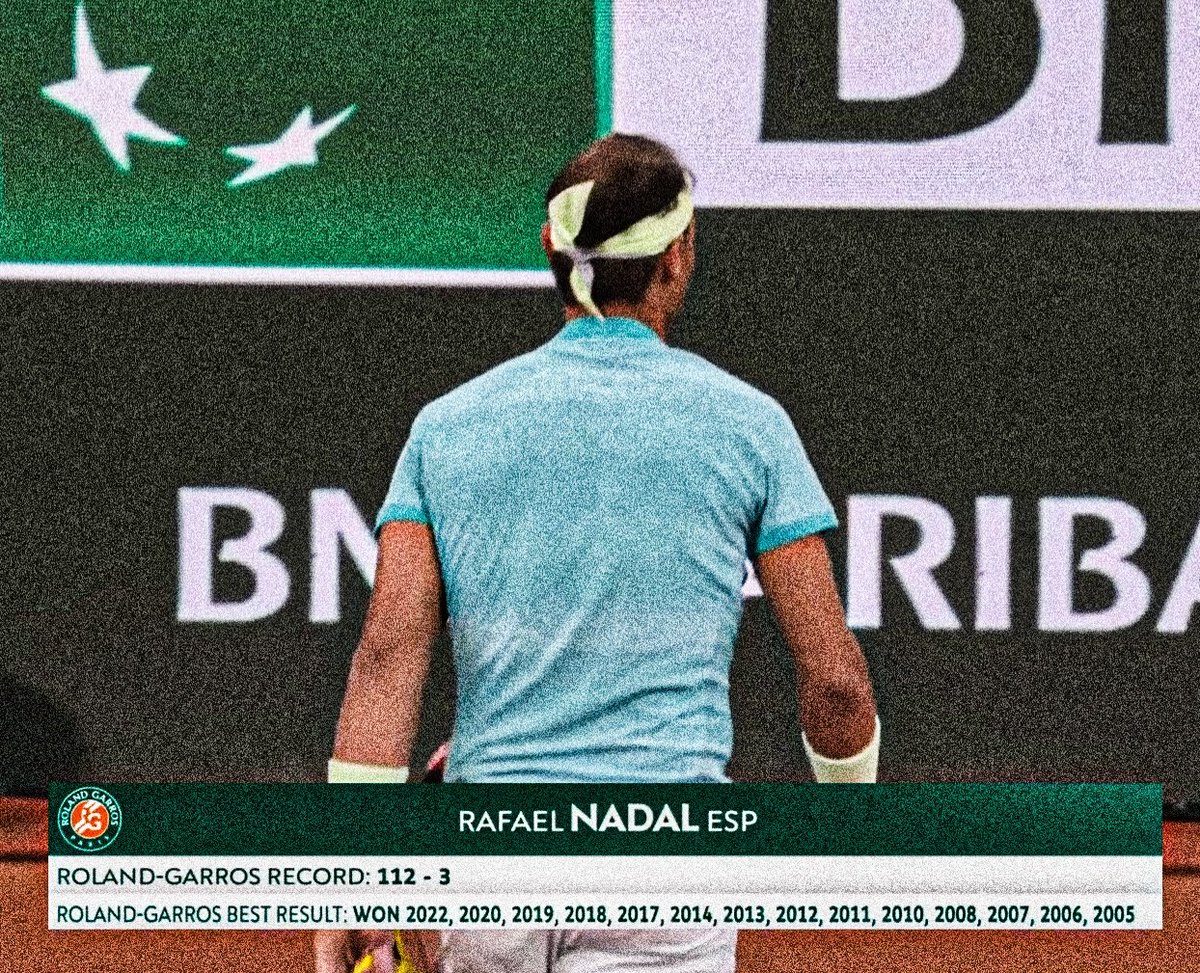
“Dad, was Nadal actually as good as they say?”
“Son, he defeated peak Federer at Wimbledon. Beat prime Djokovic in two USO finals. Olympic Gold in his first try. Won AO from 0-2 down at 36... he was the best.”
“Wow! But that's all on grass & HC. Was he not that good on clay?”
deberíamos hablar más del zumbado este eh, descubría fórmulas complejisimas que eran correctas pero no sabía ni demostrarlas porque decía q se las había revelado noseque diosa en sueños. gangster de época.
📢 BIG ANNOUNCEMENT!! 📢
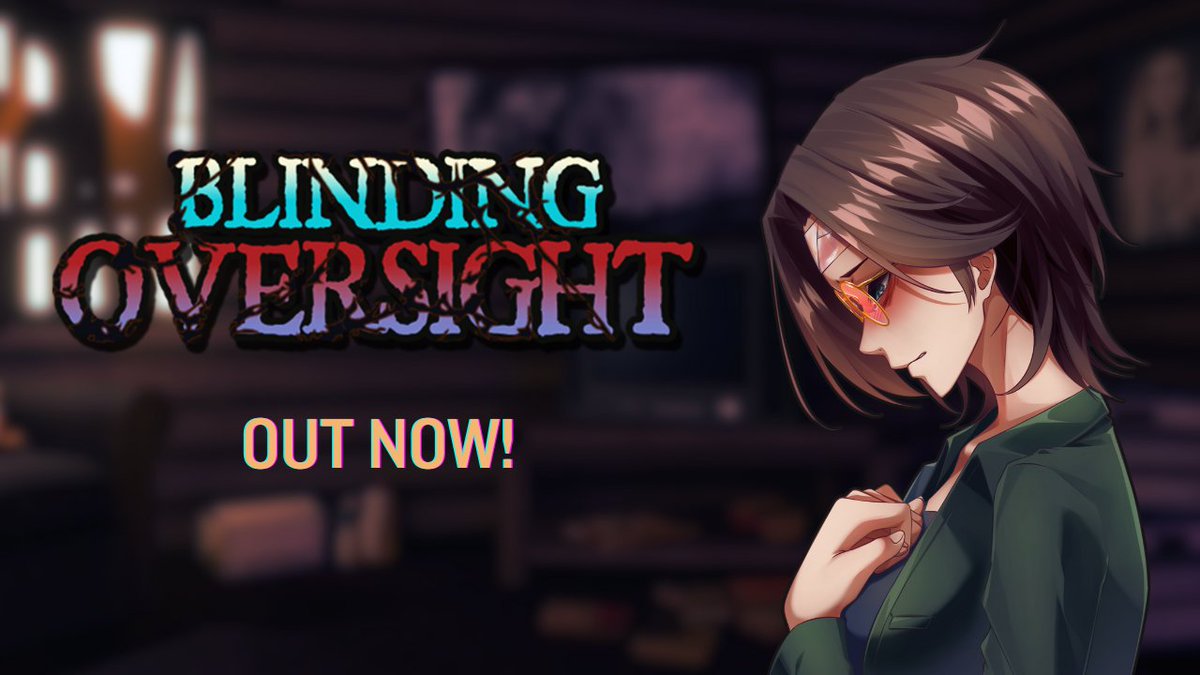
Blinding Oversight is OUT NOW on Steam!! 🧸🏚️
You can now finally get into Emma's shoes and explore a world with mysteries and thrill. And a few spooks... 💀
#indiedev#horrorgame#indiehorror
‼️HUGE ANNOUNCEMENT ‼️📢
Blinding Oversight releases on November 28th, 2025!📅That's less than a month away 🔔
I am nervous, I am excited. Please wishlist. ⭐️
Leaving Meta and PyTorch
I'm stepping down from PyTorch and leaving Meta on November 17th.
tl;dr: Didn't want to be doing PyTorch forever, seemed like the perfect time to transition right after I got back from a long leave and the project built itself around me.
Eleven years at Meta. Nearly all my professional life. Making many friends for life. Almost eight years leading PyTorch, taking it from nothing to 90%+ adoption in AI. Walking away from this was one of the hardest things I've ever done. But I'm leaving with a full heart.
PyTorch handles exascale training now. It powers foundation models that are redefining intelligence. It's in production at virtually every major AI company. It's taught in classrooms from MIT to rural India. The tools I dreamed about making accessible? They are. The barrier to entry I wanted to lower? It's almost gone.
To be clear, there’s so much more to do. As long as AI evolves at a breakneck pace, PyTorch will continue to play catch up. Obsessing over the yet-to-come sometimes makes us forget how much we’ve already done.
To everyone who built this with me—who believed research should be joyful, that tools should be elegant, that open source changes everything—thank you. This wasn't my journey. It was ours.
What's next for me? Something small. Something new. Something I don't fully understand yet. Something uncomfortable. I could have moved to something else inside Meta. But I needed to know what's out there. I needed to do something small again. I couldn't live with the counterfactual regret of never trying something outside Meta.
It's very hard to leave. I probably have one of the AI industry’s most leveraged seats, I lead the software layer that powers the entire AI industry. Every major AI company and hardware vendor are on a speed dial. This kind of power is really hard to give up. But curiosity ultimately won out in my head.
Keep making AI delicious and accessible. I'll be watching. Probably filing issues. Definitely staying involved.
Is PyTorch going to be okay?
I don't want to be doing PyTorch forever. I don't want to be like Guido or Linus— bound to a single thing for decades. Last November, coinciding with the birth of my daughter, I started planning my exit with Aparna. My goal was to leave PyTorch in a good and stable place.
By this August, during the second half of my parental leave, I knew: Edward, Suo, Alban, Greg, John, Joe and Jana were ready. The team faced hard people, product, technical and organizational problems and didn’t feel the need to lean back on me to solve these for them (unlike in the past). The product story they crafted for the PyTorch Conference was coherent—really coherent. The things I'd flagged red were turning healthy. The project didn't need me anymore. Unlike 2020-2022 (when I stepped down to go do robotics and came back when Lin, Dima and Dwarak left), I have strong confidence that this time PyTorch is truly resilient. The most aligned culture carriers of PyTorch – Greg, Alban, Ed, Jason and Joe are at the decision table now, and people with strong value alignment – Suo, John and Jana have joined them at the table. And there’s a long list of equally value-aligned people willing to sit at the table should any of these people leave. There are many little things that make up my confidence on the people – John worked on Julia and open-source for a very long time (in fact we hacked a Torch.jl in 2015), Suo has been the strongest systems builder and strategic partner I’ve had for the past two years, and Jana worked on resilient core systems for a very long time, I’ve had long technical and organizational discussions with her over the past few months that give me confidence. And the product lineup and execution in 2025 should be sufficient evidence for any remaining doubt.
I’m confident that this band of PyTorchers are going to do exceptionally well. PyTorch might change in flavor because I no longer impose my own taste from the top, but I’m confident that the values are going to stay intact and the product is going to be awesome.
My time at Meta
The early years of FAIR were absolutely magical. I was part of a small family of absolutely brilliant people building state-of-the-art AI out in the open. From working on GANs with Emily Denton, Rob Fergus, Leon Bottou, Martin Arjovsky and the (now legendary) Alec Radford to building Starcraft bots with Gabriel Synnaeve, to building the first FAIR Cluster with Howard Mansell, to working on object detection with Adam Lerer and Piotr Dollar, to building PyTorch. It was more fun than I can describe in words. 2015 and 2016 were probably the most productive and professionally enjoyable years of my life. I’ll probably romanticize this period of my life forever.
When I joined FAIR, I had massive impostor syndrome, and the first 3 months were very very difficult. I can’t credit Andrew Tulloch enough for being the most thoughtful, kind and welcoming mentor, without whom I wouldn’t have made it. I’m so damn bullish for Meta just from the fact that he’s back.
---
My time on PyTorch was special.
I loved every part of building it—designing it, managing it, being the PM, TL, comms lead, doc engineer, release engineer, squashing bugs, growth hacking, turning it into a coherent product with hundreds of people, transitioning it to industry stakeholdership – the whole nine yards.
To the core PyTorch team at Meta: the engineers, researchers, open-source maintainers, docs writers, CI infrastructure folks, hardware partners, the community builders. To the hundreds more inside and outside Meta—thank you. You turned a library into a movement.
There are too many people to credit and thank, but I can't not mention Adam Paszke, Sam Gross, Greg Chanan, Joe Spisak, Alban Desmaison, Edward Yang, Richard Zou, Tongzhou Wang, Francisco Massa, Luca Antiga, Andreas Köpf, Zach DeVito, Zeming Lin, Adam Lerer, Howard Mansell and Natalia Gimelshein. And Schrep. They made the launch happen. And so many more people became centrally important later: Lu Fang, Xiaodong Wang, Junjie Bai, Nikita Shulga, Horace He, Mark Saroufim, Jason Ansel, Dmytro Dzhulgakov, Yangqing Jia, Geeta Chauhan, Will Constable, Briah Hirsh, Jane Xu, Mario Lezcano, Piotr Balecki, Yinghai Lu, Less Wright, Andrew Tulloch, Bruce Lin, Woo Kim, Helen Suk, Chris Gottbrath, Peng Wu, Joe Isaacson, Eli Uriegas, Tristan Rice, Yanan Cao, Elias Ellison, Animesh Jain, Peter Noordhuis, Tianyu Liu, Yifu Wang, Lin Qiao and hundreds more. It’s criminal of me to not take the space to list out everyone else I should be mentioning here. PyTorch is nothing without its people ❤️.
The most joyful moments of building PyTorch was meeting users eager to share their happiness, love and feedback. I remember a grad student coming to me at Neurips 2017, in a slurring emotional voice he said he’d been trying to make progress on his research for 3 years but within 3 months of using PyTorch he made so much progress that he was ready to graduate. That moment made it tangible that what we do matters, a lot, to a lot of people, even if you don't constantly hear from them. I do miss the intimacy of the PyTorch community, with a 300 person conference that felt like an extended family gathering, but I feel that’s a small price to pay considering the scale of impact PyTorch is truly having today – yes the Conference is now 3,000 people where market-moving deals get brokered, but it’s helping orders of magnitude more people to do their best AI work. I miss the intimacy, but I'm proud of that growth.
---
To Mark Zuckerberg and Mike Schroepfer, who believed that open-sourcing is fundamentally important and is a sound business strategy. This is so hard to understand for most people within the course of business, but we’ve run lock-step on this strategy without ever having to discuss it. Without you two, neither FAIR nor PyTorch would’ve happened. And those mean so much to me.
To Yann LeCun and Rob Fergus, for building the magical early FAIR that I so revere.
To Aparna Ramani, a leader that I find so rare at Meta in her ability to hold a really high bar for the org, technically brilliant with the span to discuss deep infra systems and industry-strategy within the same conversation and for being an absolute execution-machine! I’ve learned so much from you.
To Santosh, Kaushik, Delia, Oldham and Ben for being so welcoming to Infra. For someone coming over from FAIR with a wildly different culture, you all made me feel at home and made me part of the family, and thank you for that.
To all my managers who've championed me through the PSC video game – Serkan, Howard, Jerome, Abhijit, Yoram, Joelle, Aparna and Damien – I owe you a lifetime of drinks.
---
Signing off for now.
—Soumith