Kubernetes is great at scaling systems.
But it won’t fix inefficiency.
If your app is wasteful,
K8s will just scale the waste.
Optimize first.
Then scale.
#Kubernetes#DevOps#CloudNative
Kubernetes Networking -- part 1/10
1 - The Only Thing You Need to understand:
A request is just moving through layers
- DNS ---> finds where to go
- LoadBalancer ---> receives traffic
- Ingress ---> routes HTTP requests
- Service ---> forwards using IP + Port
- Pod ---> runs your application
That’s it.
2 - Each step handles a different layer of the OSI model:
-Layer 7 ---> HTTP (Ingress, App)
- Layer 4 ---> TCP (Service, LB forwarding)
- Layer 3 ---> IP routing (inside cluster)
k8s make network layered and abstracted
3 - Next post:
We start at the Layer 7 (HTTP) and how requests are actually routed.
The skills that got you hired in 2026 won't matter by 2030.
What becomes less valuable:
- Writing Docker files manually
- Knowing specific CI/CD tools
- Memorising cloud service names
- YAML engineering skills
What becomes irreplaceable:
- Understanding TCP behaviour under packet loss
- Reading system calls and kernel traces
- Debugging race conditions in distributed state
- Knowing why eventual consistency breaks
Because when every tool generates code, the only advantage is understanding what the generated system actually does at runtime
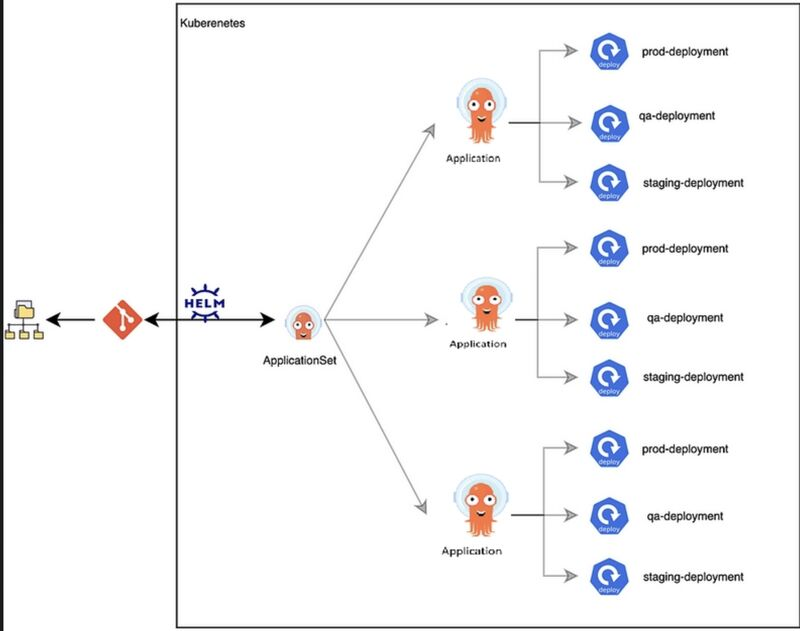
ArgoCD is evolving and this release actually solves real pain.
After working with GitOps setups across multiple environments, one thing is clear:
- Day-2 operations are always harder than Day-1 setup.
The upcoming ArgoCD 3.4 release focuses exactly on that.
Here are 4 updates that genuinely matter:
🛑 Pause at Cluster Level
- Finally, a simple way to stop reconciliation during incidents.
- No more disabling apps one by one.
🧩 Helm Value File Flexibility
- Wildcard support = less config mess, fewer PRs, cleaner structure.
🔍 Better UI Filtering
- Filtering by annotations & status makes the UI actually usable at scale.
⚡ Reduced DNS Noise
- Less background chatter = better performance + cost savings.
Small changes. Big operational impact.
Especially for teams:
• Running multi-cluster GitOps
• Handling production incidents
• Managing large-scale platforms
If you're using ArgoCD in production Which feature would help you the most ?
Kubernetes doesn’t make systems resilient.
It gives you the tools.
What matters: • resource limits
• probes
• autoscaling
• observability
Bad architecture?
K8s exposes it faster.
#Kubernetes#DevOps#CloudNative#SRE
Downtime rarely starts with a crash.
It starts with small, ignored signals: • slow queries
• retry storms
• queue buildup
By the time it’s “down” —
it’s already too late.
Monitor early.
Act sooner.
#DevOps#SRE#Reliability#Tech
Every incident is a design document you ignored.
• alerts tell you what broke
• logs tell you why
• metrics tell you when
• traces tell you where
If you’re missing one — you’re guessing.
#DevOps#SRE#Observability#Tech
Production rule:
If you can’t detect it,
you can’t fix it.
If you can’t fix it fast,
you don’t understand it.
Observability isn’t optional —
it’s your first line of defense.
#DevOps#SRE#Observability#Tech
If your system needs manual intervention to recover,
it’s not production-ready.
Design for:
automated rollback
self-healing
observability-first debugging
Uptime isn’t luck.
It’s architecture.
#DevOps#SRE#CloudEngineering
Good engineers build systems that work.
Great engineers build systems that fail gracefully.
Because failure isn’t an edge case in tech —
it’s the default.
Design for it.
#DevOps#SRE#Engineering
Most companies think DevOps is about speed.
It’s not.
It’s about reducing the cost of failure.
Fast deployments mean nothing if rollback, observability, and ownership are weak.
#DevOps#SRE#Engineering