[NEW REPORT]
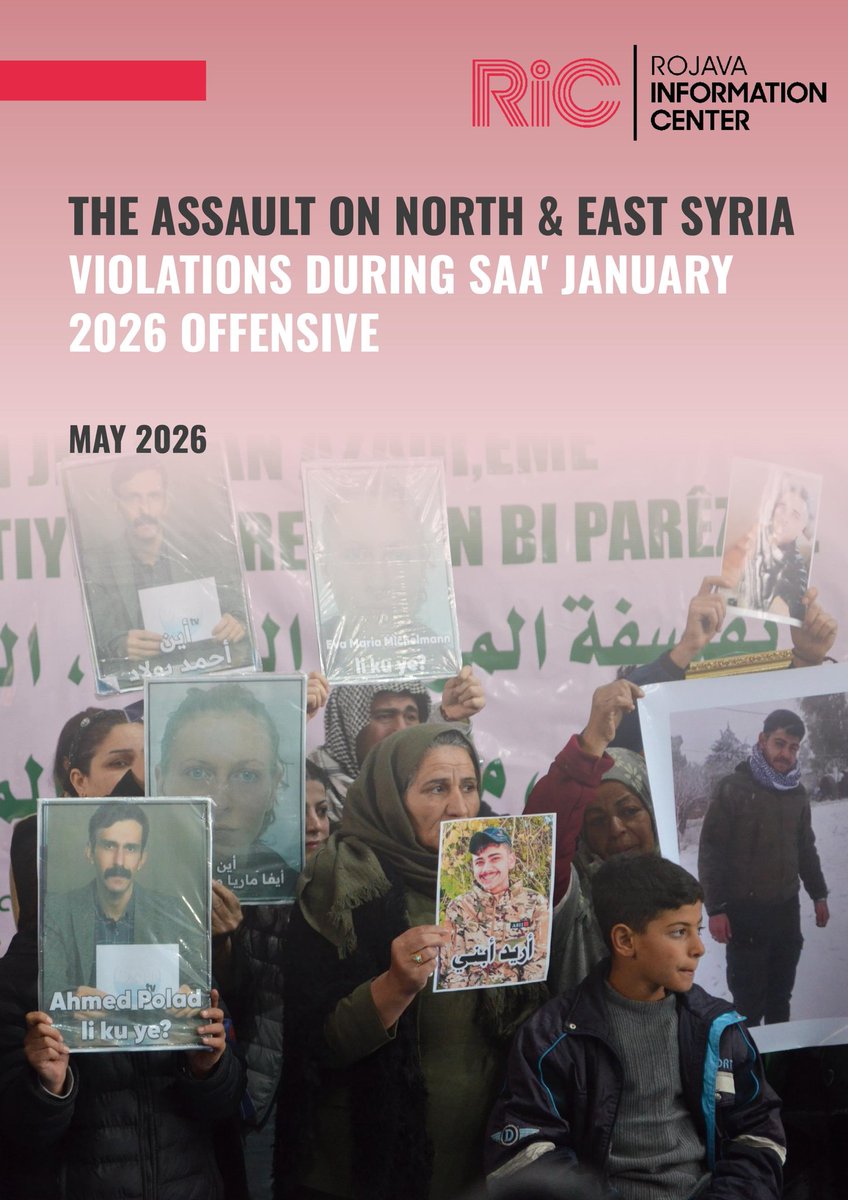
This report investigates alleged violations during Damascus' January 2026 attack on North and East Syria (NES).
Full report: https://t.co/hV2n6ekq8n
Presidential Adviser Mazloum Abdi said the cell was suspected of links to ISIS, warning that the group’s sleeper cells continued to threaten regional security. He vowed to continue efforts to track them down.
Two members of the Internal Security Forces (ISF) were killed and five injured in a suicide attack attributed to ISIS, targeting an ISF facility in Hasakah’s al-Mushairfa neighbourhood on Wednesday.
Four militants were reportedly involved: one detonated himself on a motorcycle at the entrance, two others inside the facility, and the fourth was arrested. The rare attack coincided with demonstrations in solidarity with the Kurdistan Region.
The integration process also raises questions regarding the future of mechanisms previously established to ensure women’s representation and participation in governance, including the co-chair system.
Today, women and men gathered in Qamishlo to mark the International Day for the Elimination of Violence Against Women, calling for an end to violence against women and greater protection of their rights.
This year’s commemoration comes amid major political and institutional changes in northeast Syria, as the Democratic Autonomous Administration of North and East Syria (DAANES) and its governing structures undergo integration into the Syrian state.
Tensions rose during a visit by a Syrian government education delegation to Rojava University in Qamishlo, as students sought to prevent the delegation from leaving the university premises in a protest.
“We do not accept decisions being imposed on us. The government must respect our will and offer an integration process that respects our rights and language.”
Diyar Yousif, a student at Rojava University, told RIC.
Those students, who have studied in Kurdish for over a decade, are demanding the continuation of education in their mother tongue, citing difficulties in learning in another language
The return of IDPs, from Afrin, Sere Kaniye (Ras al-Ayn), and Tel Abyad, was a key factor in January’s 14-point ceasefire and integration agreement.
Despite this, the Syrian Transitional Government's has yet to demonstrate its ability to guarantee a safe return for Kurds.
Yesterday evening, following attacks on Kurdish IDPs trying to return to Tel Abyad (Gire Spi), several cities across North and East Syria held protests condemning the violence and demanding a safe return for all displaced Kurdish families.
2/ The area occupied following 2019's operation "Peace Spring" included Sere Kaniye, formerly under SNA control, has since come under state authority, but gaps in security persist. The lack of effective security arrangements raises concerns for returning IDPs.
1/ Displaced residents attempting to return to Tel Abyad (Gire Spi) have reportedly faced violence from people occupying their homes and lands following 2019's Turkish-backed invasion.
Videos have circulated online appearing to show cars being attacked, overturned and burning.
With the return of calm, about fifty vehicles belonging to the STG’s i
Internal Security Forces withdrew from the city of Heseke towards Raqqa, after they had been brought in to support the local Internal Security Forces in maintaining security in Heseke.
[THREAD]
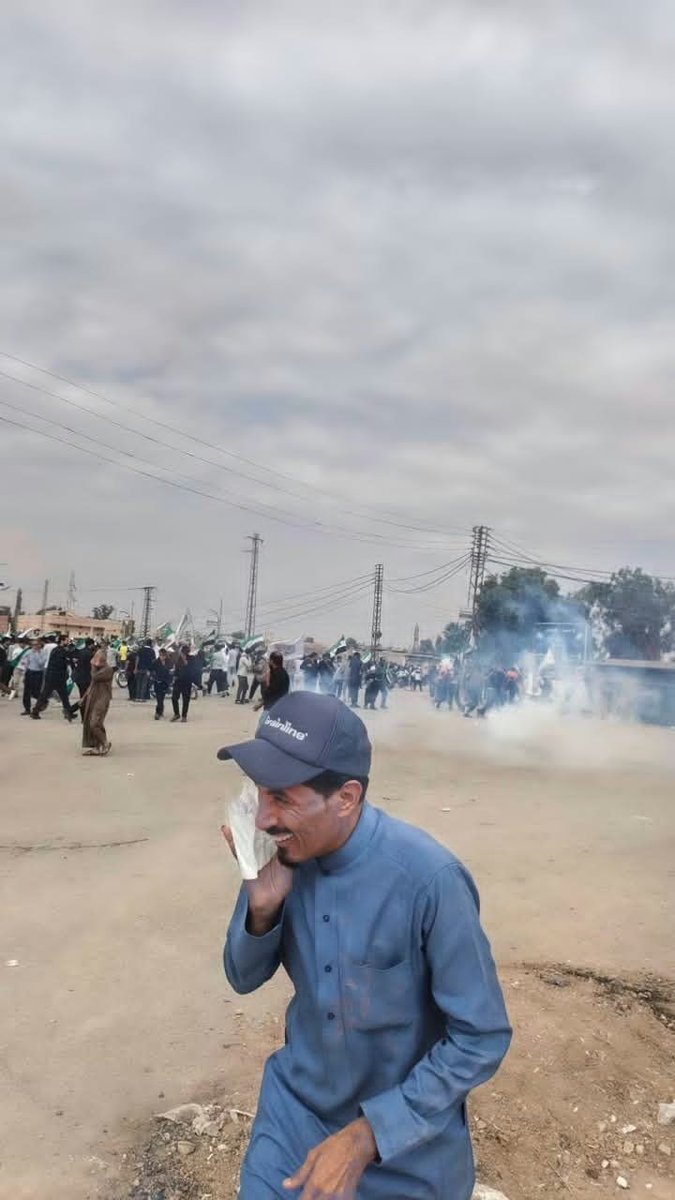
Demonstrations were held in Heseke city on Friday, which reportedly escalated into rioting, and notably vandalism of Kurdish symbols.
In addition to locals the protest allegedly involved participants who travelled from Shaddadi, and Deir ez-Zor.
After events escalated, security forces used tear gas to disperse the group, as demonstrators attempted to reach Kurdish-majority neighborhoods, which would have led to a clash between the two sides, amid escalating tensions since the announcement of the integration process.