This is the Antarctic explorer Sir Ernest Shackleton (1874-1922), watching the ice break up in the winter of 1915, just weeks before his exploration vessel The Endurance was crushed by the ice pack and sank below the Weddell Sea. I have cleaned-up and enhanced this old paget plate, which was taken in colour by the ship's photographer Frank Hurley 111 years ago. It's an early colour glass-plate process and not colourised.
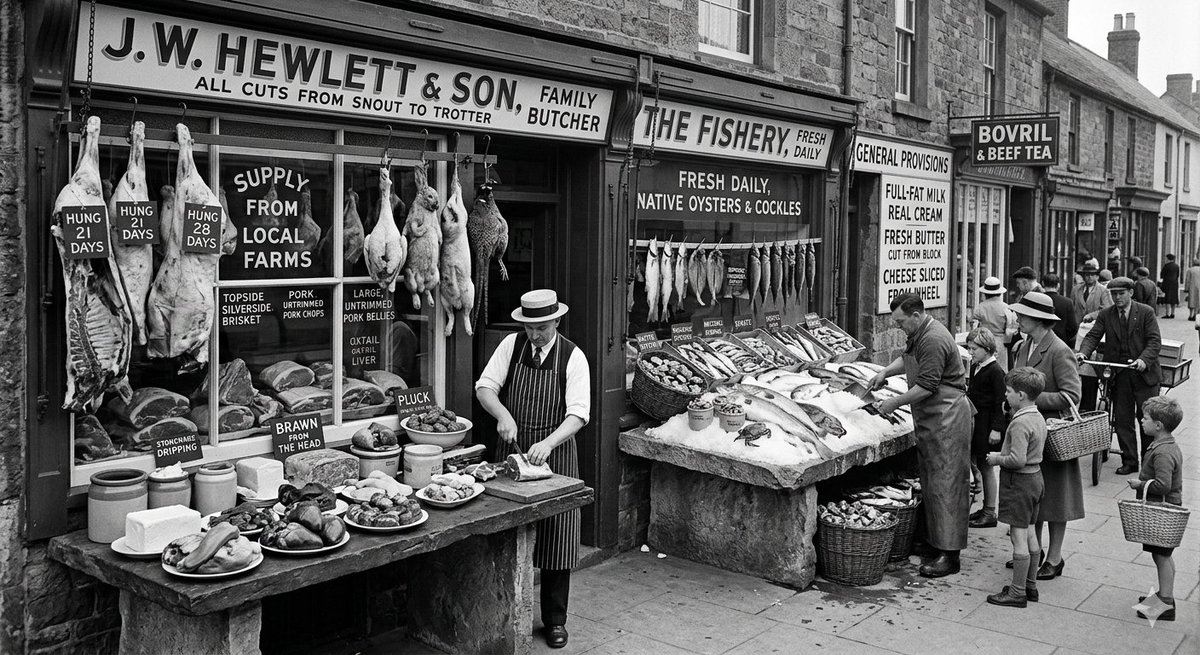
The animal foods in an average British town, 1955 vs 2026.
1955, on the butcher's slab and the fishmonger's slab:
- Beef: hung 21 to 28 days. Topside, silverside, brisket, shin, oxtail, ox cheek, ox tongue, ox heart, ox kidney, ox liver, marrow bones, suet, dripping in a stoneware pot
- Pork: every cut from snout to trotter. Belly, chops, shoulder, leg, cheek, kidney, liver, heart, caul fat, lard, bath chaps, scratchings, brawn from the head
- Lamb and mutton: leg, shoulder, breast, neck, scrag end, kidneys in their suet, sweetbreads, tongue, faggots, pluck
- Poultry: whole bird with giblets, goose at Michaelmas, Aylesbury duck, rabbit on a hook, pheasant in season
- Fish: cod, haddock, plaice, sole, herring, mackerel, sprats, kippers, smoked haddock, eels, native oysters, cockles, whelks, winkles, brown shrimp, crab, lobster
- Dairy: full-fat milk, real cream, fresh butter cut from a block, cheese sliced from a wheel, dripping, beef tea
2026, in the average Tesco refrigerated aisle:
- Chicken breasts, water-injected
- Mince in plastic
- Vacuum-packed steaks
- Salmon fillet, farmed
- Bacon, water-injected
- Pre-grated cheese
- Skimmed milk
One slab offered the entire animal. The other offers a handful of cuts from a handful of species, processed for shelf life rather than flavour, sold in plastic.
The B12, the haem iron, the fat-soluble vitamins, the collagen, the trace minerals, the long-chain omega-3, the bioavailable protein that came as a matter of course from the offal, the bones, the marrow, the shellfish, the small oily fish, are not in the second list.
The 1955 child was anaemic at a rate of roughly 3%. The 2026 woman of childbearing age is anaemic at a rate of roughly 20%.
The animal has not changed.
The chain has.
Reid Wiseman told his two teenage daughters where to find his will before he got on this rocket. He’s raised them alone since their mom died of cancer six years ago. Right now, he is 252,757 miles from home, farther from Earth than any human being has ever been.
Wiseman grew up outside Baltimore. Got rejected from the Naval Academy, went to Rensselaer Polytechnic Institute instead, studied computer engineering. Became a Navy fighter pilot, flew F-14 Tomcats (the jet from Top Gun) on combat missions over Iraq and Afghanistan. Two Middle East deployments by his mid-twenties. He saw a Space Shuttle launch in person in 2001 and couldn’t let go of it. Applied to NASA while at sea on the aircraft carrier USS Dwight D. Eisenhower. They picked him. Nine people out of 3,500 applicants. His astronaut class, nicknamed “The Chumps,” included Jeremy Hansen, the Canadian who’s floating next to him right now.
Wiseman’s first trip to space was 165 days on the Space Station in 2014. Two spacewalks. Thirteen hours outside the hull in nothing but a suit. He climbed all the way up to Chief of the Astronaut Office, the person who decides which astronauts fly and which ones sit. Then he gave it up in 2022 to put himself back on the flight list.
His wife Carroll was a nurse in a newborn intensive care unit. She got cancer. Fought it five years. Died in May 2020 at 46. His mother died from Alzheimer’s just weeks before that. Wiseman raised both daughters by himself after that. NASA’s own bio says he considers being a single parent his hardest challenge and the best part of his life. Even while she was dying, Carroll told Reid not to step back from his career. She made him keep going. His brother is a Navy SEAL. His father is 83 and battling cancer too. The old man told reporters he wanted to stay alive long enough to see his son launch.
Before liftoff, Wiseman’s daughters snuck homemade cookies into his flight bag. He posted a photo with them in front of the rocket and wrote “I’m boarding that rocket a very proud father.”
The previous distance record from Earth belonged to the Apollo 13 crew. 248,655 miles, set in April 1970, and it was an accident. An oxygen tank blew up and the emergency route home happened to swing them farther out than anyone before. Wiseman broke that record by 4,100 miles, and his distance is on purpose. Today he flies within 4,600 miles of the Moon, photographs stretches of the far side that were too dark or at the wrong angle for any of the 24 Apollo astronauts to see, and watches a solar eclipse that nobody on Earth can see, only the four people inside that capsule.
Then he turns around and spends four days flying home to his girls.
Timeline of the Artemis II Mission
In this video, we show the full journey of Artemis II — a 10-day mission that takes humanity back toward the Moon. From liftoff aboard the powerful SLS rocket, to orbiting Earth, performing a lunar flyby, and returning safely home, every step of the mission is mapped out.
@NathansNexusNow@TheProjectUnity Yes indeed - masterful. The ship of the Fens. And when there, don’t forget the Stained Glass museum! Rivals the Sainte Chapelle in Paris or the Cologne Cathedral imho. How it must have been to be alive when it was built.
Altijd fijn als iemand die je bewondert, die je ontzettend geestig en slim vindt, aan de goede kant van de geschiedenis blijkt te staan. Weg met al dat nauwelijks verhulde antisemitisme.
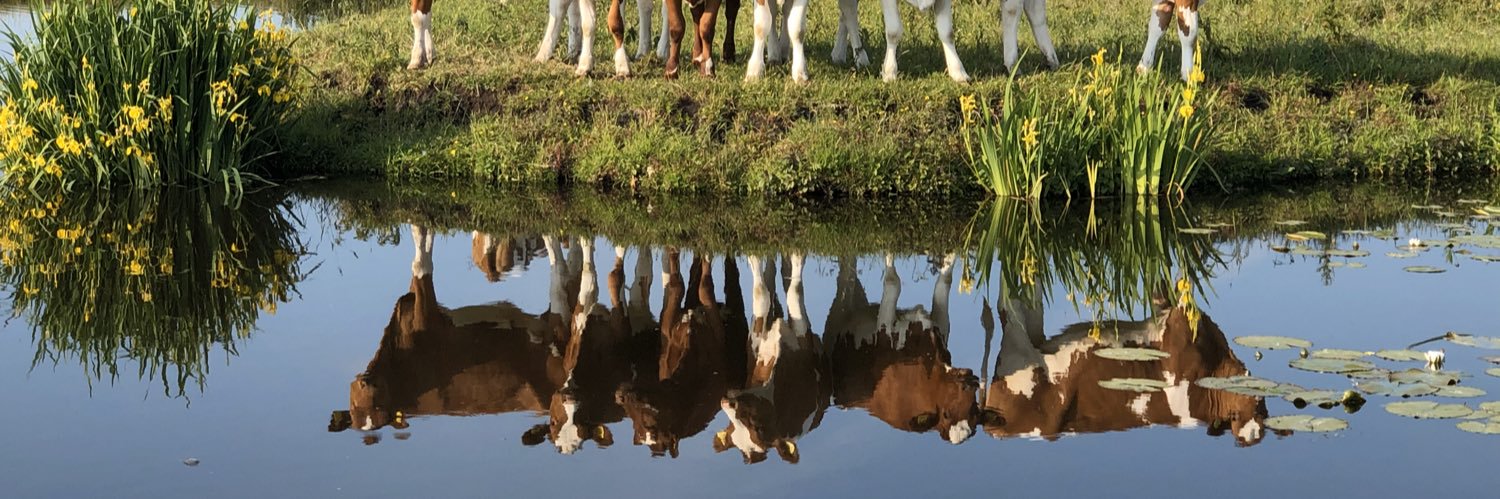
The Dutch: Tallest nation on Earth. Average male height: 6'0". Average female height: 5'7".
What do they eat? Dairy. More dairy per capita than any nation. Cheese, milk, butter, yogurt. Plus meat, fish, eggs.
1860s Dutch: Among shortest Europeans. Average male 5'6".
What changed? Not genetics. Economic development. Access to dairy and meat increased.
150 years later: 6 inches taller. Same genetic population. Different nutrition.
The Japanese: 1900 average male height: 5'2". Diet: Rice, fish, minimal dairy, some meat.
Post-WWII: American occupation introduces dairy and increased meat consumption.
Modern Japanese average male height: 5'7". Five inches taller in three generations.
Genetic changes don't happen that fast. Nutritional changes do.
South Korea: 1950s average male height: 5'5". Diet: Rice-based, minimal animal products.
Modern South Korea: Wealthy nation. Increased meat and dairy consumption.
Current average male height: 5'9". Four inches in two generations.
North Korea: Same genetic population as South Korea. Separated in 1950s.
Modern North Korean height: 5'5". No increase. Still eating rice-based diet with minimal animal products due to poverty and food scarcity.
Identical genetics. Different nutrition. Four-inch height difference.
China: Northern Chinese eat more wheat and meat. Southern Chinese eat more rice and less meat.
Northern Chinese average: 5'9". Southern Chinese average: 5'7". Same nation, different regional diets, two-inch height difference.
The pattern is global: Height correlates with dairy and meat consumption, not genetics.
Wealthy nations with high animal product consumption: Tall.
Poor nations with grain-based diets: Short.
When poor nations become wealthy and increase meat/dairy intake: Height increases within generations.
Modern height differences reflect meat access across the last century, not genetics across millennia.
Voordat ik iedereen een zalig kerstfeest toewens nog wat stof tot nadenken over de afstand die is ontstaan tussen de EU en de VS.
De Europese Unie wijst haar problemen graag toe aan externe factoren: aan Poetin, aan Trump, aan “desinformatie van buitenaf”. Maar wie eerlijk kijkt, ziet dat veel van wat vandaag misgaat in Europa het directe gevolg is van keuzes die de EU zelf heeft gemaakt. Structureel, ideologisch en institutioneel.
Al in 2005 trokken burgers in Nederland en Frankrijk een duidelijke grens. Zij stemden tegen de Europese Grondwet. Dat signaal werd niet gerespecteerd. In plaats daarvan werd vrijwel dezelfde inhoud via een omweg alsnog ingevoerd met het Verdrag van Lissabon. Juridisch correct misschien, maar politiek en democratisch ronduit problematisch. Het was het begin van een diepgaande vertrouwensbreuk tussen Europese burgers en Europese instellingen.
In 2016 herhaalde dit patroon zich. De Nederlandse bevolking stemde ‘nee’ tegen het associatieverdrag met Oekraïne. Opnieuw werd de uitslag genegeerd via een aanvullende verklaring. De plechtige belofte dat Oekraïne nooit EU-lid zou worden en dat militaire betrokkenheid uitgesloten was, bleek later weinig waard. Daarmee werd het signaal afgegeven dat democratische inspraak slechts wordt geaccepteerd zolang de uitkomst past binnen de gewenste koers.
Dit raakt aan een fundamenteler probleem: het democratisch tekort van de EU. De Europese Commissie is niet rechtstreeks verkozen, maar bezit het exclusieve recht om wetgeving voor te stellen. Het Europees Parlement kan geen wetten initiëren. Nationale parlementen krijgen vaak pas laat inzicht in EU-voorstellen en hebben beperkte ruimte voor correctie. Macht concentreert zich steeds verder op een niveau dat zich onttrekt aan directe democratische controle.
Die machtsverschuiving wordt versterkt door het Europese Hof van Justitie. EU-recht heeft in de praktijk voorrang op nationaal recht, inclusief grondwetten. Door steeds ruimere interpretaties van verdragen verschuiven bevoegdheden structureel richting Brussel, zonder expliciet democratisch mandaat. Lidstaten hebben nauwelijks mogelijkheden om deze ontwikkeling terug te draaien.
Economisch gezien heeft de EU eveneens fundamentele fouten gemaakt. De invoering van de euro heeft economieën samengebracht die structureel verschillen in productiviteit, schuldenlast en begrotingsdiscipline. Het beleid van de Europese Centrale Bank past niet bij alle lidstaten tegelijk. Dit heeft geleid tot inflatie, vermogensongelijkheid en koopkrachtverlies, vooral in landen die financieel relatief solide waren. Nationale regeringen dragen de gevolgen, maar hebben nauwelijks monetaire beleidsruimte.
Daarbovenop heeft de EU een energietransitie doorgedrukt die onvoldoende rekening houdt met economische realiteit en mondiale concurrentie. Hoge energieprijzen en een overdaad aan regels hebben de concurrentiekracht van Europese bedrijven ondermijnd. Industrie vertrekt, investeringen blijven uit en het levensonderhoud wordt voor steeds meer mensen onbetaalbaar.
Hetzelfde patroon zien we bij migratie en open grenzen. Het probleem is niet alleen de schaal en het gebrek aan controle, maar ook de culturele gevolgen. Massale immigratie zonder integratie tast de sociale cohesie aan. Europese cultuur - gevormd door geschiedenis, tradities, waarden en gedeelde normen - staat onder druk. En cultuur is geen bijzaak. Politics is downstream from culture. Als de culturele basis verdwijnt, volgt politieke instabiliteit vanzelf. Dat zien we terug in spanningen rond veiligheid, onderwijs, woningmarkt en zorg, maar ook in het verlies van een gedeeld maatschappelijk referentiekader.
Tegelijkertijd stapelt de EU regelgeving op regelgeving. Vooral het midden- en kleinbedrijf, de motor van de Europese economie, wordt geconfronteerd met complexe, kostbare en vaak ideologisch gedreven verplichtingen. Ondernemerschap maakt plaats voor bureaucratische overleving.
In de landbouw zien we een vergelijkbaar top-down beleid. Boeren worden geconfronteerd met verregaande maatregelen zonder realistische alternatieven of voldoende draagvlak. Voedselzekerheid wordt behandeld als een sluitpost, terwijl de Covid-crisis juist heeft laten zien hoe kwetsbaar Europa is geworden. Strategische autonomie begint bij energie én voedsel.
Ook fundamentele vrijheden staan onder druk. Onder het mom van het bestrijden van desinformatie wordt steeds vaker gestuurd op wat wel en niet gezegd mag worden, terwijl achteraf blijkt dat officiële EU-standpunten over Covid, klimaat en geopolitiek lang niet altijd volledig of correct waren. Tegelijk wordt de privacy van burgers ingeperkt met argumenten als veiligheid, terwijl de Europese Commissie zelf opvallend weinig transparantie toont. Dat ondermijnt vertrouwen. Wie macht uitoefent namens burgers, moet het goede voorbeeld geven.
Daarnaast wordt publiek geld gebruikt om NGO’s te financieren die beleid beïnvloeden of uitvoeren dat de EU zelf formeel niet kan of mag doen. Daarmee wordt democratische controle omzeild en verantwoording uitgehold.
Op het gebied van buitenlands beleid ontwikkelt de EU zich tot een geopolitieke speler zonder duidelijk democratisch mandaat. Sancties, wapenleveranties en strategische keuzes worden genomen met verstrekkende gevolgen voor burgers, maar zonder breed maatschappelijk debat. De verhouding tussen EU-defensie, NAVO en nationale krijgsmachten wordt steeds onduidelijker.
De EU heeft zichzelf altijd gepresenteerd als een project van vrede en welvaart. Toch is de afgelopen jaren diplomatie rond het conflict tussen Rusland en Oekraïne vrijwel volledig vervangen door escalatie en sancties. Die sancties raken vooral de Europese bevolking in koopkracht en economische zekerheid, terwijl serieuze vredesinitiatieven zijn genegeerd of zelfs gesoboteerd.
Het fundamentele probleem van de Europese Unie is niet extern, maar intern: een systeem dat steeds meer macht concentreert, steeds minder verantwoording aflegt en steeds verder verwijderd raakt van de burgers namens wie het zegt te handelen.
De toren van Babel wankelt. In plaats van anderen de schuld te geven, moeten Europese leiders in de spiegel kijken, verantwoordelijkheid nemen en terugkeren naar de basis: economische samenwerking via de interne markt, respect voor nationale democratieën, culturele soevereiniteit en een realistisch, diplomatiek buitenlands beleid, inclusief steun voor serieuze vredesbesprekingen.
Ik wens iedereen een zalig kerstfeest 🎄✝️
For @tmagazine, I wrote an essay about GenX, the generation I am quite happy to be a part of—but in true GenX fashion I am late to post it. Here’s a gift article if you’d like to read it. Enjoy.
https://t.co/9KWuOPnC3E
Hoe is het om na jaren van oorlog terug te gaan naar je huis in een grotendeels verlaten en verwoeste stad? Afrika-correspondent Elles van Gelder was in Sudan, waar volgens de VN de ergste humanitaire crisis ter wereld gaande is door een oorlog tussen de regering en milities.