Nice! TDA features are perfect for this task: surprising that it has not been tried before, it seems so natural a posteriori.
I'll look for people in Chile to replicate this kind of work, maybe we can use our pseudodistances for faster search https://t.co/Zy8lFytwOC @rolan2kn
Young scientists regularly ask me for career advice. Academia or industry? Big company or startup? US or Europe? Good scientists in AI disciplines are fortunate to have many choices. But choosing can be stressful. I always give the same advice. 1/10
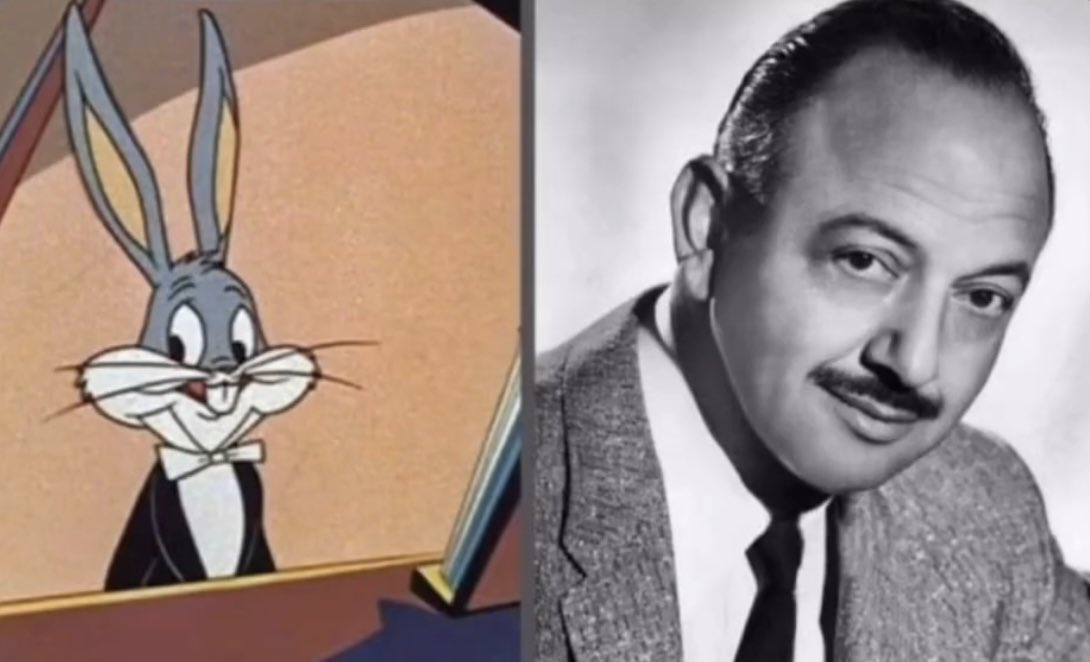
Mel Blanc, the voice of Bugs Bunny, was in a serious car accident that put him in a coma. After many unsuccessful attempts to get him to talk, the doctor asked, "Bugs, can you hear me?" Mel responded in Bugs voice: "Whats up Doc?" They used this technique to lead him out of his coma.
Looking through the Dune 2 (amazing movie!) art book, I was thinking about the relationship between art and games.
In the early days, you just couldn’t apply much art to a game. The fundamental display resolution and color palette were very limited, and distribution media size was an even harsher limit. Significant amounts of engineering effort and artist contortions were called on to allow just a little bit more artistry to shine through. Fine art could be done on the boxes, manuals, and advertisements, but it had little connection to the game experience.
The introduction of CD-ROM made distribution size almost a non-issue, such that the cost of creating art dominated. We had a few enemy characters in Doom 2 that were basically “paint overs”, and Doom 3 could have really benefitted from having multiple variations on the enemies, but that was all we could manage with our team size.
Unlike many aspects of game development, art can largely be done in parallel, and companies started building out artist armies that could fill out multiple CD-ROMs, DVDs, and Blu-ray discs. Players value art, but there is a diminishing return effect for the typical player. The hit-driven, power-law return nature of the AAA gaming business generally pushes the creation of art past what would be a natural value point, which in some ways diminishes the value of individual works of art, and leads to a lot of work being created and never used. Doom 2016 went through multiple internal reboots, discarding entire art styles and characters along the way.
One of the things that stood out for me during my early VR experiments when I was using scenes from Rage was how much amazing detail was already there that I never even noticed in dozens of conventional play throughs. There is SO MUCH in modern games that barely gets looked at by most players.
The modern gaming cosmetics markets are actually pretty cool from an art value standpoint — there is precise feedback on how much a given work of art is valued by players, and there are all the traditional sales tools available to try to maximize the value of the art. I haven’t worked on a team that did cosmetics, but I bet there are a lot of interesting things to learn there. It would be great if artists got bonuses when their cosmetics are hugely successful.
@fchollet claimed that "learning to reason" (robustly across problem instances) is hard because of the nature of the MLE objective. This paper proves that claim. The reason is "statistical features inherently exist in data distributions, but can hinder model generalization performance [because learning them can mask the underlying function]".
H. Zhang, L. H. Li, T. Meng, K.-W. Chang, and G. Van den Broeck, “On the paradox of learning to reason from data,” in IJCAI, 2023,
https://t.co/jeqGShVtuZ
Our distance is also parallel friendly, making it suitable for heavy workloads with large sets of dense persistence diagrams that were unthinkable before.
A join work with @MirceaSci See the paper at https://t.co/bXxK8fO6oX and code at https://t.co/lJVXqJfjn3.
n/n
Excited to share our latest work on a game-changing method for comparing persistence diagrams! 🚀 Our paper, 'A Class of Topological Pseudodistances for Fast Comparison of Persistence Diagrams,' was accepted at AAAI'24. #AAAI24#TopologicalDataAnalysis
1/n
We introduce a class of pseudodistances called Extended Topological Pseudodistances (ETD)s a faster approximation to Sliced and classical Wasserstein distances while being computationally lighter and close to Persistence Statistics at the lower complexity extreme. 2/n
Hello #AAAI24, going to present joint work with @rolan2kn on a new class of efficient paeudometrics for comparing Persistence Diagrams! Are any #TDA colleagues around ?
@CitImmCanada @quanlanang Hi I need to travel to canada in february one week to attend a international conference, but my passport expires in january. It is possible to apply for a visit visa with a travle doc. I am cuban and I visit canada before in 2012.
@keenanisalive Basically, to compute persistent homology (PH) a sequence of simplicial complexes is required, by increasing a scale value up to a limit. Then, using the topological information provided by PH you can choose a suitable scale, and retrieve a subcomplex in that scale (2D in pic)
@ThePhDPlace 5th year Phd Candidate from University of Chile (writing thesis stage), working on exploring the Topological Data Analysis capabilities for solving classification challenges