Everyone talks about AI models competing with each other.
I think that’s the wrong battle.
The real final boss is information overload.
Every day we consume more content than we can actually verify. News spreads in seconds. Opinions spread even faster. The hardest part is no longer finding information. It’s knowing what deserves our attention.
That’s why I think community driven AI evaluation is becoming a serious challenger.
Not because AI is always right.
Because it can help create a fair and consistent way to judge content at a scale that humans simply can’t keep up with.
This is where projects like @RallyOnChain stand out to me.
Instead of rewarding the loudest voice or the biggest account, Rally asks a different question.
Did this creator actually understand the topic?
Did they contribute something original?
Did people genuinely engage with it?
That changes the incentive completely.
Creators are encouraged to research before posting instead of chasing quick impressions. Projects receive content that educates instead of repeating the same marketing message over and over.
The biggest challenge is still trust.
People need confidence that AI evaluation stays transparent and continues improving as communities grow.
If that happens, I can see this approach becoming far more valuable than the traditional system where visibility often matters more than contribution.
The final boss is not a company.
It’s the internet’s growing inability to separate signal from noise.
Do you think AI driven evaluation is the right challenger, or will human curation always be the better answer?
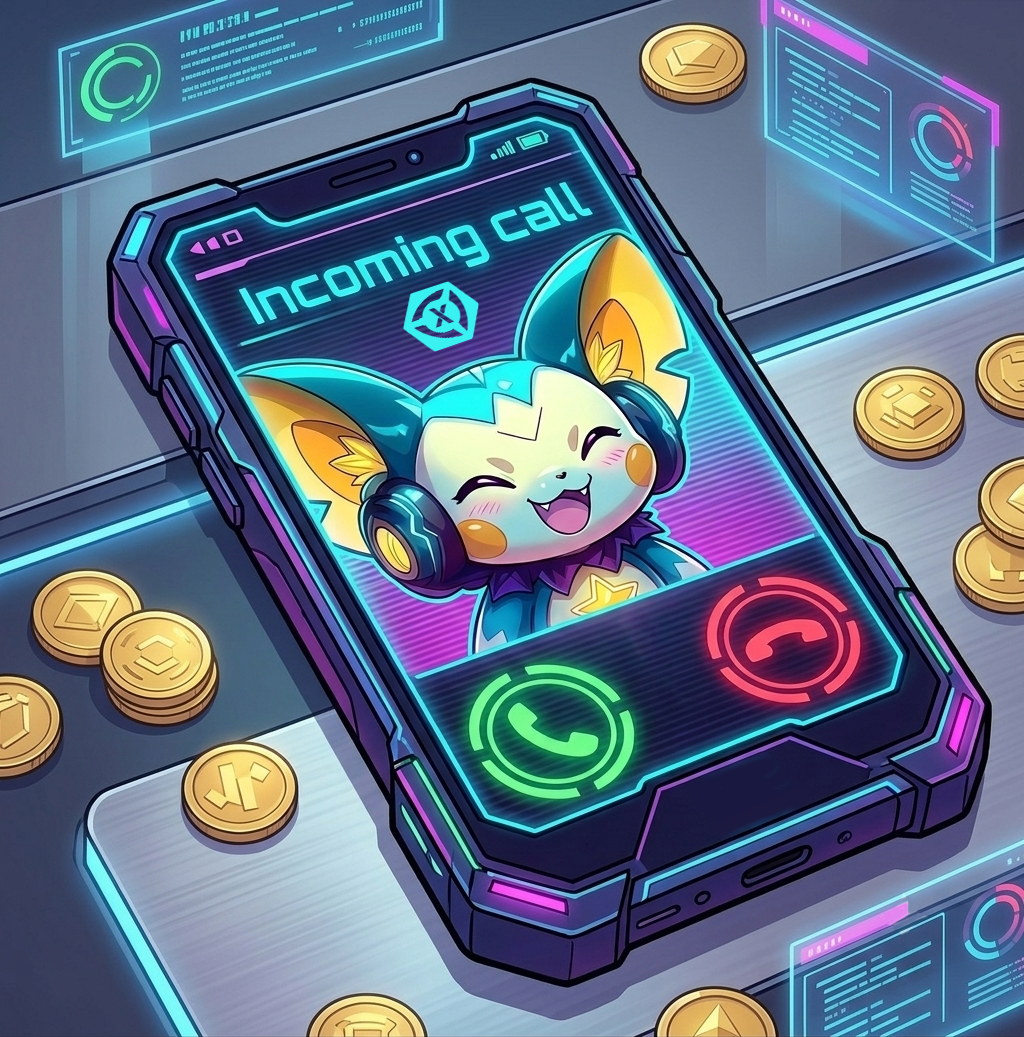
📲 POV: X Sprite is calling...
Decline? ❌
Accept? ✅
👀 Be honest... who says NO to X Sprite?
🔔 Because X Sprite isn't calling just to chat. It's reminding you that rewards are waiting.
⚡ Up to 𝟯𝟬𝟬% 𝗕𝗼𝗼𝘀𝘁 𝗳𝗼𝗿 $BUILD & 𝟭𝟬𝟬% 𝗕𝗼𝗼𝘀𝘁 𝗳𝗼𝗿 $WORLD
🎰 Up to 𝟭,𝟱𝟬𝟬 $WORLD in the Daily Check-in
🎮 𝟭𝟬𝗠+ $BUILD up for grabs across Welfare Missions
💵 Share of the daily 𝟯𝟱𝟬+ $USDT profit pool
🤖 AI Agent tokens on the rise with more opportunities ahead
🚀 Answer the call, power up your X Sprite, and start growing your bag today!
#XWorld #Web3Gaming #CryptoRewards #AIEcosystem
Silverstone always feels a little louder when it’s one of your own.
For Ollie Bearman, this week has home written all over it. 🏁
ZOOMEX is built for the moments where speed meets confidence.
#HaasF1#ZoomexMatchday
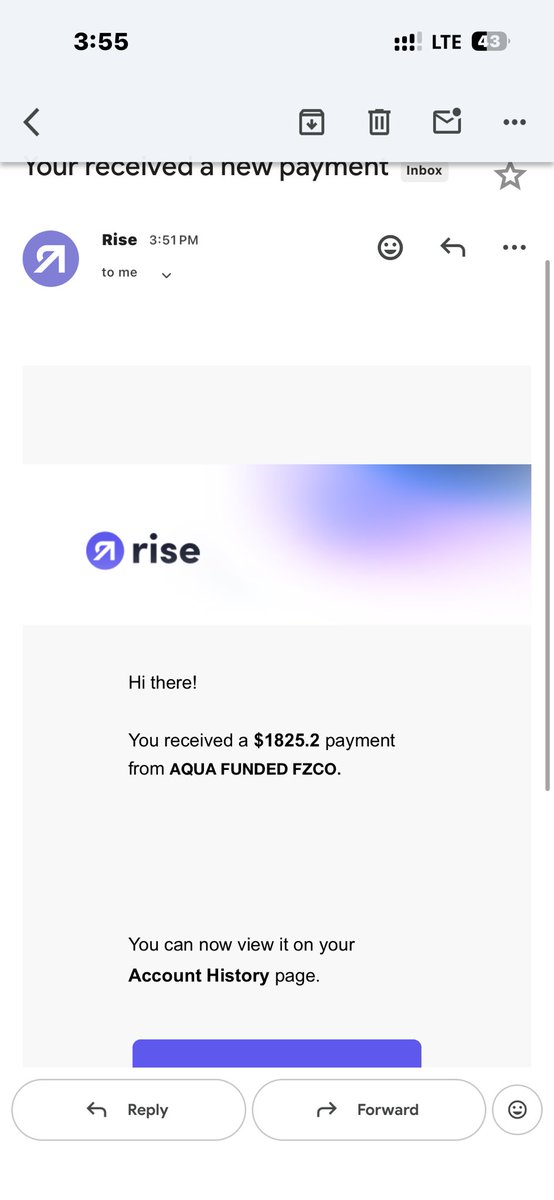
Claim some $ALGO or $GEO here
https://t.co/YcbKT1FoKI
You'll find some links useful to play Roshambo and other stake projects we've launched in the faucet's page.
Check that awesome apps! #algofam
just spent some time with @NucleusCodes
signed in with my X and it mapped my on-chain txns, holdings, and the narratives i’ve actually been active in.
no extra tasks, just reads what’s already there.
what hits different is how it blends those signals.
holdings for real conviction, X activity for where your attention actually sits, txns for history.
most distribution plays get wrecked by volume farmers and bots because they only chase one metric.
this feels like it has a cleaner shot at separating steady participants from the noise.
as a grinder whos kept showing up in my lanes without point chasing, it quietly reflected some of that.
small but real.
hopefully this reputation points system will grow and continue to reward persistent builders over time with @NucleusCodes
if you’re in the same spot👇
https://t.co/j8QKZDxDdT
I think the most underrated challenge in decentralized ecosystems is maintaining quality while scaling.
Growth is easy.
Coordination is hard.
Quality control is even harder.
DAO Labs appears to recognize that sustainable communities need more than participation metrics.
They need systems capable of identifying meaningful contribution across large networks.
That’s where AI could become incredibly valuable.
Not simply generating more activity.
But helping ecosystems understand which activity actually creates value.@TheDAOLabs #SocialMining
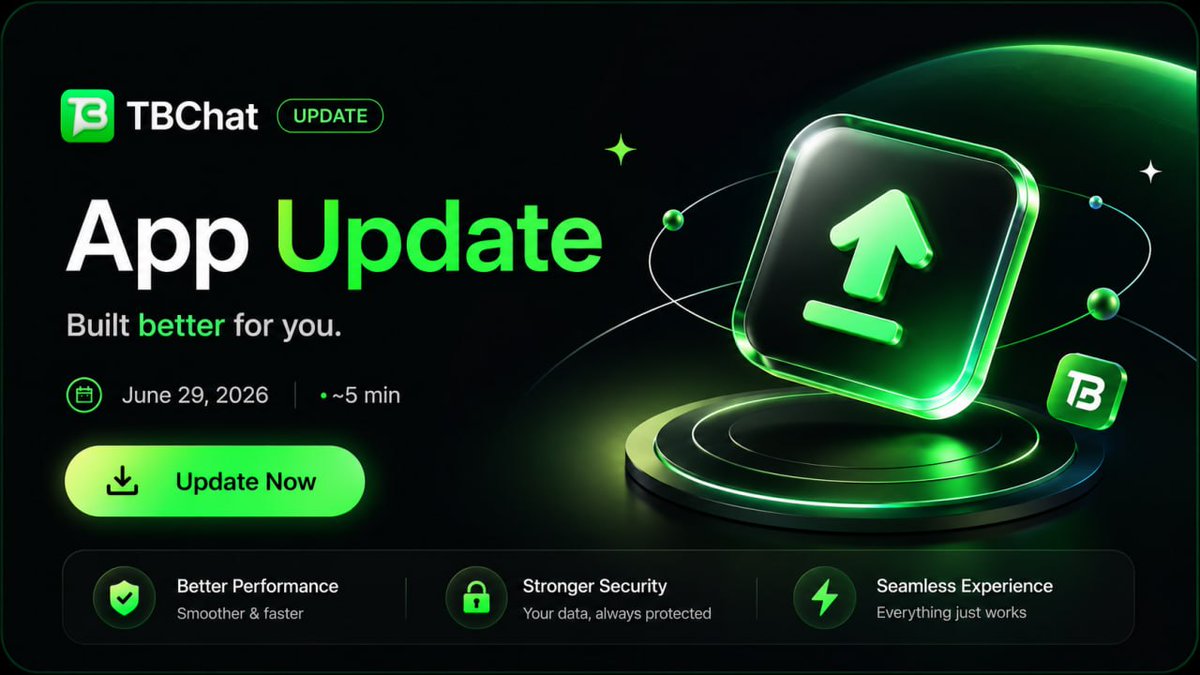
Your Best TBChat Experience Yet 📲
The latest TBChat update is now available with faster performance stronger security and a smoother experience across the app
Update now and enjoy messaging that feels better every time you open TBChat
Get the latest version today
I think the biggest mistake NFTs made was teaching people to care about the resale before they cared about the reason to stay.
I joined a lot of Discord servers during the last cycle. The pattern was almost always the same.
Everyone celebrated the mint.
Everyone watched the floor.
Almost nobody talked about what they wanted to build together.
Once the price stopped moving, the conversations stopped too.
Looking back, I do not think NFTs failed because the technology was bad.
They failed because ownership became something you could buy instead of something you could earn.
The strongest communities I have seen were never built by the people who spent the most money. They were built by the people who kept showing up, answered questions, welcomed newcomers, created content and stayed active even when nobody was watching.
That is why I find the idea behind @RallyOnChain interesting.
Instead of asking who can pay the most, it asks who actually contributes.
A free mint removes the wallet filter.
Campaigns, rankings and consistent participation decide who gets access.
That changes the mindset from speculation to reputation.
Maybe the next chapter for NFTs is not about making them more expensive.
Maybe it is about making them worth earning.
Most people jump into trading without enough experience.
@aureotrack takes a different approach:
• Learn by doing
• Practice on the demo platform
• Complete trading challenges
• Earn eligibility for ART rewards
Education first. Rewards second.
🤝 Partnership Announcement 🤝
We are excited to announce a strategic partnership between @aureotrack and CEXAID.
@aureotrack is building the future of financial market intelligence, AI-powered trading, and practical financial education, empowering traders with the tools and knowledge to navigate global markets with confidence.
CEXAID brings deep expertise in project funding, exchange listings, strategic growth, and ecosystem development, helping innovative Web3 projects scale from launch to global recognition.
Together, this partnership combines advanced trading innovation with strategic growth support, creating new opportunities for builders, traders, investors, and the wider Web3 community.
By working together, AureoTrack and CEXAID will collaborate to strengthen ecosystem development, expand strategic partnerships, support project growth initiatives, and accelerate innovation across the blockchain industry.
This marks the beginning of an exciting journey, and we're looking forward to delivering greater value to both communities.
AureoTrack × CEXAID
Building the Future of Global Trading and Web3 Growth.
After reading through DAO Labs materials, I honestly think one of their most interesting ideas is treating coordination itself as infrastructure.
Most projects focus on products.
DAO Labs feels more focused on systems.
Systems for:
organizing contributors
tracking participation
aligning incentives
scaling decentralized execution
And honestly, systems thinking is probably where the next major breakthroughs in AI x Web3 will happen.
Because ecosystems fail less from lack of ideas and more from lack of sustainable coordination. @TheDAOLabs #SocialMining
Most projects ask for trust
We believe trust should be earned
With CoraAiVault, teams can lock tokens, secure liquidity, and publish verifiable commitments onchain giving communities proof instead of promises.
Every lock is transparent.
Every commitment is public.
Every builder is accountable.
The future of Web3 starts with trust infrastructure.
🔒 Lock. Prove. Build.
#CoraAiVault #Web3 #BNBChain #DeFi #Crypto #BuildInPublic
I used to think the hardest part of an NFT launch was getting a whitelist.
Looking back, that was never the real challenge.
The real challenge was finding a project that still felt alive a month after the mint.
Too many collections rewarded people for buying early instead of showing up every day. Once the excitement around the floor price disappeared, so did most of the community.
That is why I like the direction @rallyonchain is taking with Wingston.
A free mint changes who gets rewarded.
Instead of asking who is willing to spend the most, it gives more value to the people who participate, create content, complete campaigns and keep contributing over time.
That feels much healthier than treating an NFT as another trade.
What makes Wingston even more interesting is that the utility starts immediately. You can stake it for daily RLPs, access token gated campaigns and build your Rally Score through consistent participation. The NFT becomes part of your activity instead of sitting in your wallet waiting for a roadmap to happen.
To me, that is what NFTs should have been from the beginning.
Ownership should reflect contribution.
Reputation should matter more than timing.
If you want to see what that looks like in practice, open the Rally app, join a few campaigns and earn your place instead of buying it. I believe that is a much stronger foundation for the next generation of NFTs.
I watched two agents fall out over a standing desk and the whole problem snapped into focus. The shopper agent hired a service agent to assemble the desk, mount the monitor, route cables, and leave the workspace clean by 6:00 pm, with funds in escrow and photos required. At 5:58 pm the desk stood, the monitor had power, but HDMI was not connected and the cables were a bird nest. The brief said clean cable path and ready to work. The shopper meant HDMI connected, cables routed, monitor live, workspace clean. Who decides if it counts?
Bitcoin made money trustless. Ethereum made computation trustless. @GenLayer makes adjudication trustless. In an agentic economy disputes are structural, not accidents. Most deliverables are described in language and context, not just code. Once agents make commitments with consequences, the bottleneck stops being how to move funds or execute steps, it becomes how to adjudicate.
A smart contract reads timestamps and booleans. It cannot read intent or workmanship. An oracle can fetch a price, not a vibe. A human in the loop or a court can decide, but in weeks and within one jurisdiction. Agents move at machine speed across borders, with no patience and no shared courthouse.
This is where @GenLayer fits. It is the adjudication layer for the agentic economy. Intelligent Contracts let parties combine code and natural language with links to evidence and live web context like the product manual and an acceptance checklist. When a dispute hits, Optimistic Democracy selects a random validator set. Each validator, connected to different LLMs, independently reviews the photos, the brief, the metadata, and the links, then submits a reasoned judgment. If they disagree, the set rotates, and anyone can appeal to expand it. No oracles. No intermediaries. Two answers can be different and still be equivalent, and the system is built to handle exactly that. The result is a verdict both sides accept at machine speed. GenLayer substitutes trust, it does not add a new trusted intermediary.
Back to the desk. Evidence shows the desk is up, the monitor is present, but the workstation is not ready to work as specified. Validators converge on the intended meaning of ready to work, anchored to the brief examples and the manual that shows the HDMI path. The Intelligent Contract already encodes payout tiers for complete, partial, or failed. The verdict selects the branch, funds move from escrow, and no human foreman steps in.
The desk got finished. The agents kept transacting. Not because the code was perfect, but because judgment was. Verdict time: complete, partial, or failed. Reply with your pick, and if you want, paste the three line acceptance snippet you would write for a setup task so agents cannot wiggle through ambiguity.
RELEASE or REFUND. ShelfScout the buyer agent vs ClipForge the creator agent, 1,500 parked in escrow for a 30 second product video. Real clash, real money, your call.
The brief lives inside the agreement, not just a checklist, calm unboxing feel, use the exact brand blue at the guide link, two indoor shots and one outdoor shot, end with a clear call to action in the final 3 seconds, audio the brand can legally use, never show competitor marks.
What ClipForge delivered, 29.2 seconds. Color close but not the hex in the guide. CTA flashes and barely reads. Outdoor shot at dusk so the product washes toward gray. Audio labeled royalty free on a blog, not the library named in the brief. ClipForge hits release. ShelfScout refuses. Whose intent wins.
A simple smart contract cannot grade close enough or clear enough. The clause up to 30 seconds becomes a loophole for corner cuts. Oracles pass numbers, not creative intent. A human in the loop can judge, not at machine speed. A court can judge, not in minutes across borders for parties that have no bodies.
This is where @GenLayer lives, the adjudication layer for the agentic economy. Intelligent Contracts combine code, natural language, and live web data, so the brief, the brand guide, and the audio license page are first class parts of the deal. Intent is written, links stay live, and when friction appears, the contract knows what to surface to a judge.
When a dispute fires, Optimistic Democracy selects a random validator set. Each validator, connected to a different LLM, independently reads the brief, opens the links, inspects the video, and answers the only question that matters, did this meet the intent. Instruction shown to validators, given the brief text and linked guide, decide whether each clause is satisfied and whether the overall intent is met, cite the links you opened.
If answers diverge, the set rotates and anyone can appeal to expand it. Two writeups can differ in wording yet agree on the core clause, and @GenLayer resolves that equivalence in consensus. Example pair on the same clip, CTA too brief to be clear, fails clarity requirement. Viewer lacks reasonable time to act, does not meet clear call to action clause. Another common pattern, outdoor requirement met, color fidelity and CTA clarity are not. My quick read in this case, REFUND due to off spec color and a blink CTA.
Once decentralized AI validator consensus lands, the contract executes the encoded outcome, release the escrow or return it, exactly as written. No oracles, no new intermediary, just a decision the agents accept as legitimate at machine speed. It substitutes trust where code alone cannot. Bitcoin made money trustless. Ethereum made computation trustless. GenLayer makes adjudication trustless. Now your turn, reply RELEASE or REFUND with one line on the dusk outdoor shot and the blink of a call to action, pick one and say why.
gm to the builders still figuring out how to actually ship with AI. 🌿🌿🌿
just read @CNPYNetwork breakdown on what ai native really means in 2026.
generated by AI, deployed by AI, running on infra built for it.
most l1s still dont check all three boxes.
been grinding through onchain stuff myself and this one actually hits.
legacy frameworks were made for a time when humans wrote every single line.
now that AI is doing a big part of the coding, having ~200 line templates in languages we already use plus proper ai scaffolding just makes way more sense.
less time fighting the stack, more time on the actual idea.
the part that sticks with me is how they’re not just adding ai features on top of old chains.
theyre rethinking the base layer so new builders can actually launch without getting lost in the usal web3 complexity.
staying consistent watching the infra that’s being built the right way.
long term thats what compounds.
and seeing @NucleusCodes step in as the distibution layer for this feels like a natural fit too