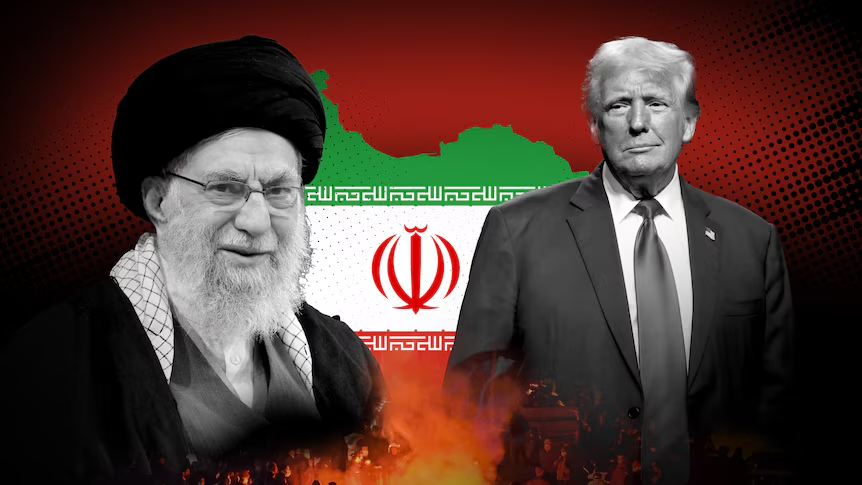
🚨 USA–IRAN situation update:
The U.S. navalblockade against Iran remains fully enforced, according to CENTCOM. Since April 13, 58 commercial vessels have been redirected and 4 disabled.
After failed Islamabad negotiations, tensions remain extremely high across the Gulf and Hormuz.
Current probabilities:
• 65% chance of serious negotiations and de-escalation in the next 48–72h
• 30% chance of new USA strikes / Iran retaliation
• 5% chance of total stalemate
Next 2 weeks outlook:
• 58% → stabilization, nuclear talks, partial Hormuz easing
• 32% → escalation, new strikes, wider Iran-USA war risks involving Gulf states
• 10% → prolonged standoff under blockade
Trump continues “maximum pressure” strategy while keeping negotiations open. Iran faces massive economic pressure as oil exports collapse under the blockade.
Watch CENTCOM and Trump statements closely over the next 24–48h. A single move could shift the entire Iran-USA war situation.
🚨 $7 billion in suspicious oil trades before the Iran war headlines, Brent and U.S. crude surging, Saudi Arabia and Kuwait restoring U.S. military access for Hormuz operations, and now reports the Trump administration could restart Project Freedom.
The market is reacting to something far bigger than a temporary regional escalation. Oil, shipping routes, military positioning, everything is moving at once around the Strait of Hormuz.
🚨 The WSJ reports the U.S. has handed Iran a new nuclear framework.
If Tehran accepts, detailed negotiations begin within 30 days.
Key U.S. demands reportedly include:
• No pursuit of nuclear weapons
• Dismantling Fordow, Natanz, and Isfahan
• Full ban on underground nuclear activity
• On-demand inspections with penalties
• 20-year halt on uranium enrichment
• Transfer of enriched uranium stockpiles
• Reopening of the Strait of Hormuz
• Sanctions relief only if Iran complies
This could become one of the most consequential Middle East negotiations in years.
🇮🇷🇦🇪🇺🇸❗️One key reason behind tensions with the UAE: energy power.
- Breaking away from OPEC limits to control its own oil output
- Expanding Fujairah exports to bypass the Strait of Hormuz
This reshapes global oil supply, and threatens price control dynamics.
🚨IRAN NEW THREE STAGE PEACE PLAN
Stage 1:
✅ End War in 30 Days Including in Lebanon
✅ Gradual Opening of the Strait of Hormuz,
✅ Lift U.S Blockade
✅ U.S. Military Withdrawal from Iran's Borders
✅ Iran to clear mines.
Stage 2:
✅ Complete Freeze on Uranium Enrichment for 15 Years.
✅ After 15 years Resume at 3.6%
✅ No storage of Enriched Uranium
✅ No Dismantling of nuclear infrastructure.
✅ Sanctions relief
✅ Frozen asset release tied directly to nuclear steps.
Stage 3;
✅ Iran-Arab strategic dialogue to build a regional security architecture
✅ Non-aggression commitment that covers Israel.
WAR MAY START AGAIN🚨
President Donald Trump is reportedly preparing to strike Iran again.
Per senior U.S. officials, he was briefed for 45 minutes on a final blow after International Atomic Energy Agency says most enriched uranium remains intact.
Escalation is now back on the table.
🚨 Risk-off showing clearly in crypto, but this may not be the end.
BTC dropped from ~73.8k to ~70.7k, a sharp move reflecting the shift in sentiment as markets reopened and geopolitical risk increased.
This is macro-driven, oil above $100, tensions rising, uncertainty everywhere.
But these latest developments change things even more:
• Trump threatening 50% tariffs on China → global trade risk
• Possible end of ceasefire with Iran → escalation risk
What this means:
If escalation + trade tension increase → BTC could break lower toward 69–68k
If panic spreads across markets → downside accelerates
If clarity comes → short-term relief bounce possible
Crypto is reacting first, but with these new headlines, the broader market could still reprice further.
@SpiritualTruthW Saying “0% chance” isn’t really analysis, it’s just conviction without pricing.
If escalation were guaranteed, oil wouldn’t be around $95, it would already be well above $110 reflecting a full supply shock.
Markets deal in probabilities, not absolutes. That’s the difference.
🚨 Oil market just got two opposing signals at once.
Saudi Arabia has restored the East-West pipeline to ~7M barrels/day, bypassing the Strait of Hormuz and easing supply risk. At the same time, reports of a potential U.S. escalation on Iran are raising geopolitical tensions again.
WTI last closed around $95 (-2.4%), but this balance won’t hold for long.
Here’s the key:
+7M bpd capacity reduces supply pressure
BUT
Geopolitical risk premium could return instantly if escalation is confirmed
My view:
If no military escalation → oil could stabilize or even pull back toward $90–92
If escalation is confirmed → oil likely spikes above $100 quickly
Watch the open carefully, markets will reprice fast, and volatility will be extreme across oil, equities, and crypto.
True, that’s the key point.
The pipeline restores ~7M b/d capacity, but if the market is still short 8–11M b/d, the imbalance remains. That’s why supply relief alone won’t fully offset geopolitical risk.
In other words, even with Saudi flows back online, prices can still move higher if tensions escalate.
It increases the risk, but it doesn’t guarantee it.
Failed talks usually raise tensions and the chance of escalation, but both sides still have strong incentives to avoid a full-scale conflict. What’s more likely in the short term is pressure, strategic moves, and volatility rather than immediate large-scale warfare.
You can already see early reactions in BTC and other cryptocurrencies, which are starting to move lower.
🚨 Talks collapse, markets now brace for impact.
Negotiations in Islamabad between the U.S. and Iran have ended without agreement, with Vice President JD Vance confirming that no deal was reached and tensions are set to rise again.
Markets are currently closed (Sunday), including oil, but the last print shows WTI around $95.62 (-2.40%), already reflecting some easing expectations that may now reverse.
Looking ahead to the next sessions:
• Oil could spike higher again as geopolitical risk returns, especially around the Strait of Hormuz
• Equities may face downside pressure due to renewed uncertainty
• Safe-haven assets like gold and the dollar could strengthen
• Volatility is likely to increase across all major markets
The key shift is clear, expectations have moved from de-escalation back to escalation, and markets will reprice fast as trading resumes.
🚨 Negotiations in Pakistan are nearing the end, but tensions are still shaping the narrative.
WTI crude continues to decline, now around $95.62 (-2.40%), as markets increasingly price in a potential de-escalation and the reopening of the Strait of Hormuz, a key signal for global oil supply.
Trump, staying true to his sharp tone, continues to pressure Iran while portraying U.S. strength, reinforcing a narrative of dominance that markets are watching closely.
If the Strait reopens and diplomacy holds, oil could extend its downside, but any setback could quickly reverse this move.