Tokenised deposits have moved from pilots to production planning, and regions are racing to get there first.
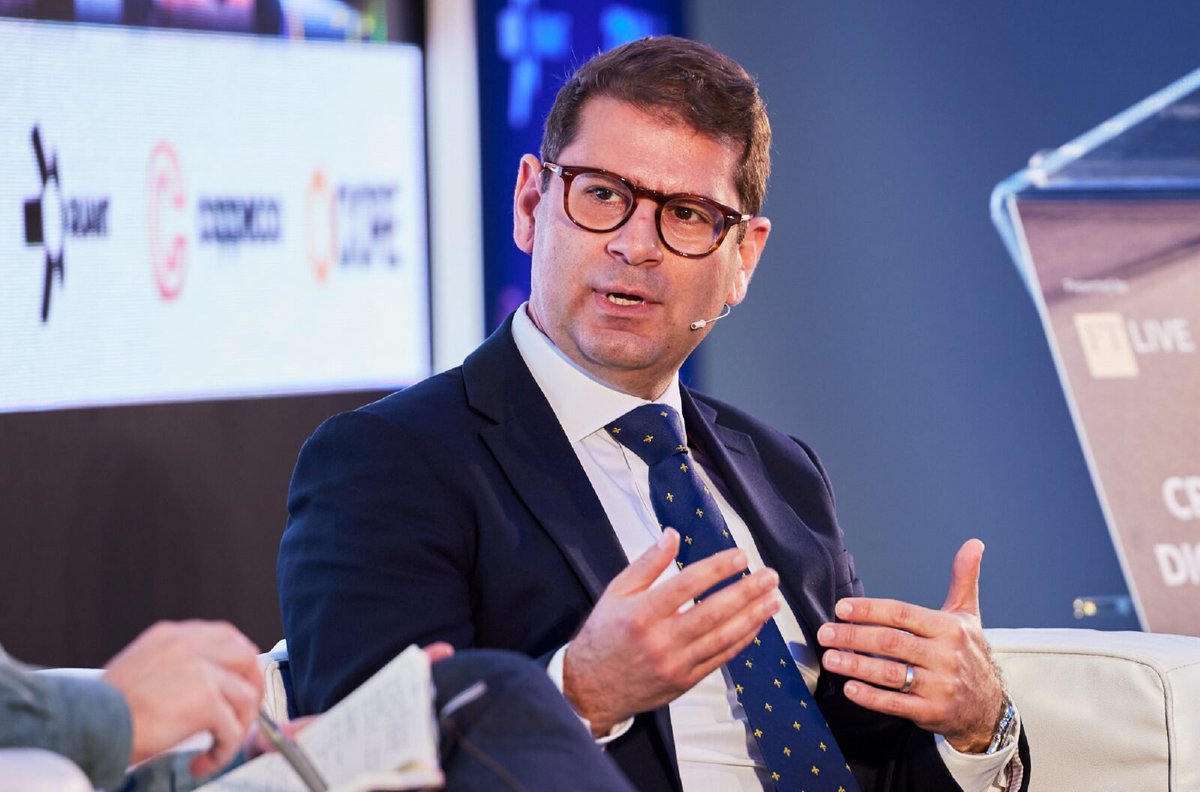
At @Sibos Miami 2026, our Founder and CEO, @gverdian, moderated a panel with @LloydsBank, @UKFtweets, @TCHtweets, @TDBank_US and @smbc_group.
The discussion covered where #tokeniseddeposits go first, what makes the commercial case, and why #interoperability will shape the next five years.
Read the full article here: https://t.co/MdsPGCnje6
#ProgrammableMoney #Sibos2026
After establishing a strong presence across the US, UK, and European markets, Quant CEO G. Verdian now appears to be hinting that Japan could be next.
For those new to Quant: I’ve followed Verdian for years, and I have yet to see him hint at a partnership that wasn’t eventually made official.
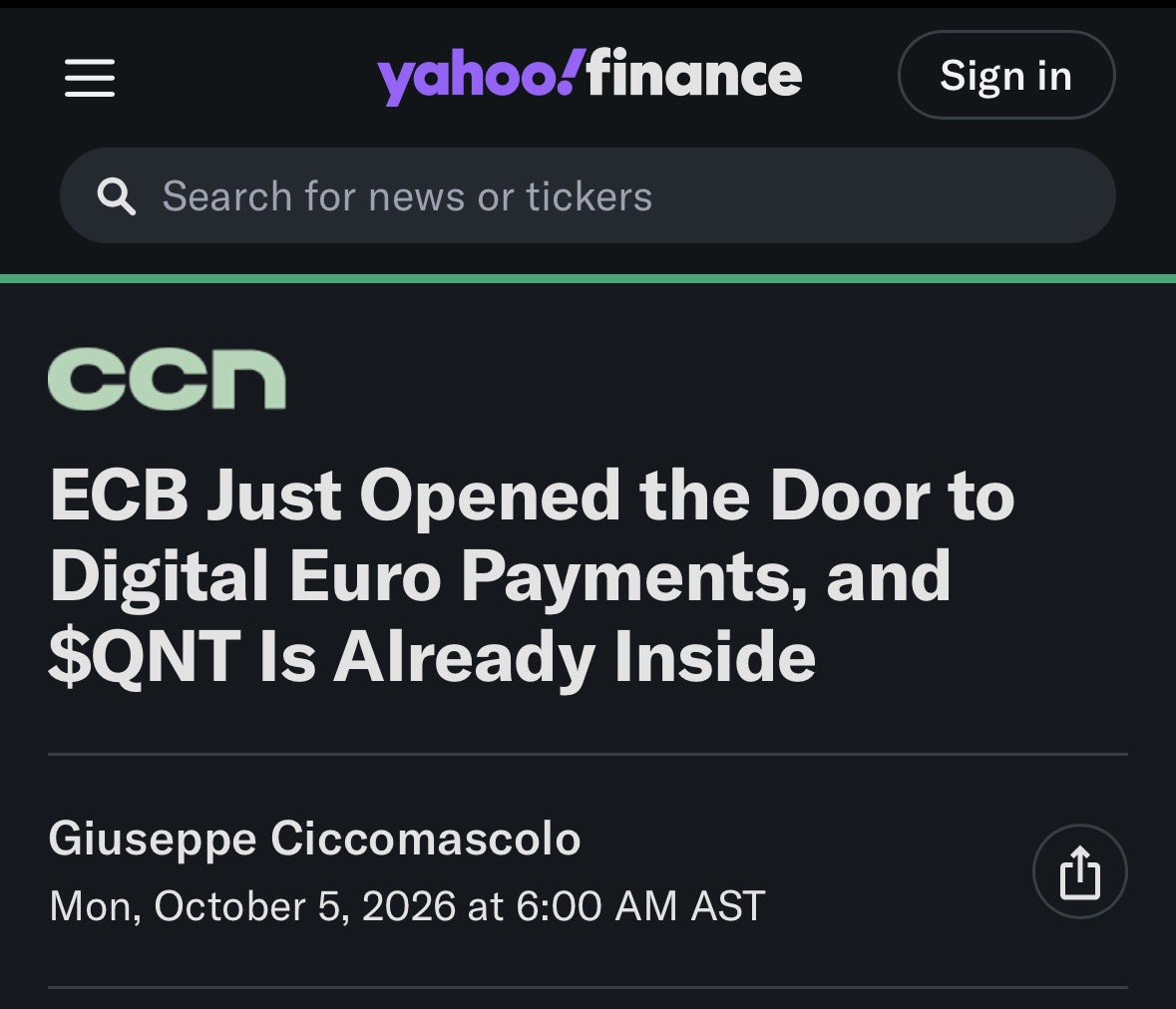
“ECB Just Opened the Door to Digital Euro Payments, and $QNT Is Already Inside”
Quant is at the heart of the future payment rails in the US, UK, and EU, and it can connect those rails.
Juan is back, digging further into the mechanics of Quant Network’s groundbreaking technology.
And yes — $QNT is the gas that powers the network.
If you want to truly understand how Quant works under the hood, make sure to follow him. 🙏
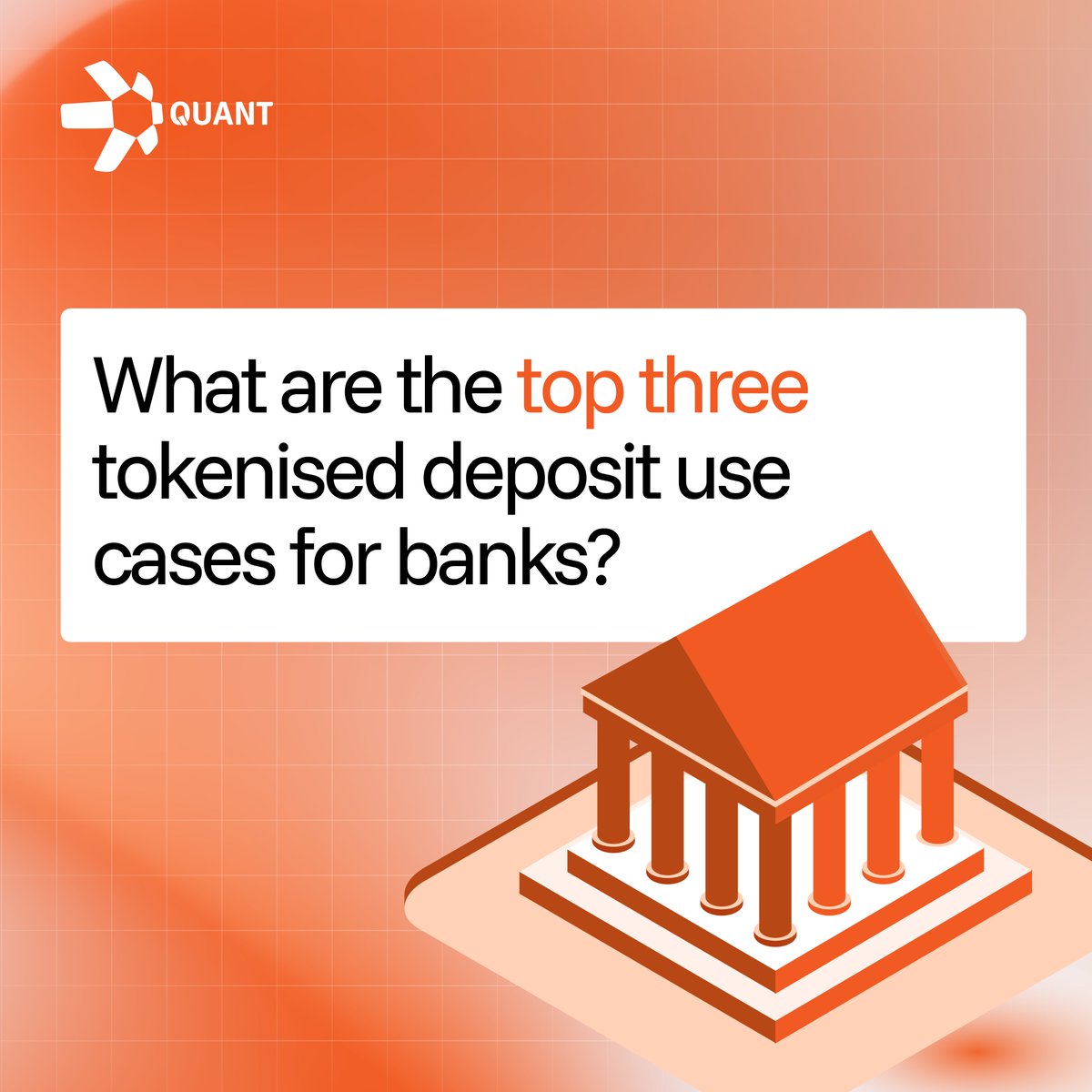
Tokenised deposits are moving out of pilots and into production planning.
Three use cases keep coming up across markets:
1. Settlement for tokenised assets
2. Corporate transaction banking
3. Cross-border intra- and inter-bank flows
Discover the value each one brings for #banks in this article: https://t.co/n9Xf2ZVgD2
#TokenisedDeposits #Tokenisation
JUST IN: QNT token price is up 306% over the past two weeks
Quant’s Fusion Rollup is now live on mainnet, with QNT serving as the native token for staking, transaction fees and node capacity, adding to momentum from its OKX listing.
How does $QNT work between banks? 👇
Bank A pays $10,000. It stays in dollars. Only the network fee becomes QNT and pays Fusion to move the payment across networks.
The bank never holds QNT. The network behind it does.
#Quant#QNT
FYI: Lloyds, together with Barclays, HSBC, Monzo, Nationwide, NatWest and Santander form UK’s tokenized deposit project (GBTD) which is powered by… Quant. And the first transactions have been completed. $QNT #DYOR
@Ivan_the_gent@swiftcommunity@chainlink Actually people like you following Link is bullish for ethereum:0x4a220e6096b25eadb88358cb44068a3248254675. Its matches its coin to its die hard holders. Segregation by IQ
They laughed at 12 $BTC bought at $265.
Now ethereum:0x4a220e6096b25eadb88358cb44068a3248254675 is $265 after a 300% week.
Same number. Different ticker.
@grok can 12 QNT still make
somebody a millionaire?
$QNT’s banking story is getting harder to ignore🚀
The Clearing House picked Quant for US tokenized deposits, while seven UK banks completed live transactions on Quant-built infrastructure.
See why these milestones are putting $QNT in focus 👇
https://t.co/RBvxzWkhdn
Most millionaires could never own 1 full $QNT at the same time.
UBS estimates there are roughly 57.5 million USD millionaires worldwide including approximately 3,300 billionaires.
There are only 14,612,493 $QNT
That is nearly FOUR millionaires for every ONE $QNT in existence.
Even under perfect distribution, only 25.4% of the world’s millionaires could hold one complete $QNT
Now watch what happens when the desired allocation increases:
If just 2.54% wanted 10 $QNT each…
Demand would equal the entire supply.
If just 0.254% wanted 100 $QNT each…
Demand would equal the entire supply.
If only 14,612 people wanted 1,000 $QNT each…
Demand would equal the entire supply.
And this assumes every single token is available for purchase.
It isn’t.
Circulating supply is not sell-side liquidity.
Existing holders own multiple tokens.
Long-term holders reduce what is available to the next buyer.
$QNT doesn’t need all 57.5 million millionaires to want it.
It doesn’t need 10%.
It doesn’t even need 3%.
The supply shock begins when a tiny percentage decides that one $QNT isn’t enough.
$QNT will not disappear.
The opportunity to own one whole $QNT cheaply can.
If you’re holding $QNT, here’s my prediction: The Clearing House was the first domino.
I’m watching seven major infrastructure moves next.
People are celebrating the price move.
I’m watching the architecture.
The Clearing House sits underneath a huge part of U.S. banking.
It selected Quant around tokenized deposits and connected that architecture into RTP and CHIPS.
To me, the important part is what that proves.
Quant can sit between:
traditional payment rails
tokenized bank money
different ledgers
settlement systems
and the banks themselves.
That is exactly the problem almost every major financial market is now creating.
So here are the next places on my radar.
1. Zengin / BOJ-NET in Japan
Quant already has Dentsu Soken.
Dentsu Soken already works around BOJ-NET, SWIFT and CLS.
The partnership is already aimed at tokenized deposits, bank-issued stablecoins and programmable settlement.
Japan has the ingredients.
My prediction is the orchestration layer becomes the next battle.
2. Payments Canada
BMO, CIBC, National Bank, RBC, Scotiabank and TD are already working toward shared CAD tokenized deposits.
Canada has Lynx.
Once multiple banks create digital commercial-bank money, somebody has to make those liabilities settle together.
The U.S. now has a live reference case.
3. EBA Clearing + ECB infrastructure
Europe has RT1, STEP2, TARGET, TIPS and Pontes.
Tokenized euro deposits will need to interact with those systems.
Quant already has the digital-euro connection described in this thesis.
Europe eventually needs coordination more than another private bank silo.
4. Pay UK + Bank of England Synchronisation
Quant already proved the UK side through Great British Tokenised Deposits with:
Barclays
HSBC UK
Lloyds
Monzo
Nationwide
NatWest
Santander
So I’m looking beyond another pilot.
I’m watching whether the same logic gets closer to Faster Payments, Bacs, CHAPS and RTGS Synchronisation.
5. HKMA Ensemble / EnsembleTX
Hong Kong already has HSBC, Standard Chartered and Bank of China (Hong Kong) working around tokenized deposits and wholesale CBDC settlement.
Multiple forms of money.
Multiple institutions.
One shared settlement problem.
That is Quant territory in my thesis.
Then come the two monsters.
6. SWIFT
If tokenized deposits start moving globally, SWIFT needs programmable connectivity between digital bank money and existing ISO 20022 infrastructure.
7. CLS
Once tokenized USD, GBP and other major currencies become real institutional settlement assets, FX needs PvP.
CLS sits right in that path.
Now zoom out.
Project Rosalind.
BIS.
Bank of England.
UK Regulated Liability Network.
Great British Tokenised Deposits.
ECB.
Murex.
Dentsu Soken.
The Clearing House.
None of these names appeared overnight.
Quant spent a decade building around the same problem:
banks will tokenize money, but somebody still has to make all that money work together.
The Clearing House showed what happens when that problem becomes real infrastructure.
My prediction is simple:
Japan, Canada, Europe, the UK and Hong Kong now have versions of the same problem. SWIFT and CLS complete the cross-border picture.
I’m watching who calls Quant next.
You ready?