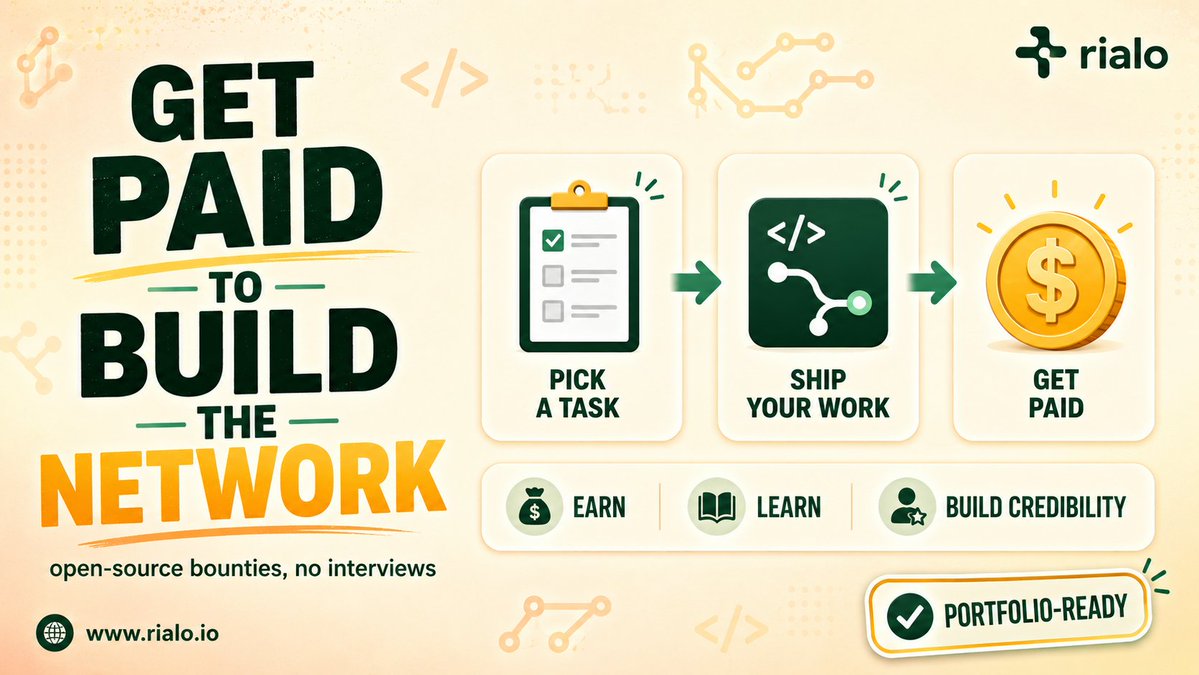
Something about @RialoHQ that does not get talked about enough is that they are not just asking devs to build on the network, they are actually paying people to help build the network itself.
The whole thing is open-source with a bounty program where the team posts specific problems they want solved, improving developer tooling, writing templates, fixing bugs, building useful examples, & each task carries a real reward attached to it.
There's no drawn-out interviews, hiring funnel, no waiting on a recruiter. You complete the task, your work clears the bar & you get paid.
What makes it genuinely worth doing goes past the money though, because contributing to the actual repositories powering the chain gives you real hands-on time with the tools instead of grinding through tutorials alone, & accepted code sitting inside a live blockchain protocol is the kind of thing that goes straight onto a portfolio & opens doors with future clients & employers.
The repos are well-organized, the docs are clear, newcomers are helped to find their footing, so the barrier to actually starting is low. Earn, learn & build credibility at the same time is a rare combination, & it is sitting there open for anyone willing to ship.
@rialo_africa@0x_alextine
One of the most interesting thing about @RialoHQ is not its consensus, it is the question almost nobody in crypto wants to answer out loud, which is who eats the loss when an external fact turns out to be wrong.
The whole industry has built a strange economy around admitting it needs the normal internet, oracle feeds, keepers, indexers, webhook relays, bridge-adjacent glue, & some of that genuinely buys you guarantees while plenty of it is just a surcharge for wrapping an ordinary dependency in crypto-shaped infrastructure with a token & a dashboard attached.
Native api calls do not make web2 data magically true, what they do is make the dependency visible inside the app instead of laundering it through another network pretending to be decentralized.
That matters because every api response a contract treats as binding is a liability event waiting to happen, a bad price, a bad credit score, a wrong shipment status, & the moment that value triggers settlement, somebody owns the damage.
The real edge is helping apps decide which outside facts can bind state, under what quorum, fallback, and with what recourse. If that works, pipes that only move data get cheaper & accountable correctness becomes the thing worth paying for.
@rialo_africa@0x_alextine
For weeks now the @RialoHQ community has been circling the same three questions about Latch, what it actually is, how it works under the hood, & why Rialo decided to build it in the first place, & today we finally get the answers straight from the source.
Ade Adepoju, the Co-Founder & CEO, is going live on the Discord stage to walk through the whole thing himself. And it's not a summary or a recap from someone who sat in, but the person who actually shaped the product breaking down the vision, real-world use cases, & where it fits in the bigger picture of where Rialo is heading.
The part I am genuinely looking forward to is the live Q&A, because it is rare to get a founder on a stage taking unscripted questions about a product on the day it gets introduced, & that openness has quietly been one of the best things about this community the whole way through.
If you have been even mildly curious about AI agents, secure automation, or what comes after the API-key era, this is the session to actually show up for. Bring your questions to the stage & ask them live.
See you there.
@rialo_africa@0x_alextine
A couple of days ago @GenLayer crossed 1,000,000 onchain decisions, & it's heading into Testnet Clarke, the last stop before mainnet. Good moment to actually understand staking.
Almost every conversation about AI agents fixates on intelligence, how smart they get, how many tasks they automate, how well they reason, but intelligence on its own does not build an economy, & the thing the Subzero Labs stack made click for me is that an actual agent economy needs three completely separate layers that nobody talks about together.
You need governance, which defines what an agent is even allowed to do, & that is the job Latch handles with hardware-bound permissions instead of leakable api keys. Also you need execution, the ability for an agent to actually take actions, read real-world data & settle onchain, which is the @RialoHQ infrastructure itself.
And you need economic coordination, a way for agents to evaluate each other's work & pay each other for it, which is what SCALE introduces. A swarm of brilliant agents with no governance is a liability, with no execution layer is a demo, with no payment rails is just a group chat.
The hard problem was never building one smart agent, it was building the rails that let millions of them work, transact & stay accountable at once. Intelligence is the easy part now, the coordination is the real frontier.
@rialo_africa@0x_alextine
@GenLayer's Intelligent Oracle resolved 97.2% share of Polymarket's prediction marketsin its live benchmark.
On every market it called, agreement with Polymarket's own resolution hit 100%.
The bigger story is what's now sitting on top of it. OKX's Exchange OS handles 300,000 TPS of permissionless market creation. GenLayer plugs in as the permissionless resolution layer underneath, no custom adapters, plain English criteria.
Permissionless markets meet permissionless resolution. That's a much bigger idea than prediction markets alone.
Quick breakdown below 👇
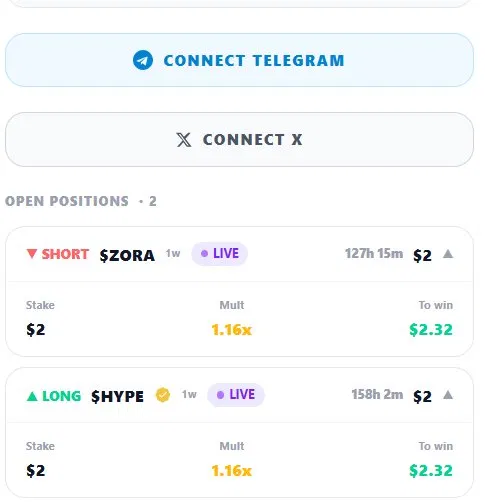
Opened a $ZORA short & a $HYPE long on @FUDmarkets mainnet just to test both directions at once.
Execution was fast, both entries filled clean with zero lag & switching between positions to track them is smooth.
Solid flow overall, two things would level it up though, deeper PnL analytics & a proper dashboard for filled positions instead of having to click the wallet address up top to see them.
The detail that genuinely surprised me reading about @RialoHQ's guarded multisig is the one about when the timelock clock actually starts running, because most vault designs out there start their cooldown the moment a proposal is created.
And this sounds fine until you realize an attacker can quietly file a proposal, let the timer run down for a week with nobody watching, then collect the final signer approvals at the very end & execute almost instantly.
The timelock technically existed, the protection effectively did not. Guarded multisig flips that ordering so the cooldown only begins after every required approval is already in, meaning the timer represents real reaction time for humans to look at what was just approved & shut it down if something feels wrong.
The Drift exploit that happened earlier this year landed because the security council had moved to a zero-timelock config right before the attack, so the moment compromise happened, settings could change in the same block.
A timelock is not really a delay mechanism, rather it is a window for somebody to notice, & the design choice of when that window opens matters more than the length of it.
@rialo_africa@0x_alextine
Took an angle on @GenLayer I haven't seen broken down well anywhere: the GenVM vs the EVM, side by side.
The short version is that the EVM is a calculator built for certainty, while the GenVM is a thinking engine built for everything else.
Python at the top instead of Solidity. WebAssembly sandbox in the middle. A native LLM bridge underneath. Two execution modes running in parallel so AI can live onchain without breaking consensus.
Explainer below 👇
This is actually a bigger deal than people are treating it.
In plain terms, Brookwell just went global, meaning the waitlist that was previously limited to US residents is now open to users across 150+ countries & that alone is significant news. But what makes this even more interesting when you sit with it is what's running underneath Brookwell quietly making all of this possible in the first place.
Stablecoins have always had a gap between holding them & actually spending them on everyday things like rent, bills & mortgages because merchants & legacy payment systems weren't built to accept them directly, so people were stuck doing slow & expensive workarounds just to use money they already had.
Brookwell is basically the bridge that closes that gap & @SeismicSys is the private infrastructure layer the whole thing runs on, meaning every transaction moving through Brookwell stays encrypted & protected by default while still being fully verifiable for compliance purposes.
Stablecoins are expected to represent 3% of all US dollar payments in 2026 & 10% by 2031, so the timing of Brookwell opening globally right now while sitting on privacy-first rails is genuinely well positioned. This is what real ecosystem momentum looks like when it compounds quietly.
As usual @RialoHQ Shark Tank event took place this week & I want to talk about all 3 projects that were presented because each one deserves more than a one-liner.
Stelo Finance is building a DeFi super app & the thing that actually stood out to me isn't the feature list, it's the fact that they've thought about retention from day one, lending interest revenue sharing & paid educational content built into the model means the platform has a reason to keep users engaged beyond just the novelty of it being new, & that's a level of product thinking a lot of early DeFi projects completely skip.
The Rialo Builder Showcase is the kind of infrastructure project that doesn't get enough credit, forty projects already listed, independent developer submissions, search & filtering, GitHub links, data stats, & you can browse the whole thing without logging in at all, which in Web3 is genuinely rare & genuinely matters because most discovery tools quietly gatekeep the people they're supposed to be helping.
Then Royale Casino, one wallet connection covering your entire gaming experience, testnet running on mock tokens so you can actually feel the full product without any real financial exposure, RNG optimization & social battle features already on the roadmap.
3 very different projects, but all 3 are being built on @RialoHQ & all are further along than most people probably realize.
Tuned into the second Rialo Shark Tank session yesterday & honestly it was one of those things where you log on out of curiosity & end up staying way longer than you planned because what the builders are actually putting together inside this ecosystem is genuinely worth paying attention to.
3 projects pitched & each one showed something different about what becomes possible when you have infrastructure that can actually talk to the real world without needing a anyone or anything sitting in between.
ChainSure is building insurance that pays out automatically the moment a flight delay gets confirmed through a live airport API, with no paperwork or waiting for someone to approve your claim & zero chance of the payout getting quietly denied on a technicality.
OlpaDEX is building a trading platform where real world sports events like a corner kick or a goal directly move prices in real time, targeting 5 billion sports fans rather than just crypto natives which is a completely different kind of ambition.
The Rialo Event Community Hub project pulls everything scattered across Discord & X into one place with automatic timezone conversion, Google Calendar sync & Telegram reminders 5 minutes before anything starts.
I've been following @RialoHQ long enough now to say these Shark Tank sessions are genuinely worth attending whether you're building or just trying to understand where this ecosystem is actually heading.
And btw, Big congrats to @Arlor09 & @Johson_Nguyen for being the first winners of the inaugural edition of the Shark Tank program!
After reading The AI Loop #17 from @PerleLabs I had to break down what's actually happening in the AI world right now because this week was genuinely packed & a lot of it connects back to something most people in the space still aren't paying enough attention to.
OpenAI just closed the biggest private funding round in history at $110 billion which tells you everything about how serious & expensive the race to build AI infrastructure has become & that's not a small signal, that's the industry putting its money where its mouth is at a scale nobody has seen before.
At the same time researchers just published findings on an AI system that can spot breast cancer risk up to four years before it actually shows up, even when standard tests are coming back completely clean & that's the kind of real world impact that reminds you why getting AI right actually matters beyond just the tech hype.
Meanwhile over in China, DeepSeek V4 is gearing up to launch a trillion-parameter multimodal model that looks like it could genuinely go toe to toe with the most advanced systems currently out there & that's a big deal for how competitive this space is getting globally.
Here's the thread that connects all of it though & it's the part people keep skipping over which is that every single one of these breakthroughs lives or dies based on the quality of the data behind it & that's exactly the problem @PerleLabs is focused on solving by building a human-verified data layer where contributors review datasets, evaluate outputs & complete real tasks like legal clause conflict detection with everything logged onchain so quality is actually measurable & provable.
Bigger models are cool but trusted intelligence built on verified human knowledge is what actually moves the needle.
in simple terms:
better human signals → better datasets → better AI.
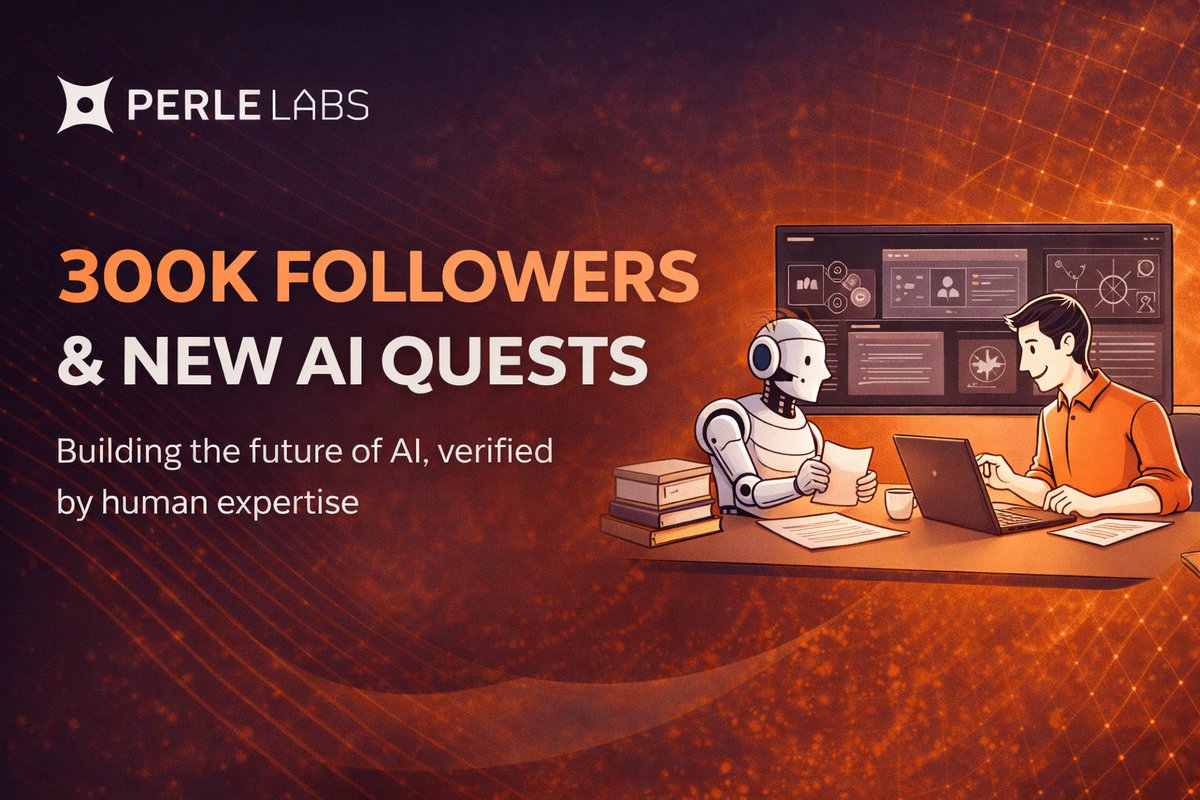
It's also worth noting that @PerleLabs just hit 300K followers on X & when you consider they were sitting at around 200K at the start of February that's a genuinely impressive jump in a pretty short window of time & it says a lot about how much attention is shifting toward what they're building.
The community growth isn't just a vanity number either because the platform has been actively rolling out real tasks that are doing meaningful work like the Multi-Issue Clause Conflict Detection quest which is literally training AI to reason through complicated legal clauses & figure out how they interact with each other rather than just reading them one at a time in isolation & that's a pretty sophisticated type of task when you think about what it's actually teaching the model to do.
The Human CAPTCHA challenge also wrapped up recently & participants who performed well got rewarded for their contributions which is exactly the kind of accountability & recognition that makes this platform different from just showing up & doing throwaway gig work that disappears into a system you never hear from again.
Big congrats to the @PerleLabs team honestly because the momentum building around human-verified AI infrastructure is real & the fact that a growing number of people are paying attention & actively participating shows that the idea of grounding AI intelligence in verified human knowledge is resonating way beyond just the crypto or tech crowd.
Came across this meme from the generator that @CessyeS88189 designed & it honestly hit different than i expected it to.
The image of "Zero privacy" raining down like missiles while someone just sleeps peacefully underneath it says so much about where we are in this space right now, because for years building on transparent blockchains just meant accepting that being exposed was part of the deal & people just got used to it somehow.
Your trades, balances, whole strategy & user flows just sitting out there for anyone to see & somehow that became normal.
But that was never going to work once real finance started showing up on chain & that's exactly what the meme captured without even trying to explain it technically.
What got me was the contrast between the chaos happening above & the calm sitting below it, because that's literally what good privacy infrastructure is supposed to feel like in practice. The system absorbs all the noise & complexity so the people building on it & the users actually using it don't have to live inside that chaos every single day.
That's what @SeismicSys is actually building toward, encrypted execution that's just on by default, verification that works without broadcasting every single detail to the entire world & privacy that's blended right into the foundation rather than something you add on later as an afterthought.
The goal was never secrecy for its own sake, it's just boundaries, the same kind every real financial system has always had & when privacy becomes the infrastructure itself, you can finally just sleep while the system quietly does its job.
A new quest just went live on @PerleLabs & honestly this one is pretty interesting if you like puzzles or anything legal.
It's called multi-issue clause conflict detection & the way it works is you get shown two clauses pulled from the same contract & your job is simply to read both & decide whether they clash with each other & if they do, figure out what kind of conflict it actually is.
The tricky part that makes it genuinely fun is that both clauses can look completely fine on their own & it's only when you put them side by side that the contradiction starts to show up, so you really have to think about how they interact together rather than just reading each one separately.
This type of task is actually really valuable because it teaches AI to understand how different parts of a legal document connect & affect each other instead of just looking at each clause in isolation like most systems currently do.
Task details are 10 tasks at 100 points each & you need 1,500 points to qualify so jump in here: https://t.co/OMQFkwGlEm
You know that feeling when you're excited to try something cool but then you're just sitting there watching a progress bar for like 20 minutes waiting for a massive app to download & by the time it actually finishes you've already lost interest completely?
That's literally been the story of immersive tech for years & the crazy part is that your device was never really the problem & neither was the content, it was always the delivery system sitting in the middle that was broken & nobody was really fixing it properly.
What @mawariXR is doing is basically taking all that heavy 3D processing work off your device entirely & spreading it across a massive global network of GPU computers that do all the hard work close to where you actually are & then just stream the final experience straight to you the same way Netflix streams a movie to your TV right now.
So instead of needing an expensive device, waiting on downloads, watching your phone overheat or dealing with lag that completely ruins the moment, you just open it & it works instantly on whatever device you already have in your hand.
The internet started with text, then it leveled up to video & now it's making its biggest jump ever into full 3D spatial worlds & @mawariXR is literally building the roads & delivery system that makes that whole shift actually work for normal everyday people.
Seeing Via build on @SeismicSys actually makes complete sense once you think about how businesses that operate on the internet actually handle money today.
If you're a company moving money across different countries constantly, you don't just need things to move faster, you need financial tools that actually work across borders without leaking sensitive information about your treasury every single time a transaction goes through, & that's a problem most people don't think about until it's their own money on the line.
Via is coming at this with a pretty simple idea when you break it down, one global account that holds multiple currencies, handles cross-border payments & gives access to flexible credit all settled through stablecoins, which honestly already sounds more useful than what most traditional banking offers companies operating at that scale.
But building on Seismic is what adds the layer that traditional rails genuinely can't offer easily, & that layer is privacy sitting right at the infrastructure level meaning payments can move globally, liquidity stays accessible & businesses can actually operate without their entire financial activity becoming a public data feed that competitors & anyone else can just read freely.
For startups, fintech teams & companies with people spread across different countries, this stops looking like crypto experimentation pretty quickly & starts looking like the next generation of real financial infrastructure just quietly taking shape in the background without making a big noise about it.
Bitcoin has always been the solid foundation of this space. It is simple, secure, and stubborn in the best way. For years that strength came with a quiet cost: it couldn’t expand beyond its original script. It protected value but it never allowed builders to shape new worlds on top of it.
@citrea_xyz changes that narrative without disturbing what makes Bitcoin special.
Was buildt by the brilliant team @atomixlabs, it introduces zk-rollups to Bitcoin in a way that feels almost effortless. Transactions happen off-chain, proofs settle on-chain and Bitcoin validates those proofs without needing to repeat any of the work. Speed increases and fees drop, while security remains exactly where it has always been which is in Bitcoin’s base layer.
What sets @citrea_xyz apart is its method of programmability. It speaks EVM natively, so an Ethereum developer can deploy familiar contracts while anchoring everything to Bitcoin’s settlement guarantees. There are no federated multisigs, no wrapped assets and no “just trust us” bridges. The Clementine Bridge uses BitVM to maintain security with math rather than gatekeepers.
This creates a path for real ₿apps: lending built on solid ground, decentralized exchanges that benefit from Bitcoin’s permanence, and games that settle on the strongest ledger on earth. Dormant BTC liquidity finally has a place to move without leaving home.
Bitcoin remains unchanged but becomes much more capable.
Citrea isn’t trying to compete with Bitcoin; it is showing what Bitcoin has been capable of all along.