The contrast between Reagan’s speech at Point-Du-Hoc and Pete Hegseth today are like two different galaxies. Listen to how much reverence he gives to the same allies that Hegseth attacks.
St. Patrick: From Slave to Preacher
When Patrick was a teenager, he was kidnapped during a raid on Britain and taken to Ireland to serve as a slave. After six years in captivity, he escaped, made his way back home, and eventually was ordained into the priesthood.
Then God, in his ironic way, sent Patrick back into the land of his former captivity to proclaim the freedom of the Gospel.
The boy who had been a slave was used by Christ to bring his word of salvation and life to a people who had been living in the darkness of pagan unbelief.
In Patrick we see the Lord of life at work, as we see him at work in our own lives. The God who can take a slave who seemed destined for nothing but death, and use his life to bring wisdom and light and salvation to the lives of so many others—this same God can and does work in our own lives.
We may seem destitute of hope, but the hope of Christ is stronger than our weakness. As he was for Patrick, so he will be for us: our companion in suffering, our life in death, our resurrection in the grave, and the Lord who uses us in his own way to bring blessings into the lives of others.
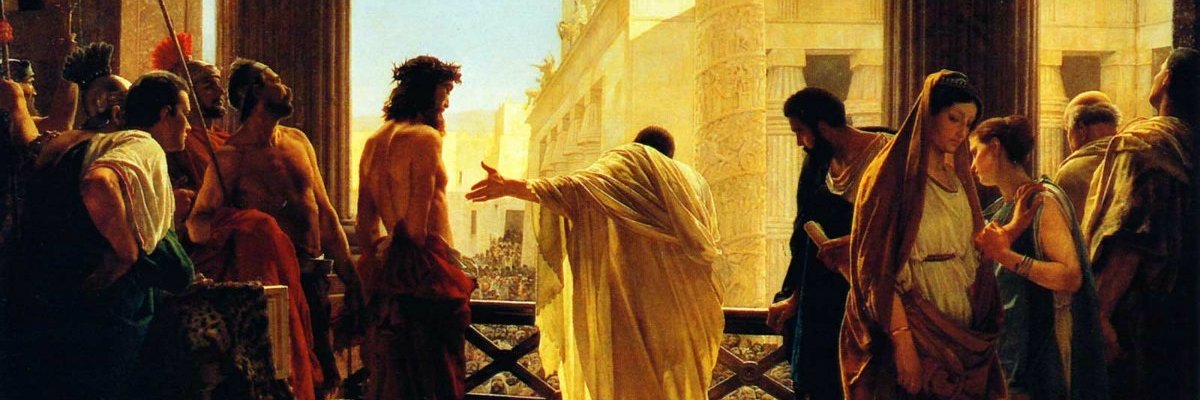
Today's image is commonly called the Alexamenos Graffito. It is a late 2nd-century or early 3rd-century graffiti from Rome, discovered on the Palatine Hill in 1857.
The drawing mocks Jesus by portraying him crucified with the head of a donkey, while a figure stands nearby in a gesture of worship. The Greek inscription reads, “Alexamenos worships [his] god.”
The image reflects common ridicule of early Christians, who were sometimes accused of absurd or impious worship—even of atheism since they rejected the gods of Rome. A crucified deity was scandalous enough; pairing that figure with a donkey’s head heaped mockery upon mockery.
It is hard for us as moderns to wrap our minds around how shameful the cross was in the Roman Empire. In the first century, the cross was a reprehensible, horrific Roman instrument used to control the masses, instill fear, and eliminate political threats.
Crucifixions were public warnings: mess with Rome, and this is what you get. Respectable society avoided even mentioning words like "cross" or "crucifixion." The cross was not a topic for polite conversation, much less something to proclaim from the rooftops as good news.
Yet Paul insists that Christ crucified is precisely what Christians preach. Why? Because God reveals his wisdom in ways that overturn human expectations. The weak shame the strong; the despised nullify what appears powerful (1 Cor. 1:27–28). God reveals himself beneath his seeming opposite: life in death, glory in shame, hope in despair.
“Alexamenos worships his god.” Indeed, he does. And we do with him. Call me Alexamenos. Call me a fool. The mocked and crucified one bore our sins, our blasphemies, the world’s corruption, and made them his own so that they are no longer ours.
Look nowhere else for God but in the crucified and resurrected Jesus. In him alone we find wisdom, righteousness, sanctification, and redemption (1 Cor. 1:30). Now that is a God worthy of worship.
______
-We read 1 Corinthians 1 today in Bible in One Year: https://t.co/XxNvEtNH7e
-The image is public domain. See the Wikipedia article "Alexamenos graffito" for more.
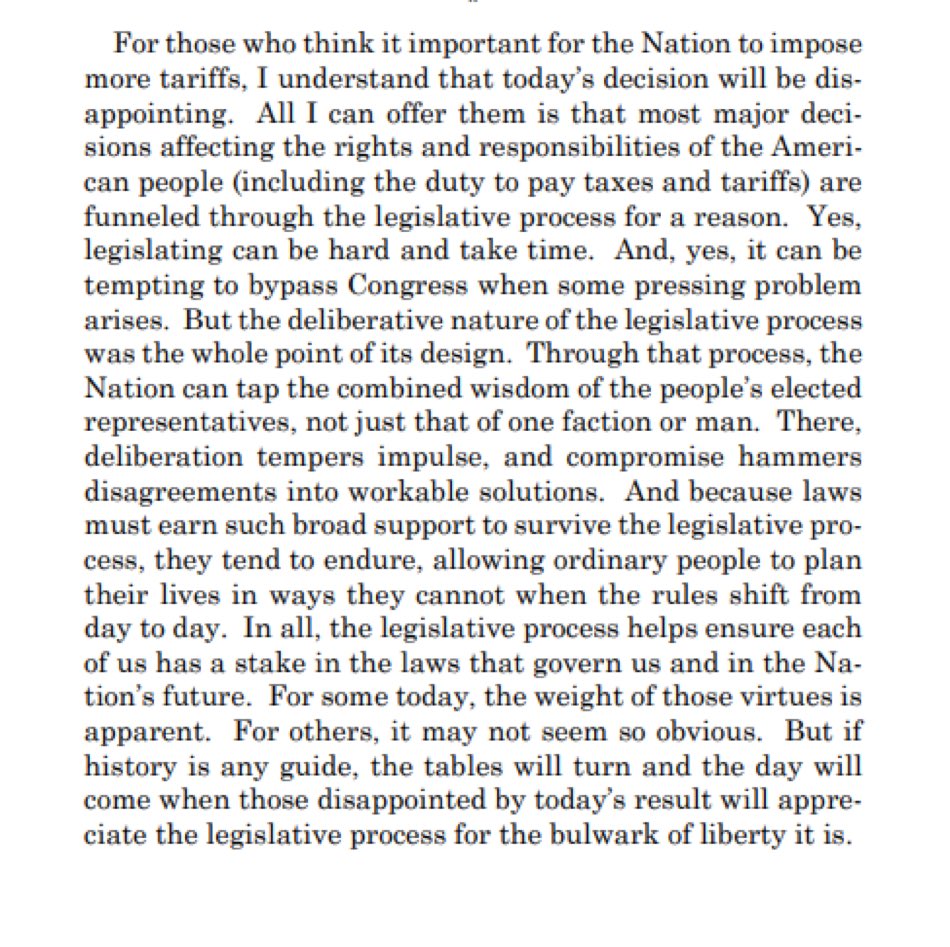
I'm not remotely surprised by the court's tariff decision. There is a consistent through-line here, from the student loan decision, to the OSHA vaccine mandate case, to tariffs -- the Supreme Court is jamming the presidency back into its constitutional box.
I’m not even an Indiana fan, but I never get tired of watching this. It’s one of the best things I’ve ever seen in football.
I hope somebody makes a movie out of it with Jerry Goldsmith writing the score.
Friends-
This is a tough note to write, but since a bunch of you have started to suspect something, I’ll cut to the chase: Last week I was diagnosed with metastasized, stage-four pancreatic cancer, and am gonna die.
Advanced pancreatic is nasty stuff; it’s a death sentence. But I already had a death sentence before last week too — we all do.
I’m blessed with amazing siblings and half-a-dozen buddies that are genuinely brothers. As one of them put it, “Sure, you’re on the clock, but we’re all on the clock.” Death is a wicked thief, and the bastard pursues us all.
Still, I’ve got less time than I’d prefer. This is hard for someone wired to work and build, but harder still as a husband and a dad. I can’t begin to describe how great my people are. During the past year, as we’d temporarily stepped back from public life and built new family rhythms, Melissa and I have grown even closer — and that on top of three decades of the best friend a man could ever have. Seven months ago, Corrie was commissioned into the Air Force and she’s off at instrument and multi-engine rounds of flight school. Last week, Alex kicked butt graduating from college a semester early even while teaching gen chem, organic, and physics (she’s a freak). This summer, 14-year-old Breck started learning to drive. (Okay, we’ve been driving off-book for six years — but now we’ve got paper to make it street-legal.) I couldn’t be more grateful to constantly get to bear-hug this motley crew of sinners and saints.
There’s not a good time to tell your peeps you’re now marching to the beat of a faster drummer — but the season of advent isn’t the worst. As a Christian, the weeks running up to Christmas are a time to orient our hearts toward the hope of what’s to come.
Not an abstract hope in fanciful human goodness; not hope in vague hallmark-sappy spirituality; not a bootstrapped hope in our own strength (what foolishness is the evaporating-muscle I once prided myself in). Nope — often we lazily say “hope” when what we mean is “optimism.” To be clear, optimism is great, and it’s absolutely necessary, but it’s insufficient. It’s not the kinda thing that holds up when you tell your daughters you’re not going to walk them down the aisle. Nor telling your mom and pops they’re gonna bury their son.
A well-lived life demands more reality — stiffer stuff. That’s why, during advent, even while still walking in darkness, we shout our hope — often properly with a gravelly voice soldiering through tears.
Such is the calling of the pilgrim. Those who know ourselves to need a Physician should dang well look forward to enduring beauty and eventual fulfillment. That is, we hope in a real Deliverer — a rescuing God, born at a real time, in a real place. But the eternal city — with foundations and without cancer — is not yet.
Remembering Isaiah’s prophecies of what’s to come doesn’t dull the pain of current sufferings. But it does put it in eternity’s perspective:
“When we've been there 10,000 years…We've no less days to sing God's praise.”
I’ll have more to say. I’m not going down without a fight. One sub-part of God’s grace is found in the jawdropping advances science has made the past few years in immunotherapy and more. Death and dying aren’t the same — the process of dying is still something to be lived. We’re zealously embracing a lot of gallows humor in our house, and I’ve pledged to do my part to run through the irreverent tape.
But for now, as our family faces the reality of treatments, but more importantly as we celebrate Christmas, we wish you peace: “The people walking in darkness have seen a great light; on those living in the land of deep darkness a light has dawned….For to us a son is given” (Isaiah 9).
With great gratitude, and with gravelly-but-hopeful voices,
Ben — and the Sasses








![birdchadlouis's tweet photo. Today's image is commonly called the Alexamenos Graffito. It is a late 2nd-century or early 3rd-century graffiti from Rome, discovered on the Palatine Hill in 1857.
The drawing mocks Jesus by portraying him crucified with the head of a donkey, while a figure stands nearby in a gesture of worship. The Greek inscription reads, “Alexamenos worships [his] god.”
The image reflects common ridicule of early Christians, who were sometimes accused of absurd or impious worship—even of atheism since they rejected the gods of Rome. A crucified deity was scandalous enough; pairing that figure with a donkey’s head heaped mockery upon mockery.
It is hard for us as moderns to wrap our minds around how shameful the cross was in the Roman Empire. In the first century, the cross was a reprehensible, horrific Roman instrument used to control the masses, instill fear, and eliminate political threats.
Crucifixions were public warnings: mess with Rome, and this is what you get. Respectable society avoided even mentioning words like "cross" or "crucifixion." The cross was not a topic for polite conversation, much less something to proclaim from the rooftops as good news.
Yet Paul insists that Christ crucified is precisely what Christians preach. Why? Because God reveals his wisdom in ways that overturn human expectations. The weak shame the strong; the despised nullify what appears powerful (1 Cor. 1:27–28). God reveals himself beneath his seeming opposite: life in death, glory in shame, hope in despair.
“Alexamenos worships his god.” Indeed, he does. And we do with him. Call me Alexamenos. Call me a fool. The mocked and crucified one bore our sins, our blasphemies, the world’s corruption, and made them his own so that they are no longer ours.
Look nowhere else for God but in the crucified and resurrected Jesus. In him alone we find wisdom, righteousness, sanctification, and redemption (1 Cor. 1:30). Now that is a God worthy of worship.
______
-We read 1 Corinthians 1 today in Bible in One Year: https://t.co/XxNvEtNH7e
-The image is public domain. See the Wikipedia article "Alexamenos graffito" for more.](https://pbs.twimg.com/media/HCuEfOWWkAAHC2t.jpg)