@nickmmark Not completely inane. Plenty of places put PACs in for routine cardiac surgery at all levels of risk. Even though it’s not the PAC itself, decisions and protocols made on the basis of that info frequently delay recovery and may cause harm.
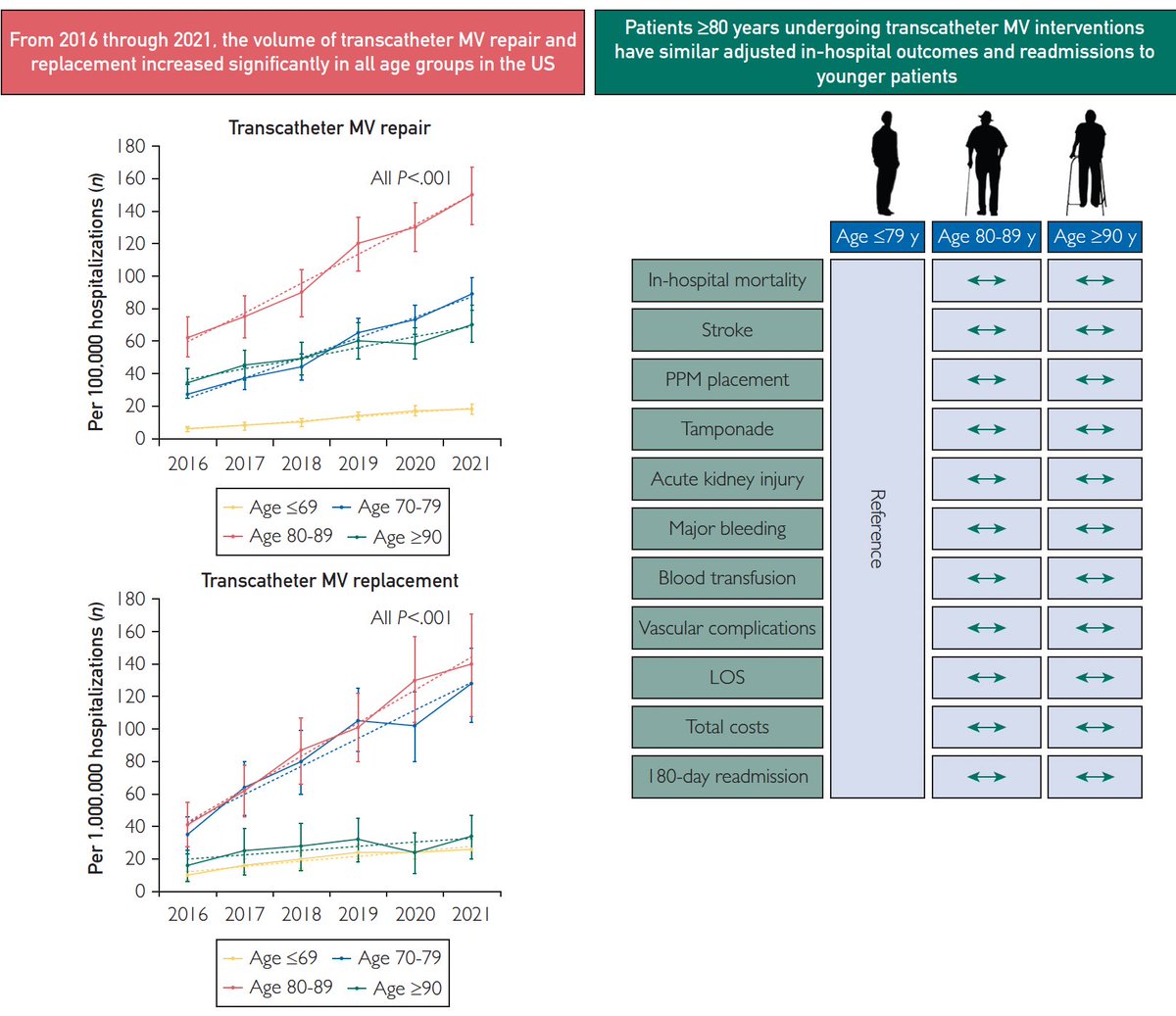
Excited to share our 📜 on transcatheter MV repair/replacement outcomes in the very elderly @MayoProceedings
Octogenarians & nonagenarians vs. younger pts:
• ↔️ in-hospital safety outcomes ☠️ 🧠 🩸
• ↔️ all-cause & HF readmissions 🏥
🔗 Link: https://t.co/Y8RJajL4Pc
Convert a continuous variable into a binary variable (hi/low) loses info unless n goes up
" in the most favorable case, the loss of information due to dichotomization would have to be compensated for by an increase in sample size by a factor = 1.57".
https://t.co/GlmjOcL3fc
@TristinHopper The necessary changes to provide a modern efficient public healthcare system are beyond the capabilities and incentive structures of those leading and managing it currently.
@BradenMannsYYC I agree, the ideal answer is to improve the efficiency of delivery of publicly funded surgical services. However in reality I feel that change of this magnitude this is outside the capability and incentive structure of our current managers and leaders.
@MichaelAlbertMD Obesity medicine may be different but in my specialty the number of high quality practice changing studies come along relatively infrequently so not a huge challenge to keep current.
The Department of @FishOceansCAN is considering removing the principle that salmon are a public resource managed for all Canadians.
This would be a colossal shift in conservation law and public access.
If adopted, fishing would no longer be a shared right but a "privilege" granted by First Nations, placing non-Indigenous Canadians last.
Email your objections and feedback by January 23, 2026: DFO at [email protected]
Visit @SFIBC and @BCWildlife's website: https://t.co/Pi4F5Y85I3
#fishingrights