Hi there, I'm Ron. I'm all about helping people who run their own businesses—like you—get past tough spots and hit their goals while keeping their personal lives balanced. I've been in your shoes, so I get it.
#Coachingsuccess#coachingsuccess#solopreneurlife#businesscoaching
When a vendor or buyer uses vague corporate language, slow down.
Ask:
“What does that mean in plain words?”
“What happens next?”
“Who owns that?”
“When will we know?”
Clear language protects you better than a polished answer.
Owners often hold onto their caseload because they're afraid patients will feel abandoned.
Most patients want their needs met well.
Frame the handoff clearly:
“This therapist is a strong fit for this part of your care, and I’m still close by if needed.”
When your team criticizes a newer hire for “overstepping,” the problem may not be the new person.
It may be unclear authority.
Who leads when the lead is out?
Who decides?
Who backs them up?
A clarity gap often looks like a personality problem.
You have read the books.
Tried the programs.
Asked the AI.
The problem may not be information.
It may be order.
What needs to happen first?
What needs to wait?
What needs to be finished before you add anything else?
Pick one next move and finish it.
A clinic with an attendance policy nobody protects does not have a real policy.
It has paperwork.
When arrival rate drops into the 70s, the owner has to look at the standard before blaming the patients.
Keep the standard clear.
Use judgment with exceptions.
If patients think every late cancel gets a free pass, the schedule weakens.
If the standard is clear and exceptions stay rare, you get to be firm and human at the same time.
If one clinician’s patients cancel far more than everyone else’s in the same clinic, do not start by blaming the zip code.
Start with perceived value.
Are patients clear on the plan?
Do they know why the visits matter?
Do they believe each visit is worth protecting?
Most clinic owners have no succession plan and no coverage for the one person everything runs through.
Usually that person is you.
A clinic that depends entirely on one person isn't a business yet. It's one bad week away from chaos, and everyone there knows it but you.
A two-strike cancellation policy might be too soft.
One grace, then the fee charges automatically, and patients sign the policy on day one.
The clinics that enforce it can keep cancellations under 10%. The ones that understand every excuse stay high and call it kindness.
For a new therapy grad, retention starts in the first week.
They're collecting evidence. Does the schedule match the interview? Are questions welcomed or tolerated? Do senior clinicians teach, or only answer when cornered?
That evidence becomes their story about the clinic.
Most attendance fixes start too late.
Third miss.
Frustrated parent.
Uncomfortable front desk.
The best attendance conversation happens at the evaluation, before the patient learns showing up is optional.
Say it on day one.
Busy morning. One open treatment slot. The mentorship hour is on the calendar, and the new grad has cases to talk through.
Protect the hour, or fill it and tell yourself you'll catch up later.
That's when the new grad learns what your promise was worth.
A new grad isn't full capacity on day one. They need supervision, ramp time, and room to ask basic questions.
If your clinic only works when they carry a full schedule immediately, you're not ready to promise mentorship.
Price the time before you sell it.
Your clinic stops scaling when one person is both the clinical lead and the operations lead.
That person is you. Splitting those two roles, even before you think you can afford to, is usually what lets the clinic grow past the bottleneck you keep blaming on volume.
## Threads
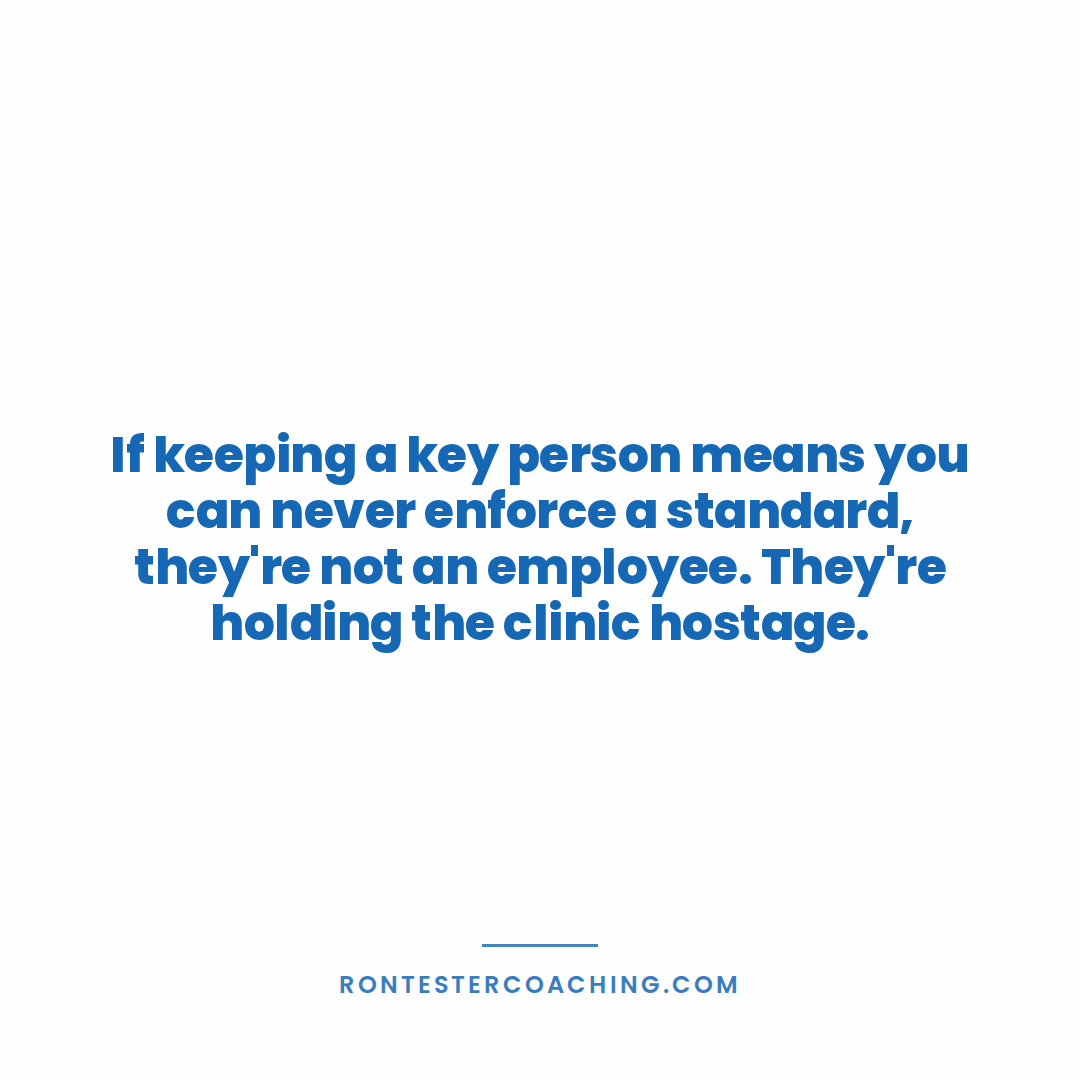
You can't run a clinic well if you're scared a key person might quit.
If keeping them means you can never enforce a standard, they're not really an employee anymore. They're holding the clinic hostage. Run it in a way that works, even if you lose them.
Clinic attendance is not only a patient problem.
It is a standard the owner sets, teaches, reviews, and protects.
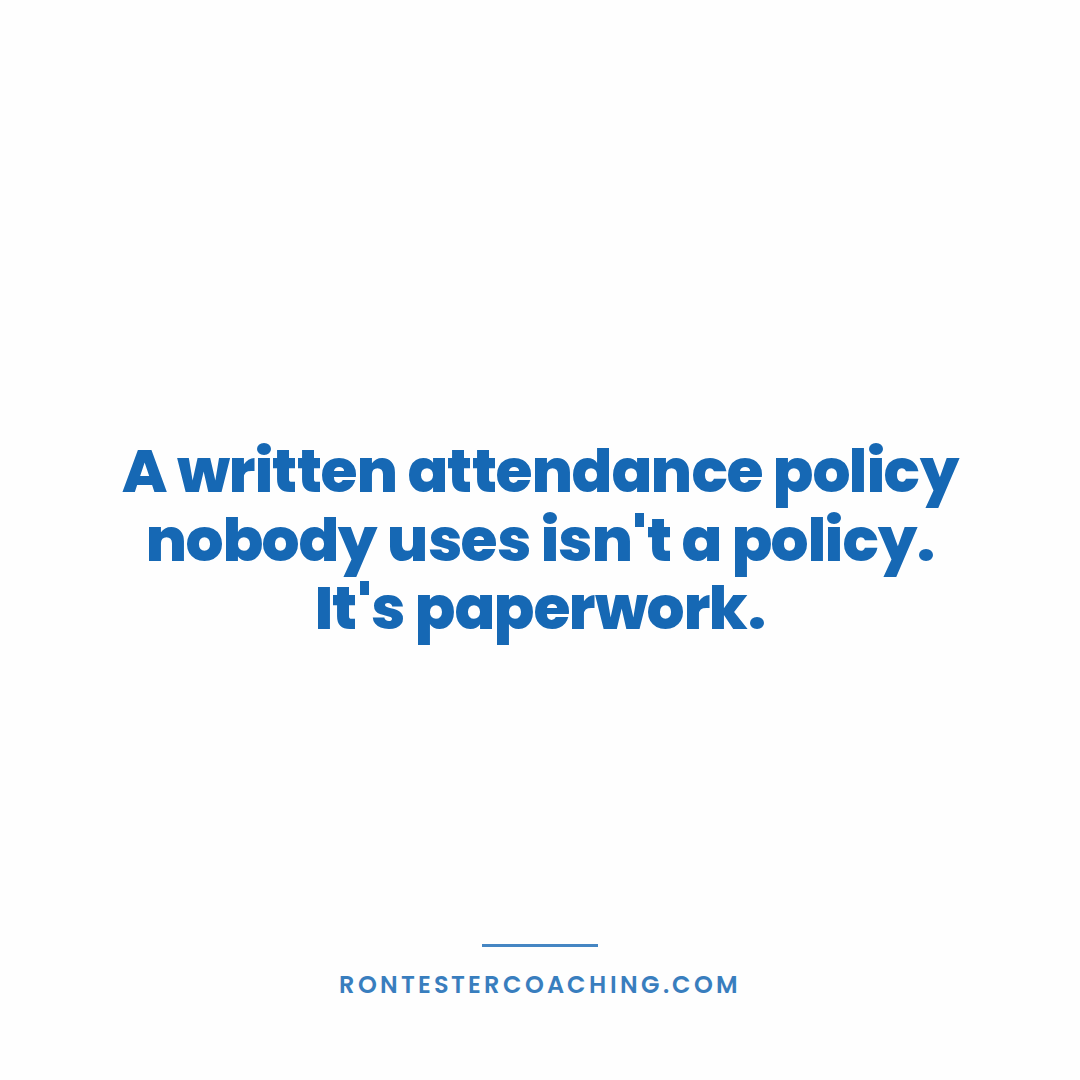
A written policy nobody uses is not a real policy.
It is paperwork.
A profitability problem and a cash-flow problem feel identical in your chest. The fixes are opposite.
Short on cash but profitable: line of credit, payment timing, collection cadence. Unprofitable: payer mix, payroll ratio, pricing. Looking early is how you tell them apart.
When cash is tight, the instinct is more patients. More referrals. More marketing.
If your unit economics are upside down, more volume just makes the same problem bigger. A busier clinic losing money on too many visits isn't a fix. It's the leak running faster.
A full schedule can hide a shrinking business.
One clinic hit a record month. Most visits ever, lowest cancellations. Revenue barely moved. A therapist had been billing four units where the case justified five.
Full is not the question. Full of what, collected at what rate?