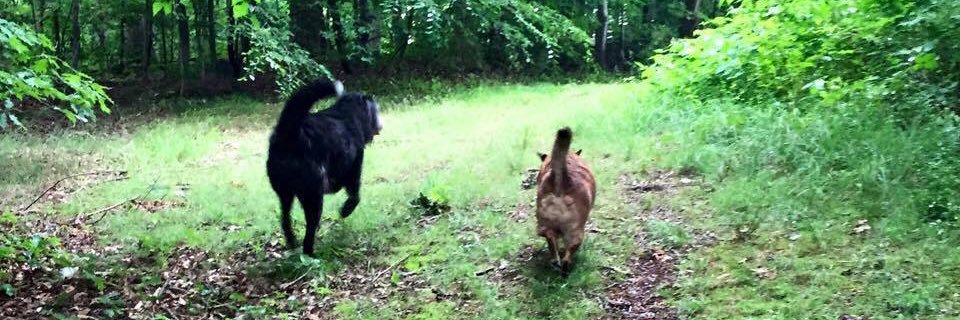
I hope whoever did this actually goes to hell
https://t.co/uAsHMXrPhJ Cincinnati Zoo's beloved Fiona the hippo dies after swallowing hat thrown into exhibit
Has everyone seen this video of a woman finding her stolen chickens and ordering the birds to haul ass and get into her car?
And telling the turkeys they can come along as well because no one there loves them?
And then driving off with a car full of happy birds?
No? What are you waiting for?
SHE TAPS EVERY NUMBER AND COUNTS FROM ONE. MOM ASKS IF THAT IS REALLY HOW THEY TEACH IT??
Is this new way of teaching math actually helping kids, or did the old way work just fine?
A mom asks her young daughter to show how she does her addition homework. For 8 plus 3, the girl taps her pencil on invisible points on each number and counts from 1 all the way to 11. Mom asks if that is really how they are teaching it, and the girl nods.
The little girl is doing exactly what she was told, and she gets the right answers, so none of this is on her. It is on whoever decided this was progress. My wife and I watched this and had the same reaction as that mom. For 9 plus 3 she starts at 1 and counts to 12. That is not learning addition. That is counting with extra steps. What happens when the numbers get bigger? You cannot tap your way through 48 plus 37, let alone long division or a grocery bill. The old way was simple. You learned your facts, you drilled them with flash cards, and 9 plus 3 was 12 without thinking. Generations of kids learned it that way and went on to build bridges and run businesses. So who is this actually helping? It sure is not the parents at the kitchen table who cannot help with homework anymore because it looks nothing like what they learned. And it is fair to ask whether kids are really learning math or just learning a routine for the worksheet. To be fair, teachers say touch counting can help some kids who struggle early on, and if it is a short bridge to memorizing facts, fine. But it should be a bridge, not the destination. As parents, we would want our boys to know their facts cold, not count dots until fourth grade.
Teach the facts. The rest gets easier.
Nike has agreed to Scott Colom's request to send custom Air Force 1's to every Mississippi high school valedictorian.
They will be sending AF1s to not only every Mississippi valedictorian, but also every high school valedictorian in America.
The caretakers at the savanna rescue sanctuary were watching a baby die, and there was absolutely nothing humanly possible they could do to stop it.
His name was Kip. He was a three-month-old African elephant calf who had been found wandering alone in the dust after poachers had taken his mother. By the time the rescue helicopters brought him to the sanctuary, he was physically unharmed but entirely broken. Elephants possess a level of emotional intelligence and profound empathy that rivals our own, and Kip was in the crushing grip of absolute grief.
For four agonizing days, Kip stood in the corner of the medical boma with his head pressed against the cold concrete wall. He refused the specialized milk formula. He refused water. He wouldn't even acknowledge the gentle strokes and soft voices of the weeping caretakers who stayed awake with him around the clock. He was shutting down, his tiny body succumbing to a phenomenon well-documented in highly intelligent mammals: he was quite literally dying of a broken heart.
The veterinary team had exhausted their intravenous fluids and their options. If Kip didn’t willingly drink by nightfall, his organs would begin to fail.
In a desperate final attempt, the sanctuary director decided to open the heavy wooden gates connecting the medical ward to the main enclosure of their oldest resident.
**Her name was Mala.**
Mala was a massive, sixty-year-old matriarch. She was completely blind, her eyes clouded over by cataracts, and her hide was deeply scarred from a lifetime of surviving a harsh world. Decades ago, long before she was brought to the sanctuary, Mala had lost her own calf to a sudden flash flood. It was a trauma that had permanently changed her; she spent her days quietly grazing alone, keeping her distance from the younger, boisterous elephant herds.
The staff held their breath as the towering, blind elephant slowly shuffled into the medical ward.
Mala didn't rush. She used her trunk to gently map the air, smelling the metallic scent of medicine, the dust, and the heavy, sour scent of the dying calf's grief. She stopped a few feet away from the corner where Kip was huddled.
She didn't try to nudge him. She didn't force him to move. Instead, the giant, blind matriarch simply closed her eyes, lowered her massive head, and began to vibrate.
To the human ears in the room, it sounded like a faint, rhythmic purr. But elephants communicate using infrasound—deep, low-frequency rumbles that can travel for miles through the ground. Mala was sending a seismic wave of pure comfort directly into the floorboards, a specific, ancient frequency that resonated through the soles of Kip's feet and straight into his chest.
**It was an elephant lullaby.**
For ten minutes, the room was suspended in this deep, vibrating hum. Slowly, miraculously, the baby elephant’s ears twitched. Kip turned his head, his dull eyes focusing on the towering shadow behind him.
Mala extended her trunk, not to push or pull, but simply offering it in the space between them.
Kip let out a weak, heartbreaking squeak. He took one trembling step backward, and then another, until he leaned his small, fragile body entirely against Mala’s massive front leg. Mala gently wrapped her trunk around the baby's shoulders, pulling him into the warmth of her chest, and continued to hum.
When the caretaker slowly approached with the giant bottle of milk formula ten minutes later, Kip didn’t turn away. Anchored by the heavy, vibrating heartbeat of a mother who knew exactly what it felt like to lose everything, the baby elephant finally opened his mouth and drank.
The footage of the blind matriarch adopting the orphaned calf brought millions to tears online, but the message it carries is even more powerful.
Grief is a universal language, but so is healing. Sometimes, the most profound way to save a broken soul isn't to bombard them with frantic solutions. Sometimes, all it takes is the quiet, steady presence of someone who has survived the same darkness, willing to stand by your side and remind you that you are not alone in the world.