Whether you like it or not, at some point in your career, there’s a good chance you’ll need third-party investment to take your brand to the next level. Investment isn’t the problem, and investors aren’t the enemy.
The real question is: What deal is right for your career?
Make informed decisions, understand what you’re signing, and take responsibility for the choices you make. Every deal comes with consequences—good or bad.
Running to social media for public sympathy after a deal goes wrong rarely solves the problem. In fact, it can damage your reputation and make future investors think twice about working with you.
The music business runs on trust, relationships, and accountability. Protect all three.
One clause every artist should fight for in a record deal: Release Commitment.
If you’ve delivered records to the label, there should be a clear obligation on the label to release music within a defined timeframe.
In today’s music industry, you cannot afford to be stuck in a deal where six months have passed, you’ve delivered records, and nothing has been released.
A record deal should move your career forward—not leave your music sitting on a hard drive.
Nothing quite compares to having a rough day and then having someone randomly walk up to you in a mall, call you by your full name, and tell you how much they’ve been following your work.
She spoke about reading my articles and publications, how much they’ve impacted her, and even spent a few minutes discussing her favorite one. She also mentioned how much she looks forward to working with us in the future.
Moments like these are a reminder that the work we put out into the world reaches people in ways we may never fully realize.
Feeling incredibly grateful and blessed today. 😇
A lot of Nigerian producers are responsible for global hits but have nothing to show for it long-term because they negotiated from a place of excitement, not knowledge.
Bad metadata = uncollected royalties. It’s that simple.
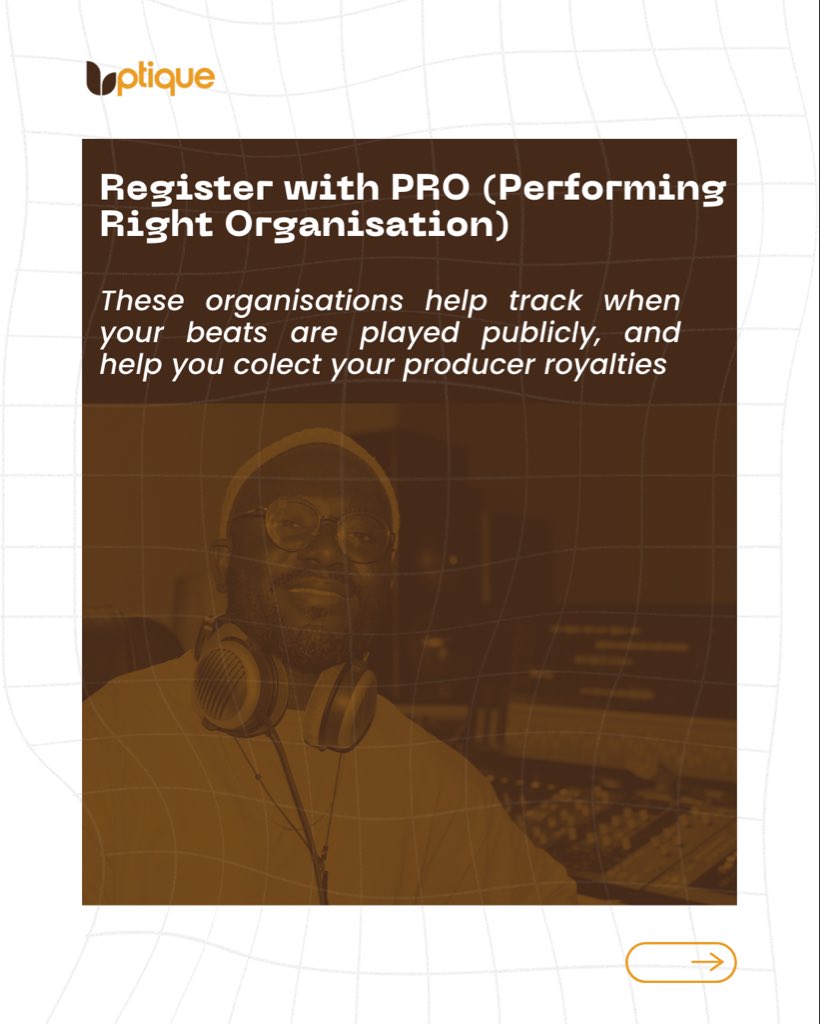
Know your ISWC from your ISRC. Know your PRO affiliation. Know your splits. Your music career depends on it.
A lot of people think the music business is driven by talent alone. It’s not.
The people who usually win long-term are the ones who understand ownership, leverage, contracts, publishing, distribution, data, and timing.
Talent can get you noticed.
Structure is what keeps you rich.
Session musicians are some of the most underappreciated contributors in music.
A guitarist, saxophonist, drummer, or backup vocalist can shape the soul of a record and still receive little long-term compensation because the business historically treated them as “hired performers.”
The system needs more education and structure.
Silence in a contract is where the real danger hides.
As a creative, never be afraid to ask questions before signing any deal. If there’s a clause you don’t understand, ask your lawyer to explain it clearly. A lot of creatives lose rights, royalties, ownership, and control not because they lacked talent, but because they stayed silent.
Every word in a contract means something.
Every clause has consequences.
Understand what you’re agreeing to before you put pen to paper.
A signature can change your career forever. Make sure you fully understand what you’re signing.
The best A&R executives today are no longer relying on instincts alone. They are studying data.
Streaming locations, audience retention, saves, playlist adds, ticket demand and fan behavior now influence collaborations, marketing and even signing decisions.
An artist pulling unexpected numbers in South Africa, France or the UK is no longer just “going viral.” That data can shape touring plans, partnerships and market expansion.
The music business is becoming less emotional and more strategic. The people who understand the numbers will always have an advantage.
The biggest producers in the world don’t just make beats. They own catalogs.
Production fees can pay bills, but ownership builds wealth.
Every hit record you touch is a potential long-term asset if structured properly.
Take the BNXN x Sarz collaboration for example.
That’s not just music. That’s intellectual property with value across streaming, publishing, sync, neighboring rights, live performances and future licensing.
As a producer, the goal shouldn’t stop at “getting placements.”
You need to think beyond providing services and start thinking like an owner, partner and rights holder.
The producers who will dominate the next decade in Africa are the ones building catalogs, retaining rights and creating leverage from their IP.
An artist I consider one of the greatest to ever do it in our industry just reached out to work with @uptiquemusic on royalties collection.
Moments like this remind me that we’re doing something right and moving in the right direction.
We keep pushing, celebrating the little wins, and building forward 🙏🏾
Thank You, Lord 🙏🏾
Arsenal in the Champions League final for the first time in 20 years — and the first time in my adulthood. Grateful to witness this moment
COYG !!! ⚪️🔴
Get a lawyer before you get a manager.
Managers open doors. Lawyers protect what’s behind them.
@UptiqueMusicLtd | Legal consultation + industry insights. Link in bio.
Just got a heartfelt message from a team member saying she genuinely enjoys working at @uptiquemusic and is proud to be part of the journey. Moments like this keep me going.
If you can’t clearly explain where your money comes from—performance, mechanicals, neighboring rights—then you’re not running a business yet, you’re just participating in one.
Who is collecting for you? What percentage are you actually receiving? What’s uncollected or sitting with a DSP, PRO, or label?
If you don’t understand your revenue map, someone else is controlling your income. Ownership is not just about rights. It’s about visibility, structure, and control.
@uptiquemusic@UptiqueC
Since 10am yesterday, I’ve been running operations on fuel because there’s still no power.
A government that can’t provide basic amenities is still quick to demand taxes.
So I’ll ask again—what exactly are we paying these taxes for?
Have you ever asked your label for a detailed breakdown of your marketing spend?
As an artist, you should. Every now and then, it gives you a clear reality check on where the money is going—and how much you might actually owe.