A Japanese manga artist lost his entire Google account forever after he uploaded private files from an old comic he drew to Google Drive.
Google’s AI checked the files and flagged them as not allowed. He asked Google to review it again, but they rejected his appeal and banned the account immediately.
He can no longer access years of his private drawings and lost access to many websites and services that used his Google login.
The artist said this is very embarrassing and causes him a lot of trouble. He warned that it might not happen to people who always follow every rule, but others should be careful.
So Google is scanning files that people upload to its cloud storage even if they are supposed to be private. I wonder how long they have been doing this.
Dennis Ritchie created C in the early 1970s without Google, Stack Overflow, GitHub, or any AI ( Claude, Cursor, Codex) assistant.
- No VC funding.
- No viral launch.
- No TED talk.
- Just two engineers at Bell Labs. A terminal. And a problem to solve.
He built a language that fit in kilobytes.
50 years later, it runs everything.
Linux kernel. Windows. macOS.
Every iPhone. Every Android.
NASA’s deep space probes.
The International Space Station.
> Python borrowed from it.
> Java borrowed from it.
> JavaScript borrowed from it.
If you have ever written a single line of code in any language, you did it in Dennis Ritchie’s shadow.
He died in 2011.
The same week as Steve Jobs.
Jobs got the front pages.
Ritchie got silence.
This Legend deserves to be celebrated.
@MateuszChrobok Też jestem za, ale znając genialne pomysły żabojadów na modernizację, spodziewam się rzezi, jakiej helpdesk dawno nie widział. Potem cały ten cyrk nadętych VIP-ów, zacznie zrzucać winę na informatyków, bo przecież łatwiej kogoś zgnoić niż przyznać się do własnej niekompetencji.
@powl_d Dans mon cas, lorsque j’ai résilié mon abonnement chez Free et que je leur ai renvoyé le modem, on m’a facturé 190 euros. En effet, comme le colis a été volé pendant sa livraison à Free, l’opérateur en a profité pour me faire payer.
#FreeArnaques
⚠️ WARNING - An unpatched critical telnetd bug (CVE-2026-32746) lets attackers gain full system access with no credentials.
One connection to port 23 is enough to trigger memory corruption and execute code as root.
No patch yet. Prior telnet flaw is already exploited in the wild.
🔗Read → https://t.co/qYE10CQNIR
🚨 Używanie dodatków w VS Code może prowadzić do eksfiltracji danych oraz wykonania kodu (RCE).
💻 Badacze bezpieczeństwa z OX Security wykryli szereg podatności w popularnych rozszerzeniach do VS Code. Błędy występowały w Live Server, Code Runner, Markdown Preview Enhanced oraz Microsoft Live Preview. Mimo otrzymania oficjalnych zgłoszeń, twórcy dodatków nie udzielili odpowiedzi ani nie opublikowali poprawek bezpieczeństwa.⚠️ Sprawa jest o tyle niepokojąca, że rozszerzenia zostały pobrane ponad 128 mln razy i nadal są dostępne w oficjalnym sklepie.
👉 Szczegóły: https://t.co/mvqGZUr4dP
@linuxiac Fish shell's syntax differs from Bash/Zsh, making standard venv activation scripts incompatible out of the box. Have any steps been taken in this regard in this version?
Tips for new learner.
If you’re new to coding, don’t blindly follow the AI hype.
Even AI experts are still learning—and will continue learning for life.
Focus on coding fundamentals first.
Strong basics build real knowledge, confidence, and long-term growth.
Let me blow your mind real quick:
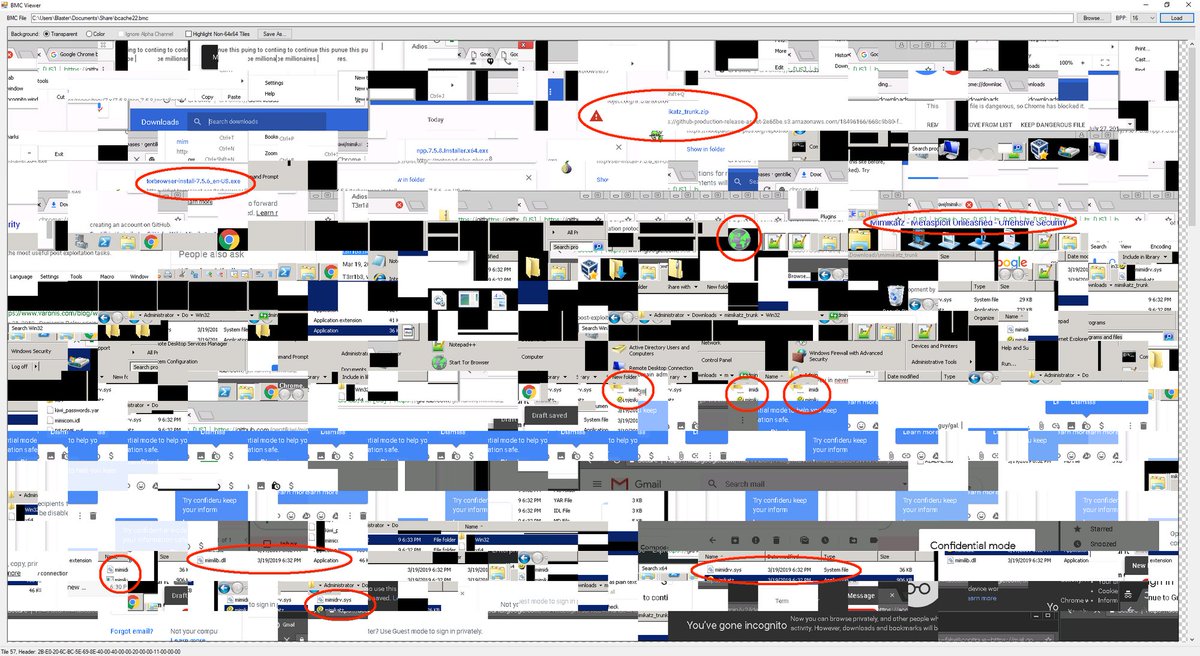
When you use Remote Desktop (RDP), Windows secretly takes screenshots of what you are doing.
It’s called the RDP Bitmap Cache.
To make the connection faster, Windows saves small tiles (images) of the remote screen to your hard drive in a bin file.
Even if the session is over and the remote server is destroyed... your laptop still holds the cache files.
Forensics teams use tools like BMCViewer to stitch those tiles back together.
They won't just see logs but the literal email, document, or picture you were looking at.
💀