Finally written the long-threatened Motion x Tailwind CSS guide. Learn how to:
🙂 Perform basic animations
😮 Create responsive animations
😵💫 Generate reusable CSS spring classes in-editor with Motion for AI
https://t.co/AahQDyLXHm
@mauerbac@usopen Think the EU is pushing for this to be law in European countries. It already is for sure in countries like France and Ireland. Nobody is allowed to resell above face value, this wasn't something that was done voluntarily by organisers.
@WelshRugbyUnion Delighted with that performance from Wales but also relieved Ireland got the win. Didn't like the way the media were treating Wales recently.
Open source has the potential to transform how we access and use information. Learn how we worked with the United Nations to build a more efficient system for searching through their library of documents. 🗂️
https://t.co/bXkq06tJ6a
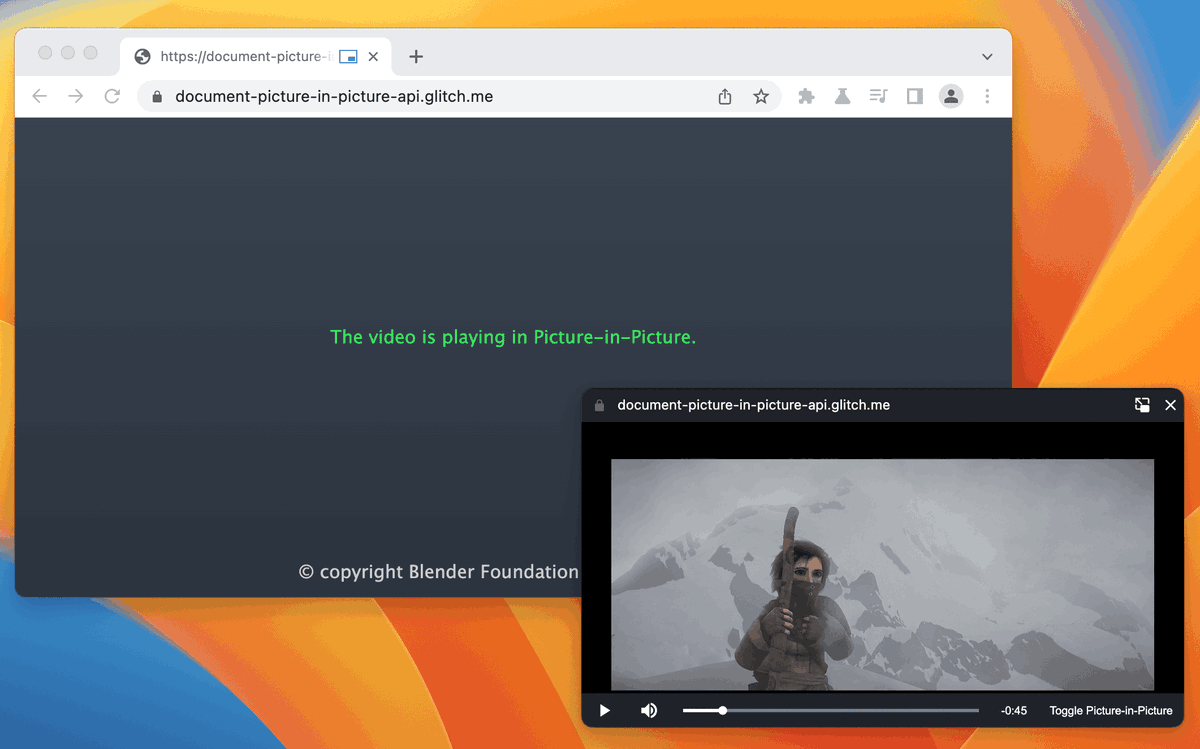
Imagine custom video controls, integrated chat in video calls, and more - all in a floating window. Explore the possibilities of Document Picture-in-Picture!
Get started here: https://t.co/Ks2uEogS3u
Do you want to see what the differences are between AWS Amplify Gen 1 and Gen 2? 💭
Check out this doc for more detailed information! 🔗
https://t.co/T8rJxBI7tW
WHAT IS REACT DOING WITH SUSPENSE?! WTH*CK
honestly idk all the details rn
but I know preloading is important and you'll probably want to get good at it if you want to optimize data loading and provide a snappy UX while it happens
Here's how it looks in future React Router v7
Student: I need to implement pagination with DynamoDB, help!
Me: Don't worry, I've got you covered! This article covers both unidirectional and bidirectional pagination 😎
https://t.co/VfrcWGRLHK
Amazon EventBridge supports AWS AppSync GraphQL APIs as a target to send events! 🚀
This makes it easy to publish backend events to frontend apps via AppSync's subscriptions. And now you can use CDK's L2 construct to easily configure your target! 🎯
https://t.co/j8te82Kkaq
@AWSAmplify Ones that cover much more complicated/involved backends e.g. multi-tenant, permission based access, pagination and other real world production set ups. There's countless basic apps, not enough of this. Lots of Amplify, AppSync, etc capabilities that I've actually never seen coded
We are so excited to announce the rebuilt Amplify functions category!
💻 Defined, authored, and consumed using TypeScript
🚀 Powered by AWS Lambda
👯 Same codebase as your app
⚡️ Access any AWS resource
https://t.co/bfu1n4ijVQ
We’d like to reintroduce ourselves:
👋 we’re AWS Amplify.
🟣 Build a cloud-powered backend in TypeScript
🟣 Connect it to your frontend using your favorite framwork
🟣 Deploy on every `git push`.
Amplify Gen 2 is now ready for production! 🚀
https://t.co/tbf9EIfAEq
Struggling with CORS when the API lives on a different domain than the client app? 🤔 We've got you covered! 😄 Check out our latest blog post on integrating #awscloudfront with #awsappsync to simplify CORS config and enhance security🌩️ https://t.co/7zgCIiUbZ6
What is Elasticsearch, and how does it work?
Elasticsearch stands out as a key tool in search and analytics, valued for its real-time data processing.
This open-source engine is part of the ELK stack (elastic stack). It integrates seamlessly with data visualization tools and log processors which enhance its utility.
How elasticsearch works.
Elasticsearch uses an inverted index to facilitate rapid full-text searches, enabling fast and efficient data access. It works similarly to how a book index works.
Its distributed architecture not only enhances speed but also ensures high availability by sharding and replicating data across multiple nodes. Its powerful query DSL and efficient indexing mechanism support a wide range of search requirements, from simple to complex.
To get a better picture of how it works, let's look at its workflow:
1) Data ingestion
Elasticsearch begins by importing data in JSON format, whether directly inputted or processed via tools like logstash and beats.
2) Indexing
It then indexes this data, creating an inverted index to enable rapid text searches by linking terms to their locations in documents.
3) Sharding and replication
The system distributes data across nodes through sharding, with replication enhancing fault tolerance and availability.
4) Searching
The query DSL allows users to perform searches, accessing the inverted index to find relevant documents quickly.
5) Analysis and aggregations
Analysis of data and compilation are also made possible by elasticsearch, offering insights into trends and patterns.
6) Results retrieval
It retrieves and returns query results in near real-time.
Some key advantages of elasticsearch include exceptional scalability, real-time search capabilities, and an intuitive RESTful API, which enables effective large-scale data analysis.
Through its extensive log and event data analysis capabilities, it supports enhanced monitoring and diagnostics, which can help facilitate improvements in application security and performance.
Elasticsearch's applications are diverse, from enabling instant product searches on e-commerce platforms to facilitating real-time transaction analysis on financial systems. It's also crucial in monitoring and logging systems, where it aggregates and analyzes logs, offering a detailed view of system health and potential security threats.
Elasticsearch’s capabilities go beyond search. Supporting real-time data indexing and basic analytics through aggregation features makes it part of a toolset for big data analysis.
~~
A big thank you to our partner Postman who keeps our content free to the community.
📣 POST/CON, Postman's biggest API conference ever is on April 30 - May 1 in San Fransisco. A lot of knowledge being dropped. Take a look to see if it's for you: https://t.co/fIY9c5T7Qo