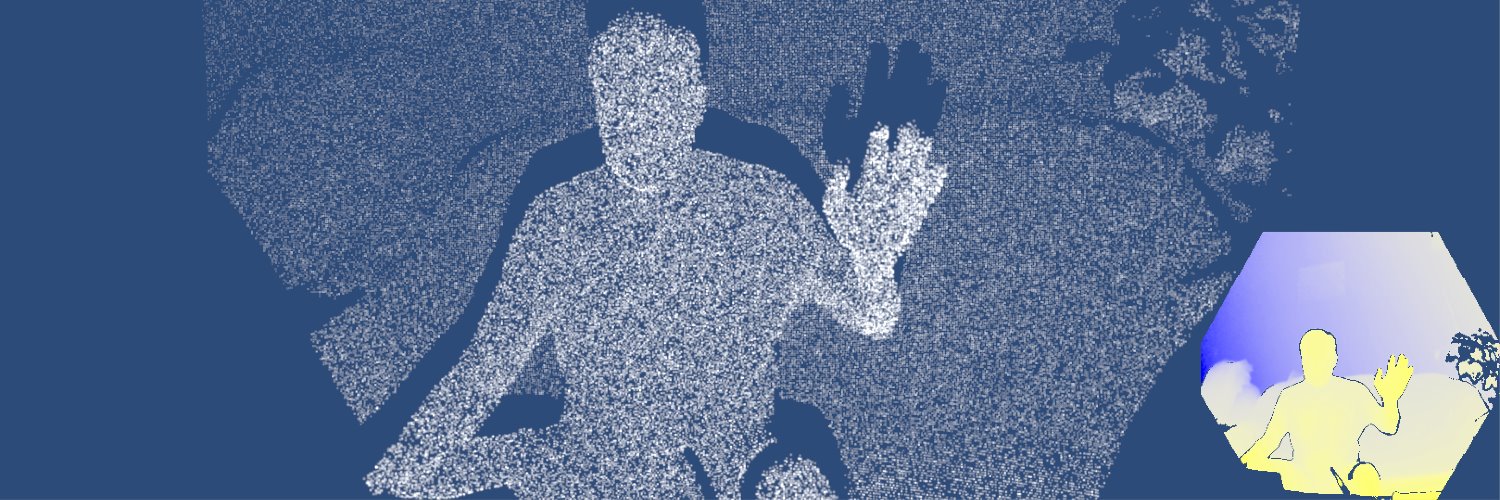
A raw, real-time demo of "Computer Vision Examples" v1.7
Due to health issues, I can only continue its development for a small group of subscribers, or as an exclusive development for 1 company or org.
If interested, please email me your offer, suggestion or questions by 28.Feb.
An interesting line in Politico’s coverage of the proposed AI executive order, which, at 16 pages, is also much longer than expected. This is still under discussion and not yet finalized, and everything I'm about to write is conjecture, but it appears the administration intends to regulate US open-weight models.
Here are the reasons why this will almost certainly happen in some form.
Open-weight models are currently about nine months behind the frontier. Once the big labs are subjected to pre-release screening, development itself will not slow down, but the release cadence will. At that point, open-weight development will quickly close the gap - much faster than nine months. When those models surpass the big labs, everyone will switch to using open-weight alternatives.
From the administration’s perspective, allowing this option defeats the entire purpose of regulation. If the government is restricting and vetting models beyond a certain capability level, and people can simply switch to open-weight models that are just as capable - and eventually even more capable as the big labs slow down their release schedules under the new rules - then the situation becomes even worse from the government's perspective. They will not allow this to happen.
Second, the big labs themselves have almost certainly been covertly lobbying for open-weight models to be included in any new regulations. Allowing the public to switch to a superior, free alternative would completely destroy their business models, potentially bankrupting them all. Given the enormous scale of current investment in these companies and in AI infrastructure, the broader economy would also suffer "significant disruption".
That leaves China. If the two dynamics above play out, the same pattern repeats: everyone switches to Chinese open-weight models, which now quickly surpass both US closed and open releases. This produces the same consequences for the big labs, and causes the same issues with regulation. The government therefore has only two realistic options: ban Chinese models from use in the West, or negotiate a deal with Xi Jinping to impose identical regulation and pre-release vetting on open-weight models in China.
The first option would mean China pulls ahead and wins the AI race. So the administration will almost certainly pursue the second. Negotiations are likely already underway, because the ideal outcome for the admin would be to announce that China has agreed to similar restrictions to what they are announcing, thereby blunting domestic backlash. China will know it has the US over a barrel and will insist on compromises. Compromises such as lifting all export controls on NVIDIA GPUs.
Dario is wrong.
He knows absolutely nothing about the effects of technological revolutions on the labor market.
Don't listen to him, Sam, Yoshua, Geoff, or me on this topic.
Listen to economists who have spent their career studying this, like @Ph_Aghion , @erikbryn , @DAcemogluMIT , @amcafee , @davidautor
The reason it is so important for everyone to keep pretending that AGI is definitely right around the corner is that there is now over $1T of investment riding on this belief (either already expended, or committed)
Current (and recent past) capex cannot be justified by current use cases and technology (currently spending $10-15 to make $1). To ever be in the black you'd need dramatically better tech/applications, and you'd need them fast -- before current datacenters depreciate, which is a 3-5 years timescale
@tomorrowevening There is another asset (Azure Kinect and Femto Bolt Examples) that works with Femto Bolt with one additional import. If you want the CVE-asset to work with Femto Bolt, you need to import two additional packages. Please e-mail me, to send you these packages.
CVE v1.6 will remain as a Lite demo version available in the Asset store. CVE v1.7 (and later) is now a Pro-version, and will only be available to select partners under a commercial license or agreement.
A raw, real-time demo of "Computer Vision Examples" v1.7
Due to health issues, I can only continue its development for a small group of subscribers, or as an exclusive development for 1 company or org.
If interested, please email me your offer, suggestion or questions by 28.Feb.
Y Combinator has helped create more than $800 billion in market value over 20 years. Thank you to Paul, Jessica, Trevor and Robert and Happy Birthday to the fixed point combinator that changed the world.
Today we are showing two humanoid robots performing collaborative grocery storage
A single set of Helix neural network weights runs simultaneously on two robots
They then work together to put away groceries neither robot has ever seen before
Cursor going entirely from ticket to PR!
We've shipped several improvements to Cursor's agent, including support for custom tools, better semantic search, and the ability to fix lints.
A raw, real-time demo of "Computer Vision Examples" v1.7
Due to health issues, I can only continue its development for a small group of subscribers, or as an exclusive development for 1 company or org.
If interested, please email me your offer, suggestion or questions by 28.Feb.
If this continues it seems almost certain that the UK/EU will eventually see a major model release get blocked. The next tier will probably be inherently multimodal, it seems sure to hit the regulations.
Computer Vision Examples v1.6.2 is out, featuring support for iPhone/iPad LiDAR sensors, as well as Azure Kinect and Orbbec Femto Bolt & Mega depth cameras.
https://t.co/2AwyW5AvEG
#computervision#unity#sentis
Computer Vision Examples v1.6.1 is out, featuring YOLO-11 model for object detection & segmentation, as well as camera change and restart at runtime.
https://t.co/2AwyW5AvEG
#cv#unity#sentis