Thrilled to announce I'll start in 2026 as faculty in Psych & CS @UAlberta + @AmiiThinks Fellow!! 🥳 Recruiting students to develop theories of cognition in natural and artificial systems 🤖💭🧠. Find me at #NeurIPS2025 workshops (talk at @CogInterp & organising @DataOnBrainMind)
Check out NeuralRemaster with Phase-Preserving Diffusion (ϕ-PD): a parameter-free, model-agnostic reformulation that makes structure-aligned generation simple and reliable.
Huge thanks to @rowantmc@vitorguizilini@vishalm_patel and other coauthors
At TRI’s newest division: Automated Driving Advanced Development, we’re building a clean-slate, end-to-end autonomy stack. We're hiring, with open roles in learning, infra, and validation: https://t.co/Qhu5syU6V3
So excited to be co-organizing a workshop on computational models of human road user behavior at #iavvc2025 this year! Join us! (link below)
📅 Key deadlines:
🔹 abstracts (including abstract-only & full papers): Feb 16, 2025
🔹 full papers: Mar 30, 2025
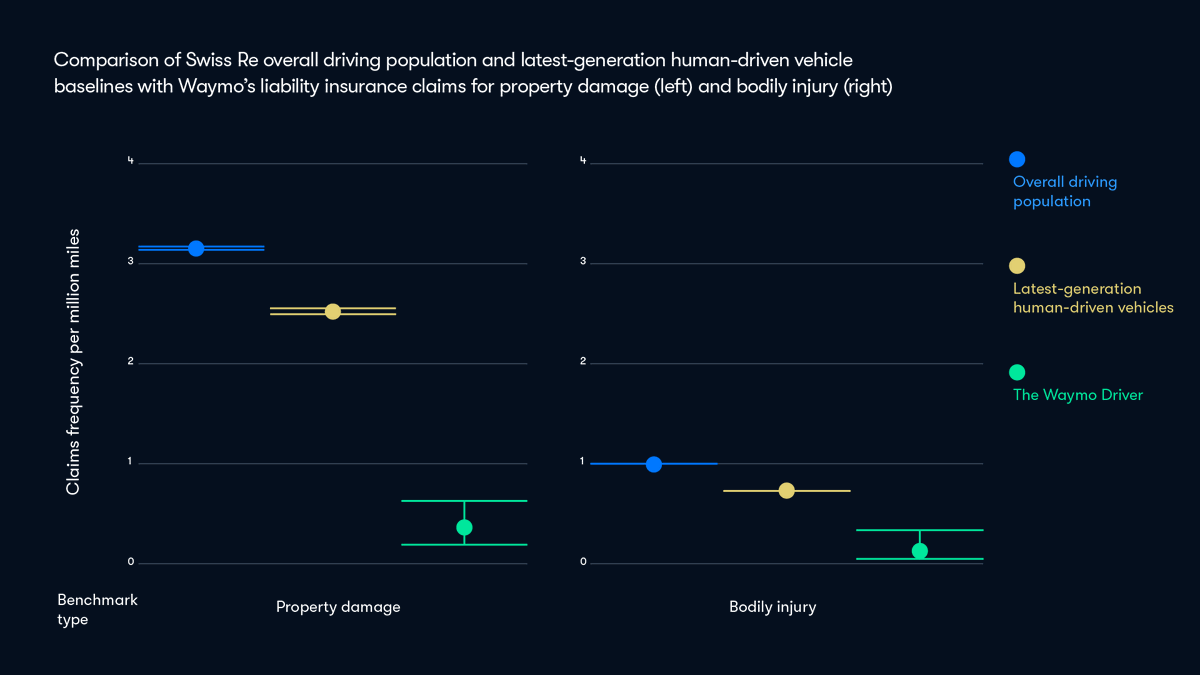
Our mission is to be the world's most trusted driver and a new study by @SwissRe validates the exceptional safety record of the Waymo Driver. Learn more: https://t.co/aMTGDZqmtY
Excited to share that I will be joining @Princeton as an Assistant Professor in ECE & Robotics next academic year! 🐯🤖
https://t.co/duyDWeRP8S
I am recruiting PhD students for the upcoming admissions cycle. If you are interested in working with me, please consider applying.
Part of being a good driver is driving defensively while reasoning about things occluded from your view, and reacting quickly to any sudden changes in the scene. This is exactly what we’ve trained the @Waymo Driver’s AI to do and happy to see validation in real-life scenarios.
I’m happy to share that I’ve started a new position as Assistant Professor at The University of Toronto! I'll lead the Learning, Embodied Autonomy, and Forecasting (LEAF) Lab. Find us at https://t.co/Y3fJ0JjeVZ
Everyone can hail robotaxis in SF now, no more waitlists or invite codes, the Waymo One app lets you summon robot cars anytime, anywhere here: https://t.co/vHOUznilTr
@tdietterich See @wucathy's works e.g.
https://t.co/7OTKBioyBN and https://t.co/5RLDRuXG0F my understanding is human drivers are typically underdamped when following, which AVs can counter, dissipating human-created stop-and-go traffic waves
We’ve avoided a meaningful number of injuries over @Waymo’s 10M+ rider-only miles. Sometimes a specific instance can be more eye-opening than the stats. We’re not perfect, but our driver never gets distracted and can react faster than a human.
From https://t.co/d7ROdOXP8u
Some fun videos on how Waymo's fleet response works: how human agents can inform or guide Waymo vehicles in ambiguous situations:
https://t.co/k72nNERQyT
Leveraging AI for semantic understanding of complex driving scenes is a key capability of the #WaymoDriver. Check out this example of it autonomously interpreting and adhering to a police officer directing traffic in Los Angeles.