I’m JAY, a Space Intelligence Analyst recently forward deployed for c-UAS…Curiosity//Interests: ☢️Power; 🇺🇸 Deep Tech; 🧱Manufacturing/Building #ForksUp
Before you learn Kubernetes, understand why to learn Kubernetes. Or should you?
25 years ago, if you wanted to run an application, you had to buy an expensive physical server. You did the cabling. Installed an OS. Configured everything. Then run your app.
If you needed another app, you had to buy another expensive server ($10k-$50k for enterprise).
Only banks and big companies could afford this. It was expensive and painful.
Then came virtualization. You could take 10 physical servers and split them into 50 or 100 virtual machines. Better, but you still had to buy and maintain all that hardware.
Around 2005, Amazon had a brilliant idea. They had data centers worldwide but weren't using full capacity. So they decided to rent it out.
For startups, this changed everything. Launch without buying a single server. Pay only for what you use. Scale when you grow.
Netflix was one of the first to jump on this.
But this solved only the server problem.
But "How do people build applications?" was still broken.
In the early days, companies built one big application that did everything. Netflix had user accounts, video player, recommendations, and payments all in one codebase.
Simple to build. Easy to deploy. But it didn't scale well.
In 2008, Netflix had a major outage. They realized if they were getting downtime with just US users, how would they scale worldwide?
So they broke their monolith into hundreds of smaller services. User accounts, separate. Video player, separate. Recommendations, separate.
They called it microservices.
Other companies started copying this approach. Even when they didn't really need it.
But microservices created a massive headache. Every service needed different dependencies. Python version 2.7 for one service. Python 3.6 for another. Different libraries. Different configs.
Setting up a new developer's machine took days. Install this database version. That Python version. These specific libraries. Configure environment variables.
And then came the most frustrating phrase in software development: "But it works on my machine."
A developer would test their code locally. Everything worked perfectly.
They'd deploy to staging. Boom. Application crashed. Why? Different OS version. Missing dependency. Wrong configuration.
Teams spent hours debugging environment issues instead of building features.
Then Docker came along in 2012-13.
Google had been using containers for years with its Borg system. But only top Google engineers could use it, too complex for normal developers.
Docker made containers accessible to everyone. Package your app and all dependencies into a single container. The exact Python version. The exact libraries. The exact configuration.
Run it on your laptop. Works. Run it on staging. Works. Run it in production. Still works.
No more "works on my machine" problems. No more spending days setting up environments.
By 2014, millions of developers were running Docker containers.
But running one container was easy.
Running 10,000 containers was a nightmare.
Microservices meant managing 50+ services manually. Services kept crashing with no auto-restart. Scaling was difficult. Services couldn't find each other when IPs changed.
People used custom shell scripts. It was error-prone and painful. Everyone struggled with the same problems. Auto-restart, auto-scaling, service discovery, load balancing.
AWS launched ECS to help. But managing 100+ microservices at scale was still a pain.
This is exactly what Kubernetes solved.
Google saw an opportunity. They were already running millions of containers using Borg. In 2014, they rebuilt it as Kubernetes and open-sourced it.
But here's the smart move. They also launched GKE, a managed service that made running Kubernetes so easy that companies started choosing Google Cloud just for it.
AWS and Azure panicked. They quickly built EKS and AKS. People jumped ship, moving from running k8s clusters on-prem to managed Kubernetes in the cloud.
12 years later, Kubernetes runs 80-85% of production infrastructure. Netflix, Uber, OpenAI, and Medium all run on it.
Then AI happened. And Kubernetes became even more critical.
AI startups need to run thousands of ML training jobs simultaneously. They need GPU scheduling. They need to scale inference workloads based on demand.
Companies like OpenAI, Hugging Face, and Anthropic run their AI infrastructure on Kubernetes.
Training models, running inference APIs, orchestrating AI agents, all on K8S.
The AI boom made Kubernetes essential.
Now, advanced Kubernetes skills pay big bucks.
Kubernetes won because of the perfect timing. It solved the right problems at the right time.
Understanding this story is more important than memorizing kubectl commands.
Now go learn Kubernetes already.
Apple is working on a new app called Harbor
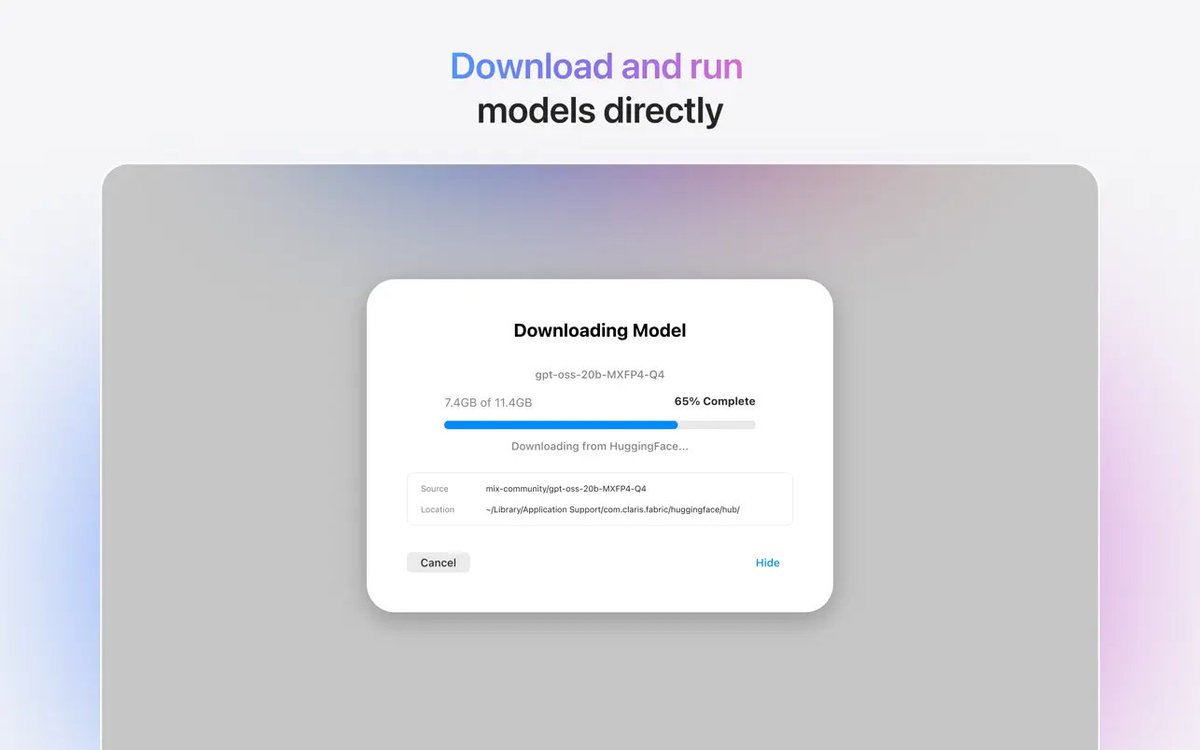
Harbor turns your Mac into a private AI inference server. Run open-weight models locally on Apple silicon—your data never leaves your hardware, and nothing reaches the cloud. Connect multiple Mac computers over Thunderbolt 5 to pool unified memory, enabling large models and higher concurrency that a single computer can handle alone.
Set up in minutes, not hours Harbor automatically detects your devices over Thunderbolt 5 to form a cluster. Plug in, start, and you’re running—no manual configuration, no command line, no infrastructure expertise required.
Download and run models directly Browse, download, and load open-weight models from within the app. Harbor handles model management so you can focus on the work, not the setup.
Cluster for scale Connect two or more Thunderbolt 5-capable Mac computers and Harbor pools their unified memory into a single inference resource. Run models that exceed any single computer’s capacity, or serve more concurrent requests across your cluster.
Harbor is currently in a private preview under the Claris brand.
THE VIBE MANUFACTURING PLAYBOOK
1. Measure everything. Digital calipers for small parts, a phone LiDAR app like Polycam to scan a space or an object. Bad measurements are the #1 reason first builds fail
2. Have a frontier model write the design as code. Describe the part to a model like Claude Opus 5.5 or Astra, and have it write the design in a codebased CAD tool like OpenSCAD or CadQuery. Zoo's Text to CAD does it in one step!
3. Use real CAD files. The text to 3D models on Hugging Face make shapes that look right, but factories need precise files: STEP for machined parts, DXF for lasercut metal, STL for 3D printing
4. Make sure it can be made. Ask the AI to check the design against how factories actually work: how tight metal can bend, how small a hole can be, how much wiggle room parts need etc...
5. Prototype in plastic first. A $300 to $600 home 3D printer like a Bambu Lab lets you test the fit overnight before paying for metal (really fun to play with too!)
6. Pay an engineer for 1 hour. Before your first real order, have a mechanical engineer on Upwork etc review the files. It's the cheapest insurance you'll ever buy.
7. Send it out. SendCutSend cuts and bends metal, Xometry and Protolabs handle machining and plastic, JLCPCB builds circuit boards. Instant quotes, and parts usually ship in days.
8. Add the brains. Most smart features run on a cheap wifi chip like the ESP32. Design the board in KiCad, and use ESPHome to control it straight from your phone.
9. Make one, then fix it. Your first version will be off somewhere! Order a single unit, test it, and adjust.
10. Do the math. Add up parts, finishing, assembly, packaging, and shipping. Custom products are hard to resell, so price for healthy margins.
11. Sell the design and make to order. Let customers adjust the measurements, and only manufacture after they pay. Zero warehouse, zero unsold stock.
12. Handle the boring part. If it plugs into a wall or touches kids, you'll need safety certification. It's slow and annoying, which is exactly why it's a moat.
13. Scale when it works. Once orders are steady, switch to batch runs and your cost per unit drops fast.
Vibe coding changed who can build software!
Vibe manufacturing is about to change who can build things!!
Even if you just want to make things for yourself (and not make things for others)
WELCOME TO THE VIBE MANUFACTURING ERA
Dave Smith: “My grandfather literally worked at a factory and could buy a house on a year’s salary.”
“His wife was a housewife.”
“That has absolutely been robbed from you.”
“And you should be furious.”
“A 25-year-old today might have $100,000 in debt from college.”
“Making $40,000 a year.”
“And the average house is going for $700,000.”
“It’s fucking wrong.”
“It’s because George W. Bush had a bunch of neocons who needed a war for Israel.”
“There’s no reason other than artificial government policy.”
“A giant welfare state.”
“And warfare state.”
“We can’t afford any of it.”
“So we’ve just been printing the money in order to try to pretend we can.”
“That’s the reason we have this economy where you have to depend on your dad until you’re 40.”
@ComicDaveSmith@jackneel
Major cheat code in life:
Master the graceful exit. From conversations. From parties. From opportunities. “This has been wonderful, but I need to go.” No elaborate excuses. No fake emergencies. Just clear kind departure. Most people don’t know how to leave. They stay too long or leave badly. Master the exit.
The last 5 years of College Football:
The implementation of NIL.
The popularization of the transfer portal.
Eroded conference regionality.
Devalued regular season games.
Eliminated conference title games.
Popularization of “meaningless bowl game.”
Got rid of the fun OT (ex: 2018 LSU-A&M).
Teams declining to play in bowl games.
Allowed transfers immediate eligibility.
CFP says fans opinions don’t matter.
Players suing for extra eligibility.
NCAA legally can’t enforce its own rules.
Corporate sponsor logos on fields.
Corporate sponsor logos on jerseys.
Corporate sponsor logos on helmets.
Players staying at one school is rare.
Cross-country travel for conference games.
NFL players attempting to return to college.
Tampering galore, highest bidder wins.
Tamperers reported = nothing happens.
Group of 6 schools’ best players taken.
2-minute timeout (extra commercials).
Eliminated clock stopping after 1st downs.
Rivalries eroded by realignment.
ESPN solely propping up the SEC.
FOX solely propping up the B1G.
13-0 FSU left out of 4-team CFP.
2-loss teams ranked ahead of 9-0 UCLA.
1-loss Georgia ranked ahead of 9-0 Utah.
BYU went 11-1 in reg. season, left out.
Rankings completely rigged for the SEC.
SEC rigging = declining interest elsewhere.
Declining attendance.
Normal fans getting priced out of games.
Parking’s exponentially more expensive.
Home-and-homes moved to neutral sites.
Constant roster turnover with the portal.
Fans lack personal bond to 1-year transfers.
Your favorite player probably transfers out.
Recruiting matters a lot less (they’ll leave).
Landing a big recruit doesn’t feel the same.
The word “committed” means nothing.
Preseason rankings/ratings skewing things.
Portal window overlapping with CFP.
Coaches have to recruit their current players.
Players “re-signing” during the season.
What is targeting? What is a catch?
There’s a Japanese saying that I love:
“If you feel like you’re losing everything, remember, trees lose their leaves every year, yet they still stand tall and wait for better days to come.”
Marcus Aurelius understood the fleeting nature of human existence when he said, “You will be forgotten either way. So live in such a manner that, while you remain, you belong to yourself.” Stop sacrificing your authenticity for the approval of people who are equally temporary. Their opinions will fade, and so will their memories of you. The real tragedy isn’t being forgotten after death, it’s living a life that was never truly yours.
@AlThomp@tempebarstool Yeah because a college campus needs a retirement home on it, and every successful academic school offers a quick online degree if you’re willing to pay up - come back to reality…even academics have taken a dump in last 10 yrs
Was literally explaining the, "society falls when old men don't plant trees they will never sit under" to my neighbor (boomer)
He said he didn't get it and why would he plant trees if won't be around to see them
BREAKING: The DoW is deploying robotic factories housed in shipping containers, enabling drone airframes to be manufactured without traditional factory infrastructure.
Machina Bellator, the defense arm of @MachinaLabs_, will deploy two expeditionary robotic factories to enable localized production of airframes for LUCAS-class drones. Traditional airframe replacement parts can take up to 56 weeks to obtain, while these robotic factories aim to produce them in just days.
As part of a $9M, 18-month pilot program, the company will begin developing and qualifying the airframes in Los Angeles before deploying the robotic factories.
The robotic factories have capabilities including roboforming, roboscanning, robotrimming, drilling, and robotic heat treatment, enabling complete part production within a single robotic cell.