Want to quickly check how many Trainers you need or more robust counters for every Legendary Pokémon appearing this week?
Check out the limited-time GO Fest page on Leek Duck!
Here: https://t.co/86kL1X2KoR
Doggerland.
A map showing Doggerland, a region of northwest Europe home to Mesolithic people before sea level rose to inundate this area and create the Europe we are familiar with today.
Map via National Geographic magazine.
The final boss of ADHD in the ocean. This tiny pufferfish spends an entire week flapping its fins to create a perfect seven-foot mandala in the sand, then decorates it with shells—all to impress a single female that may or may not swim by.
I’m excited to announce that I’ve been working on a new commission for @MichaelFKane and his American Frontier fantasy series!
Here’s a sketch I did for a section of one of the maps. As you can see, simple mountains and green blobs for forests is all you need. 😁 More to come!
The last known son of a Civil War veteran passed away on June 7 of this year.
William “Bill” Pool, believed to have been the last known living son of a Civil War veteran, passed away on June 7, 2026, at the age of 101.
Born in Missouri on January 13, 1925, Pool entered the world nearly 60 years after the Civil War had ended. His father, Charles Parker Pool, served in Company D of the 6th West Virginia Volunteer Infantry during the war and was already an elderly man when Bill was born, creating a remarkable father-to-son link that stretched from the Civil War era into the 21st century.
Bill Pool also built a distinguished legacy of his own. He served in the U.S. Army during World War II, fought in the Battle of the Bulge, earned a Bronze Star, was wounded in combat, and was taken prisoner. After the war, he spent many years working as a brick mason in the commercial construction industry.
The Sons of Union Veterans of the Civil War recognized Pool as the last known living “Real Son” of a Union veteran—a designation reserved for the actual children of Civil War soldiers rather than later descendants.
His passing marks the end of one of the final direct father-to-son connections to a conflict that ended more than 160 years ago.
However, Pool was not necessarily the last living child of a Civil War veteran. The Sons of Union Veterans currently recognizes Emogene C. Horton of Arkansas as a living daughter of Union cavalryman Jackson Carroll.
For a glimpse into how reflexively racist and profoundly stupid libs are, read the comments of them crying about a native Brazilian wearing the war paint of his ancestors.
“Red face is as bad as black face!”
They’re literally retarded.
For the first time in decades, US officials confirmed new cases of the New World screwworm: a flesh-eating parasite that eats living tissue from the inside out and can cross over to humans. As the government prepares emergency declarations and a $750 million fly factory in Texas, McCullough Foundation epidemiologist @NicHulscher reveals the not-so-surprising, over-the-counter medication that he says "provided more than 97% protection against screwworm infestations in wounds under real-world conditions." But because it's so cheap and easily available, you will likely never hear about it in the headlines.
Conan and Cthulhu are both parts in the same fictional universe.
Lovecraft and Robert E. Howard (who created Conan) were regular correspondents, and put references to each other's work into their stories. This is also why Conan met eldritch horrors frequently. Howard even created Solomon Kane, a grim Puritan who mainly (not exclusively) battled the evil supernatural.
In addition, Robert E. Howard wrote several full-on Lovecraftian horror stories, such as The Black Stone.
1/2
There's a clay tablet with the founding charter of a 12-partner company on it. Twelve merchants pooled 33 pounds of gold to start the firm. The contract has the partner names, the starting capital, the profit split, and the penalty for cashing out early.
The tablet is nearly 4,000 years old. It was found at a site called Kanesh, in central Turkey. Archaeologists have dug up 23,500 of these clay records there, most of them business documents: receipts, loan contracts, shipping orders, lawsuits. The houses they were stored in eventually burned. The fire baked the clay solid and preserved every record.
The merchants came from Assur, in modern-day Iraq. They loaded donkeys with tin and cloth and walked them 1,000 kilometers across mountain passes to Kanesh, roughly the distance from New York to Atlanta. Each donkey carried about 180 pounds and the trip took two to three months. They came home with silver and gold.
The company ran for twelve years under a merchant named Amur Ishtar. A third of the profits went back to the investors. Pull your share out early and the firm gave you four kilos of silver per kilo of gold, half the normal rate. Locked-up money was meant to stay locked up.
That one company was just a tiny piece. The tablets show a complete economy with partners suing each other in commercial court, husbands writing home about prices, and wives writing back complaining the husband had been gone too long. A woman named Ahatum quietly lent silver to four different men over nine years. People bought up other people's loan documents and used them as collateral for new loans, the same thing Wall Street does today with mortgage-backed securities. One merchant got caught smuggling tin in his underwear to dodge a 10% import tax.
In 2019, four economists from Harvard, Sciences Po, Chicago, and Virginia ran the tablet numbers through a gravity model, the math economists use today to predict how much two countries will trade based on size and distance. The Bronze Age numbers matched modern trade numbers almost exactly. Trade fell off with distance at nearly the same rate it does between countries today. The paper ran in the Quarterly Journal of Economics.
There was no economic theory yet. The idea didn't even have a name. The word "capitalism" wouldn't be coined for another 3,800 years, and Adam Smith was 3,700 years away from writing a sentence about markets. Just a guy named Pushu-ken writing a clay tablet to his business partner about a shipment of cloth, and a woman in Assur recording who owed her how much silver. Capitalism was already there, doing its full job, almost four thousand years before anyone wrote down a theory of how it worked.
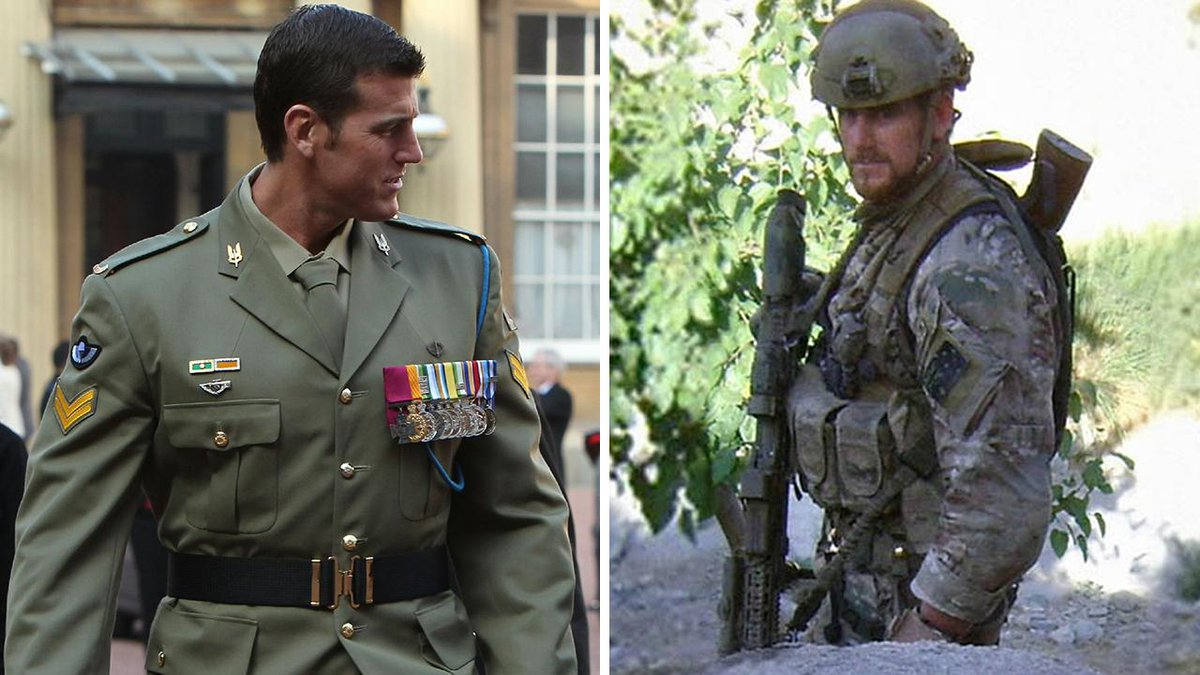
BREAKING: Court documents reveal that Australian government war crimes investigators do not even have the NAMES of two individuals Ben Roberts-Smith is alleged to have killed in Afghanistan almost 20 years ago.
Nobody has managed to identify these alleged victims - even after $300 million was spent on war crimes investigations over five years.
Australian Office of Special Investigations director Ross Barnett already revealed that investigators have:
- No crime scenes
- No access to the deceased
- No bodies
- No post-mortem report
- No official cause of death
- No recovery of projectiles to link to weapons that might have been carried by members of the ADF
- No photographs
- No site plans
- No measurements
- No recovery of projectiles
- No blood spatter
Now we know that after nearly $300 million and 5 years of investigation, they do not even have the NAMES of two alleged victims.
If there is no name, no identification, no body - how do we even know they were killed?
Does anybody actually think this is fair?
Does anybody actually think that a criminal conviction - proved to a criminal standard, beyond reasonable doubt - is remotely possible in these circumstances?
Daily Mail: ''Two of the five men Ben Roberts-Smith is accused of murdering while serving with the Special Air Service in Afghanistan have never been identified by war crimes investigators.
Court documents seen by the Daily Mail show one of the Victoria Cross recipient's alleged victims is described only as 'Person Under Control 1', or alternatively 'Enemy Killed in Action 3'.''
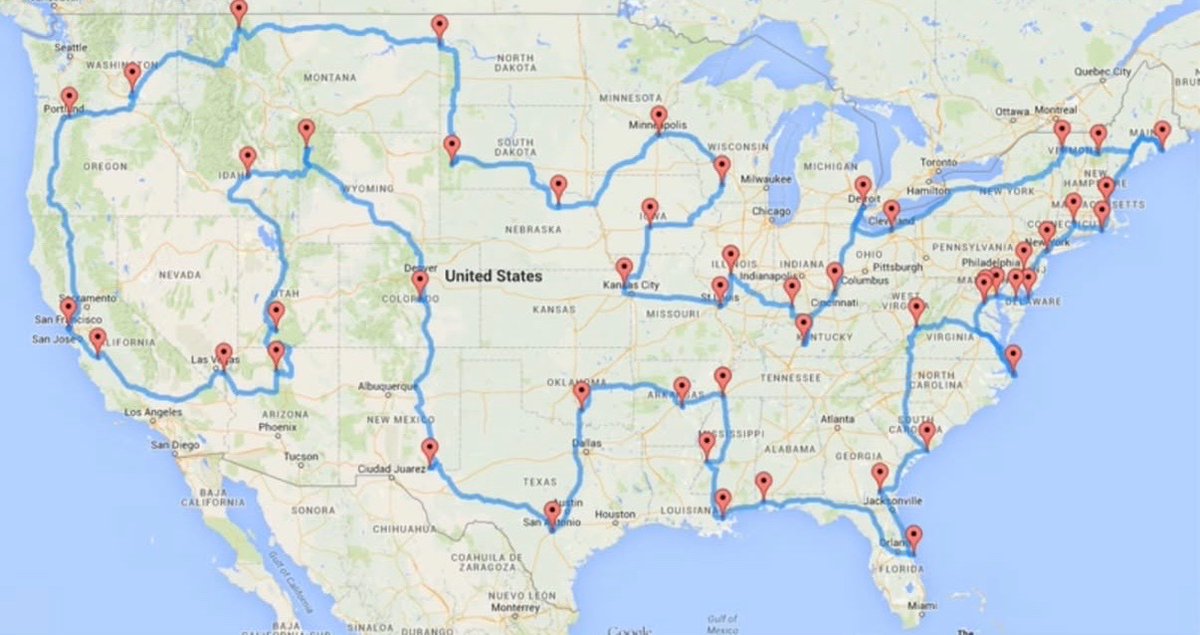
The most efficient U.S. road trip route, as determined by a data scientist…
In 2015, data scientist Dr. Randal Olson created what he dubbed the “perfect” U.S. road trip using genetic algorithms—a type of search heuristic—to tackle the classic Traveling Salesman Problem. His aim was to chart the most efficient route visiting either 50 major national landmarks or all 47–50+ National Parks without needless backtracking. The final route stretches over 13,699 miles, covering all 48 contiguous states and iconic sites like the Statue of Liberty, the Alamo, and Yellowstone. While the pure driving time totals roughly 224 hours, most travelers would spend 2 to 3 months completing the journey with sightseeing.