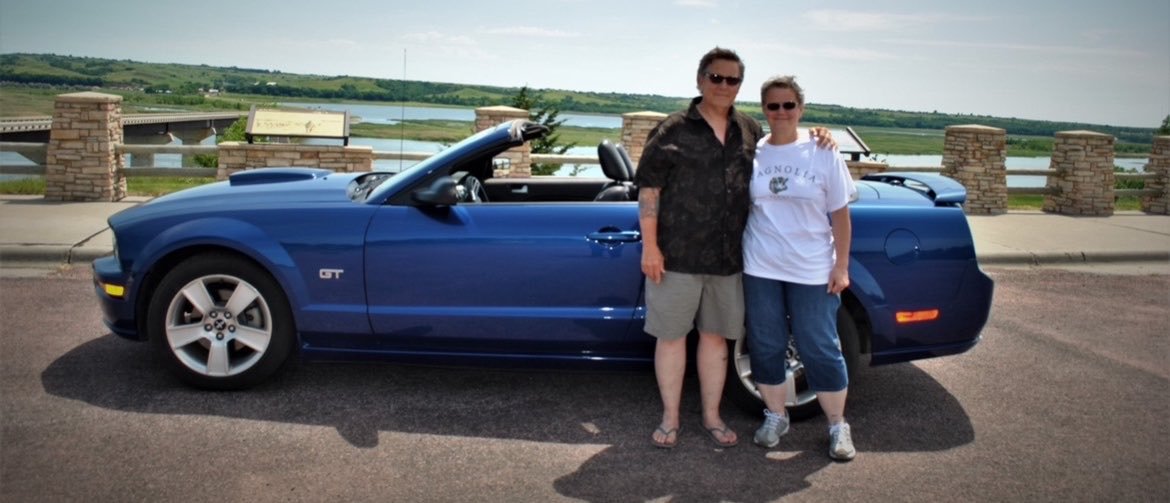
The media is trying to convince Millennials and Gen Z that greedy Boomers are the reason the economy is broken. It's a lie. It’s not Old vs. Young. It’s the working class of all ages being robbed by the billionaires in Washington. Don't let them divide us.
In 1973, eight perfectly healthy people walked into different psychiatric hospitals across the United States. They were not ill. Yet no one inside those walls was able to see it.
It was an experiment. One of the most disturbing experiments in the history of psychiatry. Designed by psychologist David Rosenhan, it began with a simple yet unsettling question: is it really possible to reliably distinguish mental health from mental illness?
To find out, Rosenhan recruited eight pseudopatients. They were ordinary people: a painter, a housewife, a pediatrician, a graduate student. They lied about only one thing—they claimed to hear voices. Nothing more. No bizarre behavior, no crises, just three words heard in their minds: “empty,” “hollow,” “thud.”
All of them were admitted. And immediately afterward, they stopped pretending. They behaved normally. They cooperated. They asked to be discharged. It wasn’t possible.
The staff no longer saw people, but diagnoses. Every action was reinterpreted through the lens of illness: writing notes? Obsessive behavior. Standing in the hallway? Pathological attention-seeking. Being polite? Controlled behavior consistent with the disorder.
Seven of them were labeled schizophrenic. One was diagnosed as manic-depressive. Not a single one was recognized as healthy. Not one.
But the real patients noticed. Some approached and whispered, “You’re not like the others. You don’t belong here.” They saw what the experts could not recognize.
The average length of hospitalization was 19 days. One person remained hospitalized for 52 days. Each passing day confirmed the same truth: the label was more powerful than reality.
When Rosenhan published his study—On Being Sane in Insane Places—it caused an earthquake. The psychiatric community erupted in outrage. One hospital challenged Rosenhan to send new pseudopatients, confident they would expose them. He accepted. In the following months, the hospital identified 41 supposed impostors. But Rosenhan had sent no one. No one at all.
The truth was now undeniable: diagnoses were not always based on facts, but on context. Once labeled, a person became a prisoner of that narrative. Even if they were sane. Even if they protested the truth.
This experiment shattered blind trust in clinical labels. It led to major reforms in the diagnosis and treatment of mental illness. But above all, it left a haunting and still relevant lesson:
Perception can distort reality more than madness itself.
And often, the most dangerous illusion is not that of those considered insane, but of those who believe they are always right.
Eight healthy people entered psychiatric hospitals in 1973. They came out carrying a truth the world could no longer ignore.
BREAKING: PANIC! Trump SCRAMBLES at the last minute to block court order exposing his tax returns and business documents in BBC lawsuit.
Donald Trump sued the BBC for $10 billion. Now that lawsuit is about to expose exactly what he doesn't want anyone to see, and he's panicking in real time.
A federal judge overseeing the case ordered Trump to hand over tax returns, ownership documents, and financial statements dating back to 2023 for the Donald J. Trump Revocable Trust — the entity holding roughly 400 of his business entities. Trump had 10 days to comply. He waited nine of them, then asked the BBC for a voluntary extension. When they said no, his lawyers filed an "emergency" motion just one day before the deadline, desperately trying to freeze the order entirely.
Why the sudden panic? Because Trump's OWN lawsuit created this mess. He sued the BBC over a 2024 documentary that edited his January 6th speech, claiming it damaged "the value of his brand, properties, and businesses." That's exactly the language that opened the door to full financial discovery — Judge Enjoliqué Lett ruled the trust's records were directly relevant to assessing those claimed damages.
Now, realizing what he unleashed, Trump's team is scrambling to rewrite the complaint entirely, suddenly claiming he only wants damages for "reputational harm," not financial losses — even though he's still demanding a staggering $10 billion. BBC's attorney has already pointed out the obvious contradiction: Trump built his entire political brand around his supposed business success, so you can't claim reputational damage while hiding the finances that reputation is built on.
Trump's lawyers accused the BBC of having "political motivations" for wanting his financial records public. But Trump is the one who chose to sue. He's the one who claimed financial injury. And now that a judge has simply asked him to prove it, he's desperately trying to change the rules mid-game rather than open the books.
If Trump's emergency motion fails, his trust must hand over the records or face sanctions. Trial is set for February 2027, with the BBC also seeking to depose Trump under oath.
Sometimes the lawsuit really is the trap you build for yourself, and only someone as clueless as Dementia Donnie could not foresee the outcome of his litigation.
Please like and share if you can’t wait to see Trump’s financial details laid out in an open court!