🌡️ Average monthly surface temperature change between February 1940 and February 2024:
🇵🇱 Poland: +16.85 °C
🇭🇺 Hungary: +15.73 °C
🇱🇹 Lithuania: +15.53 °C
🇧🇾 Belarus: +15.51 °C
🇸🇰 Slovakia: +14.75 °C
🇨🇿 Czechia: +13.79 °C
🇱🇻 Latvia: +13.04 °C
🇭🇷 Croatia: +12.75 °C
🇷🇸 Serbia: +12.35 °C
🇲🇩 Moldova: +12.16 °C
🇺🇦 Ukraine: +11.74 °C
🇷🇴 Romania: +11.19 °C
🇩🇪 Germany: +11.13 °C
🇳🇴 Norway: +9.97 °C
🇸🇪 Sweden: +8.86 °C
🇫🇮 Finland: +7.30 °C
🇰🇷 South Korea: +6.55 °C
🇮🇹 Italy: +6.31 °C
🇯🇵 Japan: +5.89 °C
🇺🇸 USA: +5.60 °C
🇹🇷 Turkey: +4.39 °C
🇬🇧 UK: +4.24 °C
🇫🇷 France: +3.88 °C
🇨🇦 Canada: +3.39 °C
🇦🇷 Argentina: +3.19 °C
🇲🇽 Mexico: +3.02 °C
🇪🇸 Spain: +2.62 °C
🇵🇹 Portugal: +2.30 °C
🇳🇬 Nigeria: +2.09 °C
🇧🇷 Brazil: +1.84 °C
🇷🇺 Russia: +1.61 °C
🇸🇦 Saudi Arabia: +1.56 °C
🇪🇬 Egypt: +1.11 °C
🇦🇪 UAE: +1.06 °C
🇮🇳 India: +1.04 °C
🇵🇰 Pakistan: +0.94 °C
🇧🇩 Bangladesh: +0.32 °C
🇲🇳 Mongolia: -1.20 °C
🇬🇱 Greenland: -3.89 °C
According to Copernicus Climate Change Service, 2024
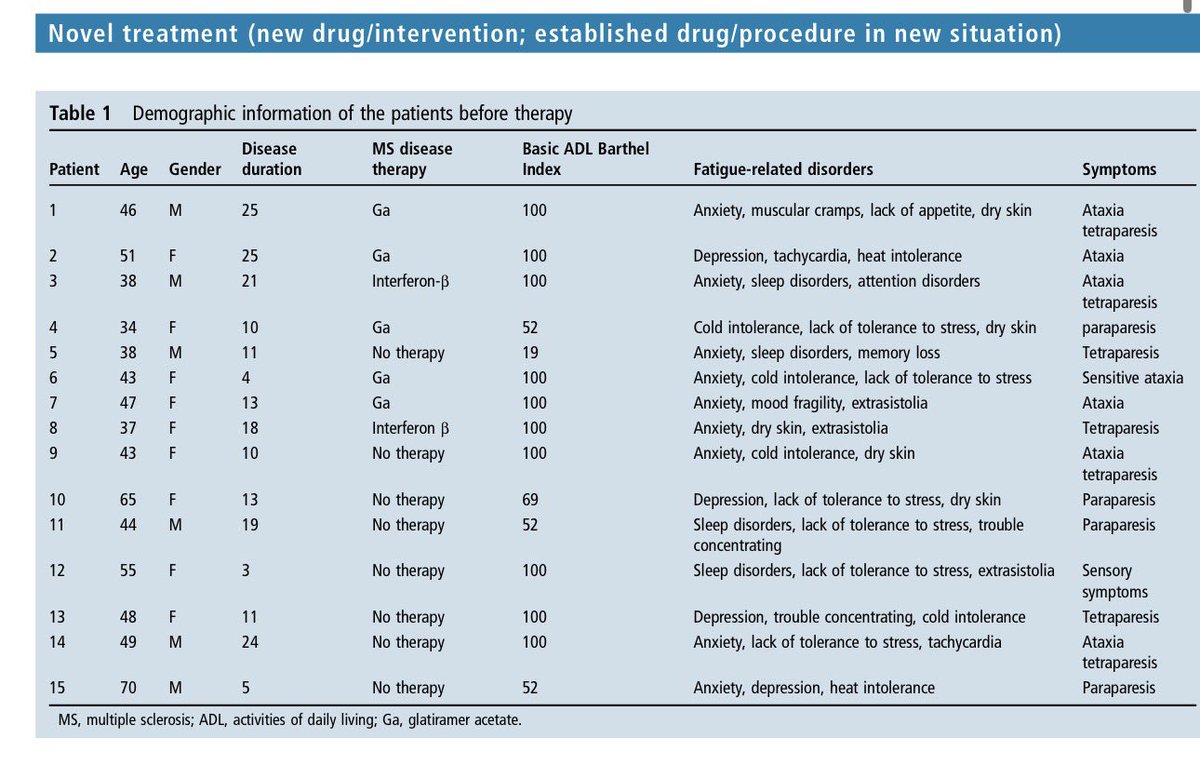
B1 in multiple sclerosis MS 🧠
600-1500 mg/day Thiamine HCl given to 15 MS patients cut fatigue 41%, despite “normal” blood levels of thiamine and TPP.
Up to 75% of people with MS experience fatigue at some point in their lives.
Thiamine treatment also resulted in near complete disappearance of:
-intolerance to heat
-sleep disorders
-depression
-anxiety
-irritability
-dry skin
-lower leg swelling
-tachycardia
“This pilot study showed that treatment with high doses of thiamine was associated to a remarkable improvement of fatigue-related symptoms in MS, which closely resemble a mild thiamine deficiency. During this study we have never recorded any side effect.” (Costantini, 2013)
New Nature Medicine study shows antibiotics can reshape the gut microbiome for up to 8 years.
Recovery strategies probably deserve more attention - diet, prebiotics, probiotics, and microbiome-supportive polysaccharides found in medicinal plants like Astragalus (Huang Qi): Astragalus increases Bifido species, improves mucosal immunity, and promotes microbial diversity.
https://t.co/GYf47jct0Y
Nobody told you histamine could do this.
Histamine is a daytime chemical. It rises with the sun and drops at night. In children with PANS and PANDAS, mast cells keep firing and it stays high.
The body fights back with adrenaline. Adrenaline triggers more histamine.
Histamine. Adrenaline. More histamine. Loop on loop.
At night this looks like hyperactivity, anxious chatter, sudden irritability, sweating, flushed skin, restless legs, an OCD flare.
Melatonin won’t touch it. This is chemistry stuck in fight-or-flight.
If your child’s nights look like this, histamine is where I would start looking.
#MastCells #Histamine #PANDAS #PANS #FunctionalMedicine
A new randomized, double-blind trial found that taking omega-3s daily for 3 months significantly improved stress, anxiety, depression, sleep quality, and everyday memory in adults with severe psychological distress.
A simple daily intervention (500mg EPA and 250mg DHA) improved nearly every psychological measure the researchers tested.
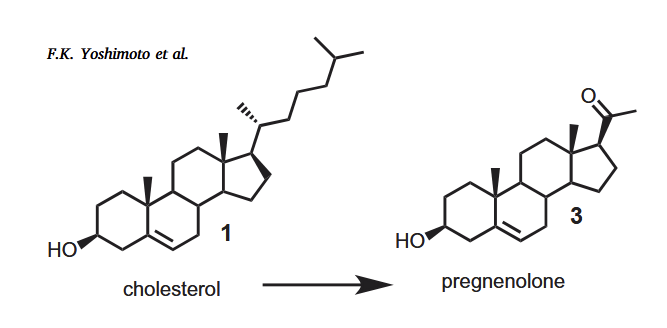
All sex hormone synthesis originates at the inner mitochondrial membrane, where an enzyme called P450scc cleaves off a hydrocarbon chain to convert cholesterol into pregnenolone.
Progesterone, DHEA, testosterone, estradiol, & cortisol are ALL downstream of pregnenolone.
To maintain healthy sex hormone levels, men and women must have:
- sufficient cholesterol available as a feedstock
- abundant mitochondria
- good membrane function, to facilitate cholesterol transport thru the cell & outer mitochondrial membrane, and react at the inner mitochondrial membrane
- dark sleep
OR another way to go is that your doctor could just write you a script for steroid injections, in which case you don't need to know a damn thing about how your mitochondria work.
Compulsive behaviors may be linked to brain inflammation, according to emerging research.
For many years, scientists believed compulsive actions occurred when the brain shifted from deliberate decision-making to automatic habits. Under that model, behaviors such as repeated handwashing, gambling, or drug use were thought to become ingrained loops that override self-control.
However, newer research suggests a different possibility. A study from the University of Technology Sydney found that inflammation in a brain region involved in decision-making may actually make behavior more deliberate rather than more automatic.
Researchers focused on the striatum, a deep brain structure that plays an important role in choosing actions and evaluating outcomes. Previous brain imaging studies have shown that people with compulsive disorder, including obsessive-compulsive disorder, substance use disorder, and gambling disorder- often show signs of inflammation in this area.
To explore the connection, scientists experimentally induced inflammation in the striatum of rats and then observed how the animals made decisions.
The results were unexpected. Instead of falling into automatic habit patterns, the rats displayed increased goal-directed behavior. They continued adjusting their actions based on the outcomes they experienced, even in situations where habitual responses would typically dominate.
The researchers linked this change to astrocytes, star-shaped support cells in the brain that help regulate neural circuits. When inflammation occurred, these cells multiplied and interfered with nearby networks responsible for decision-making and movement.
The findings suggest that some compulsive behaviors may arise not from a loss of control, but from excessive or misdirected control. For example, someone repeatedly washing their hands may be intentionally trying to prevent a feared outcome again and again, rather than acting purely out of automatic habit.
This perspective could influence future treatment strategies. Approaches that reduce brain inflammation or target astrocyte activity may eventually offer new ways to address compulsive disorders.
Study reference: “Compulsive behaviors may stem from too much (misguided) self-control.” University of Technology Sydney, 2025.
Groundbreaking Advance in Treating Incurable Mitochondrial Diseases:
Dutch Team Edits mtDNA in Patient Cells
For families battling rare mitochondrial diseases—inherited only from mothers and causing severe energy shortages, neurological issues, muscle weakness, and organ failure—effective treatments have been out of reach.
These conditions stem from mutations in mitochondrial DNA (mtDNA), which traditional tools like CRISPR can’t safely edit due to mitochondria’s unique location and multiple DNA copies per cell.
In a major 2025 breakthrough from the University Medical Center Utrecht (Netherlands), researchers used a precise, CRISPR-free tool called DdCBE (Double-stranded DNA Deaminase-derived Cytosine Base Editor) to correct pathogenic mtDNA mutations in real patient-derived human cells.
Published June 24, 2025, in PLOS Biology, this work marks a significant step toward future therapies for currently incurable disorders.
Why It’s Revolutionary
•Mitochondrial diseases affect ~1 in 4,300 births, with no cures for most forms—only symptom relief.
•Standard CRISPR risks dangerous DNA breaks and struggles with mtDNA delivery/heteroplasmy (mix of healthy/mutant copies).
•DdCBE changes single DNA letters (C to T) without cutting strands, guided by TALE proteins for high precision.
Key Results
•Corrected mutation m.4291T>C in patient fibroblasts, restoring mitochondrial membrane potential.
•Introduced/studied m.15150G>A in liver organoids, showing dose-dependent ATP reduction—validating disease modeling.
•Delivered via mRNA + lipid nanoparticles (like mRNA vaccine tech) for improved safety, viability, and efficiency.
•Minimal off-target effects; edits remained stable.
This is lab-based proof-of-principle (not yet human trials), but it demonstrates the potential to shift heteroplasmy toward healthy mtDNA and halt disease progression.
Looking Ahead
Clinical translation will take years—needing in vivo testing and safety validation—but this builds on mitochondrial replacement therapy and other gene-editing advances, offering real hope for thousands.
Here are video explainers on mtDNA editing and related breakthroughs:
•Mitochondrial DNA Editing: A New Era – Animated overview of recent progress https://t.co/q1giAISVCR
•No CRISPR Needed for mtDNA – Deep dive into base-editing tools https://t.co/0frxxcQKAX
•David Liu on Base Editing (2025 Breakthrough Prize Talk) – Explains foundational tech behind DdCBE https://t.co/q4R5BbEoOz
•Nanoparticle Delivery for Mitochondrial Therapy – Covers mRNA/lipid methods used in the study https://t.co/xUzAKZJOyf
Original sources:
•PLOS Biology paper: https://t.co/hvtw6HngSg
•EurekAlert release: https://t.co/d6JepowpZ4
•https://t.co/66lKzuUKWR summary: https://t.co/NIljGyCyGF
Science is accelerating—could this reach clinics in the 2030s? What do you think? 🧬 #GeneTherapy #MitochondrialDiseases #Biotech
Hook 🚨BREAKING: German researchers treated 15 severe lupus patients with CAR-T therapy.
All 15 went into complete remission.
Many stopped ALL medication.
This might be the biggest shift in autoimmune medicine in decades. 🧵
Добро бре еве без помпи, без пцовки, без вреѓање… него онака најљудско логично прашање… Како може, при сите проблеми што ги има град Скопје на повеќе нивоа, приоритет за средување и инвестирање да е градската плажа со поглед на најзагадената река у свет? Како?
@TheFitzzz Затоа што цел државен и јавен апарат е иста слика. Сега му се светат на ДУИ па објавуваат за Лотарија и Министерство за заедници или скопскиве јавнин претпијатија.. има и значително полоша ситуација во други министерства, агенции и јавни претпријатија!
Here's a simple explanation of how nnEMFs negatively impact our health (affect anything from fertility, to hormones, to sleep etc) .
We (humans) evolved amid natural low-level, unpolarized ELF/geomagnetic fields and electromagnetic frequencies such as 300GHz, 300MHz or even 60Hz that can be found in sources of nnEMFs ranging from your smartphone all the way to radars and satellites.
So unlike native EMFs, which occur naturally from the earth’s magnetic field or sunlight for example, nnEMFs have frequencies, intensities and patterns that differ from those our biology evolved to handle.
Some key characteristics of nnEMFs include:
-They are classified by frequency (measured in hertz (Hz))
-They include extremely low frequency (ELF) fields (such as 50–60 Hz from power lines), radiofrequency (RF) fields (such as 300 kHz–300 GHz, used in mobile phones and Wi-Fi) and microwave frequencies (such as 2.45 GHz in microwaves).
-They (nnEMFs) are polarized and pulsed unlike natural EMFs, which are often unpolarized and continuous.
Now the seven key biological mechanisms underlying the negative effects of nnEMFs include:
-Oxidative stress.
nnEMFs, particularly RF fields, can increase reactive oxygen species (ROS) like superoxide or hydroxyl radicals and cause lipid peroxidation in cells, thus alterling antioxidant enzyme levels (such as superoxide dismutase) and damaging cell membranes, proteins and DNA.
-Calcium channel dysregulation.
nnEMFs, increase intracellular calcium through voltage-gated calcium channels (VGCCs).
VGCCs are large protein complexes that “open” in response to electrical signals (they open when the membrane depolarizes (becomes less negative)), in order for calcium ions to enter cells (due to its concentration gradient (higher outside than inside cells)) and nnEMFs act as an external electrical stimulus.
VGCCs trigger neurotransmitter release (particularly glutamate), initiate contraction in cardiac and skeletal muscle for example, eegulate hormone secretion, control gene expression, enzyme activity and apoptosis.
-DNA damage.
nnEMFs, may induce single- and double-strand DNA breaks, directly (through energy transfer) or indirectly (through ROS).
-Melatonin suppression.
This happens possibly by altering neuronal signaling or mimicking some signals of light exposure but human and animal studies show reduced melatonin levels after RFR exposure, particularly at night.
-Increasing blood-brain barrier permeability.
This is well documented in animal studies that show increased blood-brain barrier leakage after RFR exposure, but it’s true that human research is limited.
Yet based on the 4 previous mechanisms that were just discussed this isn’t unlikely and nnEMFs probably increase permeability of endothelial cells in barriers in humans as well, probably through oxidative stress or calcium-mediated tight junction disruption.
-Autonomic nervous system dysregulation.
It’s documented that nnEMFs alter sympathetic and parasympathetic activity thus affecting heart rate variability and of course, animal studies show even altered neurotransmitter levels.
-Disruption of cellular electrical balance.
Our cells maintain a negative membrane potential (resting potential) and nnEMFs interfere with ion channels altering membrane potential and disrupting processes like nerve signaling, muscle contraction or enzyme function.
Then of course there are other ones such as heat shock protein induction for example (cell culture studies show increased HSP expression after EMF exposure, even at non-thermal levels).
Now here are some practical suggestions that will help you navigate our nnEMF word better and won’t turn you into a lunatic.
Number 1: Limit your exposure to them / distance yourself form them.
Without this the rest of the tips won’t really help.
But you don’t have to turn into a lunatic while implementing this.
Leave devices you’re not using in other rooms, have your phone on airplone mode when you’re not using it/need it, ditch your air pods, close the wifi at night (big one)/when you’re not using it, spend more time in nature instead of watching netflix, don’t be on your phone for no reason, use ethernet cables and so on.
Number 2: Go and ground.
We carry a constant flow of electrical charge which we week to discharge and if we never do this and thus never restore and maintain the body’s natural electrical state, disease will inevitably happen.
The surface of the earth, possesses a limitless and continuously renewed supply of free or mobile electrons as a consequence of a global atmospheric electric circuit.
A direct earth connection enables both diurnal electrical rhythms-free electrons to flow from the earth to the body and neutralize the positively charged free radicals.
*You can use grounding mats, pads etc if you also use an outlet tester.
https://t.co/88Mnuf8wEs
https://t.co/oUAZTuTz8y
https://t.co/kBmpg35cMO
https://t.co/9fu5zq66y6
Number 3: Endogenous glutathione max
Glutathione is a substance made from the amino acids glycine, cysteine, and glutamic acid.
It is naturally produced in the cytosol (an intracellular matrix) and helps with many processes varying from detoxification, protecting the mitochondria from oxidative stress, heart health and the immune system all the way to thyroid hormone conversion.
Number 4: Get enough minerals, vitamin C, E, high quality seafood.
https://t.co/nX8SHzx1q9
https://t.co/ZrP1y5gmDU
https://t.co/QMcg0449VO
Number 5: Glutamate serves a role, but given the effects of nnEMFs on nmda it is a good idea to avoid free forms of glutamate and support GABA.
Number 7: Further “lower” intracellular calcium through sunlight, nutrition, supplements and taking care of your thyroid.
Nutrition-wise wise you will need:
-Magnesium
-Vitamin K2
-Glycine
-Thiamine (indirectly (CO2 prevents the accumulation of intracellular calcium))
-Vitamin E
-Boron
-Zinc
Number 8: Do not use your electronic devices (iphone, laptop etc) while they are charging.
Number 9: Rhodiola might be promising as well.
ОРАО ЗОВЕ СОКОЛА! СОКОЛ СПАВА!
На видео снимката гледате ПРАЗНА ГЛАВНА ОПЕРАТИВНА САЛА во Македонска Навигација, нешто што во теорија не смее да се случува, ама во пракса се случува. Директорите и вработените или СПИЈАТ или ЈАДАТ во другите простории.
Од оваа оперативна сала се контролира небото на над нашата земја, од тука се следи работењето на радарот, се остварува комуникација со пилоти, со аеродромите во Солуна, Белград, Софија и Тирана. На снимката јасно се слуша како некој ги бара преку врската, се слуша глас, ама вработените се ,,зафатени,, со поважни работи па ги нема на работните места. Загрозена е безбедноста поради таквиот стил на работење, ама болуваат од куроболие, па не се секираат многу...
Инаку, Надзорниот одбор им дозволи да се самонаградат за Нова година со 150% од осноицата на нивната плата, која доста големка, па јако се омрсени!
Бараат и покачување од 20% на платата од 1 јануари 2026 година, за тоа допрва ќе се расправа. Еден од раководителите ВЛАДИМИР РИСТЕСКИ, по линија на непотизам го поставил својот роден брат АЛЕКСАНДАР РИСТЕСКИ на позиција раководител на сектор, згора и за награда го предложил, за олапаат братски плата и награда, околу 30.000 евра за спиење!
Наше е да навиваме нивниот јавашлак да не резултира со несреќа која ќе донесе несогледливи последици. И да се надеваме дека кога спијат, барем едното око им е полуотворено, заради превенција...
In 2008, evolutionary anthropologist Katie Hinde began studying breast milk from rhesus macaque mothers. What started as a routine study turned into a groundbreaking discovery. She found that mothers raising sons produced milk richer in fat and protein, while those raising daughters had different nutrient balances. This led Katie to a radical conclusion: milk is not just nutrition—it’s information.
Her research revealed that milk shapes behavior, not just growth. For instance, first-time mothers produced milk with higher levels of cortisol, influencing their babies to grow faster but also become more anxious. Katie also discovered that milk changes based on the baby’s immune needs. When a baby is sick, the mother’s milk quickly adapts by producing more white blood cells and targeted antibodies.
Katie’s work, which challenged the scientific consensus, was largely ignored. She launched a blog, Mammals Suck Milk, to spark discussions, and her findings, including that every mother’s milk is unique, gained widespread attention. In 2017, she took her research to a TED stage, and in 2020, her work was featured in Netflix’s Babies. Today, as a professor at Arizona State University, Katie continues to revolutionize our understanding of infant development and lactation.
Katie Hinde didn’t just study milk—she uncovered a living, responsive communication system, revealing that nourishment is intelligence. Her discovery shows that sometimes the biggest revolutions begin by listening to what others ignore.
#Усје
Малку прочепкав по темата Усје и бизнисот со цемент, па да презентирам нешто. Не од што толку сакам, туку безмалку ништо не може да се најде по мкд медиуми, што е показател сам за себе.
@seznajko_mk Дополнително, да не заборавиме, на неполни 50км од Скопје има уште една Цементара кај Блаце, покрај Лепенец...директно на патот на ветрот кон скопската котлина.