Volgens de medische genieën @attjekuiken en @hugodejonge is ivermectine een ontwormingsmiddel voor paarden.
En lachen dat ze deden in de Slaapkamer toen we dit keer op keer inbrachten terwijl er mensen onnodig stierven!
En ja hoor, de “wappies” blijken weer gelijk te krijgen.👇
Dit was zonder enige twijfel het absolute hoogtepunt van het verhoor van Anthony Fauci.
Eentje om in te lijsten. Zelden heb ik iemand verbaal zo afgestraft zien worden.
#FauciLiedMillionsDied
Jordan Peterson on what to do when you don't know what you want from life:
1. Don't start with the big goal. you won't find it by staring at the horizon. look around you instead, at your direct sphere of influence, and fix the things that are obviously in need of repair. they're usually small.
2. clean your room. i know it turned into a joke online. it's harder than people think, and more useful too. the point isn't the tidy room. the point is you learn to tell chaos from order, and to act in a way that produces order.
3. ask yourself, don't tell yourself. instead of "do this," ask "what could i do today that i'd actually do, that makes tomorrow a little better than today?" it's usually some small thing, because you're not that disciplined. that's fine.
4. it'll be the toad. the thing you keep avoiding. the task that feels like a snake. that's the one. do it anyway.
5. then it compounds. you fix one thing, you get a bit stronger, the next day you take on something slightly bigger. compound interest. and at some point you stop just patching what's broken, and you catch a glimmer of something positive you could build. that's your vision. it shows up at the end, not the start.
A community college professor taught the same study skills lecture for 30 years, and the video quietly became one of the most watched educational recordings on the internet.
His name is Marty Lobdell. He spent his career as a psychology professor watching students fail not because they were lazy, but because nobody had ever taught them how their brain actually works under the pressure of learning something hard.
The lecture is called "Study Less Study Smart." Over 10 million views. Passed around in Reddit threads, Discord servers, and university study groups for over a decade. And the core insight buried inside it has been sitting in cognitive psychology research for years, waiting for someone to explain it in plain language.
Here is the framework that completely changed how I think about effort.
Your brain does not sustain focus the way you think it does. Studies tracking real students found that the average learner hits a wall somewhere between 25 and 30 minutes.
After that, efficiency doesn't just decline. It collapses. You're still sitting at your desk, still looking at the page, but almost nothing is going in.
Lobdell illustrated this with a student he knew personally. She set a goal of studying 6 hours a night, 5 nights a week, to pull herself out of academic probation. Thirty hours of studying per week. She failed every single class that quarter.
She wasn't failing because she lacked effort. She was failing because she had confused time spent near books with time spent actually learning. The 25-minute crash hit her at 6:30pm every night. She spent the next five and a half hours sitting in the wreckage of her own focus and calling it studying.
The fix sounds almost too simple. The moment you feel the slide, stop. Take five minutes. Do something that actually gives you a small reward. Then go back. That five-minute reset returns you to near full efficiency. Across a six-hour window, the difference is not marginal. It is the difference between thirty minutes of real learning and five and a half hours of it.
The second thing he taught destroyed something I had believed about how memory actually works.
Highlighting feels productive. Going back over your notes and recognizing everything feels like knowing. But recognition and recollection are two completely different cognitive processes, and your brain is very good at making you confuse them.
You can see something you've read before and feel completely certain you understand it, even when you couldn't reconstruct a single sentence from memory if the page were blank.
He proved this live in the room. He read 13 random letters to his audience. Almost nobody could recall them. Then he rearranged the same 13 letters into two words: Happy Thursday. The whole room got all 13 without effort.
Same letters. Same count. The only thing that changed was meaning.
The brain stores meaning. Not repetition. The moment new information connects to something you already understand, the retention changes entirely.
This is what the cognitive psychology literature calls elaborative encoding, and it is the mechanism underneath every effective study technique.
The third principle was the one that hit me hardest, and the one almost nobody applies.
Lobdell cited research showing that 80 percent of your study time should be spent in active recitation, not passive reading. Close the material. Say it back in your own words.
Teach it to someone else, or to an empty chair if no one is around. The struggle of retrieval is where the actual learning happens. Reading your notes again is watching someone else do the work.
His parting line has stayed with me longer than almost anything else I have read about learning.
He told the room that if what he shared didn't change their behavior, they hadn't actually learned it. It would just live in their heads as something they had heard once and felt good about.
He was right. And most people leave every lecture exactly like that.
The students who remember everything aren't putting in more hours.
They stopped confusing the feeling of studying with the fact of it.
Ask them questions that no one else has ever asked them.
Forget her favorite color. Be different.
66 Powerful open-ended questions you can ask a woman....
@ruuddewild@RickAfcA013 Dat is Links: iedereen voor alles uitmaken (maar als ze zelf slachtoffer worden van die linkse val….). Ruud heeft jan en allemaal gecanceld en verweten niet te deugen. Maar dat moet wel eenrichtingsverkeer blijven natuurlijk
Throwback 2018 ❤️ Austrian Foreign Minister invited Vladimir Putin to her wedding as a joke — he actually showed up! Arrived with Cossack choir + samovar gift, then danced a perfect waltz with the bride. Pure charm! 🕺🇦🇹🇷🇺
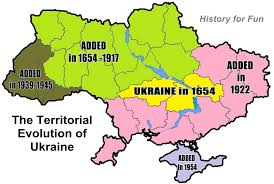
I don't think its right for 1 million Ukrainian men to be forced to die to defend territory that was never historically part of Ukraine just because NATO wants to isolate Russia.
The Ukrainian leadership crossed a line.
We did not seek conflict, yet for days now Hungary has been in the crosshairs. Still, neither threats from the president, nor from the foreign minister, nor from extremist military groups will deter us from standing up for the interests of Hungarians.
❌ We will not send money to Ukraine - it is better off with Hungarian families than in the bathroom of a Ukrainian oligarch.
❌We will not allow a ban on Russian oil and gas imports - without them there is no utility cost reduction and no affordable energy for Hungarian families.
❌And we will not allow Ukraine to be pushed into the European Union within 2 years by trampling on EU law - that would mean importing the war as well.
As long as Hungary has a patriotic government, decisions on these matters will not be made in Kyiv and not in Brussels either. This is well understood in Ukraine too. That is why they want a new, pro-Ukraine government in Budapest, and why the threats never stop.
Hungary's future will be decided by Hungarians. 🇭🇺
🇪🇺🇺🇦 Member of Ukrainian Parliament, Goncharenko at Council of Europe's Parliamentary Assembly speaks about FORCED MOBILIZATION in Ukraine:
"Zelensky is acting contrary to democracy, human rights, and the rule of law... a corrupt mobilization in which the rich and loyal can buy their way out, while the rest are beaten and killed"
*Finally, they started revealing the truth to Europeans...
#HansJanMaat "Het getuigt van een gebrek aan respect naar de eigen bevolking, om zonder dat te vragen, honderdduizenden mensen naar Nederland te brengen."
- Hans Janmaat