Director of School Counseling & Testing, K-12 | Constructivist leader building systems that empower equity & growth | MIE, Google, & Apple Certified Educator
AI is forcing us to rethink college & career readiness.
If AI can write, analyze, create & solve in seconds, what should we teach?
Critical thinking, curiosity, empathy, ethics & adaptability matter more than ever.
Are we changing education fast enough?
#AIinEducation#K12
School counseling has changed.
Today’s counselors support far more than course selection and college apps, from mental health and career pathways to graduation, WBL, advocacy, data, and AI.
The role has expanded because the world students enter has too.
#SchoolCounseling#K12
If your Portrait of a Graduate defines the goal, are your classrooms designed to get students there?
UbD starts with the end. UDL ensures access for all.
Together, they turn vision into action.
#PortraitOfAGraduate#UbD#UDL
The most important work school counselors do rarely shows up in data.
The conversation that kept a student in school. The plan that gave direction.
It’s invisible—until it isn’t.
We measure outcomes. But not belonging.
How do we capture that impact?
#SchoolCounseling
We treat school counseling like a support service.
It’s not.
It’s infrastructure.
When it’s strong, everything improves.
When it’s not, everything gets harder.
You can’t build achievement on an unstable foundation.
Counseling stabilizes it.
#SchoolCounseling#EdLeadership
The most honest document in a district isn’t the plan.
It’s the master schedule.
What gets time gets priority.
What doesn’t… doesn’t.
If it’s not in the schedule, it’s not a priority.
What does your schedule actually value?
#EdLeadership#SchoolImprovement
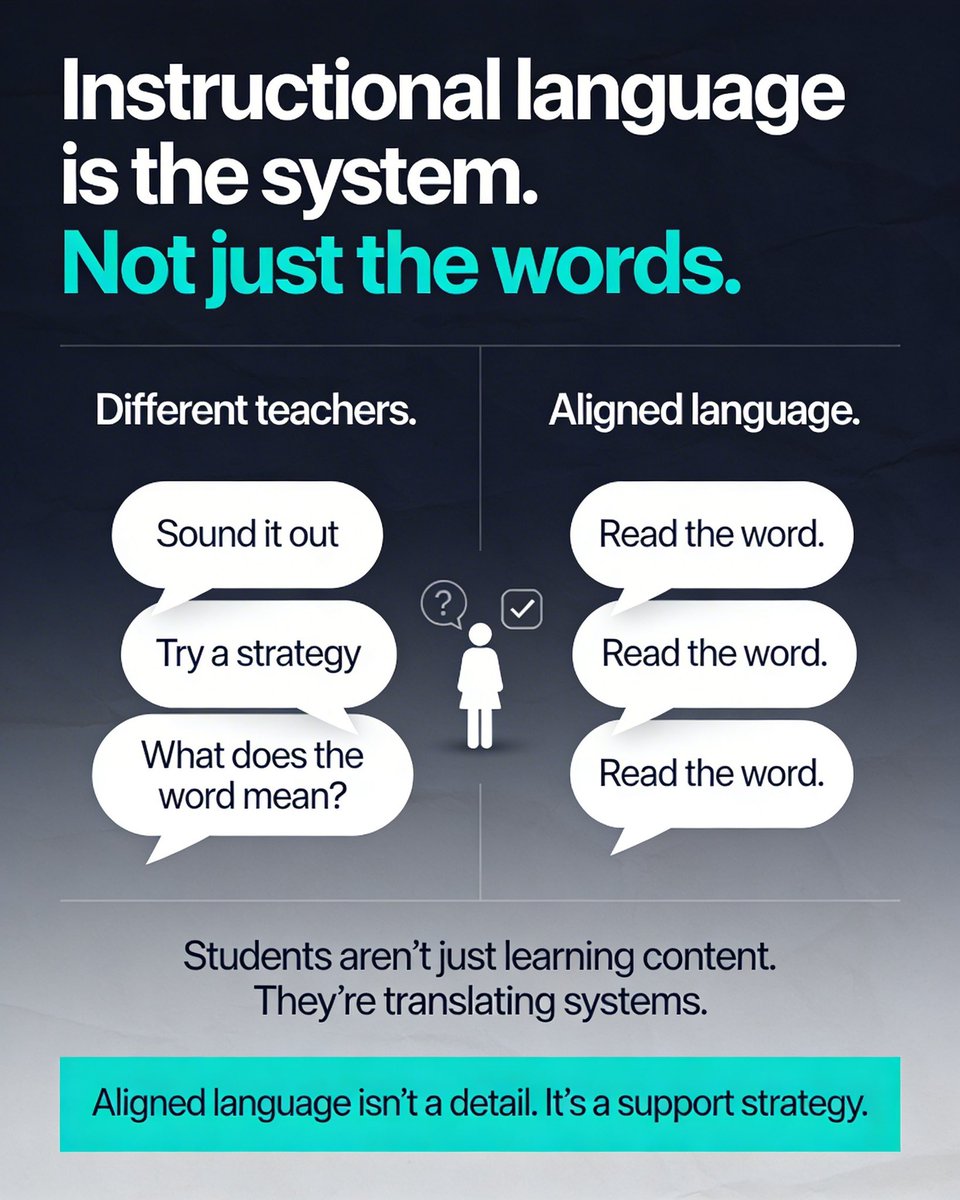
Most overlooked part of MTSS?
Instructional language.
Different terms.
Different explanations.
For students, language is the system.
If tiers say it differently, students aren’t learning—
they’re translating.
Alignment isn’t a detail.
It’s support.
#MTSS#EdLeadership
We want graduates who can analyze, communicate, and think critically.
But all depend on one thing: literacy.
If students can’t access text, they can’t access thinking.
Literacy isn’t part of the Portrait.
It’s the foundation.
#Literacy#EdLeadership
Every district has a Portrait of a Graduate.
But what does it look like on a Tuesday at 10:15am?
If it lives on posters, not in instruction—it’s branding.
Vision doesn’t change outcomes.
Aligned practice does.
Where does it show up?
#Portrait#EdLeadership
MTSS doesn’t break down from structure.
It breaks down from inconsistency.
Same curriculum.
Different delivery.
Students don’t experience systems—
they experience variation.
And variation undermines intervention.
Consistency isn’t compliance.
It’s access.
#MTSS#EdLeadership
MTSS isn’t just instructional.
It’s a leadership discipline.
Protect coherence, time, and expectations.
Without alignment, MTSS becomes programs—not a system.
When adults align, support becomes predictable.
And predictability accelerates learning.
#MTSS#EdLeadership
When achievement drops, we add intervention.
More groups.
More programs.
More schedules.
But often the issue isn’t capacity.
It’s Tier 1 clarity.
If students leave confused, intervention grows.
Strengthen the core first.
#MTSS#Tier1
Most MTSS conversations focus on tiers.
The real issue is alignment.
Different programs.
Different language.
Different routines.
That’s not support—it’s cognitive overload.
Strong systems echo instruction across tiers.
Where does alignment break down?
#MTSS#EdLeadership
Big MTSS mistake: treating intervention as the solution.
Strong systems know this:
Tier 1 is the intervention.
When core instruction is strong, fewer students need Tier 2 or 3.
MTSS wasn’t designed to rescue weak Tier 1.
It was designed to protect it.
#MTSS#EdLeadership
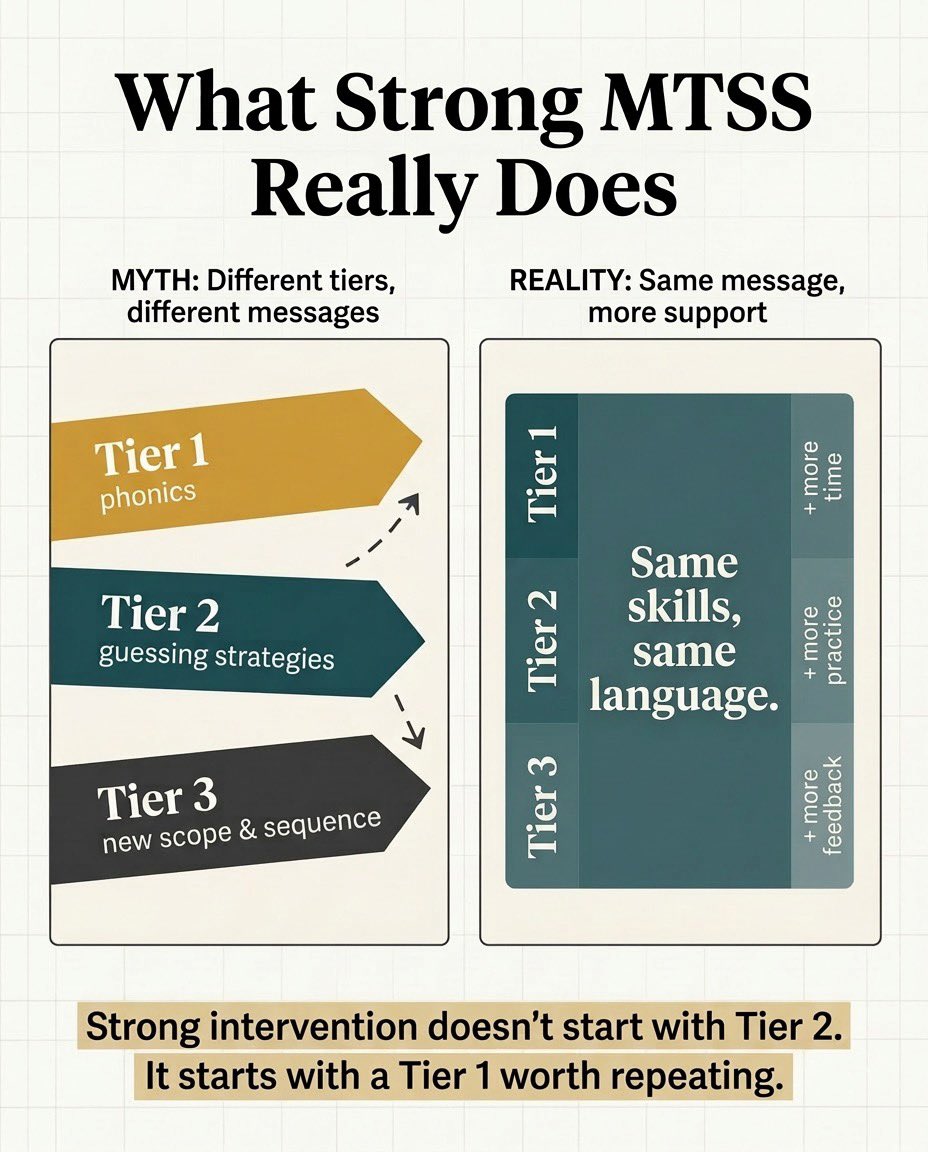
MTSS myth: intervention = something different.
Real MTSS = more of what works.
More practice.
More feedback.
More time with the same routines.
When tiers use different approaches, students relearn & unlearn.
Alignment across tiers matters.
#MTSS#EdLeadership#Literacy
Schools ask: What skills will students need for the future?
The future rarely rewards tools.
It rewards thinking.
Learning agility.
Communication.
Critical thinking.
Adaptability.
Trends change.
Thinking endures.
What skills should schools protect?
#FutureReady#EdLeadership
Policy isn’t the hard part in schools.
Practice is.
We adopt frameworks, approve policies, and launch initiatives.
But classrooms still vary widely.
Not because teachers don’t care—
because alignment is harder than adoption.
Where’s the biggest gap?
#EdLeadership
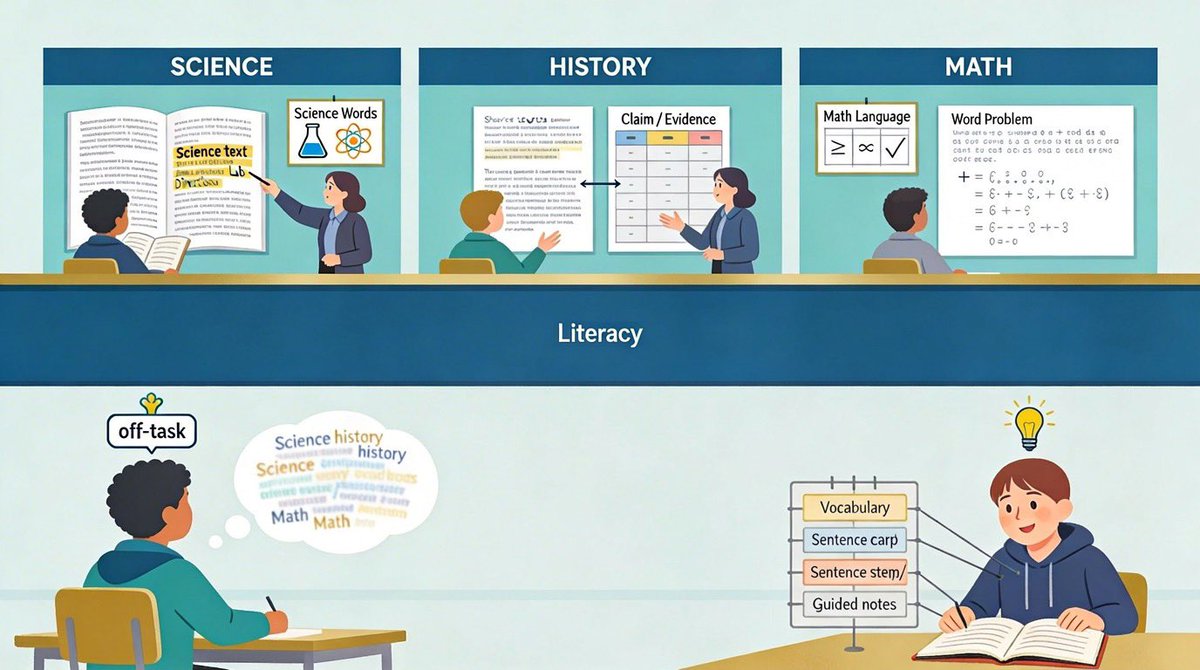
Every teacher assigns reading.
Not every teacher teaches students how to read in the discipline.
Science has vocabulary.
History has argument.
Math has language.
When gaps show up as behavior, we mislabel it.
Literacy is the foundation.
#Literacy#EdLeadership
If the teacher does most of the thinking,
students get compliance — not cognition.
Inquiry isn’t less structure.
It’s structured struggle.
The real question isn’t “Are we covering content?”
It’s: Who’s doing the intellectual heavy lifting?
#Inquiry#EdLeadership