Long-term investor | Rule based Options Seller | Life long learner.
Not SEBI Registered | Charts for Educational Purpose Only | No Buy/Sell Recommendations
BRUTAL TRUTHS ABOUT TRADING:
1. A good setup with bad position sizing will still ruin you.
2. You'll learn more from one trade you held with discipline than ten you exited on emotion.
3. Nobody blows up on their worst trades. They blow up chasing losses from their worst trades.
4. The market will give you the perfect setup on the one day you decided not to trade.
5. Watching charts all day doesn't make you a better trader. It just gives you more opportunities to make emotional decisions.
6. The traders who last aren't the ones who found the best strategy. They're the ones who stopped switching strategies every month.
7. Everyone wants to learn how to enter a trade. Nobody wants to learn how to exit one. That's exactly why most people lose.
8. You didn't lose because the market was unpredictable. You lost because you had no plan for when it was.
As a broker, there are rare days when risk management simply doesn't work, when markets move so violently that traders lose more than their entire initial margin. When this happens, both the trader and the broker are sitting ducks with no way out.
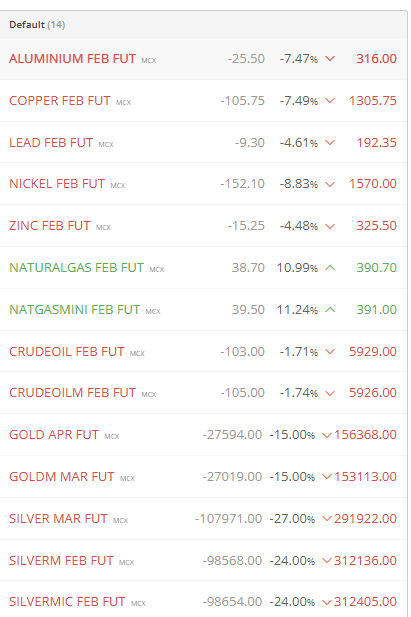
Yesterday was one of those days in commodity markets. All major metals hit lower circuits—the maximum they can move in a day. Silver crashed 30%, Gold 15%, and others followed. Btw, Natural gas was on an upper circuit.
In our 16 years of operations, we've only seen something like this once before: when Crude oil closed at a negative price during COVID. But that was just one commodity, and commodity trading wasn't nearly as popular as it is today.
What happened in commodities yesterday can happen in equities too; we saw it in 2008.
The lesson is simple but critical: only trade with money you can afford to lose. You can trade successfully for a decade and lose it all in a single day if you're not properly managing risk. There's no margin call, no exit opportunity when markets gap through circuits like this.
The difference between a struggling trader and a successful one isn't the signals they see.
It's what they DO with those signals.
Size according to conviction. Let winners run. Cut losers quickly. Trade less, earn more.