🔥 Hot off the press: We identified how and where AF begins.
I am excited to share this work.
Since the discovery of PV triggers more than 25 years ago, AF ablation has evolved into an empiric therapy centered on PVI. Yet, we have never been able to identify the arrhythmogenic substrate that determines why a premature beat initiates AF at one site and not another.
We believe this study changes that.
In this mechanistic study, we found that AF initiation arose predominantly through reentry originating from a small number of spatially discrete regions with steep repolarization gradients. Their distribution was unique to each patient, and they accounted for more than 92% of AF initiation episodes.
Importantly, the arrhythmogenic substrate was not defined by low voltage, and while conduction abnormalities were often present, they appeared to play a secondary role.
Its patient-specific distribution may help explain the controversy surrounding posterior wall isolation: the posterior wall harbored the substrate in only approximately 30% of patients. Importantly, in redo patients with durable PVI, right-atrial substrate (which is often beyond standard mapping strategies) was identified in 30%.
Most encouragingly, in an exploratory cohort of 24 patients with recurrent AF and durable PVI (50% PerAF), targeted elimination of these sites achieved 87.5% single-procedure freedom from any atrial tachyarrhythmia over a median of 489 days, without antiarrhythmic drugs.
The thoughtful accompanying editorial by Jon Kalman highlights the significance of this discovery and its central translational challenge of bringing it into real-world clinical practice.
But stay tuned! Technology is under development to transform this discovery into a rapid, automated functional mapping.
Current electroanatomic mapping relies largely on voltage amplitude and activation timing. We need to move beyond these measures and map how tissue actually functions - how it conducts, repolarizes, and responds to premature stimulation. This can add the critical dimension that has long been missing from substrate mapping and may reveal what truly makes cardiac tissue arrhythmogenic.
To me, this is the beauty of physiology: there are no black boxes. We can identify the sites that reproducibly initiate the arrhythmia, define their EP properties, eliminate them with ablation, and confirm that arrhythmia can no longer be initiated.
The next steps are prospective multicenter validation and technological development. Together, they may move AF ablation beyond empiric therapy toward truly individualized, mechanism-guided therapy.
📄 Paper in @JACCJournals:
https://t.co/izIR8HbNYk
📝 Editorial:
https://t.co/mYIilXkjJ7
#JACCCEP #AtrialFibrillation #CardiacElectrophysiology #CatheterAblation #EPeeps
Atypical Atrial Flutter congenital heart post surgery & prior PFA
Mapped with #EnSiteX + #HDGridX + #TactiFlexDuo Seamlessly switching between RF and PFA allows us to tailor the lesion directly to the specific scarred & tissue thickness we encounter ⚡️🔥
where would you burn?
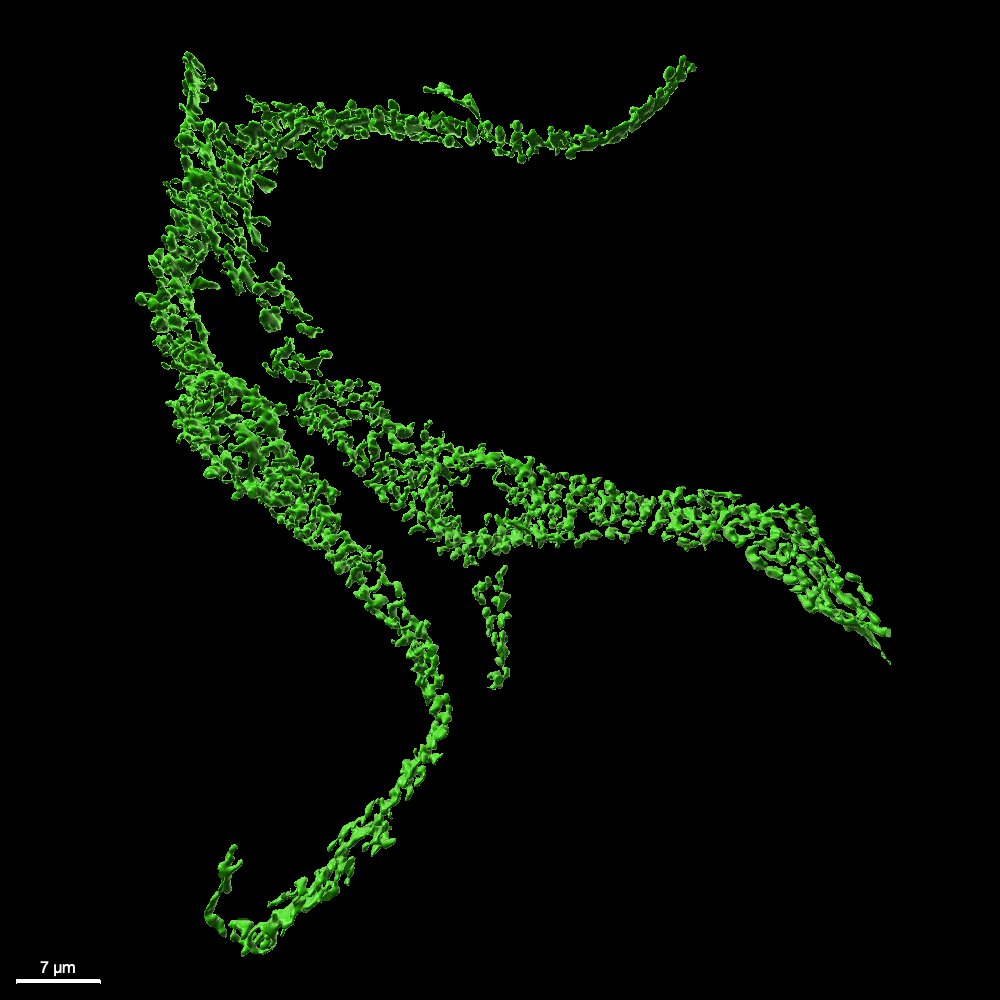
It’s #MicroscopyMonday! This cool image from the @lfsantana68 ’s Lab is of a #cardiac SA node cell labeled with a mito-tracker (a mitochondria marker).
Our recent study challenges long time dogma- aging can lead to increase in brain vasculature in some instances, which is more pathological than hypo-vascular state.
Great photo opportunity while training a student how to isolate parts of the ventricular conduction system. Cntn2 GFP reporter from @glennfishman#arrhythmia#cardiomyopathy
Can extracellular vesicles reveal how well we age? Our study suggests that these circulating vesicles are associated to immune and oxidative aging processes, offering a dynamic window into biological aging beyond chronological age. Full paper here: https://t.co/ABul18Gn93
Os dejo por aquí la edición especial en la revista Biomedicines, sobre enfermedades metabólicas en el envejecimiento, de la que somos editores invitados.
Hay formas y formas de empezar una nueva cuenta sobre ciencia en redes...
Soy Rafa Ramírez, profesor de Anatomía en la UAH, y acabamos de publicar un artículo desvelando algunos secretos del envejecimiento saludable. Aquí os lo dejamos!
https://t.co/ABul18Gn93