"La historia no se repite pero a menudo rima". Mark Twain
Donald Trump ha firmado la rendición incondicional frente a Irán en el Palacio de Versalles en Francia. En ese mismo lugar en 1919 los alemanes firmaron su rendición durante la primer guerra mundial.
Después de esa capitulacion Alemania enfrentaria el colapso económico, la hiperinflacion y el extremismo político.
La duda es si no estamos frente a la ejecución de un guión similar al impuesto a Alemania en 1919.
La prestigiosa agencia de noticias AFP publica un informe de verificación de datos (fact-checking) que desmonta la falsa narrativa fujimorista que atribuye a los expresidentes Paniagua y Toledo haber "liberado a terroristas", cuando lo cierto es que las cifras oficiales indican que fue Alberto Fujimori.
https://t.co/y0JVLGiGjy
@MasterNotesX@Sincero_Dinero En realidad no falta nada…. La cuenta por los cafés fue solo de $25, más $2 de propina y $1 cada uno. Total $30. Al final, cada uno gastó $9 incluido la propina ($25 + $3 = $27) y los $3 que se repartieron. No hay nada que descubrir aquí.
Durante los Juicios de Núremberg, Hermann Göring concedió una entrevista al psicólogo Gustave Gilbert y dijo:
«Por supuesto que la gente no quiere la guerra. ¿Por qué querría un pobre agricultor arriesgar su vida en una guerra cuando lo mejor que puede esperar es volver a su granja de una pieza?
Naturalmente, la gente no quiere la guerra. Nadie quiere la guerra en Rusia, Inglaterra, Estados Unidos, ni siquiera en Alemania. Eso es evidente.
Pero, al final, son los líderes de un país quienes determinan la política. Y siempre es sencillo arrastrar al pueblo, ya sea en una democracia, un Estado comunista, un parlamento o una dictadura fascista.»
Gilbert objetó:
«Pero hay una diferencia en una democracia: el pueblo tiene voz a través de sus representantes elegidos.»
A lo que Göring respondió:
«Eso está muy bien, pero, tenga o no tenga voz el pueblo, siempre puede ser llevado a obedecer a los líderes. Eso es fácil. Todo lo que hay que hacer es decirles que están siendo atacados y denunciar a los pacifistas por falta de patriotismo y por exponer al país al peligro. Funciona igual en cualquier país.»
— Diario de Núremberg, 18 de abril de 1946
¿No les resulta familiar?
I’m surprised by how much interest there is in a chart about the history of economic thought, and also by how many strong reactions it produced. A few clarifications on the basis of these /1
Desde 2021, el congresista Roberto Sánchez (@RobertoSanchP) ha presentado 36 proyectos de ley como autor principal. 10 fueron promulgados.
No hay que quedarse sin revisar sus propuestas: legisló en DDHH, mujer, discapacidad, salud, agua, minería y transparencia.
Les traigo un resumen de los 23 PLs más sustantivos 🧵
Ayer pasé el día leyendo y anotando la encíclica de León XIV. Ningún otro jefe de Estado podría haber escrito un documento de tanta ambición. Mis primeras conclusiones provisionales, en las páginas de Ethic: https://t.co/Wyhaoi2YS5
La siguiente iteración del taller de investigación empírica con IA será virtual, para así incluir a quienes no estén en Lima.
Dirigido a: periodistas, tesistas, analistas, curiosos.
2 sesiones remotas · 13 y 20 de junio · 9:00 - 13:00
10% dscto. con RT
https://t.co/UKcYZAzRKA
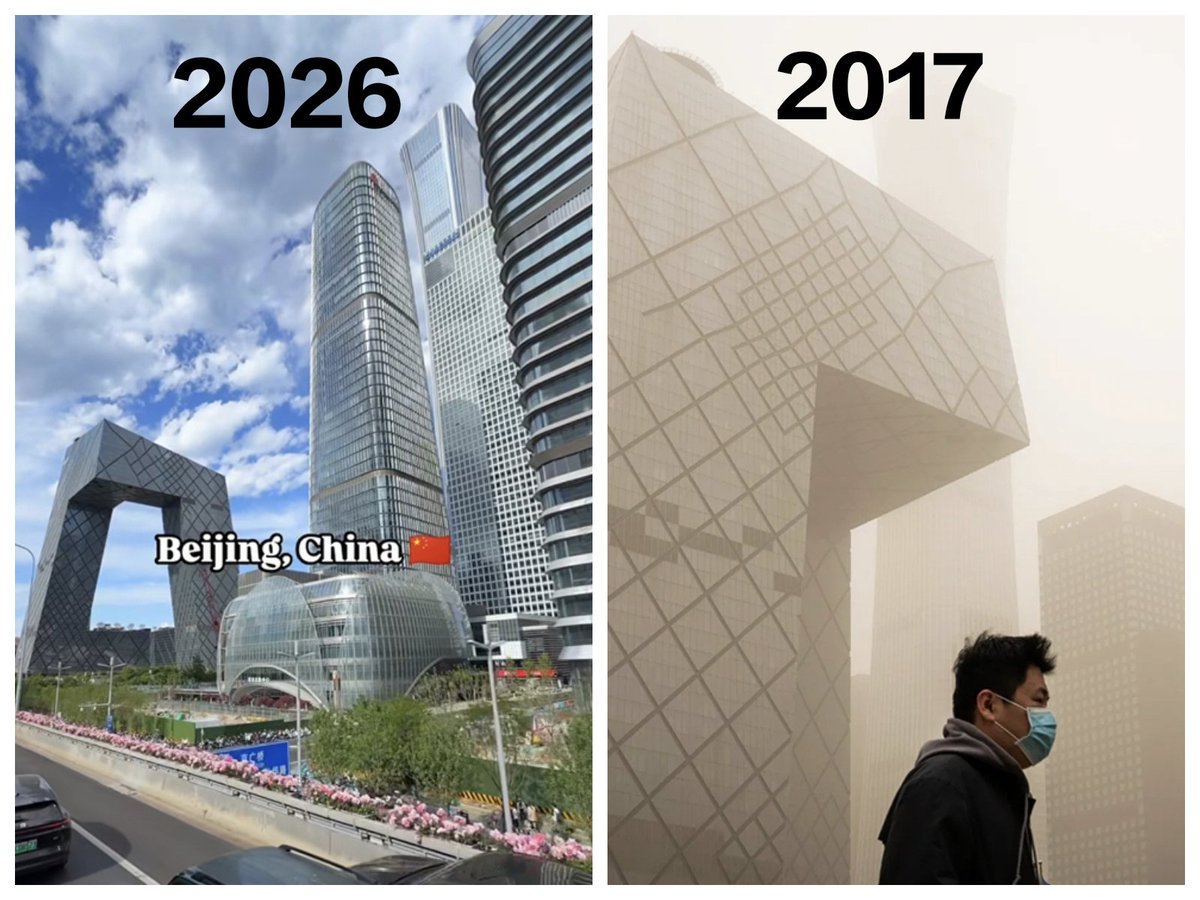
I think the real challenge in understanding contemporary China is this.
There were a considerable number of foreigners living in China just prior to 2018, and a lot of their visas were not renewed. Some of this was because of increased vigilance in checking whether they had the proper degrees and paperwork. Some of it was because the government decided that for-profit after-hours English programs were creating social divisions that were making meritocracy untenable.
With the passing of new laws, many of the foreigners who were the least qualified were swept away. This happened at a great transitional time in China along many lines. China was already in the process of cleaning up the water, air, and investing unthinkable amounts of new homes for the poor, new roads, and tens of thousands of kilometers of high-speed rail.
Tens of thousands of foreigners went home in 2018. And then, during the first months of the pandemic, perhaps one or two hundred thousand foreigners also went home. By the end of the Pandemic in 2023, the only foreigners remaining in China were true lovers of China, their people, and culture. People with families here. People with massive investments, and people with very high qualifications.
Two divergent narratives emerged. Those who were sour that they were swept away, or disappointed that they left, and secondly, those who emerged with higher positions, and more depth of understand. Of course, not all who left were unqualified. Some genuinely wanted to be with their families at a complex global moment. Having said that, there was an acute reduction in drunken foreigners following this period. But something had changed, other than the evaporation of alcoholics, and tenuous long-term visitors. China has changed.
In the space of about a decade, starting around 2012 or so, but largely unnoticed until its effect by 2018, or 2020, and then 2023. China cleaned all its waterways, moved heavy industry away from cities, and made these facilities far cleaner. China became the world leader in high-speed rail, launched the most advanced clean energy cars the world had ever seen, increased its solar energy capacity to equal the rest of the world combined. And for all practical metrics, virtually ended homelessness. Wages continued to grow at pace, while overall unemployment remained around 5%, and the cost of living stayed the same.
China, today, is enjoying a cleaner environment, the world’s best infrastructure ever, 90% homeownership, 40% family savings rates, and opulence that is hard to explain to those outside of China. China is now a model of economic prosperity, unheard of at this scale. And it did it without imperialism.
So, these two groups of foreign narrators see China very differently. Those living in, or travelling to China since 2023, and those who left before 2018 or so, know two different China’s. Very slowly though, the world is starting to see that the true state of contemporary China. This is outraging those clinging to their outdated perspectives. Soon though, I am convinced, their discordant, and inaccurate story telling will convince no-one of consequence.
Reality is persistent. And China’s reality is one of which the world is increasingly aware.
China is the most advanced, peaceful, and economically prosperous nation of scale the world has ever known.
It’s time we learn from China’s example.
He dedicado 20 horas para crear un breve resumen de los 10 PROMPTS MÁS POTENTES DE CLAUDE Opus 4.6.
Prompts avanzados que puedes usar para investigación, contenido, diseño, aprendizaje, marketing y análisis.
(Debes seguirme para poderlo recibir)
Like + RT + sígueme
Comenta “CLAUDE” y te los envío por DM.
@haugejostein The Nobel Prize in Economics is not an actual prize as Nobel himself said economics is not an actual science but a political tool. Its real name is actually The Sveriges Riksbank Prize in Economic Sciences in Memory of Alfred Nobel created by banks. https://t.co/AkaRtc9810
Cuando una sociedad empieza a hablar de educación como si hablara de clientes, promociones y consumo… ya no estamos frente a un problema universitario.
Estamos frente a un problema cultural.
The internet, GPS, touchscreen, Siri, AI –– all publicly financed. That may not be true much longer.
The salaries being paid by a handful of companies are haemorrhaging top talent from universities and public institutions. If governments do not understand AI, they cannot govern it. And if they cannot govern it, they cannot direct it toward solving the problems that matter.
Joined @TheStalwart and @tracyalloway on Odd Lots at @Bloomberg@CityLab in Madrid to discuss mission economy, AI and state capacity. Link in replies.
El 9 de mayo de 1945, se oficializó el Dia de la Victoria sobre el nazismo, después de que los criminales nazis firmaran la rendición incondicional ante el victorioso Ejército Rojo, que aplastó al Reich que duraría 1000 años, según Hitler.
Ahora los europeos herederos de los nazis pretenden borrar y manipular esta fecha por puro revanchismo, renombrando este día como "Día de Europa" y eliminando de la foto a la URSS, quién precisamente fue la que más sufrió el nazismo y quién más lo combatió.
Estos manipuladores euronazis pretenden hacer pasar a los gobiernos europeos como vencedores, cuando precisamente fueron todo lo contrario, fueron colaboradores y financiadores de Hitler, que se paseaba por Europa sin resistencia... solo el pueblo antifascista organizado en milicias partisanas luchaba contra los nazis, mientras la burguesía europea brindaba con champagne por tener esclavos en sus fábricas y hacerse de oro.
Fue el capitalismo y el imperialismo occidental quién creó a la bestia genocida de Hitler para lanzarlo sobre las fronteras de la URSS, fue la oligarquía occidental quién armó y financió el mayor ejército de la historia en aquel momento, para acabar con esos comunistas bolcheviques que iban a "destruir Occidente".
Solo un dato: El 80% de todos los hombres soviéticos nacidos en 1923 murieron combatiendo al nazismo en la Segunda Guerra Mundial... para que ahora esa Europa colaboracionista nazis, pretenda borrarlos y ponerse ellos en la foto sin ningún escrúpulo.
El Ejército Rojo fue quién aniquiló a 3 de cada 4 soldados nazis, el 93% de todos los soldados nazis muertos y desaparecidos fueron en combate contra la URSS, quién liquidó a 674 divisiones del ejército nazi; al 75% de la Werhmacht, el 70% de sus aviones, al 75% de sus tanques y al 74% de la artillería.
No lo olviden, como dijo Ernest Hemingway: "¡Cada ser humano que ame la libertad debe al Ejército Rojo más agradecimientos de los que pueda pagar a lo largo de toda una vida!".
Adam Smith used the phrase "invisible hand" just once in The Wealth of Nations. And yet it became the defining idea of modern economics. @Freakonomics have re-published the episode in which I unpack how Smith's work was simplified, distorted and used to justify an orthodoxy he would barely recognise. 250 years on, it is worth going back to what he actually wrote.
Listen ➡️ https://t.co/VabOecjlj3
The idea that the US innovates while China imitates is seriously flawed.
In the past 10 years alone, China has produced a string of innovations in EVs, batteries, solar power, robotics, AI, high speed rail, telecoms, and biotech. The list goes on.
But, most importantly, China innovates for the public whereas the US innovates for shareholders.
China now has more than 50,000km of high speed rail in operation. That's more than the rest of the world combined. It connects hundreds of cities.
A brand new EV can be purchased for as little as $6,000 in China. Electric mopeds can be as cheap as $300.
China's entire population has access to 4G or 5G. We're talking about a country of 1.4 billion people here.
Innovation isn't just about what gets invented. It's about who it's invented for, and in China, the answer is increasingly “everyone.”