The Fisk coffin, often called the Fisk Metallic Burial Case, emerged in the mid nineteenth century during a time when Americans were becoming increasingly fascinated and uneasy with the subject of death.
Invented by Almond Dunbar Fisk in the eighteen forties, the coffin was made entirely from cast metal and built with an airtight seal. This design was meant to slow decomposition by preventing outside air, moisture, and insects from entering the coffin. Families who feared that the remains of their loved ones might decay quickly found comfort in the idea of a container that promised long term preservation. The coffin also featured a small viewing window over the face of the deceased, allowing mourners to see the person one last time without exposing the body to the open air.
These coffins gained special attention during periods of disease and war when preserving bodies for shipment across long distances became increasingly important. Because they were expensive and difficult to manufacture, they were often used by wealthier families or for individuals whose remains needed to be transported home after death far from family.
During the American Civil War, Fisk coffins were used to transport the bodies of high ranking officers so that families could hold funerals in their hometowns, which increased their visibility and desirability across the country.
#archaeohistories
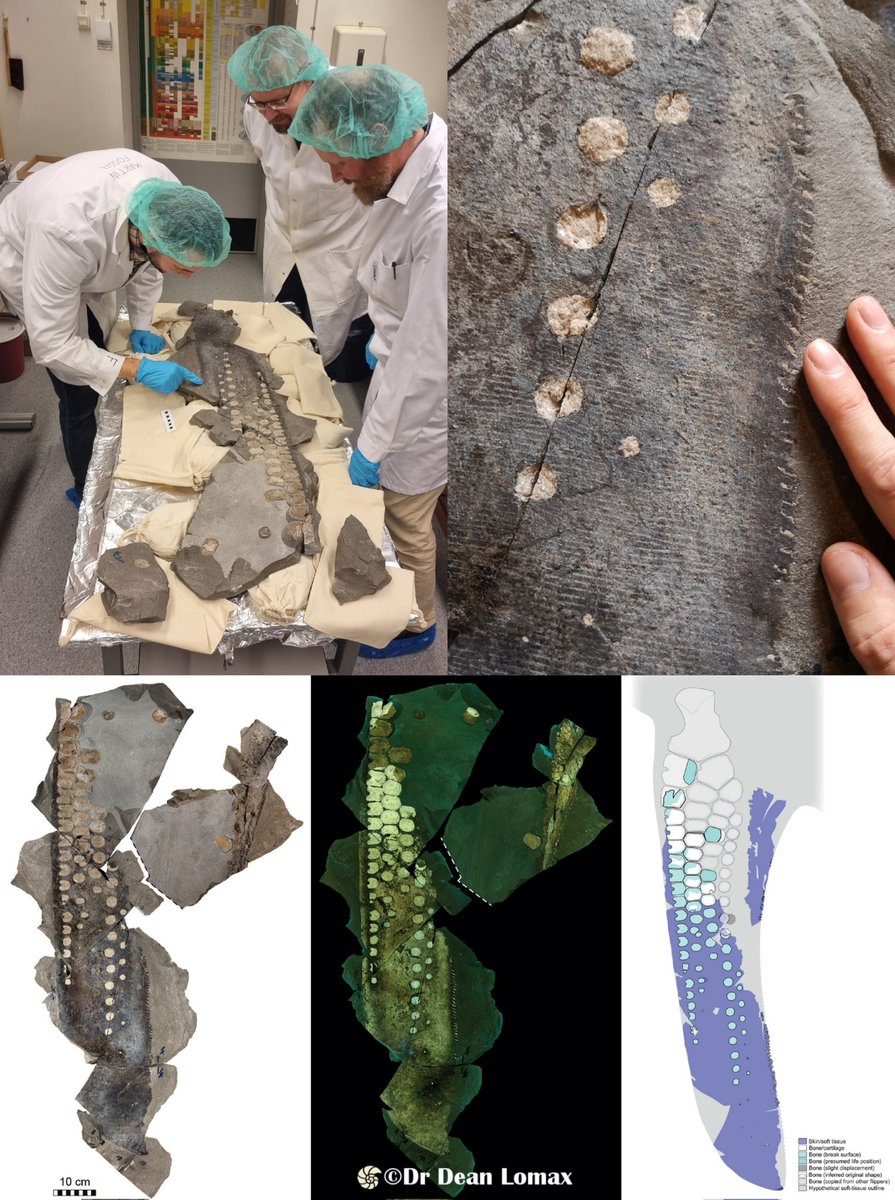
The first-ever soft tissues of the Jurassic megapredator, Temnodontosaurus! The winglike, metre-long flipper contains structures never seen in any animal (living or extinct) & shows this giant evolved a unique hunting behaviour.
Nature: https://t.co/2Q5t2pslB4